This guide is built for anyone planning a 2026 trip to Malapascua. It explains why the sharks come to Monad Shoal, what a 5 AM dive day looks like, how much it costs in real Philippine pesos, which certification you need, and how to protect the marine park that makes the encounter possible. We have also included practical details about getting there from Cebu City, where to stay, and what to eat. The information is based on the current dive operator practices on the island, municipal marine park rules, and the latest travel guidance from national and provincial tourism offices.
Why Malapascua Is the Thresher Shark Capital
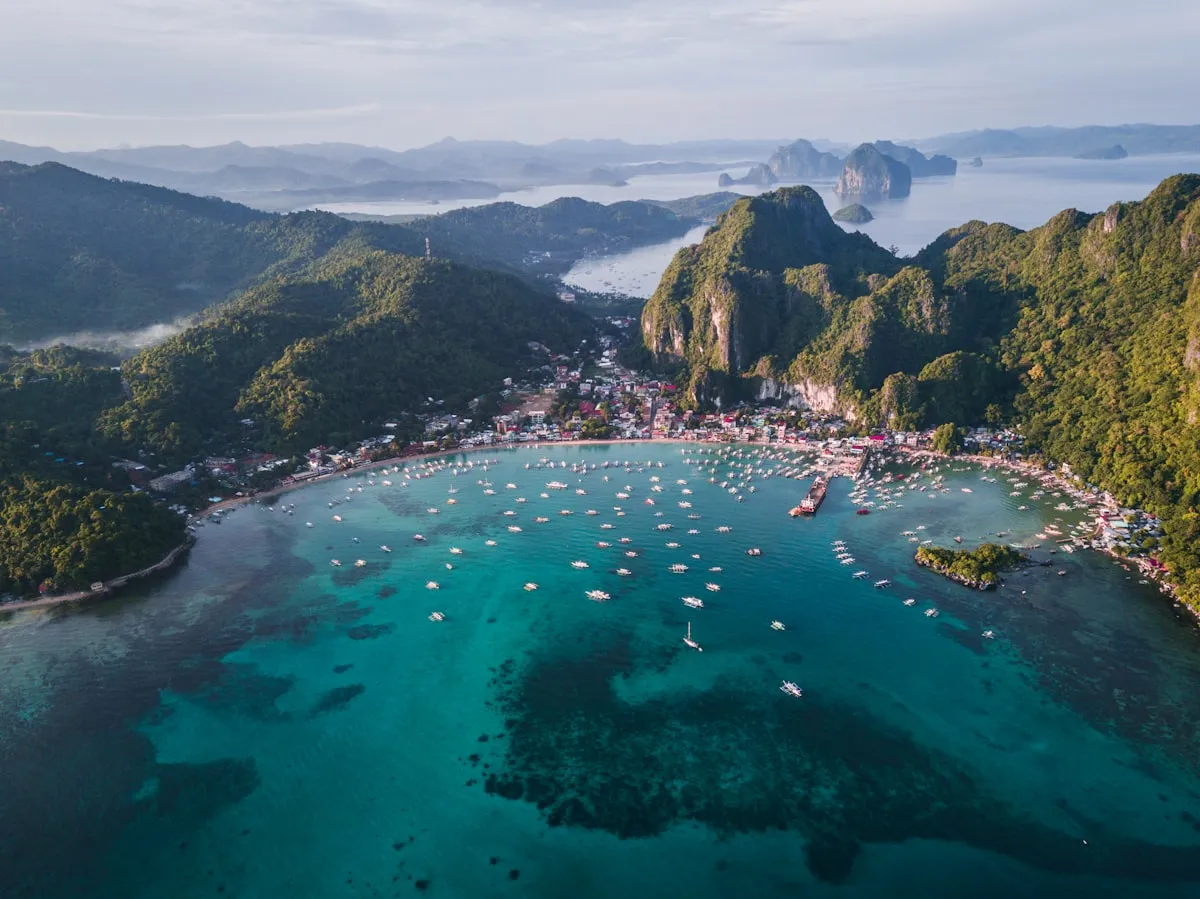
Malapascua is a small island off the northern tip of Cebu, less than two kilometers long and less than one kilometer wide. It sits at the edge of a deep channel where pelagic thresher sharks pass every night to hunt. At dawn, the sharks move up to a seamount called Monad Shoal, about 8.6 kilometers from the island. The top of the seamount sits within recreational diving depth, and it is covered with cleaning stations where small wrasse remove parasites from the sharks' skin and gills. Because the thresher sharks return to these stations almost every morning, divers have a predictable chance of seeing them at first light.
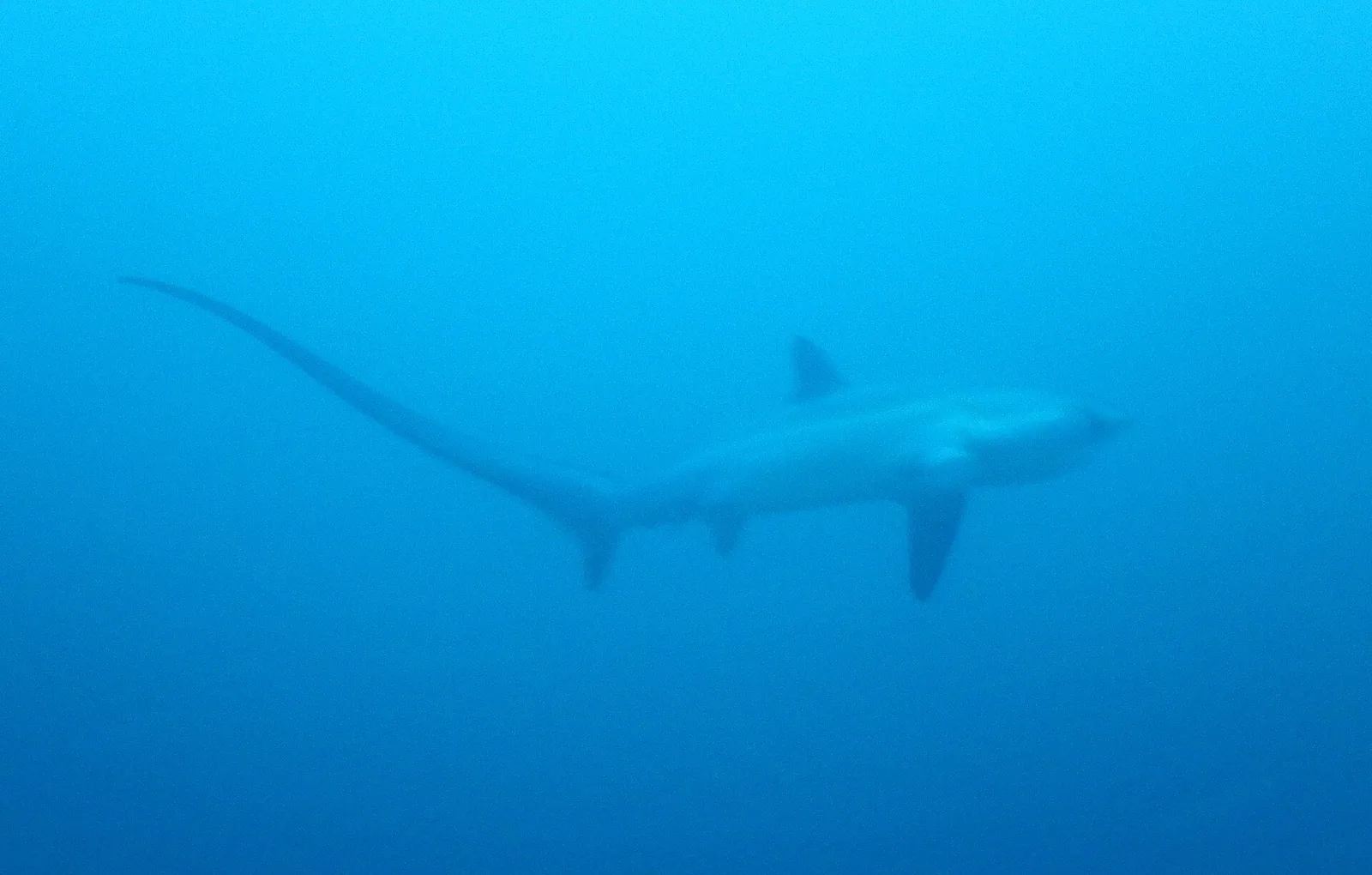
The sharks that visit Monad Shoal are pelagic thresher sharks, the smallest of the three thresher species, though they still reach three meters in length. The tail alone can be as long as the body. Their eyes are large, their snouts are pointed, and they move with slow, deliberate grace. Watching one hover at a cleaning station while wrasse pick over its flanks is one of the most memorable marine experiences in Southeast Asia. Most encounters last only a few minutes, but a single pass is often enough to leave a lasting impression.
What makes the site unusual is that the cleaning behavior happens in water shallow enough for recreational divers. Elsewhere, thresher sharks are deep-water animals seen only briefly by technical divers or from boats. At Monad Shoal, the top of the seamount is around 22 to 30 meters deep, which means Open Water divers with the right depth certification and a guide can observe the cleaning in good conditions. The site is not a guarantee, but the odds are high enough that the island has built an entire economy around that single dive.
The 5:00 AM Dive Routine
Your day begins before sunrise. Most dive shops ask you to arrive at 4:45 AM, sign the roster, and check your gear in the dark. A light breakfast of bread, banana, and instant coffee is usually served while the boat is loaded. By 5:00 AM the boat is underway, a small banca with an outrigger that carries 4 to 8 divers plus guides. The crossing takes 30 to 45 minutes depending on the swell. Some days the sea is glassy, and the only sound is the motor. Other days the crossing is bumpy, so bring a dry bag for your electronics.
At the mooring buoy, the guide gives a quick briefing. The plan is usually the same: descend the line, settle on the sand behind a low coral ridge, and wait. The cleaning station is not a cave or a wreck. It is a broad, sandy area with a few coral outcrops where the sharks circle. Divers are asked to kneel or lie flat on the bottom, keep their hands in, and avoid sudden movement. Flash photography is prohibited, and gloves are not allowed. The sharks may appear within minutes, or the group may wait 15 to 20 minutes before the first shape rises from the blue.
The dive itself is usually 45 to 60 minutes long. Because the sharks are only present at a specific window, the boat does not linger all morning. After the dive, the boat returns to Malapascua for a full breakfast and a surface interval. A second dive is typically offered around 9:00 or 10:00 AM, and a third in the afternoon. Most divers book a three-dive day: the thresher shark dive at dawn, a coral or macro site mid-morning, and Gato Island or a wreck in the afternoon. Do not plan a late night before the dawn dive. The best sightings belong to the well-rested and the patient.
Dive Sites Beyond Monad Shoal
Malapascua has more to offer than the thresher shark dive. Gato Island, a marine reserve north of Malapascua, is the next most famous site. It is a rocky islet with a tunnel cut straight through it, white-tip reef sharks sleeping in the crevices, and dense populations of nudibranchs and sea snakes. The tunnel is a highlight for experienced divers and is usually done as a separate morning or afternoon trip. The current can run, so the dive is led by a guide who knows the exit and entry points.
Chocolate Island is a shallow coral outcrop covered in soft corals and home to seahorses, cuttlefish, and frogfish. It is a favorite for macro photographers and for divers who want a relaxed second dive after the morning thresher dive. Lapus Lapus and Dakit Dakit are sloping coral gardens with parrotfish, lionfish, and the usual reef community. They are easy, colorful, and good for all levels. Kimud Shoal, further north, is a deeper seamount where hammerhead sharks are sometimes seen from December through May, but the site is more remote and depends on fuel, weather, and diver numbers.
The Dona Marilyn Wreck is a ferry that sank in a typhoon and now lies on its starboard side at around 30 meters. It attracts divers looking for something more dramatic than reef and macro. Visibility varies, and the site is best visited with a guide who can manage the current and point out the safe penetration points. The wreck is not a deep penetration site, but it is an interesting look at a real Philippine maritime disaster that has become an artificial reef.
Certification, Depth, and Safety
Monad Shoal is usually dived to 22 to 30 meters, which is within the depth range of an Open Water certification if your training includes that depth. However, the early morning light, the possibility of current, and the need for excellent buoyancy make the dive more comfortable for divers with some experience. Advanced Open Water, Peak Performance Buoyancy, or at least a few dozen logged dives beyond 20 meters is a good idea. You will be asked to stay low and still, which is harder to do if you are not comfortable with your weighting and trim.
Nitrox is available at many shops and is worth considering. The thresher dive is followed by a surface interval and another dive, and nitrox extends your bottom time at depth. Most shops offer nitrox fills for PHP 350 to PHP 500 per tank. If you are not nitrox certified, you can do a quick course on the island. Equipment rental is typically PHP 500 to PHP 900 per day for a full set, and most shops replace rental gear every few seasons. Bring a torch for the dark briefing area, a dry bag for the boat, and reef-safe sunscreen for the afternoon surface intervals.
Marine park rangers and dive shop staff patrol the site. The rules are simple: no touching, no chasing, no gloves, no flash, and no free diving at the cleaning station. Divers who break the rules may be removed from the water and reported. The goal is to keep the sharks relaxed enough to approach the cleaning station. A calm, low profile is the best way to get close.
Real PHP Prices for a Malapascua Dive Trip in 2026
The first cost is transport from Cebu City. A Ceres air-conditioned bus from the North Bus Terminal to Maya, the jump-off point, costs PHP 260 to PHP 380 and takes four to five hours. A van is faster at three to four hours but more cramped, usually PHP 300 to PHP 450 per person. From Maya, the public boat to Malapascua costs PHP 150 to PHP 250 depending on load. A private boat can be hired for PHP 2,000 to PHP 3,500 and is useful if you have heavy gear or a large group. A private van transfer from Cebu City to Maya, including a private boat, can run PHP 3,500 to PHP 5,000 for six to ten people.
Diving prices on the island vary by shop and season. A single fun dive with own equipment costs around PHP 1,400 to PHP 1,900. With equipment rental, it is PHP 1,800 to PHP 2,400. The thresher shark dive at Monad Shoal is often priced separately, around PHP 2,500 to PHP 3,500, because it includes the early boat and a guide. A three-dive day with equipment is typically PHP 4,500 to PHP 6,000. A 10-dive package, which is the best value for a week-long stay, costs PHP 17,000 to PHP 24,000.
Courses are also available. PADI or SSI Open Water is PHP 16,000 to PHP 22,000, including equipment, manual, and certification fees. Advanced Open Water is PHP 14,000 to PHP 18,000. Specialty courses such as Deep Diver, Nitrox, or Drift Diver range from PHP 10,000 to PHP 15,000. The Monad Shoal Marine Park Fee is PHP 150 per diving day and is collected by the municipality. Some packages include it, but always confirm before you book.
Accommodation on Malapascua ranges from PHP 1,000 to PHP 1,800 for a basic fan room, PHP 2,500 to PHP 4,500 for an air-conditioned room with private bathroom, and PHP 5,000 to PHP 10,000 for a beachfront resort. Meals at local eateries cost PHP 150 to PHP 350, while resort restaurants charge PHP 400 to PHP 800. Beer is PHP 80 to PHP 150, and drinking water is best bought in refillable containers. Bring cash, because the ATM is unreliable and card acceptance is limited to a few larger resorts.
Where to Stay and Eat
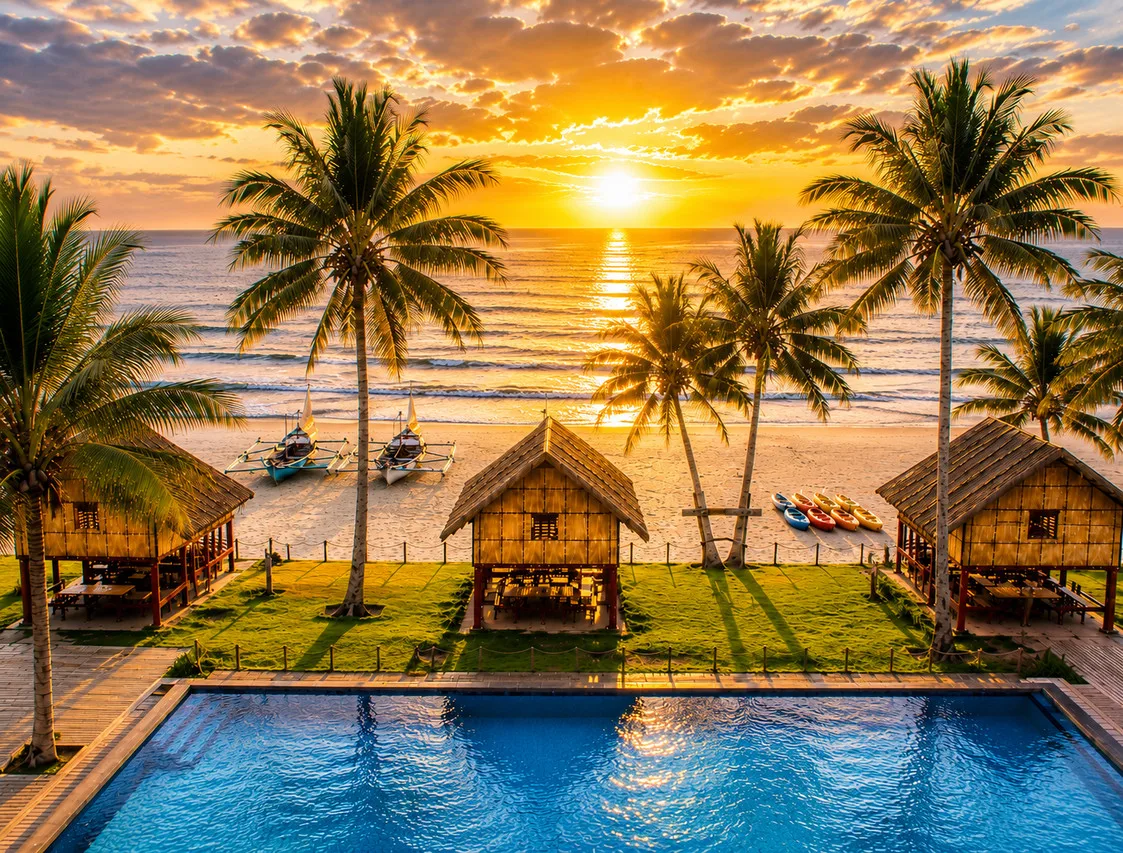
Most visitors stay on Bounty Beach, the main beach on the southern side of the island. It has the highest concentration of dive shops, restaurants, and rooms. Budget guesthouses are set back from the beach, while mid-range resorts sit on the sand. If you want a quieter stay, look at the northern or eastern parts of the island. The trade-off is a longer walk or tricycle ride to the dive shops.
Food is straightforward and affordable. Local carinderias serve Filipino breakfast, rice meals, grilled fish, and pork adobo for PHP 150 to PHP 350. Resorts offer a wider menu with pasta, burgers, salads, and fresh seafood at PHP 400 to PHP 800. Several bars on Bounty Beach stay open late, and divers often gather there after the last dive. Fresh fish is available in the morning market, and some guesthouses will cook it for you for a small fee. Coconuts are sold everywhere for PHP 40 to PHP 80.
Conservation and the Marine Park
Thresher shark diving in Malapascua exists because of a protected area. Monad Shoal, Gato Island, and surrounding waters are part of a shark and ray sanctuary established by a provincial executive order and local municipal ordinances. The rules include no fishing in the sanctuary, no touching of marine life, no gloves, no flash photography at the cleaning station, and a ban on disturbing the sharks. The marine park fee of PHP 150 per diving day funds rangers, mooring buoys, and enforcement.
Dive shops on the island are also involved in conservation. Some contribute to a fund that pays for community education, guide training, and shark population monitoring. Accredited operators display their certificates and follow the current Code of Conduct. When you choose a registered operator and follow the rules, you help keep the encounter sustainable. The thresher sharks are the economic foundation of Malapascua, and the local community knows that protection is better than short-term exploitation.
Frequently Asked Questions
Do I need to be an advanced diver to see thresher sharks?
Monad Shoal is usually dived to 22 to 30 meters. The depth is within the Open Water limit if your certification allows it. However, the early morning conditions, possible current, and need for calm buoyancy make the dive easier if you have experience. Advanced Open Water or a solid set of logged dives beyond 20 meters is recommended.
What happens if I do not see a thresher shark?
Sightings are very common, but nothing in the ocean is guaranteed. Most shops offer a repeat thresher dive the next morning at a reduced rate or free if no shark appears. Some divers stay three or four days to maximize their chances. A missed dive is an excuse to explore Gato Island, Chocolate Island, or the Dona Marilyn Wreck.
Can I snorkel or free dive with the thresher sharks?
No. The sharks stay deep at the cleaning station, far below snorkel depth. Free diving is restricted at Monad Shoal to protect the animals and the site. Scuba is the only respectful and legal way to observe the cleaning behavior.
When is the best time to dive Malapascua?
Malapascua can be dived all year, but the dry season from November to May has the calmest seas and the best visibility. Hammerheads are more likely from December to May. The wet season from June to October can still be good but is more prone to rough boat crossings and reduced visibility.
Is Malapascua safe for solo travelers?
Yes. The island is small, friendly, and used to solo divers. Most dive shops seat guests together on boats, and it is easy to meet other travelers. Use the usual common sense: keep valuables in a safe, avoid walking alone on remote beaches at night, and be careful on wet boat decks before dawn.
How much cash should I bring for a week?
A comfortable week of diving, eating, and staying on Malapascua costs roughly PHP 25,000 to PHP 45,000, depending on your accommodation and number of dives. Bring extra for emergencies, because the island has limited ATM and card services.
Sources and Official References
Last reviewed 2026-08-25. Written by the PANA.PH Visayas Desk and reviewed by PANA Editorial. Prices and schedules reflect 2026 operator rates and may change depending on season and availability.