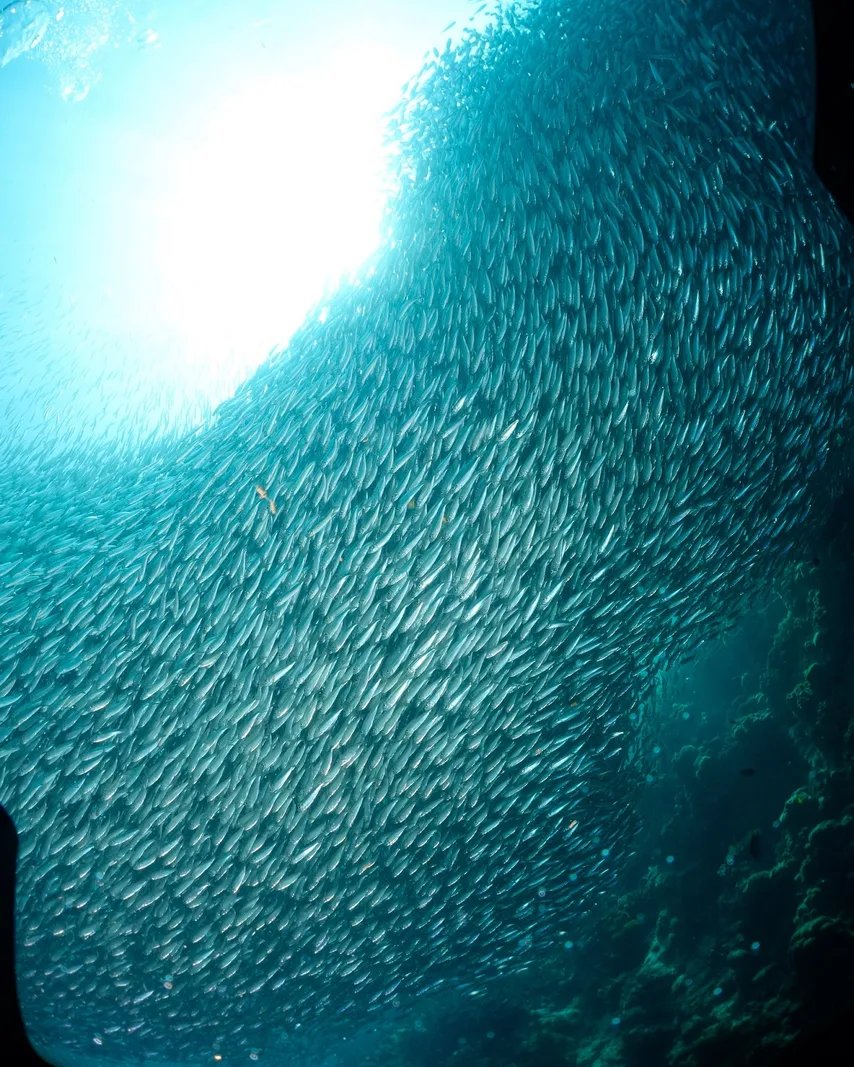
Every year, travelers from Cebu City and beyond make the three-hour drive to a small coastal town on the southwestern tip of Cebu to witness one of the most consistent underwater shows in Southeast Asia. The Moalboal sardine run is not a seasonal accident. It is a year-round gathering of millions of sardines that swirl, dive, and re-form in tight silver balls just a few fin kicks from Panagsama Beach. In 2026, the site remains one of the most accessible places in the Philippines where a snorkeler can float above a living cloud of fish without boarding a boat or earning a scuba certification.

Moalboal Sardine Run: Swimming Through a Million Fish
Trip.com
Search on Trip.comHotels in Philippines
Compare live prices via Travelpayouts — targeted for this guide.
What makes the Moalboal sardine run special
Most schooling fish in tropical destinations appear for a few weeks or vanish when a reef is stressed. The sardines of Moalboal have stayed for years, creating a spectacle that can be seen almost every day from the shore. The dense school moves like a single organism, bending around swimmers and opening up when a diver approaches. Photographers often capture the moment from the surface with nothing more than a waterproof phone case because the fish stay within five to ten meters of the waterline.
Moalboal is also a rare destination that rewards both snorkelers and certified divers on the same day. Beginners can watch the sardines while floating on the surface. Advanced divers can descend to Pescador Island, a marine protected area known for wall drops, overhangs, and regular turtle sightings. The combination of an easy shore entry and a nearby island with stronger currents makes the town a flexible base for different comfort levels.
Where the sardines gather
The main sardine run happens along Panagsama Beach, the tourist center of Moalboal. A concrete path, beachfront restaurants, and a handful of dive shops line the shore. The best entry points are near the marine protected area in front of the beach resorts. Local guides know the daily position of the school, and many of them can be hired for short snorkeling trips directly from the sand.
Trip.com
See all tours in Philippines on Trip.comDiving in Philippines
Hand-picked experiences in Philippines — book on Trip.com with instant confirmation.
Pescador Island sits a short boat ride to the west. It is not the sardine site, but it is the second half of a standard Moalboal day. The island has clear water, sea fans, and enough topography to keep a diver busy for an hour. Green sea turtles feed near the seagrass between the mainland and the island, so it is common to finish a dive and then swim over a turtle on the way back.
Best time to visit in 2026
The sardines are present all year, so the question is less about whether they will appear and more about water conditions. The dry season from December to May offers the calmest seas and the best visibility for underwater photography. June to October is the rainy season in Cebu. Diving still happens, but afternoon downpours can reduce visibility and make boat crossings to Pescador Island less comfortable. November is often a quiet transition month with decent visibility and smaller crowds.
Mornings at Panagsama are usually the calmest. The beach faces west, so the sun sets over the water, but the water itself is typically clearest before noon. Local dive shops usually run two morning dives, one at the sardine site and one at Pescador Island, with a surface interval spent back on the beach.
How to reach Moalboal
Most visitors start from Cebu City. From Mactan-Cebu International Airport or the city center, take a taxi or Grab to the South Bus Terminal. Ceres Liner and other bus companies run air-conditioned coaches to Moalboal for roughly PHP 180 to PHP 220. The ride lasts three to four hours depending on traffic at Carcar and Barili. Once in Moalboal town proper, a tricycle or habal-habal to Panagsama Beach costs PHP 50 to PHP 100.
Private vans can be chartered from Cebu City for around PHP 3,000 to PHP 4,500 one way, which becomes economical for groups of four or more. The van trip is faster and lets you stop at Carcar for roasted pork or at the Badian canyoneering turnoff if you want to combine activities. Many Pana guests book the Moalboal dive and transfer package so that transfers, gear, and lunch are handled in one booking.
Snorkeling versus scuba diving
Snorkeling is the cheapest way to see the sardine run. You can rent mask, snorkel, and fins from a beach shop for PHP 300 to PHP 500 for half a day. A local guide with a life vest may cost another PHP 300 to PHP 600. The sardines are so close to shore that even nervous swimmers can stand in shallow water and wait for the school to pass. Stronger swimmers can follow the reef drop-off and watch the fish compress into balls when a predator appears.
Scuba diving adds perspective. From below, the school looks like a moving ceiling of silver. A single guided shore dive with equipment rental costs PHP 1,800 to PHP 2,500. Two-tank boat dives that include Pescador Island and a sardine run dive range from PHP 3,500 to PHP 5,000. Nitrox and underwater photography packages are available at larger shops for a surcharge. All certified divers should bring their certification card and a logbook. Open-water students can complete training dives here, but the sardine run is not a beginner course in itself.
Pescador Island and sea turtles
Pescador Island is the marine sanctuary that rounds out a Moalboal trip. The protected status limits fishing, so coral cover and fish biomass are noticeably higher than on many mainland sites. The Cathedral is an underwater cavern with openings at the top and side, creating a dramatic light show when the sun is overhead. Reef sharks, tuna, and jackfish are seen more often than in busier locations.
Turtles are everywhere in the channel between the island and the mainland. The best etiquette is to stay at least three meters away, avoid touching the shell, and never block the animal's path. Flash photography is discouraged because it can stress turtles and other marine life. A guided snorkel to see the turtles from the surface costs about PHP 800 to PHP 1,200.
What a day in Moalboal costs in 2026
A budget day trip from Cebu City can be done for under PHP 1,500 if you take the bus, bring your own snorkel gear, and eat at local carinderias. Most travelers spend PHP 2,500 to PHP 4,000 for the bus, a guided snorkel, and a basic lunch. A full dive day with two tanks, equipment, and a boat to Pescador Island is usually PHP 3,500 to PHP 5,000. Mid-range beachfront hotels in Panagsama start around PHP 2,500 per night and go up to PHP 4,000 for air-conditioned rooms with hot showers.
Dinner at a beach restaurant with grilled fish and rice costs PHP 250 to PHP 500. A cold beer at sunset is around PHP 80 to PHP 120. Souvenir shirts, sunscreen from a sari-sari store, and small tips for boat crew should be factored in. Always carry cash. Only a few large resorts and dive shops accept cards, and ATMs in Moalboal can run out of money on weekends.
Safety and environmental rules
The sardine run is safe for most visitors, but there are practical rules to follow. Do not touch the fish or attempt to swim through the center of the ball. Touching sardines can remove their protective slime and may cause the school to move away from the area. Sunscreen should be reef-safe. Oxybenzone and octinoxate damage the coral that the sardines use for shelter. Keep all trash out of the water and take plastic bottles back to your hotel.
Boat traffic is heavy near Panagsama, especially at midday. Swimmers should use a surface marker or stay near the designated buoy line. Divers must complete safety stops and watch for incoming pump boats. Currents at Pescador Island can be strong, so the divemaster will choose the site based on the tide. Never dive without briefing the guide on your experience and air consumption.
Sample one-day Moalboal itinerary
- 05:30 - Depart Cebu City by bus or private van
- 09:00 - Arrive in Panagsama, rent gear, and have a quick breakfast
- 10:00 - Snorkel or dive the sardine run
- 12:30 - Lunch of grilled squid or pork barbecue at a beachfront eatery
- 14:00 - Boat to Pescador Island for a second dive or guided snorkel
- 16:00 - Surface interval with coffee and cake on the beach
- 17:30 - Optional turtle snorkel or sunset viewing
- 19:00 - Dinner and return to Cebu City, or overnight in Moalboal
Frequently Asked Questions
Do I need to know how to swim?
You do not need to be an advanced swimmer, but you should be comfortable in the water. Many guides provide life vests and can tow nervous swimmers to the best viewing position. Non-swimmers can watch from the beach, but they will not see the full sardine ball from above.
Can I see the sardines from the shore without paying?
Yes. The sardines are visible from the surface close to the beach, and there is no entrance fee to the water. If you want a guide, gear, or a boat, you will pay for those services. The municipal environmental fee for the marine protected area is usually PHP 50 to PHP 100.
Are there whale sharks in Moalboal?
No. Whale sharks are not a regular feature in Moalboal. If you want to see whale sharks, Oslob is the more common destination, but Oslob is a separate town and has its own ethical debates. Moalboal is about sardines, turtles, and Pescador Island.
What should I bring?
Bring a rash guard, reef-safe sunscreen, a dry bag, drinking water, cash, and an underwater camera if you have one. A towel and a change of clothes are useful because most visitors spend the entire morning in and out of the water.
Plan your Moalboal trip with Pana
Whether you want a single-day snorkel from Cebu City or a multi-day dive package, Pana can connect you to the right operator. Start by browsing our destinations page for Cebu, compare tours that include the sardine run and Pescador Island, and reserve a beachfront room through our hotels section. If you want more context on marine travel in the Philippines, read the latest stories in the blog.
Sources and official references
Every year, travelers from Cebu City and beyond make the three-hour drive to a small coastal town on the southwestern tip of Cebu to witness one of the most consistent underwater shows in Southeast Asia. The Moalboal sardine run is not a seasonal accident. It is a year-round gathering of millions of sardines that swirl, dive, and re-form in tight silver balls just a few fin kicks from Panagsama Beach. In 2026, the site remains one of the most accessible places in the Philippines where a snorkeler can float above a living cloud of fish without boarding a boat or earning a scuba certification.
What makes the Moalboal sardine run special
Most schooling fish in tropical destinations appear for a few weeks or vanish when a reef is stressed. The sardines of Moalboal have stayed for years, creating a spectacle that can be seen almost every day from the shore. The dense school moves like a single organism, bending around swimmers and opening up when a diver approaches. Photographers often capture the moment from the surface with nothing more than a waterproof phone case because the fish stay within five to ten meters of the waterline.
Moalboal is also a rare destination that rewards both snorkelers and certified divers on the same day. Beginners can watch the sardines while floating on the surface. Advanced divers can descend to Pescador Island, a marine protected area known for wall drops, overhangs, and regular turtle sightings. The combination of an easy shore entry and a nearby island with stronger currents makes the town a flexible base for different comfort levels.
Where the sardines gather
The main sardine run happens along Panagsama Beach, the tourist center of Moalboal. A concrete path, beachfront restaurants, and a handful of dive shops line the shore. The best entry points are near the marine protected area in front of the beach resorts. Local guides know the daily position of the school, and many of them can be hired for short snorkeling trips directly from the sand.
Pescador Island sits a short boat ride to the west. It is not the sardine site, but it is the second half of a standard Moalboal day. The island has clear water, sea fans, and enough topography to keep a diver busy for an hour. Green sea turtles feed near the seagrass between the mainland and the island, so it is common to finish a dive and then swim over a turtle on the way back.
Best time to visit in 2026
The sardines are present all year, so the question is less about whether they will appear and more about water conditions. The dry season from December to May offers the calmest seas and the best visibility for underwater photography. June to October is the rainy season in Cebu. Diving still happens, but afternoon downpours can reduce visibility and make boat crossings to Pescador Island less comfortable. November is often a quiet transition month with decent visibility and smaller crowds.
Mornings at Panagsama are usually the calmest. The beach faces west, so the sun sets over the water, but the water itself is typically clearest before noon. Local dive shops usually run two morning dives, one at the sardine site and one at Pescador Island, with a surface interval spent back on the beach.
How to reach Moalboal
Most visitors start from Cebu City. From Mactan-Cebu International Airport or the city center, take a taxi or Grab to the South Bus Terminal. Ceres Liner and other bus companies run air-conditioned coaches to Moalboal for roughly PHP 180 to PHP 220. The ride lasts three to four hours depending on traffic at Carcar and Barili. Once in Moalboal town proper, a tricycle or habal-habal to Panagsama Beach costs PHP 50 to PHP 100.
Private vans can be chartered from Cebu City for around PHP 3,000 to PHP 4,500 one way, which becomes economical for groups of four or more. The van trip is faster and lets you stop at Carcar for roasted pork or at the Badian canyoneering turnoff if you want to combine activities. Many Pana guests book the Moalboal dive and transfer package so that transfers, gear, and lunch are handled in one booking.
Snorkeling versus scuba diving
Snorkeling is the cheapest way to see the sardine run. You can rent mask, snorkel, and fins from a beach shop for PHP 300 to PHP 500 for half a day. A local guide with a life vest may cost another PHP 300 to PHP 600. The sardines are so close to shore that even nervous swimmers can stand in shallow water and wait for the school to pass. Stronger swimmers can follow the reef drop-off and watch the fish compress into balls when a predator appears.
Scuba diving adds perspective. From below, the school looks like a moving ceiling of silver. A single guided shore dive with equipment rental costs PHP 1,800 to PHP 2,500. Two-tank boat dives that include Pescador Island and a sardine run dive range from PHP 3,500 to PHP 5,000. Nitrox and underwater photography packages are available at larger shops for a surcharge. All certified divers should bring their certification card and a logbook. Open-water students can complete training dives here, but the sardine run is not a beginner course in itself.
Pescador Island and sea turtles
Pescador Island is the marine sanctuary that rounds out a Moalboal trip. The protected status limits fishing, so coral cover and fish biomass are noticeably higher than on many mainland sites. The Cathedral is an underwater cavern with openings at the top and side, creating a dramatic light show when the sun is overhead. Reef sharks, tuna, and jackfish are seen more often than in busier locations.
Turtles are everywhere in the channel between the island and the mainland. The best etiquette is to stay at least three meters away, avoid touching the shell, and never block the animal's path. Flash photography is discouraged because it can stress turtles and other marine life. A guided snorkel to see the turtles from the surface costs about PHP 800 to PHP 1,200.
What a day in Moalboal costs in 2026
A budget day trip from Cebu City can be done for under PHP 1,500 if you take the bus, bring your own snorkel gear, and eat at local carinderias. Most travelers spend PHP 2,500 to PHP 4,000 for the bus, a guided snorkel, and a basic lunch. A full dive day with two tanks, equipment, and a boat to Pescador Island is usually PHP 3,500 to PHP 5,000. Mid-range beachfront hotels in Panagsama start around PHP 2,500 per night and go up to PHP 4,000 for air-conditioned rooms with hot showers.
Dinner at a beach restaurant with grilled fish and rice costs PHP 250 to PHP 500. A cold beer at sunset is around PHP 80 to PHP 120. Souvenir shirts, sunscreen from a sari-sari store, and small tips for boat crew should be factored in. Always carry cash. Only a few large resorts and dive shops accept cards, and ATMs in Moalboal can run out of money on weekends.
Safety and environmental rules
The sardine run is safe for most visitors, but there are practical rules to follow. Do not touch the fish or attempt to swim through the center of the ball. Touching sardines can remove their protective slime and may cause the school to move away from the area. Sunscreen should be reef-safe. Oxybenzone and octinoxate damage the coral that the sardines use for shelter. Keep all trash out of the water and take plastic bottles back to your hotel.
Boat traffic is heavy near Panagsama, especially at midday. Swimmers should use a surface marker or stay near the designated buoy line. Divers must complete safety stops and watch for incoming pump boats. Currents at Pescador Island can be strong, so the divemaster will choose the site based on the tide. Never dive without briefing the guide on your experience and air consumption.
Sample one-day Moalboal itinerary
- 05:30 - Depart Cebu City by bus or private van
- 09:00 - Arrive in Panagsama, rent gear, and have a quick breakfast
- 10:00 - Snorkel or dive the sardine run
- 12:30 - Lunch of grilled squid or pork barbecue at a beachfront eatery
- 14:00 - Boat to Pescador Island for a second dive or guided snorkel
- 16:00 - Surface interval with coffee and cake on the beach
- 17:30 - Optional turtle snorkel or sunset viewing
- 19:00 - Dinner and return to Cebu City, or overnight in Moalboal
Frequently Asked Questions
Do I need to know how to swim?
You do not need to be an advanced swimmer, but you should be comfortable in the water. Many guides provide life vests and can tow nervous swimmers to the best viewing position. Non-swimmers can watch from the beach, but they will not see the full sardine ball from above.
Can I see the sardines from the shore without paying?
Yes. The sardines are visible from the surface close to the beach, and there is no entrance fee to the water. If you want a guide, gear, or a boat, you will pay for those services. The municipal environmental fee for the marine protected area is usually PHP 50 to PHP 100.
Are there whale sharks in Moalboal?
No. Whale sharks are not a regular feature in Moalboal. If you want to see whale sharks, Oslob is the more common destination, but Oslob is a separate town and has its own ethical debates. Moalboal is about sardines, turtles, and Pescador Island.
What should I bring?
Bring a rash guard, reef-safe sunscreen, a dry bag, drinking water, cash, and an underwater camera if you have one. A towel and a change of clothes are useful because most visitors spend the entire morning in and out of the water.
Plan your Moalboal trip with Pana
Whether you want a single-day snorkel from Cebu City or a multi-day dive package, Pana can connect you to the right operator. Start by browsing our destinations page for Cebu, compare tours that include the sardine run and Pescador Island, and reserve a beachfront room through our hotels section. If you want more context on marine travel in the Philippines, read the latest stories in the blog.
Sources and official references
Every year, travelers from Cebu City and beyond make the three-hour drive to a small coastal town on the southwestern tip of Cebu to witness one of the most consistent underwater shows in Southeast Asia. The Moalboal sardine run is not a seasonal accident. It is a year-round gathering of millions of sardines that swirl, dive, and re-form in tight silver balls just a few fin kicks from Panagsama Beach. In 2026, the site remains one of the most accessible places in the Philippines where a snorkeler can float above a living cloud of fish without boarding a boat or earning a scuba certification.
What makes the Moalboal sardine run special
Most schooling fish in tropical destinations appear for a few weeks or vanish when a reef is stressed. The sardines of Moalboal have stayed for years, creating a spectacle that can be seen almost every day from the shore. The dense school moves like a single organism, bending around swimmers and opening up when a diver approaches. Photographers often capture the moment from the surface with nothing more than a waterproof phone case because the fish stay within five to ten meters of the waterline.
Moalboal is also a rare destination that rewards both snorkelers and certified divers on the same day. Beginners can watch the sardines while floating on the surface. Advanced divers can descend to Pescador Island, a marine protected area known for wall drops, overhangs, and regular turtle sightings. The combination of an easy shore entry and a nearby island with stronger currents makes the town a flexible base for different comfort levels.
Where the sardines gather
The main sardine run happens along Panagsama Beach, the tourist center of Moalboal. A concrete path, beachfront restaurants, and a handful of dive shops line the shore. The best entry points are near the marine protected area in front of the beach resorts. Local guides know the daily position of the school, and many of them can be hired for short snorkeling trips directly from the sand.
Pescador Island sits a short boat ride to the west. It is not the sardine site, but it is the second half of a standard Moalboal day. The island has clear water, sea fans, and enough topography to keep a diver busy for an hour. Green sea turtles feed near the seagrass between the mainland and the island, so it is common to finish a dive and then swim over a turtle on the way back.
Best time to visit in 2026
The sardines are present all year, so the question is less about whether they will appear and more about water conditions. The dry season from December to May offers the calmest seas and the best visibility for underwater photography. June to October is the rainy season in Cebu. Diving still happens, but afternoon downpours can reduce visibility and make boat crossings to Pescador Island less comfortable. November is often a quiet transition month with decent visibility and smaller crowds.
Mornings at Panagsama are usually the calmest. The beach faces west, so the sun sets over the water, but the water itself is typically clearest before noon. Local dive shops usually run two morning dives, one at the sardine site and one at Pescador Island, with a surface interval spent back on the beach.
How to reach Moalboal
Most visitors start from Cebu City. From Mactan-Cebu International Airport or the city center, take a taxi or Grab to the South Bus Terminal. Ceres Liner and other bus companies run air-conditioned coaches to Moalboal for roughly PHP 180 to PHP 220. The ride lasts three to four hours depending on traffic at Carcar and Barili. Once in Moalboal town proper, a tricycle or habal-habal to Panagsama Beach costs PHP 50 to PHP 100.
Private vans can be chartered from Cebu City for around PHP 3,000 to PHP 4,500 one way, which becomes economical for groups of four or more. The van trip is faster and lets you stop at Carcar for roasted pork or at the Badian canyoneering turnoff if you want to combine activities. Many Pana guests book the Moalboal dive and transfer package so that transfers, gear, and lunch are handled in one booking.
Snorkeling versus scuba diving
Snorkeling is the cheapest way to see the sardine run. You can rent mask, snorkel, and fins from a beach shop for PHP 300 to PHP 500 for half a day. A local guide with a life vest may cost another PHP 300 to PHP 600. The sardines are so close to shore that even nervous swimmers can stand in shallow water and wait for the school to pass. Stronger swimmers can follow the reef drop-off and watch the fish compress into balls when a predator appears.
Scuba diving adds perspective. From below, the school looks like a moving ceiling of silver. A single guided shore dive with equipment rental costs PHP 1,800 to PHP 2,500. Two-tank boat dives that include Pescador Island and a sardine run dive range from PHP 3,500 to PHP 5,000. Nitrox and underwater photography packages are available at larger shops for a surcharge. All certified divers should bring their certification card and a logbook. Open-water students can complete training dives here, but the sardine run is not a beginner course in itself.
Pescador Island and sea turtles
Pescador Island is the marine sanctuary that rounds out a Moalboal trip. The protected status limits fishing, so coral cover and fish biomass are noticeably higher than on many mainland sites. The Cathedral is an underwater cavern with openings at the top and side, creating a dramatic light show when the sun is overhead. Reef sharks, tuna, and jackfish are seen more often than in busier locations.
Turtles are everywhere in the channel between the island and the mainland. The best etiquette is to stay at least three meters away, avoid touching the shell, and never block the animal's path. Flash photography is discouraged because it can stress turtles and other marine life. A guided snorkel to see the turtles from the surface costs about PHP 800 to PHP 1,200.
What a day in Moalboal costs in 2026
A budget day trip from Cebu City can be done for under PHP 1,500 if you take the bus, bring your own snorkel gear, and eat at local carinderias. Most travelers spend PHP 2,500 to PHP 4,000 for the bus, a guided snorkel, and a basic lunch. A full dive day with two tanks, equipment, and a boat to Pescador Island is usually PHP 3,500 to PHP 5,000. Mid-range beachfront hotels in Panagsama start around PHP 2,500 per night and go up to PHP 4,000 for air-conditioned rooms with hot showers.
Dinner at a beach restaurant with grilled fish and rice costs PHP 250 to PHP 500. A cold beer at sunset is around PHP 80 to PHP 120. Souvenir shirts, sunscreen from a sari-sari store, and small tips for boat crew should be factored in. Always carry cash. Only a few large resorts and dive shops accept cards, and ATMs in Moalboal can run out of money on weekends.
Safety and environmental rules
The sardine run is safe for most visitors, but there are practical rules to follow. Do not touch the fish or attempt to swim through the center of the ball. Touching sardines can remove their protective slime and may cause the school to move away from the area. Sunscreen should be reef-safe. Oxybenzone and octinoxate damage the coral that the sardines use for shelter. Keep all trash out of the water and take plastic bottles back to your hotel.
Boat traffic is heavy near Panagsama, especially at midday. Swimmers should use a surface marker or stay near the designated buoy line. Divers must complete safety stops and watch for incoming pump boats. Currents at Pescador Island can be strong, so the divemaster will choose the site based on the tide. Never dive without briefing the guide on your experience and air consumption.
Sample one-day Moalboal itinerary
- 05:30 - Depart Cebu City by bus or private van
- 09:00 - Arrive in Panagsama, rent gear, and have a quick breakfast
- 10:00 - Snorkel or dive the sardine run
- 12:30 - Lunch of grilled squid or pork barbecue at a beachfront eatery
- 14:00 - Boat to Pescador Island for a second dive or guided snorkel
- 16:00 - Surface interval with coffee and cake on the beach
- 17:30 - Optional turtle snorkel or sunset viewing
- 19:00 - Dinner and return to Cebu City, or overnight in Moalboal
Frequently Asked Questions
Do I need to know how to swim?
You do not need to be an advanced swimmer, but you should be comfortable in the water. Many guides provide life vests and can tow nervous swimmers to the best viewing position. Non-swimmers can watch from the beach, but they will not see the full sardine ball from above.
Can I see the sardines from the shore without paying?
Yes. The sardines are visible from the surface close to the beach, and there is no entrance fee to the water. If you want a guide, gear, or a boat, you will pay for those services. The municipal environmental fee for the marine protected area is usually PHP 50 to PHP 100.
Are there whale sharks in Moalboal?
No. Whale sharks are not a regular feature in Moalboal. If you want to see whale sharks, Oslob is the more common destination, but Oslob is a separate town and has its own ethical debates. Moalboal is about sardines, turtles, and Pescador Island.
What should I bring?
Bring a rash guard, reef-safe sunscreen, a dry bag, drinking water, cash, and an underwater camera if you have one. A towel and a change of clothes are useful because most visitors spend the entire morning in and out of the water.
Plan your Moalboal trip with Pana
Whether you want a single-day snorkel from Cebu City or a multi-day dive package, Pana can connect you to the right operator. Start by browsing our destinations page for Cebu, compare tours that include the sardine run and Pescador Island, and reserve a beachfront room through our hotels section. If you want more context on marine travel in the Philippines, read the latest stories in the blog.
Sources and official references
Every year, travelers from Cebu City and beyond make the three-hour drive to a small coastal town on the southwestern tip of Cebu to witness one of the most consistent underwater shows in Southeast Asia. The Moalboal sardine run is not a seasonal accident. It is a year-round gathering of millions of sardines that swirl, dive, and re-form in tight silver balls just a few fin kicks from Panagsama Beach. In 2026, the site remains one of the most accessible places in the Philippines where a snorkeler can float above a living cloud of fish without boarding a boat or earning a scuba certification.
What makes the Moalboal sardine run special
Most schooling fish in tropical destinations appear for a few weeks or vanish when a reef is stressed. The sardines of Moalboal have stayed for years, creating a spectacle that can be seen almost every day from the shore. The dense school moves like a single organism, bending around swimmers and opening up when a diver approaches. Photographers often capture the moment from the surface with nothing more than a waterproof phone case because the fish stay within five to ten meters of the waterline.
Moalboal is also a rare destination that rewards both snorkelers and certified divers on the same day. Beginners can watch the sardines while floating on the surface. Advanced divers can descend to Pescador Island, a marine protected area known for wall drops, overhangs, and regular turtle sightings. The combination of an easy shore entry and a nearby island with stronger currents makes the town a flexible base for different comfort levels.
Where the sardines gather
The main sardine run happens along Panagsama Beach, the tourist center of Moalboal. A concrete path, beachfront restaurants, and a handful of dive shops line the shore. The best entry points are near the marine protected area in front of the beach resorts. Local guides know the daily position of the school, and many of them can be hired for short snorkeling trips directly from the sand.
Pescador Island sits a short boat ride to the west. It is not the sardine site, but it is the second half of a standard Moalboal day. The island has clear water, sea fans, and enough topography to keep a diver busy for an hour. Green sea turtles feed near the seagrass between the mainland and the island, so it is common to finish a dive and then swim over a turtle on the way back.
Best time to visit in 2026
The sardines are present all year, so the question is less about whether they will appear and more about water conditions. The dry season from December to May offers the calmest seas and the best visibility for underwater photography. June to October is the rainy season in Cebu. Diving still happens, but afternoon downpours can reduce visibility and make boat crossings to Pescador Island less comfortable. November is often a quiet transition month with decent visibility and smaller crowds.
Mornings at Panagsama are usually the calmest. The beach faces west, so the sun sets over the water, but the water itself is typically clearest before noon. Local dive shops usually run two morning dives, one at the sardine site and one at Pescador Island, with a surface interval spent back on the beach.
How to reach Moalboal
Most visitors start from Cebu City. From Mactan-Cebu International Airport or the city center, take a taxi or Grab to the South Bus Terminal. Ceres Liner and other bus companies run air-conditioned coaches to Moalboal for roughly PHP 180 to PHP 220. The ride lasts three to four hours depending on traffic at Carcar and Barili. Once in Moalboal town proper, a tricycle or habal-habal to Panagsama Beach costs PHP 50 to PHP 100.
Private vans can be chartered from Cebu City for around PHP 3,000 to PHP 4,500 one way, which becomes economical for groups of four or more. The van trip is faster and lets you stop at Carcar for roasted pork or at the Badian canyoneering turnoff if you want to combine activities. Many Pana guests book the Moalboal dive and transfer package so that transfers, gear, and lunch are handled in one booking.
Snorkeling versus scuba diving
Snorkeling is the cheapest way to see the sardine run. You can rent mask, snorkel, and fins from a beach shop for PHP 300 to PHP 500 for half a day. A local guide with a life vest may cost another PHP 300 to PHP 600. The sardines are so close to shore that even nervous swimmers can stand in shallow water and wait for the school to pass. Stronger swimmers can follow the reef drop-off and watch the fish compress into balls when a predator appears.
Scuba diving adds perspective. From below, the school looks like a moving ceiling of silver. A single guided shore dive with equipment rental costs PHP 1,800 to PHP 2,500. Two-tank boat dives that include Pescador Island and a sardine run dive range from PHP 3,500 to PHP 5,000. Nitrox and underwater photography packages are available at larger shops for a surcharge. All certified divers should bring their certification card and a logbook. Open-water students can complete training dives here, but the sardine run is not a beginner course in itself.
Pescador Island and sea turtles
Pescador Island is the marine sanctuary that rounds out a Moalboal trip. The protected status limits fishing, so coral cover and fish biomass are noticeably higher than on many mainland sites. The Cathedral is an underwater cavern with openings at the top and side, creating a dramatic light show when the sun is overhead. Reef sharks, tuna, and jackfish are seen more often than in busier locations.
Turtles are everywhere in the channel between the island and the mainland. The best etiquette is to stay at least three meters away, avoid touching the shell, and never block the animal's path. Flash photography is discouraged because it can stress turtles and other marine life. A guided snorkel to see the turtles from the surface costs about PHP 800 to PHP 1,200.
What a day in Moalboal costs in 2026
A budget day trip from Cebu City can be done for under PHP 1,500 if you take the bus, bring your own snorkel gear, and eat at local carinderias. Most travelers spend PHP 2,500 to PHP 4,000 for the bus, a guided snorkel, and a basic lunch. A full dive day with two tanks, equipment, and a boat to Pescador Island is usually PHP 3,500 to PHP 5,000. Mid-range beachfront hotels in Panagsama start around PHP 2,500 per night and go up to PHP 4,000 for air-conditioned rooms with hot showers.
Dinner at a beach restaurant with grilled fish and rice costs PHP 250 to PHP 500. A cold beer at sunset is around PHP 80 to PHP 120. Souvenir shirts, sunscreen from a sari-sari store, and small tips for boat crew should be factored in. Always carry cash. Only a few large resorts and dive shops accept cards, and ATMs in Moalboal can run out of money on weekends.
Safety and environmental rules
The sardine run is safe for most visitors, but there are practical rules to follow. Do not touch the fish or attempt to swim through the center of the ball. Touching sardines can remove their protective slime and may cause the school to move away from the area. Sunscreen should be reef-safe. Oxybenzone and octinoxate damage the coral that the sardines use for shelter. Keep all trash out of the water and take plastic bottles back to your hotel.
Boat traffic is heavy near Panagsama, especially at midday. Swimmers should use a surface marker or stay near the designated buoy line. Divers must complete safety stops and watch for incoming pump boats. Currents at Pescador Island can be strong, so the divemaster will choose the site based on the tide. Never dive without briefing the guide on your experience and air consumption.
Sample one-day Moalboal itinerary
- 05:30 - Depart Cebu City by bus or private van
- 09:00 - Arrive in Panagsama, rent gear, and have a quick breakfast
- 10:00 - Snorkel or dive the sardine run
- 12:30 - Lunch of grilled squid or pork barbecue at a beachfront eatery
- 14:00 - Boat to Pescador Island for a second dive or guided snorkel
- 16:00 - Surface interval with coffee and cake on the beach
- 17:30 - Optional turtle snorkel or sunset viewing
- 19:00 - Dinner and return to Cebu City, or overnight in Moalboal
Frequently asked questions
Do I need to know how to swim?
You do not need to be an advanced swimmer, but you should be comfortable in the water. Many guides provide life vests and can tow nervous swimmers to the best viewing position. Non-swimmers can watch from the beach, but they will not see the full sardine ball from above.
Can I see the sardines from the shore without paying?
Yes. The sardines are visible from the surface close to the beach, and there is no entrance fee to the water. If you want a guide, gear, or a boat, you will pay for those services. The municipal environmental fee for the marine protected area is usually PHP 50 to PHP 100.
Are there whale sharks in Moalboal?
No. Whale sharks are not a regular feature in Moalboal. If you want to see whale sharks, Oslob is the more common destination, but Oslob is a separate town and has its own ethical debates. Moalboal is about sardines, turtles, and Pescador Island.
What should I bring?
Bring a rash guard, reef-safe sunscreen, a dry bag, drinking water, cash, and an underwater camera if you have one. A towel and a change of clothes are useful because most visitors spend the entire morning in and out of the water.
Plan your Moalboal trip with Pana
Whether you want a single-day snorkel from Cebu City or a multi-day dive package, Pana can connect you to the right operator. Start by browsing our destinations page for Cebu, compare tours that include the sardine run and Pescador Island, and reserve a beachfront room through our hotels section. If you want more context on marine travel in the Philippines, read the latest stories in the blog.
Sources and official references
Sources
Primary references for the figures and rules in this guide. Fees and schedules change — check the source before you travel.

PANA.PH Visayas Desk
Visayas travel logistics — Cebu, Bohol, Boracay and Siargao
The Visayas Desk of the PANA.PH travel desk: it maintains and re-checks the visayas travel logistics — cebu, bohol, boracay and siargao data behind the site's guides — operator price lists, official fee schedules and posted timetables — and publishes what it can verify.
🏡 Real local stays (book direct)
Hand-picked homestays and guesthouses — book direct, no markup.
Browse all local stays →
🌊 Popular activities (book instantly)
Island hopping, canyoneering, whale sharks — real Klook/GetYourGuide options.
View all activities →