Short answer: March to June if you are learning or want reliable weather; August to November if you are here to surf. Those are not two opinions but one physical fact: Siargao sits on the eastern Pacific approach where systems arrive first, so the swell that builds Cloud 9 in the second half of the year is generated by the same weather that makes flights to a small island airport cancellable.
Trip.comHotels in Siargao
Compare live prices via Travelpayouts — targeted for this guide.
Search on Trip.comA seasonality guide for Siargao: which months for which trip, and what it costs. Built from its bookable inventory. Last checked 9 August 2026.
| Period | Surf | Verdict | Checked |
|---|
| March - June | Small, forgiving | Best for beginners and weather | 2026-08-09 |
| July | Building | Transitional | 2026-08-09 |
| August - November | Peak swell | Best waves, highest storm risk | 2026-08-09 |
| December - February | Variable, windy | Amihan; mixed | 2026-08-09 |
How this guide was built
Siargao is the cheapest destination we index - entry PHP 500 for a coconut farm tour, median PHP 1,500 - and the only one whose operators sell multi-day camps rather than day tours: three days of eco surf camp at PHP 1,800, two days of surf and yoga at PHP 2,500.
That pricing is a seasonality signal in itself. Camps at PHP 600 a day exist because operators expect people to stay for a stretch, and staying for a stretch is how you catch the swell rather than gambling on three days.
Seasons follow PAGASA's official definition; the local detail is that this island sits where Pacific systems reach the Philippines first.
Why the two seasons are the same weather
Surf season runs roughly August to November. So does the most active part of the typhoon calendar. That is not coincidence: the low-pressure systems that generate the swell are the same ones that become storms.
The practical consequence is that a surf trip carries weather risk by definition. Treat a booked flight to Sayak airport in those months as cancellable in a way a Manila flight is not, and check PAGASA before travelling.
March to June, the beginner window
The dry, calmer months give smaller waves and steadier weather - which is exactly what a first-timer wants. The PHP 800 two-hour lesson takes beginners to sandier, more forgiving breaks rather than to Cloud 9 itself, and those breaks are at their friendliest here.
It is also hotter, and the island is quieter. For anyone whose trip is island hopping and lagoons rather than surf, this is simply the better half of the year.
Cloud 9 is a reef break in every season
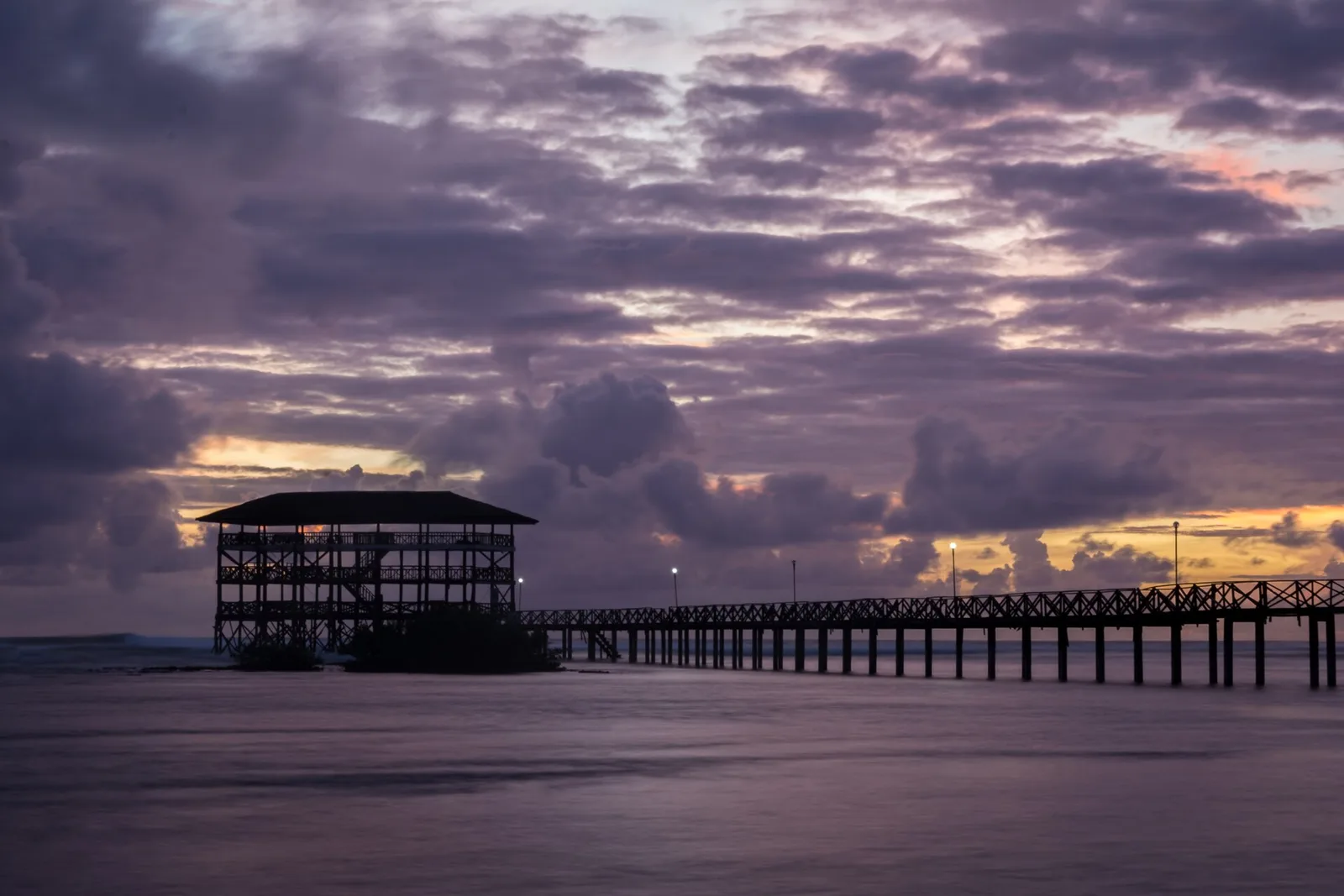
The boardwalk at Cloud 9 is the image that sells Siargao, and the wave itself breaks over reef. It is not a beginner spot at any time of year, and the operators themselves teach elsewhere.
Travel writing flattens this distinction routinely and dangerously. If you have never surfed, the season affects which nearby break you learn on, not whether Cloud 9 becomes suitable.
Tides, which matter more than months for two trips
The Magpupungko rock pools only work at low tide, so the tide table decides that day rather than the calendar. Ask the operator which day suits rather than picking a date and hoping.
Sohoton Cove on Bucas Grande, about two hours away by boat, is tide-gated too - boats can only pass under the rock arch at certain water levels. The stingless jellyfish lagoons there are seasonal rather than guaranteed, which is worth knowing before committing a full day.
What nobody tells you about a three-day Siargao trip
Arrival and departure consume two days regardless of season, so a three-night visit leaves one usable day. In the storm months it may leave none.
That is the real argument for five nights: not luxury, but the arithmetic of a small island airport in a weather-exposed position. The camps priced at PHP 600 a day are built around exactly that.
What does not change with the season
Activity prices hold: PHP 500 for the coconut farm tour, PHP 800 for a surf lesson, PHP 900 for the mangrove paddle and Magpupungko, PHP 1,200-1,500 for tri-island hopping.
Accommodation is what has risen as the island became fashionable, and cash remains a constant constraint - ATMs in General Luna and Dapa run dry at busy periods and many smaller places do not take cards.
Getting around, and the transfer from Dapa
General Luna is the main base and most accommodation sits along or behind the Cloud 9 stretch. Habal-habal motorbike taxis and rented scooters are the normal way to move, and the roads are quiet enough that this is the default rather than an adventurous choice.
Dapa, where the ferry from Surigao City lands, is about forty minutes from General Luna. If you arrive by boat rather than by air, that transfer is the difference between arriving in time for an afternoon and arriving for dinner - and ferries are more weather-affected than flights in the swell months.
What the island costs beyond the activities
Activity prices are the cheapest we index and hold year-round. Accommodation is what has risen sharply as Siargao became fashionable, and that is the real budget line rather than the tours.
Cash is the other constraint. ATMs exist in General Luna and Dapa but run dry at busy periods, and many smaller places do not take cards. Arrive with more pesos than you think you need, particularly during surf season when the island is full.
Naked Island, and the shade that does not exist
The tri-island hopping trip at PHP 1,200-1,500 visits Naked, Daku and Guyam. Naked Island is a bare sandbar with no trees, no buildings and no shade at all, and nothing to buy there.
In the hot dry months from March to June that matters more than the surf forecast does. Bring cover and water; the boats stop for long enough that an unprepared hour there is genuinely unpleasant.
Sohoton Cove, and why it is not a last-day trip
The PHP 1,500 Sohoton Cove tour is the longest day in the inventory and it does not happen on Siargao - Bucas Grande is about two hours away by boat.
Put it mid-trip rather than on your final day. A delayed return in the swell months puts a flight at risk, and the cove entrance is tide-gated regardless of season.
Frequently asked questions
When is surf season in Siargao?
Roughly August to November, which overlaps the most active typhoon months - the swell and the storms come from the same systems.
What is the best month for beginners?
March to June: smaller waves, calmer weather, and the lessons run at gentler breaks.
Can beginners surf Cloud 9?
No, in any season - it breaks over shallow reef. The PHP 800 two-hour lesson takes beginners to sandier nearby breaks instead, which is what every operator on the island does.
How many nights should I book?
Five minimum. Arrival and departure take two days, and the multi-day camps are priced for longer stays.
Is it risky to fly to Siargao in typhoon season?
Small island airports are more cancellable than major hubs. Check PAGASA and keep slack around onward flights.
Does the tide matter?
Yes, for Magpupungko rock pools and the Sohoton Cove arch - both are tide-gated regardless of month.
Book tours, hotels & stays in Siargao
Top tours