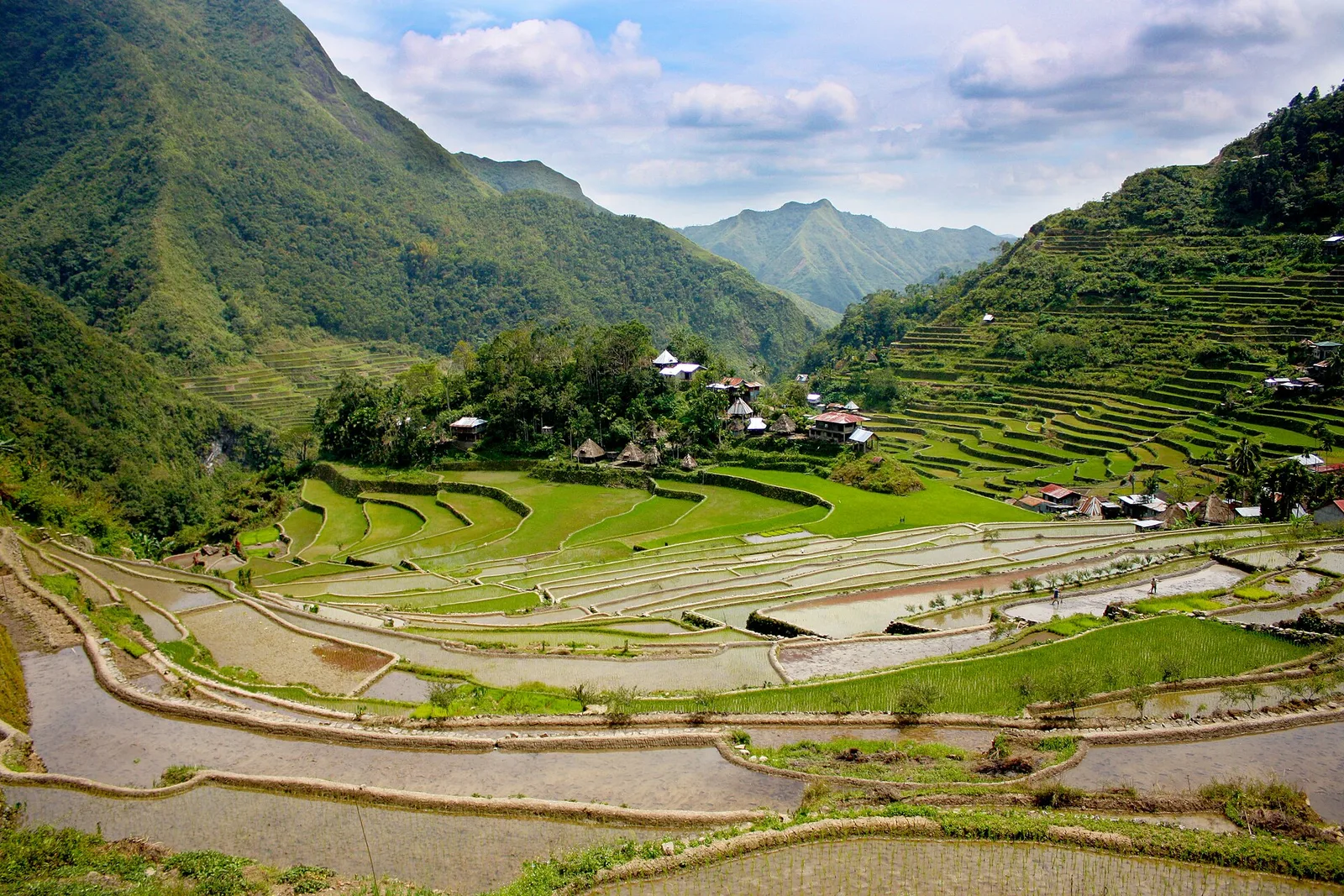
Banaue gets the postcards, but Batad gets the silence. Deep in the Cordillera mountains of Ifugao, the village of Batad sits inside a perfect amphitheatre of stone-walled rice terraces. There are no roads to the village center, no tricycles, and no last-minute convenience stores. What you get instead is a two-hour descent, a community that has farmed these steps for centuries, and a view that justifies every aching muscle. Our Pana Luzon desk has done the trek twice, stayed with local families, and eaten enough native chicken and pinuneg to know what first-timers should pack. This 2026 guide covers how to get there, what it costs, and how to be a respectful guest in a UNESCO-inscribed landscape.
Batad: The Amphitheatre Rice Terraces That Banaue Cannot Match
Trip.com
Search on Trip.comHotels in Banaue
Compare live prices via Travelpayouts — targeted for this guide.
What You Are Actually Looking At
Batad is a cluster of Ifugao rice terraces shaped like a semicircular bowl. The stone walls were built by hand, without mortar, over a period of more than 2,000 years. Water flows from the surrounding forest and is channeled through bamboo tubes and small canals that feed each terrace in sequence. The engineering is called muyong and payeo, a communal irrigation system that still functions today. Because of this, the terraces are not just beautiful; they are a living agricultural system and a UNESCO World Heritage Site.
The village itself sits near the bottom of the amphitheatre. Huts with cogon roofs and concrete paths line the main trail. Roosters, pigs, and free-range dogs share the same narrow lanes. Children walk to a school perched on the slope, and farmers work the paddies year-round. The scene changes color with the season: green during planting, gold during harvest, and mirror-like silver during the brief fallow months when terraces hold water.
Why Batad Beats Banaue for the Real Experience
Banaue Viewpoint is famous, but it is also a drive-up tourist stop. Batad demands effort. You cannot drive into the bowl, so everyone arrives on foot. That single fact keeps crowds thin and the atmosphere calm. The trail down is not technical, but it is steep and uneven in places. Hiking poles help, especially after rain. Once you arrive, the village is small and manageable. You will not get lost, and you will not need a map to find the viewpoints.
Trip.com
See all tours in Banaue on Trip.comHiking tour in Banaue
Hand-picked experiences in Banaue — book on Trip.com with instant confirmation.
The real difference is the human scale. In Banaue, you see terraces from a road. In Batad, you sleep inside them. You hear frogs at night, see farmers transplanting rice before dawn, and smell wood smoke from every kitchen. The Tappiya Falls trail starts inside the village and ends at a powerful waterfall. Nothing in Banaue matches that combination of immersion and scenery.
How to Reach Batad in 2026
Most travelers start in Banaue, which is the nearest town with regular bus service from Manila and Baguio. The overnight bus from Manila to Banaue costs PHP 500 to PHP 800 and takes about nine hours. From Baguio, the trip is shorter, around six to seven hours. Once you are in Banaue, hire a tricycle or join a jeepney to the Batad Saddle, the point where the road ends and the foot trail begins.
A chartered tricycle from Banaue to the saddle costs PHP 500 to PHP 800 one way, or PHP 1,000 to PHP 1,500 round trip including waiting time. A cheaper option is the public jeepney, which leaves Banaue in the morning and costs PHP 150 to PHP 300 per person. From the saddle, it is a 30- to 45-minute downhill hike to the village center. Porters can be hired at the saddle or in Banaue for PHP 300 to PHP 500 if you have heavy bags.
A Practical Two-Day Batad Itinerary
Day 1 - Arrival and the Village Loop. Leave Manila on the overnight bus and reach Banaue by breakfast. Hire a tricycle to the Batad Saddle, start the trek down by late morning, and check into a homestay by noon. Eat lunch, then walk the upper village trail for panoramic views of the amphitheatre. End the day with a local dinner and an early night.
Day 2 - Tappiya Falls and the Trek Out. Wake early for sunrise over the terraces. After breakfast, hike to Tappiya Falls. The trail takes 30 to 45 minutes one way, crosses more rice terraces, and ends at a cold waterfall and a swimming pool. Return to the village for lunch, then hike back to the saddle for your tricycle or jeepney to Banaue. If you are returning to Manila, the night bus leaves Banaue in the evening, giving you a full day.
Real PHP Costs and Fees
The Ifugao tourism environmental fee is PHP 50 per person and is usually collected at the jump-off or in the village. A local guide for the village and Tappiya Falls costs PHP 500 to PHP 1,000 per day, depending on the group size and how many viewpoints you cover. Homestay accommodation ranges from PHP 400 to PHP 1,000 per night, often including breakfast. Meals cooked by your host family cost PHP 150 to PHP 300 each. A packed lunch for the trail is another PHP 100 to PHP 200.
Add transport and a two-day trip should fall between PHP 2,500 and PHP 4,000 per person if you travel from Banaue. If you are coming from Manila, include the PHP 500 to PHP 800 bus fare each way. Private van transfers from Manila or Baguio raise the budget to PHP 3,000 to PHP 5,000 per person. Hiring a porter at the saddle is optional and costs PHP 300 to PHP 500 one way.
Where to Stay and Eat
Accommodation in Batad is almost entirely homestay-based. Families rent out spare rooms, some with private bathrooms and others with shared facilities. Expect squat toilets, bucket baths, and thin mattresses. The best rooms have views of the terraces from the balcony. Bring a sleeping sheet or lightweight liner if you are particular about bedding. Hosts usually serve breakfast of rice, egg, and coffee. Dinner is often native chicken, pinikpikan, pinuneg, or vegetable stew.
There are a few small sari-sari stores in the village, but stock is limited. Bring trail snacks, electrolytes, and cash. There are no ATMs in Batad, and only some mobile wallets work. If you have dietary restrictions, tell your homestay in advance. The diet is heavy on rice, pork, chicken, and root crops. Vegetarians can manage with rice, beans, and vegetables if they request ahead.
Culture, Etiquette, and the Rice Cycle
The Ifugao people are proud of their terraces and their history. When you visit, remember that the landscape is also a farm, a home, and a burial ground for some families. Do not step on the rice paddies unless a farmer invites you. Do not remove stones or plants. Photography of people should be done with consent. A smile and a brief request go a long way.
Religious festivals and agricultural cycles shape village life. The planting season is from January to March, and the harvest runs from June to July. These are fascinating times to visit but also busy for farmers. If you arrive during a community event, ask your host what is appropriate. Alcohol is fine in moderation, but public drunkenness is disrespectful. Always remove your shoes before entering a home unless told otherwise.
Trekking, Waterfalls, and Viewpoints
The main Batad trek is the descent from the saddle. It takes 30 to 45 minutes going down and 45 to 60 minutes coming up. The path is a mix of stone steps, dirt, and narrow concrete. The Tappiya Falls extension adds another 60 to 90 minutes round trip and is the best reason to stay overnight. The waterfall is strong even in dry months, and the pool is deep enough for a quick swim.
Another viewpoint is the ridge above the village, reached by a steep 20-minute climb from the main trail. This is the spot for wide amphitheatre photos. Sunrise is best for soft light; late afternoon can be hazy. Drones should be used with extreme caution and only with permission from the village council, because noise and low flight disturb the community and livestock.
Photography Tips
Batad rewards patience. The best terrace shots require a wide-angle lens or a phone with a panoramic mode. Shoot during the golden hour for texture, but do not ignore the misty days, when the village disappears into cloud and reappears in layers. Include people for scale: a farmer knee-deep in mud, a child on a stone wall, a guide pointing at the irrigation. Always ask before taking portraits. Keep your camera dry; rain is common and the trail is muddy.
Frequently Asked Questions
Is Batad suitable for beginners?
The trail is short but steep. Anyone with basic fitness and good shoes can manage it. Children and older travelers should take the descent slowly and consider a porter.
Do I need a guide for Batad?
A guide is not legally mandatory, but it is highly recommended. Guides know the safest routes, explain the irrigation system, and support the local economy. The standard rate is PHP 500 to PHP 1,000 per day.
Can I visit Batad on a day trip from Banaue?
Yes, but it is rushed. The trek in and out, plus Tappiya Falls, takes most of the day. An overnight stay is a better use of your time and money.
Is there mobile signal in Batad?
Signal is weak to nonexistent in parts of the village. Globe and Smart work intermittently on some ridges. Tell someone your plans before you go.
What should I pack?
Sturdy shoes, trekking sandals, a rain jacket, quick-dry clothes, a hat, sunscreen, insect repellent, a power bank, cash, and a small first-aid kit. Leave hard luggage in Banaue.
Plan Your Ifugao Trek with Pana
Pana helps you build a Cordillera itinerary without the guesswork. Start with Destinations for Batad and Ifugao, find guided treks and Banaue transfers on Tours, book homestays and Banaue hotels on Hotels, and read more heritage and trekking guides on the Blog.
Sources and References
- Department of Tourism - heritage tourism and sustainable travel guidelines
- Province of Ifugao - local tourism and heritage preservation updates
- National Museum of the Philippines - Ifugao ethnographic and historical context
- Department of Environment and Natural Resources - protected area and biodiversity guidelines
Sources
Primary references for the figures and rules in this guide. Fees and schedules change — check the source before you travel.

PANA.PH Luzon Desk
Luzon travel logistics — Manila, Baguio and North Luzon
The Luzon Desk of the PANA.PH travel desk: it maintains and re-checks the luzon travel logistics — manila, baguio and north luzon data behind the site's guides — operator price lists, official fee schedules and posted timetables — and publishes what it can verify.
🏡 Real local stays (book direct)
Hand-picked homestays and guesthouses — book direct, no markup.
Browse all local stays →
🌊 Popular activities (book instantly)
Island hopping, canyoneering, whale sharks — real Klook/GetYourGuide options.
View all activities →