Tubbataha Reefs Natural Park sits almost in the center of the Sulu Sea, far from any airport, pier, or resort. The only practical way to reach it is to sleep, eat, and dive on a boat that stays inside the park for a full week. That is exactly why the experience is so powerful. For seven days the ocean becomes your front yard, the dive deck becomes your commute, and the morning alarm becomes a briefing about sharks, walls, and cleaning stations. This is not a day-trip destination. It is a liveaboard commitment, and for many experienced divers it is the single best week of diving in Asia.
Tubbataha Reefs: A Week on a Liveaboard in the Best Dive Site in Asia
Trip.com
Search on Trip.comHotels in Palawan
Compare live prices via Travelpayouts — targeted for this guide.
This guide was built for travelers planning a 2026 trip. We have spoken with Puerto Princesa boat operators, reviewed liveaboard schedules, checked park fee structures, and collected the kind of practical detail that only comes from coordinating real departures. Whether you are a recreational diver looking for your first blue-water liveaboard or a photographer chasing pelagic species, the sections below will help you budget, choose a boat, and know what to expect once the anchor is dropped.
Why Tubbataha is Liveaboard-Only
The park covers roughly 96,000 hectares around two large atolls and the smaller Jessie Beazley Reef. The nearest populated municipality is Cagayancillo, which itself is a long crossing from Puerto Princesa. There are no island resorts, no restaurants, and no roads. Even the rangers who protect the park live on a small station inside the boundaries. Because everything must arrive by boat, the entire visitor economy is built around liveaboards.
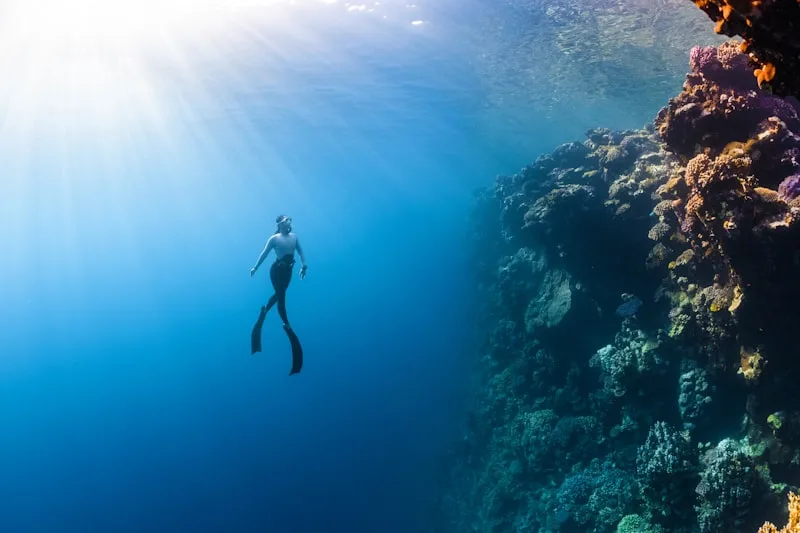
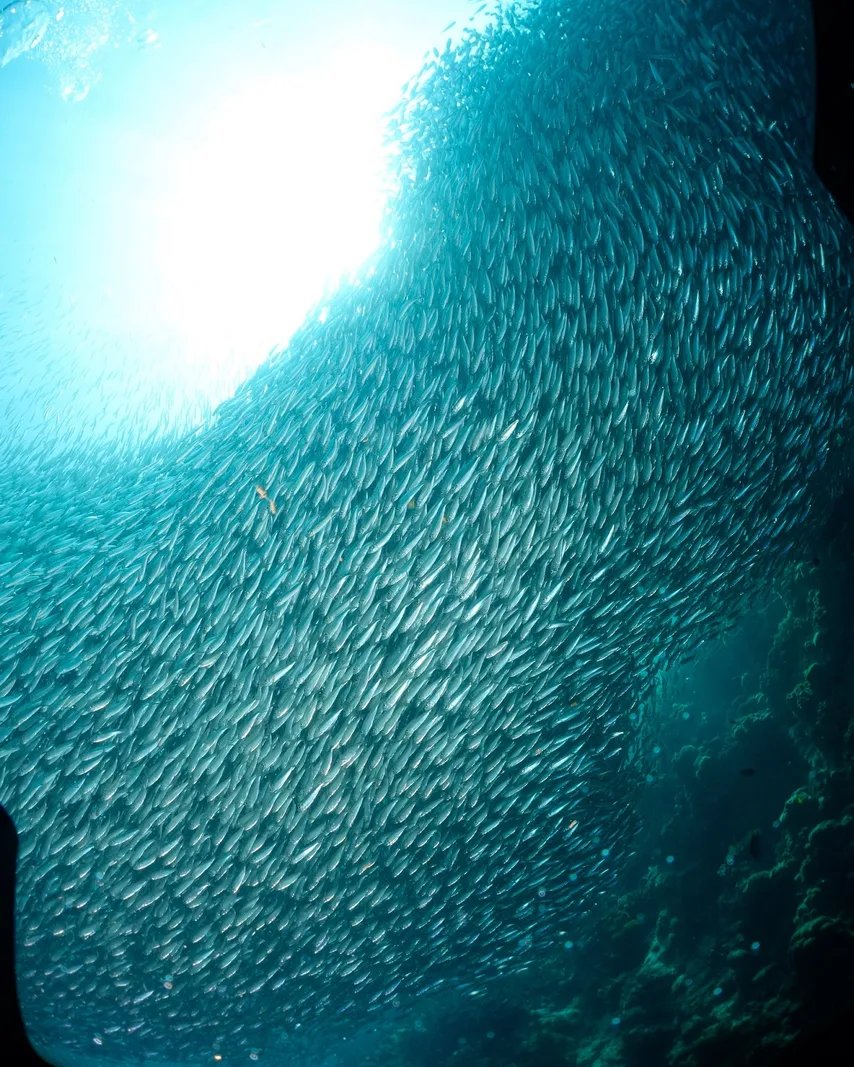
That isolation is the reason the reefs remain in such good condition. Coral cover is dense, pelagic traffic is constant, and the water clarity often reaches well past 30 meters. Divers regularly see white-tip and black-tip reef sharks, grey reef sharks, manta rays, eagle rays, whale sharks, huge schools of jacks and barracuda, hawksbill and green turtles, and a wide range of macro critters on night dives. The park is also a known stopover for rare visitors such as thresher sharks and hammerheads. A liveaboard gives you enough time at each site to see the patterns of the current, the light, and the animals that define a week here.
Trip.com
See all tours in Palawan on Trip.comDiving in Palawan
Hand-picked experiences in Palawan — book on Trip.com with instant confirmation.
The 2026 Season and When to Book
The official diving season opens around the middle of March and closes in the middle of June. Outside that window the park is off-limits to tourists and only the ranger station remains occupied. The Sulu Sea is calmest from late March through May, which is why most boats cluster in those months. April generally offers the best visibility, often above 35 meters on the eastern walls. May brings slightly more plankton and slightly lower visibility, but it is also when manta and whale shark sightings become more common. June can still deliver excellent diving, but the weather becomes less predictable toward the end of the month.
Because the season is short, the best boats fill fast. Premium liveaboards with only 12 to 16 guests often sell out by December or January. If you want a specific cabin or a preferred departure date, we recommend booking at least six months in advance. You will also need a flight into Puerto Princesa the day before the boat leaves. The crossing takes 10 to 12 hours and boats almost always depart in the late afternoon or early evening, so a same-day arrival from Manila or Cebu is risky.
Choosing a Liveaboard and Cabin
Not every liveaboard in Tubbataha is the same. The fleet includes everything from basic bunk-style vessels to purpose-built dive yachts with camera tables, nitrox, and air-conditioned cabins. The experience you want should drive your choice. If your priority is photography and comfort, a smaller yacht with a dedicated camera room is worth the premium. If you only care about maximizing dives, a budget boat with a good safety record and a low diver-to-guide ratio may be enough.
Here are the practical details to compare. First, look at the diver-to-guide ratio. Groups larger than six to one become difficult to manage on walls with current. Second, ask how many dives are included per day. Most boats run three to four day dives plus a night dive, giving you 18 to 22 dives in a week. Third, ask about nitrox. Many operators offer it as an extra, usually around PHP 3,500 to PHP 5,500 for the week. Fourth, check cabin type and charging. Lower-deck cabins move less but can be warmer, while upper-deck cabins get better airflow and natural light. Finally, ask about the food. You will be eating on the boat for every meal, and the quality of the kitchen directly affects the trip.
A Typical Day Onboard
A standard Tubbataha liveaboard lasts seven nights and six full diving days. Day one is the crossing. You board in Puerto Princesa in the late afternoon, stow your gear, meet the crew and guides, and sleep while the boat motors toward the park. By sunrise on day two you are already inside the protected area, and the pace becomes familiar.
Most mornings start at 6:00 AM with coffee, fruit, and a dive briefing. The first dive is usually around 6:30 AM, before the sun gets too high and before the current shifts. Breakfast follows, then a surface interval, then a second dive around 9:30 AM. Lunch is served mid-day, with a longer surface interval before the third dive in the early afternoon. Some boats add a fourth dive or a night dive after dinner. Between dives you rinse cameras, nap on the sundeck, download photos, read, or simply watch the water for fins breaking the surface. The rhythm is slow but full, and after the second day it starts to feel natural.
Tenders are used to move divers from the main vessel to the exact entry point. These small, fast boats make the process efficient and add a sense of expedition. Tanks are filled on the mothership, so you only carry your mask, fins, camera, and sometimes a small gear bag. Night dives are often done directly from the tender or from a platform at the stern, depending on conditions.
Signature Dive Sites You Should Know
The North Atoll, the South Atoll, and Jessie Beazley Reef each have a distinct personality. South East Islet is famous for white-tip reef sharks resting on sandy ledges, sometimes stacked in rows. Amos Rock is a cleaning station where reef sharks, Napoleon wrasse, and schooling jacks appear on the same wall. Delsan Wreck is a small shipwreck on the South Atoll that has become an artificial reef covered in soft corals and patrolled by trevallies. Bird Islet and the nearby lighthouse area give you a chance to see seabirds before descending into strong currents and dramatic drop-offs.
Jessie Beazley Reef, located to the north, is smaller and less predictable but can deliver the best pelagic action. Whale sharks, thresher sharks, and even hammerheads have been reported here. Whether the boat reaches it depends on weather and the chosen itinerary, so ask the operator before booking if the northern reef is a priority. Veteran divers often say that Jessie Beazley is where the week becomes unforgettable, because the bigger surprises happen there.
The walls themselves are the main attraction. They start shallow and drop straight into the deep. Coral coverage is healthy, with both soft and hard coral gardens, overhangs, and crevices. Keep an eye on the blue. Tuna, rays, and reef sharks pass in the distance almost constantly. Bring a reef hook or ask the operator if they are allowed, because some sites have steady current that makes a controlled drift more enjoyable than a constant kick.
Permits, Certifications, and Park Rules
Tubbataha is a protected area under Philippine law. It is managed through the Tubbataha Management Office and the Biodiversity Management Bureau, which enforces the protected area rules. All liveaboards operating in the park must hold a permit, and all divers must pay a conservation or park fee. In 2026 this fee is usually bundled into your liveaboard package, but it is worth confirming. It normally falls between PHP 2,500 and PHP 3,500 for the week, depending on the season and the operator.
Most boats require an Advanced Open Water certification and at least 30 to 50 logged dives. Some accept an Advanced certification earned during the trip, but the walls are deep and the current can run, so experience matters more than the card. A few sites are best with a Nitrox certification because you will be doing multiple dives per day and the added no-decompression time is useful. Bring your certification card, logbook, and dive insurance certificate. The park is a no-fishing, no-touch, no-collection zone. Gloves are generally not allowed, and reef hooks are restricted at certain sites. Listen to the pre-dive briefings and follow the guide's instructions about current and depth.
Real PHP Budget for 2026
A standard Tubbataha liveaboard in 2026 ranges from about PHP 95,000 to PHP 135,000 per person for a seven-night trip. Budget boats with shared cabins and fewer amenities start near PHP 95,000. Mid-range boats with better food, smaller groups, and nitrox usually fall between PHP 115,000 and PHP 135,000. Premium or luxury vessels can reach PHP 165,000 to PHP 210,000. These prices almost always include meals, diving, tanks, weights, the crossing, and the park fee.
On top of the boat price, budget for domestic flights from Manila or Cebu to Puerto Princesa, which cost PHP 4,000 to PHP 9,000 round trip if booked early. A hotel night before and after the boat in Puerto Princesa costs PHP 2,000 to PHP 5,000 for a clean mid-range room. Gear rental, if needed, is roughly PHP 1,500 to PHP 2,500 per day. Nitrox is another PHP 3,500 to PHP 5,500 for the week. Travel insurance with dive and hyperbaric coverage is essential and costs around PHP 2,500 to PHP 5,000 for a short plan. Tipping the crew is customary; PHP 3,000 to PHP 5,000 per guest is standard for a week. Beer, soft drinks, massage, and laundry are usually extra and settled on the last day.
Frequently Asked Questions
Do I need advanced certification to dive Tubbataha?
Most operators require Advanced Open Water and 30 to 50 logged dives. The walls are deep and some sites have current. If you only have Open Water, a few boats let you complete Advanced Open Water during the crossing, but the trip is not suitable for absolute beginners.
Can non-divers or snorkelers join a Tubbataha liveaboard?
Some boats accept snorkelers, but the experience is built around scuba. The long crossing, daily dive schedule, and remote setting make it a poor choice for someone who does not dive. If you snorkel, ask the operator if surface support and snorkel-friendly sites are part of the itinerary.
Is there internet or phone signal inside the park?
Almost none. You may catch a weak mobile signal near Cagayancillo or on the return leg, but most of the park is offline. Use the week as a digital detox and download any maps, books, or entertainment before boarding.
What happens if bad weather cancels the trip?
Reputable operators have clear cancellation and force majeure policies. If the Philippine Coast Guard suspends sailing because of a tropical depression or storm, the trip is usually rescheduled or refunded according to the operator's terms. Read the policy before paying.
Are there any medical facilities on the liveaboard?
Basic first aid and oxygen are standard, and most boats carry emergency radios and satellite phones. Serious medical evacuation requires a fast boat or helicopter transfer to Puerto Princesa, which is why dive insurance with evacuation coverage is mandatory on most liveaboards.
Plan Your Tubbataha Liveaboard with PANA.PH
Ready for a week in the Sulu Sea? Browse more Philippine destinations, compare dive and liveaboard tours, find a room in Puerto Princesa in our hotel listings, and get more practical advice on the PANA.PH blog.
Sources and Official References
Sources
Primary references for the figures and rules in this guide. Fees and schedules change — check the source before you travel.

PANA.PH Palawan Desk
Palawan travel logistics — El Nido, Coron and Puerto Princesa
The Palawan Desk of the PANA.PH travel desk: it maintains and re-checks the palawan travel logistics — el nido, coron and puerto princesa data behind the site's guides — operator price lists, official fee schedules and posted timetables — and publishes what it can verify.
🏡 Real local stays (book direct)
Hand-picked homestays and guesthouses — book direct, no markup.
Browse all local stays →
🌊 Popular activities (book instantly)
Island hopping, canyoneering, whale sharks — real Klook/GetYourGuide options.
View all activities →