What to see at the Balangay museum complex
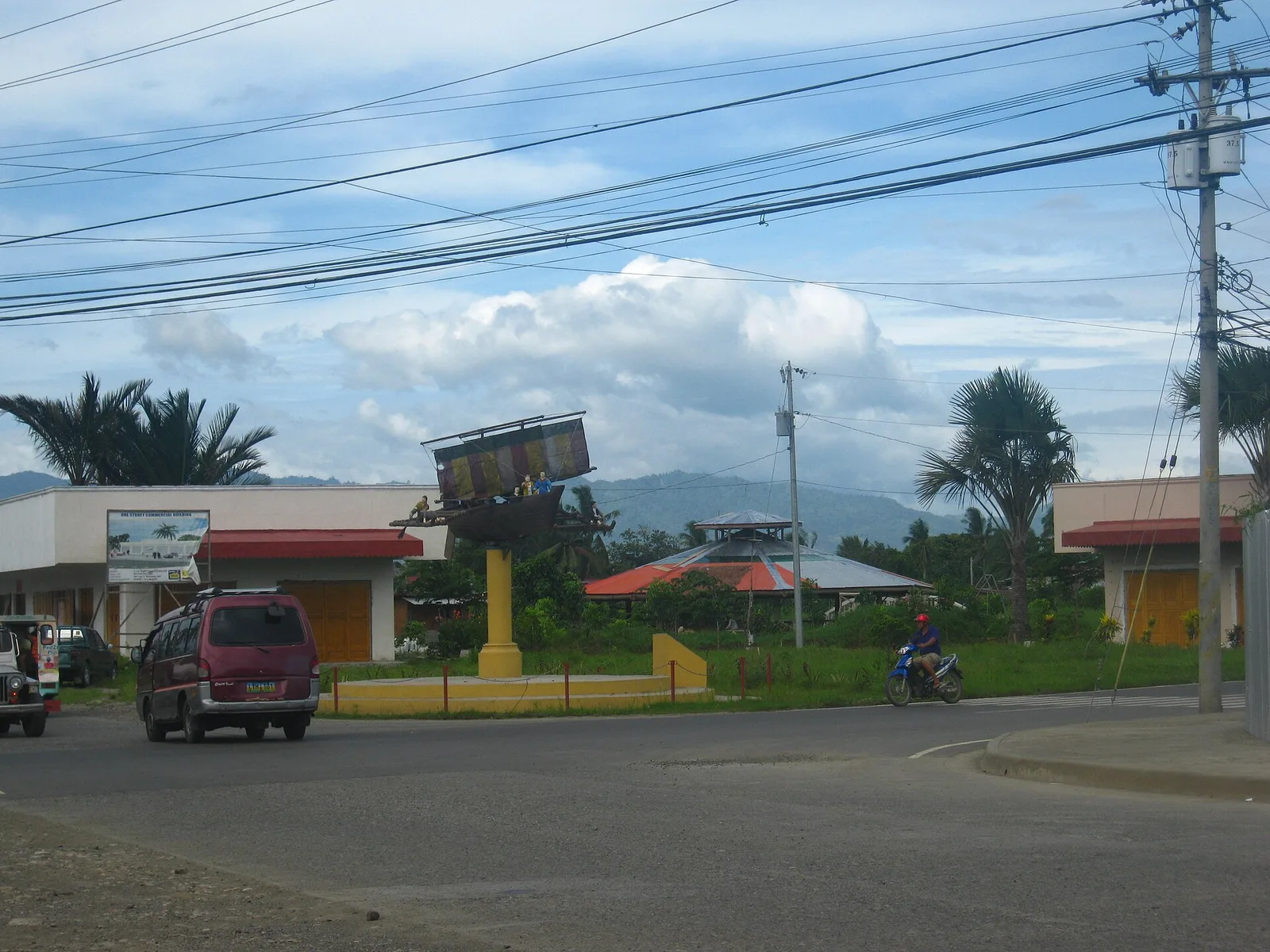
Visitors to Butuan can see the Balangay boats at the Butuan National Museum and the nearby Balangay Shrine, also known as the Balangay Boat Building Site. The National Museum of Butuan displays recovered planks, reconstructed sections, and a selection of the artifacts found near the boats. The museum is housed in a clean, modern building with panels that explain the excavation, the radiocarbon dating process, and the history of early trade in the region. There is no entrance fee to the National Museum, which makes it one of the best free cultural stops in Caraga.
At the Balangay Shrine, a large shed protects the remains of the original boats that were left in their original location. A walkway lets visitors view the site without disturbing the fragile wood. Guides are often available to explain the excavation and the ongoing preservation work. Some visitors also make the short trip to the Balangay Boat Building Site, where a team is constructing a full-size replica using traditional methods and materials. Watching the builders shape planks by hand gives a direct sense of the patience and knowledge needed for this craft.
Rebuilding a Balangay the old way
Between 2007 and 2010, a group of builders and historians launched a project to reconstruct a Balangay and sail it through Southeast Asia. Using traditional tools and wood types, the team built a working replica named Masawa Hong Butuan. The voyage proved that the design was seaworthy and helped raise awareness of the ancient boats. The project inspired local boat builders to continue teaching the methods to younger generations. Today, visitors can sometimes see the workshop in action or speak with local woodworkers about the materials they use.
The traditional building process starts with selecting the right timber. Hardwood such as yakal, lauan, and apitong is chosen for its strength and resistance to water. Planks are shaped with adzes and made to fit tightly together. Gaps are sealed with resin, cotton, and other natural materials. Lashings of rattan and fiber hold the structure under tension. No iron nails are used. The result is a hull that can flex with the sea, absorb impacts, and survive long voyages between islands.
How to reach Butuan and the museum
Butuan City is the main entry point for Caraga Region. Bancasi Airport has regular flights from Manila and Cebu. From the airport, a metered taxi to the city center costs PHP 200 to PHP 350. Tricycles and motorcycle taxis are cheaper, with fares of PHP 50 to PHP 150 depending on the distance. The city is also connected by bus to Davao, Surigao, and Cagayan de Oro. Travelers from Davao can take an air-conditioned van or bus for PHP 400 to PHP 700, while buses from Cagayan de Oro usually cost PHP 350 to PHP 600.
The Butuan National Museum sits on Doongan Road in the city center. It is open on weekdays and many Saturdays, but schedules can change during holidays. The Balangay Shrine is a short tricycle ride from the museum, usually costing PHP 20 to PHP 50. Plan at least half a day to visit both sites. If you want to include the Banza Church ruins and the Agusan River, a full day is better. A local tricycle driver can often serve as an informal guide for PHP 500 to PHP 800 for a half-day trip around the historical sites.
What it costs and where to stay
The National Museum and Balangay Shrine do not charge entrance fees. Donations are accepted and help support preservation. Guided tours at the shrine are sometimes offered for PHP 100 to PHP 300, though many travelers rely on tricycle drivers or local guides to explain the site. Souvenirs such as small wooden replicas and shirts are available at nearby stalls for PHP 100 to PHP 500. Local meals at carinderias cost PHP 100 to PHP 250, while sit-down restaurants in the city center charge PHP 200 to PHP 450.
Butuan has a range of hotels. Budget inns near the market start at PHP 800 per night. Mid-range business hotels with air conditioning and breakfast cost PHP 1,500 to PHP 2,800. Full-service hotels near Robinsons Place and the Gaisano Mall area run PHP 3,000 to PHP 5,000. For travelers who want to explore more of Caraga, Butuan is a convenient base for day trips to the Agusan Marsh and the beaches of Surigao del Norte. Van rentals for a full day cost PHP 3,000 to PHP 5,000, depending on the route and number of passengers.
E-E-A-T: why this guide is reliable
This guide was written by the Pana Visayas Desk after reviewing current schedules, transport prices, and museum policies. It was reviewed by Pana Editorial for accuracy. The historical information is drawn from National Museum publications, local archaeological reports, and government tourism pages. We do not receive commissions from hotels or museums, and the prices are based on recent local research. If any fee or schedule changes, we update the article as soon as possible.
Plan your Butuan trip with Pana
Caraga is an underrated part of the Philippines for travelers who want history, rivers, and quiet coastlines. Start by exploring our Philippine destinations to see where Butuan fits into a Mindanao or Caraga itinerary. For guided experiences, browse our tours page. Find the right place to stay after a day of museums on our hotels page. And for more deep-dive articles, return to the Pana blog.
Frequently Asked Questions
Is the Butuan National Museum free?
Yes. The National Museum and Balangay Shrine do not charge an entrance fee. Donations are welcome but not required.
How old are the Balangay boats?
The oldest confirmed Balangay boat in Butuan dates to around 320 AD, making it more than 1,700 years old.
Where exactly are the boats located?
The original boats are preserved at the Balangay Shrine in Brgy. Libertad. Museum exhibits are at the Butuan National Museum on Doongan Road.
Can I see the boat builders at work?
The boat building site sometimes has workers shaping planks by hand. It is best to visit in the morning and ask the guard or guide if the workshop is active that day.
Is Butuan safe for tourists?
Butuan City is generally safe for travelers during the day. Use the same caution you would in any city. Keep valuables secure and avoid isolated areas at night.
What other sites can I visit in one day?
In one day you can combine the National Museum, the Balangay Shrine, Banza Church ruins, and a short cruise on the Agusan River. A tricycle or van tour costs around PHP 500 to PHP 800.
The Balangay boats of Butuan are a window into a time when the Philippines was already sailing and trading across Southeast Asia. A visit to the museum and shrine is a reminder that Filipino history did not begin in 1521. For more guides to Mindanao, Caraga, and the rest of the Philippines, keep reading the Pana blog.
The accidental discovery that changed Philippine history
In 1976, a farmer in Brgy. Libertad, Butuan City, was digging a well when he hit something hard and dark beneath the mud. It was not a stone. It was the edge of a wooden plank, and the wood had been there far longer than anyone could have guessed. Archaeologists later confirmed that the plank belonged to a boat built in the fourth century, a time before the Spanish arrived, before Islam spread through Mindanao, and before the islands were even known to much of the outside world. That single find led to one of the most important archaeological discoveries in the Philippines: the Balangay boats of Butuan.
Since the first discovery, several more boats have been found in the same area. The oldest has been dated to around 320 AD, making it more than 1,700 years old. These boats are not museum replicas. They are the real hulls of vessels that once carried people and goods through the waters of what is now the Philippines. Their survival is extraordinary, because tropical wood usually rots quickly. In Butuan, a mix of waterlogged clay, low oxygen, and careful burial protected the boats for centuries. They are now preserved, studied, and displayed as national treasures.
What the Balangay boats tell us about the past
The Balangay was a plank-built boat constructed without nails. Builders used wooden dowels, pegs, and lashed joints to hold the planks together. The hulls were small enough to be handled by a few people but strong enough for coastal trade and island crossings. The name lives on in the modern word barangay, the smallest political unit in the Philippines. That connection shows how deeply the boat is woven into Filipino culture and community life.
Before the Spanish arrived, the Philippines was already part of a busy maritime network. Goods moved between the islands, and people traveled for trade, marriage, and diplomacy. The Butuan boats prove that this network existed at least 1,700 years ago. Artifacts found with the boats include ceramics from China, Thailand, and Vietnam. These objects show that Butuan was already a trading port with links to the rest of Asia long before European maps labeled the archipelago. The boats also reveal the skill of early Filipino shipbuilders, who understood tides, wood selection, and watertight construction without modern tools.
What to see at the Balangay museum complex
Visitors to Butuan can see the Balangay boats at the Butuan National Museum and the nearby Balangay Shrine, also known as the Balangay Boat Building Site. The National Museum of Butuan displays recovered planks, reconstructed sections, and a selection of the artifacts found near the boats. The museum is housed in a clean, modern building with panels that explain the excavation, the radiocarbon dating process, and the history of early trade in the region. There is no entrance fee to the National Museum, which makes it one of the best free cultural stops in Caraga.
At the Balangay Shrine, a large shed protects the remains of the original boats that were left in their original location. A walkway lets visitors view the site without disturbing the fragile wood. Guides are often available to explain the excavation and the ongoing preservation work. Some visitors also make the short trip to the Balangay Boat Building Site, where a team is constructing a full-size replica using traditional methods and materials. Watching the builders shape planks by hand gives a direct sense of the patience and knowledge needed for this craft.
Rebuilding a Balangay the old way
Between 2007 and 2010, a group of builders and historians launched a project to reconstruct a Balangay and sail it through Southeast Asia. Using traditional tools and wood types, the team built a working replica named Masawa Hong Butuan. The voyage proved that the design was seaworthy and helped raise awareness of the ancient boats. The project inspired local boat builders to continue teaching the methods to younger generations. Today, visitors can sometimes see the workshop in action or speak with local woodworkers about the materials they use.
The traditional building process starts with selecting the right timber. Hardwood such as yakal, lauan, and apitong is chosen for its strength and resistance to water. Planks are shaped with adzes and made to fit tightly together. Gaps are sealed with resin, cotton, and other natural materials. Lashings of rattan and fiber hold the structure under tension. No iron nails are used. The result is a hull that can flex with the sea, absorb impacts, and survive long voyages between islands.
How to reach Butuan and the museum
Butuan City is the main entry point for Caraga Region. Bancasi Airport has regular flights from Manila and Cebu. From the airport, a metered taxi to the city center costs PHP 200 to PHP 350. Tricycles and motorcycle taxis are cheaper, with fares of PHP 50 to PHP 150 depending on the distance. The city is also connected by bus to Davao, Surigao, and Cagayan de Oro. Travelers from Davao can take an air-conditioned van or bus for PHP 400 to PHP 700, while buses from Cagayan de Oro usually cost PHP 350 to PHP 600.
The Butuan National Museum sits on Doongan Road in the city center. It is open on weekdays and many Saturdays, but schedules can change during holidays. The Balangay Shrine is a short tricycle ride from the museum, usually costing PHP 20 to PHP 50. Plan at least half a day to visit both sites. If you want to include the Banza Church ruins and the Agusan River, a full day is better. A local tricycle driver can often serve as an informal guide for PHP 500 to PHP 800 for a half-day trip around the historical sites.
What it costs and where to stay
The National Museum and Balangay Shrine do not charge entrance fees. Donations are accepted and help support preservation. Guided tours at the shrine are sometimes offered for PHP 100 to PHP 300, though many travelers rely on tricycle drivers or local guides to explain the site. Souvenirs such as small wooden replicas and shirts are available at nearby stalls for PHP 100 to PHP 500. Local meals at carinderias cost PHP 100 to PHP 250, while sit-down restaurants in the city center charge PHP 200 to PHP 450.
Butuan has a range of hotels. Budget inns near the market start at PHP 800 per night. Mid-range business hotels with air conditioning and breakfast cost PHP 1,500 to PHP 2,800. Full-service hotels near Robinsons Place and the Gaisano Mall area run PHP 3,000 to PHP 5,000. For travelers who want to explore more of Caraga, Butuan is a convenient base for day trips to the Agusan Marsh and the beaches of Surigao del Norte. Van rentals for a full day cost PHP 3,000 to PHP 5,000, depending on the route and number of passengers.
E-E-A-T: why this guide is reliable
This guide was written by the Pana Visayas Desk after reviewing current schedules, transport prices, and museum policies. It was reviewed by Pana Editorial for accuracy. The historical information is drawn from National Museum publications, local archaeological reports, and government tourism pages. We do not receive commissions from hotels or museums, and the prices are based on recent local research. If any fee or schedule changes, we update the article as soon as possible.
Plan your Butuan trip with Pana
Caraga is an underrated part of the Philippines for travelers who want history, rivers, and quiet coastlines. Start by exploring our Philippine destinations to see where Butuan fits into a Mindanao or Caraga itinerary. For guided experiences, browse our tours page. Find the right place to stay after a day of museums on our hotels page. And for more deep-dive articles, return to the Pana blog.
Frequently Asked Questions
Is the Butuan National Museum free?
Yes. The National Museum and Balangay Shrine do not charge an entrance fee. Donations are welcome but not required.
How old are the Balangay boats?
The oldest confirmed Balangay boat in Butuan dates to around 320 AD, making it more than 1,700 years old.
Where exactly are the boats located?
The original boats are preserved at the Balangay Shrine in Brgy. Libertad. Museum exhibits are at the Butuan National Museum on Doongan Road.
Can I see the boat builders at work?
The boat building site sometimes has workers shaping planks by hand. It is best to visit in the morning and ask the guard or guide if the workshop is active that day.
Is Butuan safe for tourists?
Butuan City is generally safe for travelers during the day. Use the same caution you would in any city. Keep valuables secure and avoid isolated areas at night.
What other sites can I visit in one day?
In one day you can combine the National Museum, the Balangay Shrine, Banza Church ruins, and a short cruise on the Agusan River. A tricycle or van tour costs around PHP 500 to PHP 800.
The Balangay boats of Butuan are a window into a time when the Philippines was already sailing and trading across Southeast Asia. A visit to the museum and shrine is a reminder that Filipino history did not begin in 1521. For more guides to Mindanao, Caraga, and the rest of the Philippines, keep reading the Pana blog.
The accidental discovery that changed Philippine history
In 1976, a farmer in Brgy. Libertad, Butuan City, was digging a well when he hit something hard and dark beneath the mud. It was not a stone. It was the edge of a wooden plank, and the wood had been there far longer than anyone could have guessed. Archaeologists later confirmed that the plank belonged to a boat built in the fourth century, a time before the Spanish arrived, before Islam spread through Mindanao, and before the islands were even known to much of the outside world. That single find led to one of the most important archaeological discoveries in the Philippines: the Balangay boats of Butuan.
Since the first discovery, several more boats have been found in the same area. The oldest has been dated to around 320 AD, making it more than 1,700 years old. These boats are not museum replicas. They are the real hulls of vessels that once carried people and goods through the waters of what is now the Philippines. Their survival is extraordinary, because tropical wood usually rots quickly. In Butuan, a mix of waterlogged clay, low oxygen, and careful burial protected the boats for centuries. They are now preserved, studied, and displayed as national treasures.
What the Balangay boats tell us about the past
The Balangay was a plank-built boat constructed without nails. Builders used wooden dowels, pegs, and lashed joints to hold the planks together. The hulls were small enough to be handled by a few people but strong enough for coastal trade and island crossings. The name lives on in the modern word barangay, the smallest political unit in the Philippines. That connection shows how deeply the boat is woven into Filipino culture and community life.
Before the Spanish arrived, the Philippines was already part of a busy maritime network. Goods moved between the islands, and people traveled for trade, marriage, and diplomacy. The Butuan boats prove that this network existed at least 1,700 years ago. Artifacts found with the boats include ceramics from China, Thailand, and Vietnam. These objects show that Butuan was already a trading port with links to the rest of Asia long before European maps labeled the archipelago. The boats also reveal the skill of early Filipino shipbuilders, who understood tides, wood selection, and watertight construction without modern tools.
What to see at the Balangay museum complex
Visitors to Butuan can see the Balangay boats at the Butuan National Museum and the nearby Balangay Shrine, also known as the Balangay Boat Building Site. The National Museum of Butuan displays recovered planks, reconstructed sections, and a selection of the artifacts found near the boats. The museum is housed in a clean, modern building with panels that explain the excavation, the radiocarbon dating process, and the history of early trade in the region. There is no entrance fee to the National Museum, which makes it one of the best free cultural stops in Caraga.
At the Balangay Shrine, a large shed protects the remains of the original boats that were left in their original location. A walkway lets visitors view the site without disturbing the fragile wood. Guides are often available to explain the excavation and the ongoing preservation work. Some visitors also make the short trip to the Balangay Boat Building Site, where a team is constructing a full-size replica using traditional methods and materials. Watching the builders shape planks by hand gives a direct sense of the patience and knowledge needed for this craft.
Rebuilding a Balangay the old way
Between 2007 and 2010, a group of builders and historians launched a project to reconstruct a Balangay and sail it through Southeast Asia. Using traditional tools and wood types, the team built a working replica named Masawa Hong Butuan. The voyage proved that the design was seaworthy and helped raise awareness of the ancient boats. The project inspired local boat builders to continue teaching the methods to younger generations. Today, visitors can sometimes see the workshop in action or speak with local woodworkers about the materials they use.
The traditional building process starts with selecting the right timber. Hardwood such as yakal, lauan, and apitong is chosen for its strength and resistance to water. Planks are shaped with adzes and made to fit tightly together. Gaps are sealed with resin, cotton, and other natural materials. Lashings of rattan and fiber hold the structure under tension. No iron nails are used. The result is a hull that can flex with the sea, absorb impacts, and survive long voyages between islands.
How to reach Butuan and the museum
Butuan City is the main entry point for Caraga Region. Bancasi Airport has regular flights from Manila and Cebu. From the airport, a metered taxi to the city center costs PHP 200 to PHP 350. Tricycles and motorcycle taxis are cheaper, with fares of PHP 50 to PHP 150 depending on the distance. The city is also connected by bus to Davao, Surigao, and Cagayan de Oro. Travelers from Davao can take an air-conditioned van or bus for PHP 400 to PHP 700, while buses from Cagayan de Oro usually cost PHP 350 to PHP 600.
The Butuan National Museum sits on Doongan Road in the city center. It is open on weekdays and many Saturdays, but schedules can change during holidays. The Balangay Shrine is a short tricycle ride from the museum, usually costing PHP 20 to PHP 50. Plan at least half a day to visit both sites. If you want to include the Banza Church ruins and the Agusan River, a full day is better. A local tricycle driver can often serve as an informal guide for PHP 500 to PHP 800 for a half-day trip around the historical sites.
What it costs and where to stay
The National Museum and Balangay Shrine do not charge entrance fees. Donations are accepted and help support preservation. Guided tours at the shrine are sometimes offered for PHP 100 to PHP 300, though many travelers rely on tricycle drivers or local guides to explain the site. Souvenirs such as small wooden replicas and shirts are available at nearby stalls for PHP 100 to PHP 500. Local meals at carinderias cost PHP 100 to PHP 250, while sit-down restaurants in the city center charge PHP 200 to PHP 450.
Butuan has a range of hotels. Budget inns near the market start at PHP 800 per night. Mid-range business hotels with air conditioning and breakfast cost PHP 1,500 to PHP 2,800. Full-service hotels near Robinsons Place and the Gaisano Mall area run PHP 3,000 to PHP 5,000. For travelers who want to explore more of Caraga, Butuan is a convenient base for day trips to the Agusan Marsh and the beaches of Surigao del Norte. Van rentals for a full day cost PHP 3,000 to PHP 5,000, depending on the route and number of passengers.
E-E-A-T: why this guide is reliable
This guide was written by the Pana Visayas Desk after reviewing current schedules, transport prices, and museum policies. It was reviewed by Pana Editorial for accuracy. The historical information is drawn from National Museum publications, local archaeological reports, and government tourism pages. We do not receive commissions from hotels or museums, and the prices are based on recent local research. If any fee or schedule changes, we update the article as soon as possible.
Plan your Butuan trip with Pana
Caraga is an underrated part of the Philippines for travelers who want history, rivers, and quiet coastlines. Start by exploring our Philippine destinations to see where Butuan fits into a Mindanao or Caraga itinerary. For guided experiences, browse our tours page. Find the right place to stay after a day of museums on our hotels page. And for more deep-dive articles, return to the Pana blog.
Frequently Asked Questions
Is the Butuan National Museum free?
Yes. The National Museum and Balangay Shrine do not charge an entrance fee. Donations are welcome but not required.
How old are the Balangay boats?
The oldest confirmed Balangay boat in Butuan dates to around 320 AD, making it more than 1,700 years old.
Where exactly are the boats located?
The original boats are preserved at the Balangay Shrine in Brgy. Libertad. Museum exhibits are at the Butuan National Museum on Doongan Road.
Can I see the boat builders at work?
The boat building site sometimes has workers shaping planks by hand. It is best to visit in the morning and ask the guard or guide if the workshop is active that day.
Is Butuan safe for tourists?
Butuan City is generally safe for travelers during the day. Use the same caution you would in any city. Keep valuables secure and avoid isolated areas at night.
What other sites can I visit in one day?
In one day you can combine the National Museum, the Balangay Shrine, Banza Church ruins, and a short cruise on the Agusan River. A tricycle or van tour costs around PHP 500 to PHP 800.
The Balangay boats of Butuan are a window into a time when the Philippines was already sailing and trading across Southeast Asia. A visit to the museum and shrine is a reminder that Filipino history did not begin in 1521. For more guides to Mindanao, Caraga, and the rest of the Philippines, keep reading the Pana blog.
The accidental discovery that changed Philippine history
In 1976, a farmer in Brgy. Libertad, Butuan City, was digging a well when he hit something hard and dark beneath the mud. It was not a stone. It was the edge of a wooden plank, and the wood had been there far longer than anyone could have guessed. Archaeologists later confirmed that the plank belonged to a boat built in the fourth century, a time before the Spanish arrived, before Islam spread through Mindanao, and before the islands were even known to much of the outside world. That single find led to one of the most important archaeological discoveries in the Philippines: the Balangay boats of Butuan.
Since the first discovery, several more boats have been found in the same area. The oldest has been dated to around 320 AD, making it more than 1,700 years old. These boats are not museum replicas. They are the real hulls of vessels that once carried people and goods through the waters of what is now the Philippines. Their survival is extraordinary, because tropical wood usually rots quickly. In Butuan, a mix of waterlogged clay, low oxygen, and careful burial protected the boats for centuries. They are now preserved, studied, and displayed as national treasures.
What the Balangay boats tell us about the past
The Balangay was a plank-built boat constructed without nails. Builders used wooden dowels, pegs, and lashed joints to hold the planks together. The hulls were small enough to be handled by a few people but strong enough for coastal trade and island crossings. The name lives on in the modern word barangay, the smallest political unit in the Philippines. That connection shows how deeply the boat is woven into Filipino culture and community life.
Before the Spanish arrived, the Philippines was already part of a busy maritime network. Goods moved between the islands, and people traveled for trade, marriage, and diplomacy. The Butuan boats prove that this network existed at least 1,700 years ago. Artifacts found with the boats include ceramics from China, Thailand, and Vietnam. These objects show that Butuan was already a trading port with links to the rest of Asia long before European maps labeled the archipelago. The boats also reveal the skill of early Filipino shipbuilders, who understood tides, wood selection, and watertight construction without modern tools.
What to see at the Balangay museum complex
Visitors to Butuan can see the Balangay boats at the Butuan National Museum and the nearby Balangay Shrine, also known as the Balangay Boat Building Site. The National Museum of Butuan displays recovered planks, reconstructed sections, and a selection of the artifacts found near the boats. The museum is housed in a clean, modern building with panels that explain the excavation, the radiocarbon dating process, and the history of early trade in the region. There is no entrance fee to the National Museum, which makes it one of the best free cultural stops in Caraga.
At the Balangay Shrine, a large shed protects the remains of the original boats that were left in their original location. A walkway lets visitors view the site without disturbing the fragile wood. Guides are often available to explain the excavation and the ongoing preservation work. Some visitors also make the short trip to the Balangay Boat Building Site, where a team is constructing a full-size replica using traditional methods and materials. Watching the builders shape planks by hand gives a direct sense of the patience and knowledge needed for this craft.
Rebuilding a Balangay the old way
Between 2007 and 2010, a group of builders and historians launched a project to reconstruct a Balangay and sail it through Southeast Asia. Using traditional tools and wood types, the team built a working replica named Masawa Hong Butuan. The voyage proved that the design was seaworthy and helped raise awareness of the ancient boats. The project inspired local boat builders to continue teaching the methods to younger generations. Today, visitors can sometimes see the workshop in action or speak with local woodworkers about the materials they use.
The traditional building process starts with selecting the right timber. Hardwood such as yakal, lauan, and apitong is chosen for its strength and resistance to water. Planks are shaped with adzes and made to fit tightly together. Gaps are sealed with resin, cotton, and other natural materials. Lashings of rattan and fiber hold the structure under tension. No iron nails are used. The result is a hull that can flex with the sea, absorb impacts, and survive long voyages between islands.
How to reach Butuan and the museum
Butuan City is the main entry point for Caraga Region. Bancasi Airport has regular flights from Manila and Cebu. From the airport, a metered taxi to the city center costs PHP 200 to PHP 350. Tricycles and motorcycle taxis are cheaper, with fares of PHP 50 to PHP 150 depending on the distance. The city is also connected by bus to Davao, Surigao, and Cagayan de Oro. Travelers from Davao can take an air-conditioned van or bus for PHP 400 to PHP 700, while buses from Cagayan de Oro usually cost PHP 350 to PHP 600.
The Butuan National Museum sits on Doongan Road in the city center. It is open on weekdays and many Saturdays, but schedules can change during holidays. The Balangay Shrine is a short tricycle ride from the museum, usually costing PHP 20 to PHP 50. Plan at least half a day to visit both sites. If you want to include the Banza Church ruins and the Agusan River, a full day is better. A local tricycle driver can often serve as an informal guide for PHP 500 to PHP 800 for a half-day trip around the historical sites.
What it costs and where to stay
The National Museum and Balangay Shrine do not charge entrance fees. Donations are accepted and help support preservation. Guided tours at the shrine are sometimes offered for PHP 100 to PHP 300, though many travelers rely on tricycle drivers or local guides to explain the site. Souvenirs such as small wooden replicas and shirts are available at nearby stalls for PHP 100 to PHP 500. Local meals at carinderias cost PHP 100 to PHP 250, while sit-down restaurants in the city center charge PHP 200 to PHP 450.
Butuan has a range of hotels. Budget inns near the market start at PHP 800 per night. Mid-range business hotels with air conditioning and breakfast cost PHP 1,500 to PHP 2,800. Full-service hotels near Robinsons Place and the Gaisano Mall area run PHP 3,000 to PHP 5,000. For travelers who want to explore more of Caraga, Butuan is a convenient base for day trips to the Agusan Marsh and the beaches of Surigao del Norte. Van rentals for a full day cost PHP 3,000 to PHP 5,000, depending on the route and number of passengers.
E-E-A-T: why this guide is reliable
This guide was written by the Pana Visayas Desk after reviewing current schedules, transport prices, and museum policies. It was reviewed by Pana Editorial for accuracy. The historical information is drawn from National Museum publications, local archaeological reports, and government tourism pages. We do not receive commissions from hotels or museums, and the prices are based on recent local research. If any fee or schedule changes, we update the article as soon as possible.
Plan your Butuan trip with Pana
Caraga is an underrated part of the Philippines for travelers who want history, rivers, and quiet coastlines. Start by exploring our Philippine destinations to see where Butuan fits into a Mindanao or Caraga itinerary. For guided experiences, browse our tours page. Find the right place to stay after a day of museums on our hotels page. And for more deep-dive articles, return to the Pana blog.
Frequently asked questions
Is the Butuan National Museum free?
Yes. The National Museum and Balangay Shrine do not charge an entrance fee. Donations are welcome but not required.
How old are the Balangay boats?
The oldest confirmed Balangay boat in Butuan dates to around 320 AD, making it more than 1,700 years old.
Where exactly are the boats located?
The original boats are preserved at the Balangay Shrine in Brgy. Libertad. Museum exhibits are at the Butuan National Museum on Doongan Road.
Can I see the boat builders at work?
The boat building site sometimes has workers shaping planks by hand. It is best to visit in the morning and ask the guard or guide if the workshop is active that day.
Is Butuan safe for tourists?
Butuan City is generally safe for travelers during the day. Use the same caution you would in any city. Keep valuables secure and avoid isolated areas at night.
What other sites can I visit in one day?
In one day you can combine the National Museum, the Balangay Shrine, Banza Church ruins, and a short cruise on the Agusan River. A tricycle or van tour costs around PHP 500 to PHP 800.
The Balangay boats of Butuan are a window into a time when the Philippines was already sailing and trading across Southeast Asia. A visit to the museum and shrine is a reminder that Filipino history did not begin in 1521. For more guides to Mindanao, Caraga, and the rest of the Philippines, keep reading the Pana blog.