The nudibranch is perhaps two centimetres long. You would not notice it on a casual dive — it sits on a sea fan in the slope current at 18 metres, its vivid orange-and-blue body a warning to anything that might consider eating it. But through a 100mm macro lens at a 1:1 reproduction ratio, it fills the frame completely: a creature of alien geometry, each gill plume perfectly resolved, its texture rendering in extraordinary detail against the out-of-focus coral background.
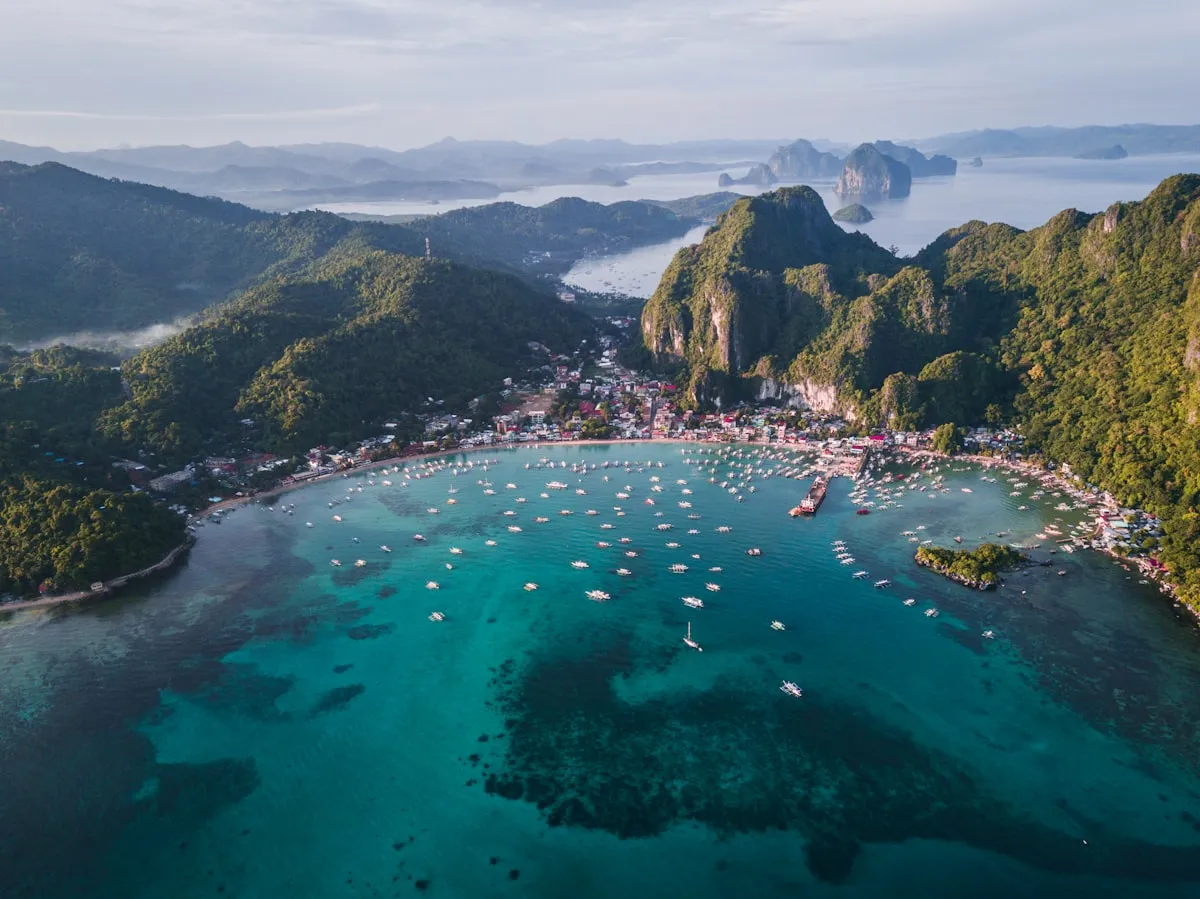
Philippines Underwater Photography Guide: Best Sites, Camera Settings & Tips
Trip.com
Search on Trip.comHotels in Philippines
Compare live prices via Travelpayouts — targeted for this guide.
This is Anilao, Batangas, and it is one of the world's great macro photography destinations. The Philippines as a whole offers underwater photographers a diversity that few destinations on Earth can match — from microscopic macro subjects to wide-angle spectacle, from World War II wrecks to living reefs to open-ocean pelagics. This guide covers the best sites, the equipment to use, and the techniques that will actually get you the images.
Why the Philippines for Underwater Photography
The Philippines sits at the apex of the Coral Triangle — the most biodiverse marine ecosystem on Earth. More species of coral, fish, invertebrate, and marine mammal have been recorded in Philippine waters than in any equivalent area on the planet. For underwater photographers, this translates directly into subject availability: you are never short of something extraordinary to photograph.
The country also offers extraordinary diversity of photographic subjects and environments:
Trip.com
See all tours in Philippines on Trip.comDiving in Philippines
Hand-picked experiences in Philippines — book on Trip.com with instant confirmation.
- Macro: Anilao and Lembeh-comparable concentrations of nudibranchs, pygmy seahorses, frogfish, ghost pipefish
- Wide-angle reef: Tubbataha, El Nido, Apo Island — pristine coral gardens with large schools of fish
- Pelagics: Malapascua thresher sharks, Moalboal sardine run, Tubbataha open-ocean schools
- Wrecks: Coron's World War II Japanese fleet — the most photographer-friendly wreck diving in Asia
- Marine mammals: Spinner dolphins (Bohol, Pamilacan), whale sharks (Donsol, Oslob), dugongs (Palawan)
Best Underwater Photography Sites in the Philippines
Anilao, Batangas — Macro Capital of Asia
Anilao in Batangas province, 2.5 hours south of Manila, is the country's diving heartland and its finest macro photography destination. The muck-and-reef environment here supports an astonishing concentration of small, photogenic marine life: over 500 nudibranch species have been recorded in the Anilao-Mabini area, along with Mandarin fish (best photographed at dusk during their breeding displays), ghost pipefish in at least 6 color morphs, ornate and hairy frogfish, flamboyant cuttlefish, Pontoh's pygmy seahorse, and an endless scroll of small invertebrates that reward patient searching.
Dive costs at Anilao: PHP 800–1,200 per dive including guide and equipment. Most divers stay at one of the dive resorts along the Anilao coast (PHP 2,000–5,000/night, typically including diving packages). Day trips from Manila are possible but the best macro photography requires multiple dives per day over several days — the critters take time to find, and revisiting a site at different times of day reveals different subjects. The best Mandarin fish shows happen at dusk; plan at least one early-evening dive specifically for this species.
Best time: Year-round (Anilao is sheltered from most weather systems), with March–May offering the best visibility. Occasional jellyfish plankton blooms reduce visibility in October-November.
Moalboal, Cebu — The Sardine Run
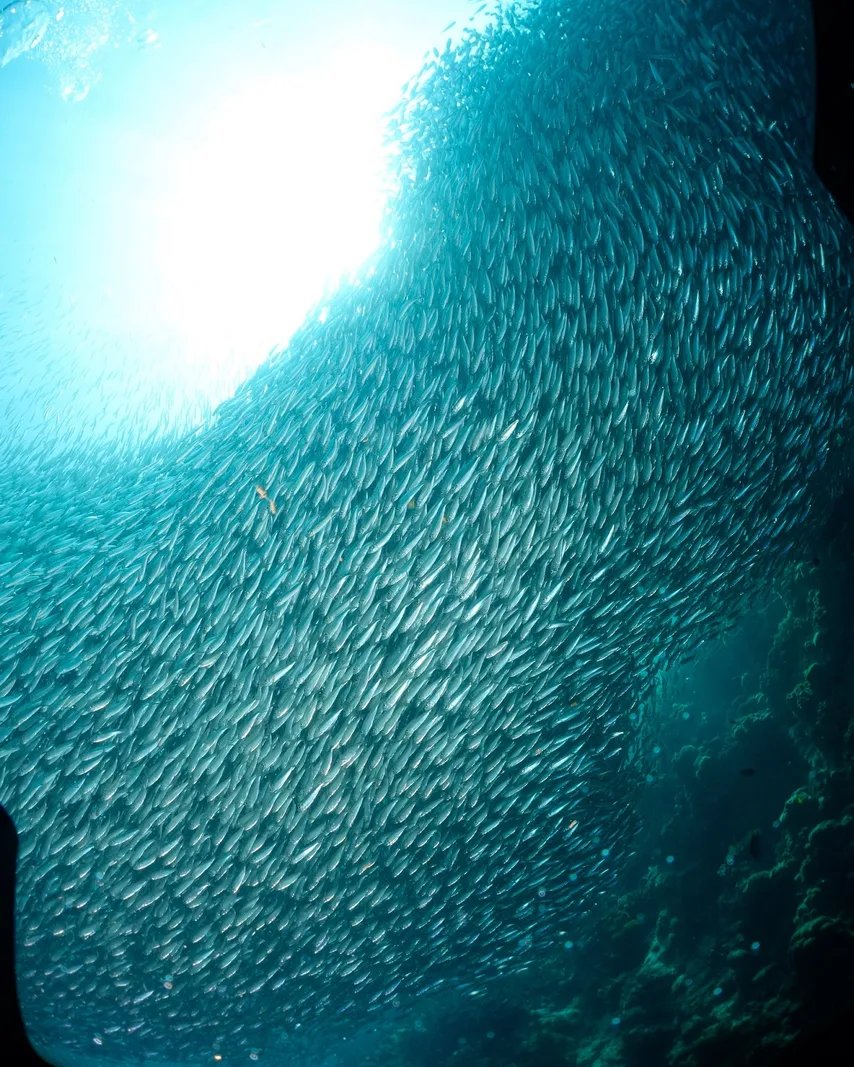
Moalboal on the western coast of Cebu houses one of the ocean's most extraordinary spectacles: a permanent resident population of millions of sardines (known locally as the Panagsama sardine run) that moves as a single coordinated school in the shallow reef just meters from the beach. The school shifts, contracts, and swells in response to predators — jacks, trevally, fusiliers, and the occasional thresher shark working the edges. This is pure wide-angle spectacle: the sardines catch and reflect light in patterns of silver and shadow that fill your entire field of vision.
The sardines are accessible as a shore dive (literally walk into the water from Panagsama Beach) at depths of 5 to 20 metres. Cost: PHP 500–800/dive at local dive shops. Wide-angle lens or rectilinear wide (not fisheye for the clearest rendition of the school) plus a strobe for color recovery at depth. The thresher sharks that visit the sardine run at dawn are photographed from the surface — they patrol the upper water column and come close enough for good telephoto shots.
Tubbataha Reef — Open Ocean Pelagics
Tubbataha Reef Natural Park in the Sulu Sea is the Philippines' most remote and most pristine dive destination — a UNESCO World Heritage Site accessible only by liveaboard from Puerto Princesa. The distance (roughly 180km from Puerto Princesa) means it sees limited dive traffic; the marine life responds by being completely unafraid of divers. Schools of barracuda, hammerhead sharks, grey reef sharks, manta rays, and enormous Napoleon wrasse are the headline subjects. Whale sharks and silvertip sharks appear regularly.
The photography at Tubbataha is wide-angle and epic: you are shooting large animals in clear, blue open water with schools of fish as background. Visibility regularly exceeds 30 metres. A 10–17mm fisheye or 16–35mm wide zoom is the primary lens here. Liveaboard costs: USD 3,000–4,500 (approximately PHP 175,000–260,000) for a 5 to 6 day trip including all diving and meals. Season: March through June only (the park closes to liveaboards from October through February to allow recovery).
Coron, Palawan — Wreck Photography Paradise
Coron Bay holds the remnants of a Japanese supply fleet sunk by American aircraft on September 24, 1944. Twelve major wrecks lie at depths of 10 to 40 metres, all now encrusted with coral, colonized by lionfish, batfish, and schools of glassfish, and penetrable (with guide) through engineered interior passages that give interior wreck shots a ghostly, cathedral-like quality.
The photography here ranges from wide-angle exterior hull shots with diver silhouettes to mid-range fish-and-coral compositions to macro of the invertebrates colonizing every surface. The Okikawa Maru (a tanker wreck with its engine room still intact), the Irako (a refrigerated supply ship with visible cargo), and the Olympia Maru are photographic highlights. Dive costs: PHP 900–1,400 per wreck dive including guide and entry fees. Wide-angle dome port essential; a torch or video light for interior color recovery.
Malapascua, Cebu — Thresher Sharks at Dawn
Monad Shoal off Malapascua Island is one of very few places in the world where thresher sharks are reliably seen at recreational diving depths. The sharks visit the cleaning station on the shoal's edge at dawn (5 to 6am) and allow divers to observe them closely at 25 to 30 metres. Photographically: threshers are grey animals in grey water at dawn — you are fighting low light and a moving, relatively shy subject. A fast lens equivalent (f/2.8 or wider on wide-angle), high ISO capability, and a strobe are essential. A successful thresher image requires patience, good buoyancy to hold position on the cleaning station edge, and realistic expectations: a clean, well-lit thresher portrait is a 3-to-5-dive project, not a one-dive guarantee.
Camera Systems: What to Bring
Entry Level: GoPro
A GoPro Hero 12 or 13 in its standard dive housing (rated to 10m, or the Protective + Housing for 60m) is the easiest entry point. The wide field of view, simple operation, and compact size make it popular. The image quality has improved dramatically — in good light at shallow depths, GoPro footage is genuinely excellent. Limitations: no interchangeable lenses, limited manual control, built-in wide-angle distortion not ideal for macro. Budget: PHP 15,000–22,000 for camera and housing.
Best Value: Olympus TG-7 (Compact)
The Olympus TG-7 (or its predecessor TG-6) is the most capable compact underwater camera available. The macro mode achieves 1:1 magnification, the built-in lens is sharp, and the optional PT-059 underwater housing (rated to 45m) turns it into a serious macro system. A wide-angle wet lens (INON UCL-165 or Nauticam WACP equivalent) can be added for reef and wide-angle work. Total system cost: PHP 15,000–25,000 including camera, housing, and basic accessories. The best recommendation for photographers who want significantly better results than GoPro without the complexity and cost of a full mirrorless system.
Professional: Mirrorless or DSLR in Housing
Sony A7 series, Nikon Z series, or Canon RF mirrorless cameras in Nauticam, Ikelite, or Sea & Sea housings represent the highest quality underwater imaging systems available for recreational divers. The ability to change lenses between macro and wide-angle, shoot full-frame RAW files, and use powerful external strobes produces images that define underwater photography as an art form. Cost: housing alone PHP 60,000–150,000; add dome port, lens port, and two strobes and total investment reaches PHP 150,000–300,000 or more. Only appropriate for photographers who are already committed to serious underwater photography.
Essential Accessories
Strobe/Flash: The single most important accessory for underwater photography at any level. Water absorbs red light rapidly with depth — by 5 metres, everything has a blue-green cast that RAW editing alone cannot fully correct. A strobe returns natural color to subjects within its beam range (typically 1.5 to 2 metres). INON strobes (PHP 20,000–35,000 each, two recommended) are the standard for mid-range setups. For GoPro and compact cameras, INON S-220 or Kraken Hydra strobes are practical options.
Red Filter: For video work (where strobes are impractical in wide-angle situations), a clip-on red filter compensates for the blue water cast in shallow water (2–8 metres). Cheap (PHP 500–1,500) and effective at moderate depths. Not a substitute for strobes at greater depth but useful for shallow reef video.
Buoyancy Control: The most underrated element of good underwater photography. Camera shake from poor buoyancy produces blurred images regardless of shutter speed. Master neutral buoyancy and controlled hovering before investing in expensive camera equipment. The best underwater photographers can hold position motionless at any depth — this is a skill, not a piece of equipment.
Camera Settings Simplified
For photographers new to underwater work, these starting settings will get you in the right neighborhood:
- Macro photography: Aperture Priority mode, f/8–f/16 for depth of field, ISO 200–400, let the camera choose shutter speed. Add strobe at half to full power.
- Wide-angle reef: Manual mode, f/8, 1/125s, ISO 200. Adjust strobe power to balance foreground subject exposure with ambient blue-water background.
- Sardine run / schools: Continuous shooting mode, f/8, 1/200s, ISO 400–800. The fast shutter freezes motion in the school. No strobe (too close, overexposure risk) — rely on the natural silver reflectivity of the fish.
- Always shoot RAW. JPEG compression discards color information that RAW retains, and underwater images always require post-processing color correction that needs RAW data to work well.
Best Time for Underwater Visibility
Across most Philippine dive sites, March through May offers the best water clarity. The tail end of the dry season brings lower rainfall (less runoff turbidity), calmer seas (less water movement stirs up sediment), and settled plankton levels. Visibility at top sites like Tubbataha and Apo Island regularly reaches 30–40 metres in this period.
The sardine run at Moalboal and the Malapascua thresher sharks are year-round but show highest activity from October through May. Anilao is productive year-round with the best macro conditions from March to June.
Frequently Asked Questions
Do I need to be a certified diver for underwater photography in the Philippines?
For snorkeling-depth photography (GoPro, compact cameras at 0–5m), no certification required. For reef diving at 10–30 metres with a camera system, an Open Water certification minimum is required by all reputable dive operators. For wreck penetration at Coron, Advanced Open Water or equivalent plus specific wreck diving experience is recommended. The most productive macro diving at Anilao is at 10–25 metres — standard recreational certification territory.
What is the best site for beginners to underwater photography?
Anilao for macro (abundant subjects, patient guides, shallow to medium depth), and the Moalboal sardine run for wide-angle (the sardines are at 5–15 metres, accessible even to snorkelers, and the spectacle is forgiving of imperfect camera settings — a million silver fish in front of your lens covers a multitude of technical sins).
How do I get my photos color-corrected after the dive?
In Lightroom or Capture One, start with the White Balance tool — click on a white or neutral grey area in the image (a diver's equipment, a sandy bottom patch, a bleached coral) to establish a color reference. From there, increase Reds and Oranges in the HSL panel to restore warm tones absorbed by the water. The Dehaze slider (Lightroom) also helps restore contrast in backscatter-heavy images. For video, the Lumetri Color panel in Premiere Pro has a similar white balance tool. Practice on the same dive site images repeatedly — each depth and water type requires a slightly different correction recipe.
Is it worth bringing my own camera to the Philippines or can I rent?
Serious camera systems (mirrorless in housing with strobes) are not rentable at most Philippine dive resorts. GoPros are sometimes available for rent (PHP 500–800/day) at popular sites. The Olympus TG-7 system is affordable enough to buy and bring — if you're planning multiple days of diving and care about the photos, the PHP 15,000–25,000 investment is worthwhile for the trip and all future trips. Higher-end systems should be brought from home if you own them, purchased from Philippine camera shops (Satel, Henry's), or rented from specialist shops in Manila that cater to underwater photographers.
What is the hardest underwater photography subject in the Philippines?
Thresher sharks at Malapascua — grey subjects in grey water at 25–30 metres in pre-dawn low light, actively swimming and not particularly cooperative with framing. Getting a sharp, well-lit, properly composed thresher portrait is a genuine photographic challenge that separates skilled underwater photographers from casual ones. The Mandarin fish at Anilao is the runner-up: tiny (4–5cm), in constant motion, encountered at dusk in low light in complex coral rubble environments. Both are spectacular achievements when captured well.

PANA.PH Editorial Team
Philippines travel desk
The PANA.PH travel desk researches, books and re-checks Philippines travel logistics — fares, ferry schedules, government fees and permit rules — and publishes what it can verify.
🏡 Real local stays (book direct)
Hand-picked homestays and guesthouses — book direct, no markup.
Browse all local stays →
🌊 Popular activities (book instantly)
Island hopping, canyoneering, whale sharks — real Klook/GetYourGuide options.
View all activities →