Australian divers are spoiled. The Great Barrier Reef, the Coral Sea, the SS Yongala, Ningaloo — Australia has a dive resume that most countries can only envy. So it takes something genuinely special to make an Australian diver pack their regulator and fly five hours north to the Philippines. That something is the combination of Tubbataha Reef, the Japanese shipwrecks of Coron, the thresher sharks of Malapascua, and a marine biodiversity that even the GBR cannot quite replicate. This is the complete guide for Aussie divers planning a Philippines trip in 2026.
Scuba Diving in the Philippines: The Aussie Diver's Complete Guide
Trip.com
Search on Trip.comHotels in Philippines
Compare live prices via Travelpayouts — targeted for this guide.
Philippines vs the Great Barrier Reef: An Honest Comparison
Both nations sit at the heart of the Coral Triangle — the global center of marine biodiversity covering the seas between the Philippines, Indonesia, Malaysia, Papua New Guinea, Solomon Islands, and Timor-Leste. The triangle contains 76% of all known coral species and 37% of all coral reef fish species on Earth. Both Australia and the Philippines benefit enormously from this positioning.
But they offer different experiences:
- Coral diversity: The Philippines wins on raw number of coral species accessible from a typical dive boat. Scientists estimate the Tubbataha Reef System alone contains more coral species than the entire Caribbean. The GBR is vast but much of its most biodiverse section is offshore and requires liveaboards to access properly.
- Megafauna: Australia has whale sharks (Ningaloo), manta rays (Lady Elliot Island), sea lions (South Australia), and grey nurse sharks (NSW). The Philippines has whale sharks (Oslob/Donsol), thresher sharks (Malapascua), manta rays (Tubbataha, Apo Reef), and hammers (Monad Shoal). Different cast, equally impressive.
- Wrecks: Philippines wins decisively. Coron Bay contains over 10 Japanese Imperial Navy warships sunk in a single 1944 WWII airstrike, many intact and diveable at 15-35m depth. Australia's SS Yongala is extraordinary but it is a single site. The Philippines has a full fleet.
- Price: Philippines wins significantly. A two-tank guided dive in the Philippines runs AUD 45-90. A comparable GBR day trip from Cairns runs AUD 180-280. The Philippines PADI Open Water course is AUD 250-400 vs AUD 450-700 in Cairns.
- Accessibility: Australian sites win — no visa required, no international flight needed. The Philippines requires the flights and planning but delivers exceptional sites once you are there.
- Water temperature: Philippines averages 27-29°C year-round. GBR ranges from 23-29°C depending on season and location. Both are comfortable in a 3mm wetsuit or shorty.
Best Philippine Dive Sites for Australian Divers
Tubbataha Reef, Sulu Sea — The Bucket List
Tubbataha is the Philippines' equivalent to Australia's Coral Sea liveaboard experience. A UNESCO World Heritage Site and a strict marine protected area accessible only by liveaboard from Puerto Princesa, Tubbataha is a two-atoll reef system 150 kilometres from the nearest land. The remoteness is the point — no day trippers, no boats anchoring on the reef, no mass tourism.
Trip.com
See all tours in Philippines on Trip.comDiving in Philippines
Hand-picked experiences in Philippines — book on Trip.com with instant confirmation.
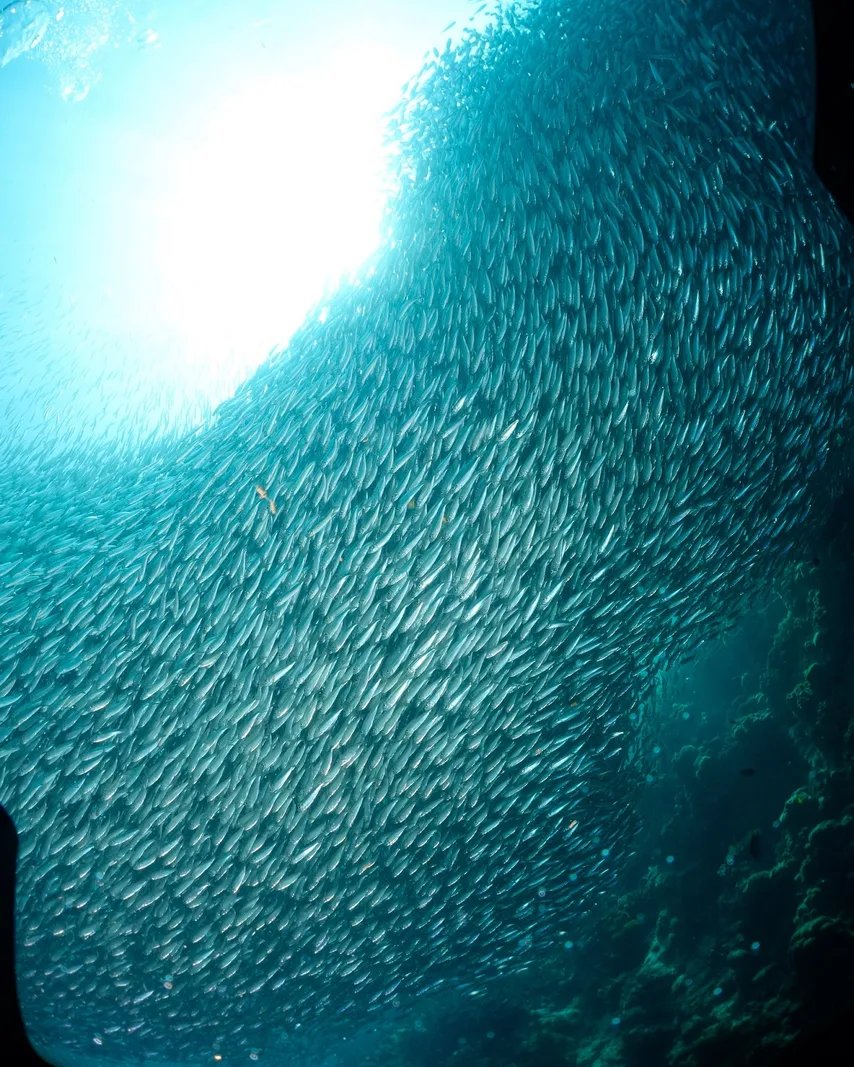
What you will see: hammerhead sharks (schooling in numbers), grey reef sharks, silvertip sharks, manta rays, sea turtles nesting on the islets, whale sharks (March-April), napoleon wrasse, bumphead parrotfish in enormous schools, and coral walls that drop hundreds of metres into the Sulu Sea. The visibility routinely exceeds 30 metres.
The Tubbataha season is strict: March through June only, determined by weather and the National Park permit system. Liveaboards depart from Puerto Princesa (Palawan). In Australian dollar terms, a Tubbataha liveaboard runs AUD 2,800-4,500 for a 6-8 night itinerary including all dives, meals, and park fees. For Australian divers who have done Coral Sea liveaboards (which run AUD 3,000-5,000 for comparable duration), this is price-competitive and offers a genuinely different experience.
Operators worth researching for Australians: Big Blue Explorer, MV Stella Maris, and Infiniti Liveaboard all operate Tubbataha circuits with strong safety records.
Coron, Palawan — Wrecks vs the SS Yongala
The SS Yongala off Townsville is Australia's most celebrated dive wreck — a passenger ship lost in a 1911 cyclone, now encrusted in coral and teeming with bull sharks, sea snakes, and grouper. It is genuinely world-class.
Coron's Japanese shipwrecks are different in character but equally extraordinary. In September 1944, a US Navy carrier airstrike (Operation Snapshot) sank 24 Japanese Imperial Navy vessels in Coron Bay in a single day. Today, at least 10 of these wrecks are fully diveable and mapped, sitting in 15-35m of water — accessible to Open Water certified divers, not just advanced wreck specialists.
The Irako (refrigerator ship, 147m long), the Okikawa Maru (tanker, 165m), and the Kogyo Maru (cargo ship with a small aeroplane on deck) are the standouts. All are encrusted in decades of hard coral growth and home to lionfish, moray eels, batfish, and schooling jacks. The intact scale of these vessels — walking along the deck of a 160-metre warship at 30m depth — is an experience the Yongala, for all its brilliance, cannot replicate simply because there is only one of it.
Day trip wreck diving from Coron town runs AUD 50-80 per day including two dives, guide, and gear rental. A 5-day wreck diving trip from Coron with accommodation and diving is achievable on AUD 700-1,000 all in, flights excluded.
Malapascua Island, Cebu — Thresher Sharks
Australian divers familiar with the hammerhead aggregations at Osprey Reef (Coral Sea) will understand the appeal of Malapascua. Monad Shoal — a seamount rising to 20-25m depth a short boat ride from Malapascua — is the world's only known site for reliable daily thresher shark encounters.
Threshers are deep-water pelagic sharks that come up to Monad Shoal at dawn for cleaning station visits, allowing divers to encounter them on safety-stop depths. The dives are done as dawn dives — enter the water before sunrise, descend to 25-30m in the pre-dawn dark, and wait for the threshers to emerge from the blue. They are eerie, elegant, and genuinely one of the more unusual shark dives in the world. The thresher's elongated tail (as long as its body) is unmistakeable.
Malapascua is a small car-free island reached by a short pump boat from Maya port in northern Cebu. Divemasters and instructors from around the world base themselves here. Thresher shark diving runs AUD 28-45 per dawn dive including boat and guide. Combined with Cebu's other dive sites — Moalboal's sardine run, Oslob's whale sharks — northern Cebu is an outstanding dive week destination.
Apo Island, Negros Oriental — Turtle Conservation Volunteer Diving
For Australian divers interested in marine conservation, Apo Island Marine Sanctuary near Dumaguete is one of the Philippines' great success stories. A locally managed no-take marine sanctuary established in the 1980s, Apo Island has become a textbook example of community-based reef recovery. The turtle population — green turtles and hawksbills — is extraordinary: encounters with 5-10 turtles per dive are routine, and individual turtles are often unafraid of divers due to generations of protected coexistence.
Several Dumaguete-based dive operators offer Apo Island day trips (AUD 60-90 per person including two dives, boat, and lunch) and volunteer week programs working with local marine conservation NGOs. For Australian divers whose GBR experience includes concerns about reef health and climate impact, Apo Island offers a genuinely hopeful counter-narrative about what community conservation can achieve.
Apo Reef, Mindoro — Remote Open-Sea Diving
Not to be confused with Apo Island, Apo Reef off Mindoro is the Philippines' largest atoll reef system and a comparable experience to the outer GBR — remote, pristine, and accessible only by liveaboard. Manta rays, whale sharks, tiger sharks, hammerheads, and schooling barracuda make Apo Reef one of the country's premier pelagic sites. Liveaboards depart from Puerto Galera or Coron. Season is roughly November through May.
PADI Qualifications: Do Australian Certifications Work?
Yes. PADI certifications are internationally standardized — your Australian PADI Open Water, Advanced Open Water, or Divemaster card is recognised everywhere in the Philippines with no additional paperwork or fees. Bring your certification card (physical or digital via the PADI app) and your logbook. Philippine dive operators will ask to see both for more advanced dive sites.
NAUI, SSI, and CMAS certifications are equally accepted throughout the Philippines. No Australian diver needs to requalify.
Want to get certified in the Philippines? Cebu (especially Moalboal and Malapascua), El Nido, Siargao, and Dumaguete all have well-regarded PADI dive shops offering Open Water courses at AUD 250-380 — significantly cheaper than Australian certification. The warm, clear water and gentle conditions make these ideal learning environments.
DAN Asia Pacific Membership from Australia
Australian divers already know about DAN (Divers Alert Network) — the non-profit dive safety and emergency response organisation. DAN Asia Pacific covers Australian members diving throughout the Philippines and the broader Asia-Pacific region.
DAN membership from Australia costs approximately AUD 110-165 per year (individual) and includes: dive accident insurance covering hyperbaric (recompression) treatment, emergency evacuation, medical evacuation to Australia if required, and a 24-hour emergency hotline (+61 8 8212 9242 for Australian members). The Philippines has recompression chambers in Manila (St. Luke's Medical Center), Cebu, Subic Bay, and Puerto Princesa — so access to hyperbaric treatment in an emergency is genuine, not theoretical.
For any Australian diving regularly in the Philippines — particularly for liveaboard or remote reef diving — DAN Asia Pacific membership is non-negotiable. The cost of a single recompression treatment without insurance exceeds the annual membership fee by a factor of 20-30.
Liveaboard Recommendations and Prices in AUD
Philippine liveaboards cater to a range of budgets. In 2026 AUD pricing for reference:
- Budget liveaboard (Coron wrecks, Visayas circuits): AUD 180-280 per person per night, typically 4-5 dives per day, basic cabin, simple meals. Operators like Seadoors and Navicula run value options.
- Mid-range liveaboard (Tubbataha, Apo Reef): AUD 380-520 per person per night. Better cabins, more consistent diving, improved food. Most Tubbataha operators fall in this range.
- Premium liveaboard (Tubbataha, Coral Triangle circuits): AUD 550-750+ per person per night. Air-conditioned en suite cabins, excellent food, small group sizes (12-16 divers maximum), experienced guides. Infiniti Liveaboard and Atlantis Azores operate in this tier.
For comparison, a comparable Australian Coral Sea liveaboard runs AUD 500-700 per person per night — so the Philippines' premium liveaboard tier is genuinely price-competitive for the experience delivered.
Best Months for Each Major Dive Destination
- Tubbataha Reef: March through June (strict seasonal access by park management)
- Coron wrecks: November through May (calm Sulu Sea conditions), January-March optimal
- Malapascua thresher sharks: Year-round, but March-May offers the calmest seas and best visibility
- Apo Island: Year-round (well-protected from weather), April-June ideal
- Apo Reef (Mindoro): November through May
- Siargao diving: March through October (surf season; diving is secondary but accessible)
- Puerto Galera: November through May
Aussie Dive Operators Running Philippines Trips
Several Australian-based travel companies organise Philippines dive trips with liveaboard and resort components specifically marketed to Australian divers:
- Dive Adventures (Sydney): Long-established Australian dive travel specialist with Philippines Tubbataha and Coron packages.
- Dive The World (operates across Asia-Pacific): Australia-friendly booking platform for Philippine liveaboards with AUD pricing and Australian customer service hours.
- Mike Ball Dive Expeditions: Primarily GBR and Coral Sea but also organises occasional Philippines expedition circuits for Australian divers.
Booking directly with Philippine liveaboard operators is also easy and often cheaper — all major operators accept USD or AUD bank transfers or credit cards, and their booking processes are traveller-friendly.
Frequently Asked Questions
Is diving in the Philippines better than the Great Barrier Reef?
Different rather than simply better. The Philippines offers superior wreck diving (Coron), unique shark encounters (threshers at Malapascua, hammerheads at Tubbataha), and dramatically lower prices. The GBR offers unmatched accessibility for Australians (no international travel), specific megafauna (GBR whale sharks, GBR minke whales, sea lions), and an extraordinary overall scale. Serious divers should do both — they complement each other rather than competing. The Philippines is better value for equivalent biodiversity and offers experiences (WWII wrecks, Tubbataha's pristine atoll) the GBR cannot replicate.
What certification level do I need for Tubbataha?
Most Tubbataha liveaboard operators require at least PADI Advanced Open Water or equivalent (NAUI Advanced, SSI Advanced Adventurer) with a minimum of 50 logged dives. Some require 100 logged dives. The dives themselves range from easy reef drifts to deep shark encounters requiring good buoyancy control. Bring your certification card, logbook, and a recent dive within the last 12 months. If you have not dived in over a year, do a skills refresher dive in the Philippines before the liveaboard.
Are there recompression chambers in the Philippines?
Yes. The Philippines has functional recompression (hyperbaric) chambers in Manila (St. Luke's Medical Center in BGC), Cebu City, Subic Bay Naval Base, Puerto Princesa (Palawan), and General Santos City. Coverage is not as dense as Australia's but adequate for the major dive regions. DAN Asia Pacific membership provides emergency coordination and evacuation assistance if local treatment is insufficient. Always dive within the table limits, ascend slowly, and do your safety stops — prevention is far preferable to treatment.
What is the water visibility like in the Philippines?
Excellent in most dive regions during the dry season. Tubbataha averages 25-40m visibility — among the best in the world. Coron's lagoons and wrecks average 15-25m. Malapascua's Monad Shoal averages 20-30m in good conditions. Visibility drops in rainy season (June-October) for western-facing sites due to runoff and surge. Siargao and eastern-facing sites maintain better visibility year-round. For comparison, the GBR's outer reef typically sees 15-30m visibility — the Philippines' top sites are comparable or better.
Can I rent all dive gear in the Philippines or should I bring my own?
All major Philippine dive destinations offer full gear rental — BCD, regulator, wetsuit, fins, mask, computer. Quality varies from excellent (major dive schools in Cebu, Malapascua, El Nido) to adequate (smaller remote operators). For serious diving, Australian divers should bring their own regulator and computer at minimum — these are the two items where personal familiarity and trust in the equipment genuinely matters. Wetsuit and BCD rental is generally fine. A 3mm wetsuit or shortie is comfortable year-round in Philippine waters. Pack your Australian DAN card and any specialty certifications (wreck, nitrox, deep) you hold.

PANA.PH Editorial Team
Philippines travel desk
The PANA.PH travel desk researches, books and re-checks Philippines travel logistics — fares, ferry schedules, government fees and permit rules — and publishes what it can verify.
🏡 Real local stays (book direct)
Hand-picked homestays and guesthouses — book direct, no markup.
Browse all local stays →
🌊 Popular activities (book instantly)
Island hopping, canyoneering, whale sharks — real Klook/GetYourGuide options.
View all activities →