PHPANA.PH Team · Philippines travel teamPublished June 15, 2026 · 5 min read
There is a particular kind of magic in arriving somewhere just as the whole town spills into the streets. In the Philippines, festivals - or fiestas - are not just events on a calendar; they are the beating heart of community life, equal parts devotion, dance, drumming, and pure joy. Time your trip right and you do not just see a place, you feel its pulse. This guide covers the festivals genuinely worth planning around, what each one feels like, roughly when it falls, and how to enjoy it without getting overwhelmed.
A quick honest note before we begin. Festival dates shift from year to year and some follow religious calendars, so always confirm the exact dates closer to your travel window rather than trusting any single number. What stays reliable is the general season, which is what we will focus on here.
Sinulog - Cebu, January
If you can only catch one, Sinulog is a spectacular place to start. Held in Cebu City in January, it honors the Santo Nino (the Holy Child) and draws enormous crowds for a grand parade of dancers in dazzling costumes, all moving to a hypnotic two-steps-forward, one-step-back rhythm. The energy is electric, the streets are packed, and the celebration spills well beyond the official parade into days of music and street parties.
Cebu is wonderfully easy to reach and has plenty to offer once the confetti settles, from historic sites to nearby beaches and island hopping. If you are thinking of building a trip around it, our Cebu guide covers where to stay and what to do, and you can fill the surrounding days with diving, waterfalls, and food trips. Book accommodation early - Sinulog is one of the busiest times of year in the city.
Ati-Atihan - Kalibo, Aklan, January
Often called the mother of all Philippine festivals, Ati-Atihan takes over the town of Kalibo in Aklan, also in January. Revelers paint their faces and bodies in soot-dark hues, don tribal-inspired costumes, and dance through the streets to relentless drumbeats chanting Hala Bira. It is raucous, joyful, and refreshingly participatory - onlookers are pulled into the dancing rather than kept behind barriers.
Because Ati-Atihan and Sinulog fall in the same month, some travelers try to experience both, though that requires careful planning and a willingness to move quickly. Aklan is also the jumping-off point for one of the country most famous islands, which makes pairing the festival with some beach time very tempting. Our Boracay guide can help you plan that stretch of the trip.
Dinagyang - Iloilo, January
Rounding out the January trio is Dinagyang in Iloilo City. Like its cousins, it honors the Santo Nino and features tribes of dancers in bold, intricate costumes performing tightly choreographed routines that are genuinely jaw-dropping. Dinagyang has a reputation for performance polish - the warrior dances and drumbeats are precise and powerful - and the city embraces visitors warmly. Iloilo is also a quietly excellent food destination, so come hungry.
MassKara - Bacolod, October
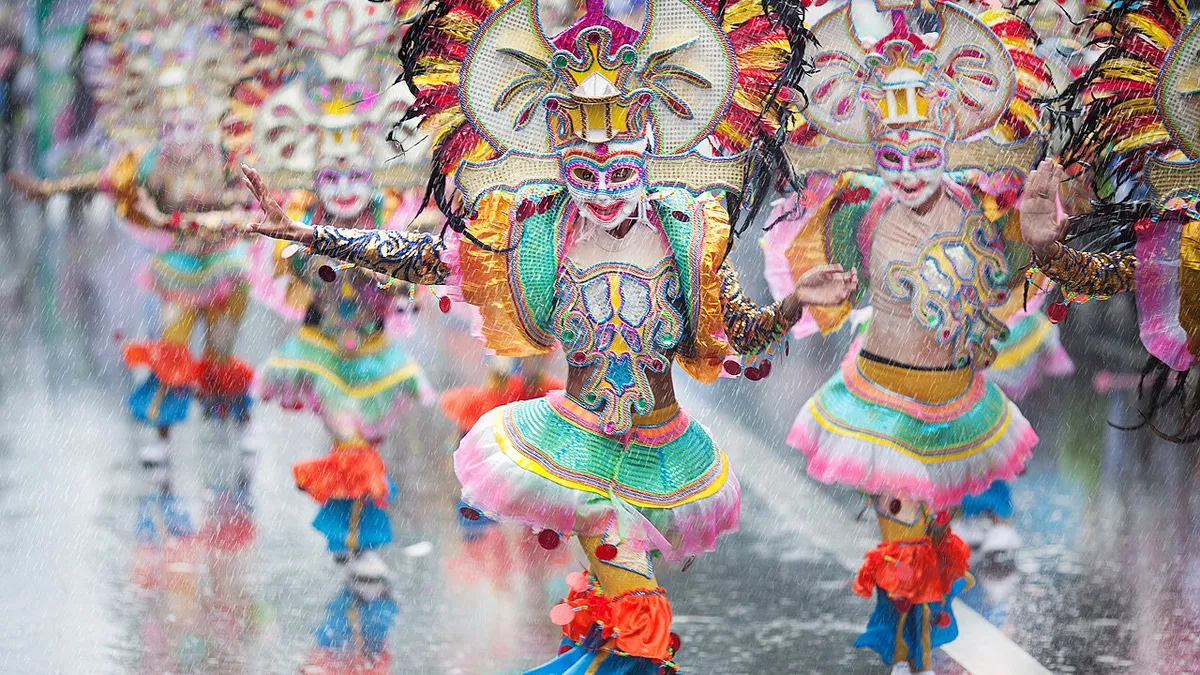
If January feels too far off, MassKara in Bacolod offers a completely different flavor in October. This is the festival of smiling masks, born in a difficult period as a defiant celebration of resilience and joy. The result is a riot of color: dancers in elaborate, beaming masks and feathered costumes filling the streets, alongside street parties, food, and live music. Bacolod is known as the City of Smiles, and during MassKara that nickname feels entirely earned. The vibe is more carnival than solemn procession, making it a great pick for travelers who want pure celebration.
Panagbenga - Baguio, February
For something gentler and cooler - literally - head to the mountain city of Baguio in February for Panagbenga, the flower festival. Spread across several weeks, it celebrates the blooming season with grand float parades covered in fresh flowers, street dancing in flower-inspired costumes, and a relaxed, family-friendly atmosphere. Baguio mild climate is a welcome break from lowland heat, and the festival pace is far more leisurely than the January fiestas. It is a lovely choice if you want festivity without the crush of the biggest events.
How to Choose and Plan
So which one is for you? If you want the grandest spectacle and easy logistics, Sinulog in Cebu is hard to beat. For raw, participatory energy, Ati-Atihan delivers. If polished performance thrills you, Dinagyang is the pick. Want pure color and celebration with no religious solemnity? MassKara. Prefer cool weather and a gentle pace? Panagbenga.
A few practical pointers apply across the board. Book flights and accommodation well in advance, because festival weeks are peak travel times and prices and availability tighten quickly. Confirm the precise dates and parade schedules from official local sources before you commit. Pack light, comfortable clothes and good shoes - you will be on your feet in the heat for hours. Keep your valuables secure in big crowds, stay hydrated, and build a rest day into your itinerary, because festival days are long and joyfully exhausting.
When you are ready to stitch it all together, the PANA.PH trip planner can help you sequence festival days, travel time, and downtime so the trip flows instead of overwhelming you. Wherever you land, arriving with an open heart and a willingness to dance is the only real requirement.
Frequently Asked Questions
When is the busiest festival season in the Philippines?
January is the standout month, with Sinulog, Ati-Atihan, and Dinagyang all taking place within weeks of each other. October (MassKara) and February (Panagbenga) are other strong picks. Because these are peak travel periods, booking early is essential.
Can I attend more than one festival in a single trip?
Sometimes, yes. The three January festivals fall close together, so energetic travelers occasionally chain them, but it requires tight planning, advance bookings, and quick travel between regions. For a more relaxed trip, pick one festival and explore the surrounding area fully.
Are these festivals safe and welcoming for foreign visitors?
Very much so. Filipino fiestas are famously welcoming, and visitors are often invited to join the dancing and celebrations. As with any large crowd, use common sense: secure your belongings, stay hydrated, and keep an eye on your group. The warmth you will encounter is genuine.
How far in advance should I book?
As early as you reasonably can, ideally several months ahead for the most popular festivals like Sinulog and MassKara. Accommodation in host cities fills up fast and rates rise during festival weeks, so the earlier you lock in flights and a place to stay, the better.