Contents
- 1What the Bohol Countryside Tour Actually Is
- 2The Chocolate Hills: Geology of 1,268 Mounds
- 3The Philippine Tarsier: Ethics Before the Selfie
- 4Sandugo: The 1565 Blood Compact
- 5Baclayon Church and the 2013 Earthquake
- 6The Loboc River Cruise
- 7Practical How-To: Getting There, Fees and Timing
- 8Honest Caveats: Weather, Crowds and Wildlife
- 9Conclusion
The Bohol countryside tour is the single most popular day excursion in the Central Visayas, and for good reason: in one well-paced loop it threads together a geological wonder, the world's smallest primate, a Spanish colonial church, the site of the Philippines' first international treaty, and a lunch cruise on a jade-green river. This guide goes well beyond the brochure. We cover the real geology of the Chocolate Hills, the conservation crisis facing the Philippine tarsier, the 1565 Sandugo blood compact, the devastating 2013 earthquake, and the honest, practical details — fees in pesos, seasons, and ethical caveats — you need to plan a trip that respects both the island and your budget.
Hotels in Bohol
Compare live prices via Travelpayouts — targeted for this guide.
What the Bohol Countryside Tour Actually Is
The "countryside tour" is a roughly 8-to-10-hour circuit, usually starting in Tagbilaran City or the Panglao resort strip and looping inland and east. A standard itinerary covers the Blood Compact Shrine, Baclayon Church, the Philippine Tarsier Sanctuary, the Loboc River lunch cruise, the man-made mahogany forest, and the Chocolate Hills viewpoint at Carmen, often with stops for native handicrafts, a python display, or a hanging bridge. It is typically sold as a private van charter or a shared join-in tour. Because every stop is spread across the southern and central interior, doing it independently by motorbike is possible but tight; most visitors hire a driver-guide for the day.
Who the tour suits
It is ideal for first-time visitors with one or two days on the island, families, and anyone who wants the "greatest hits" without logistics. If you have more time, you can break these stops across separate days and add Anda's beaches, Cabilao's diving, or the Anda and Candijay seascapes. For trip-cost planning across multiple days, our travel expenses guide helps you budget transport, fees, and meals realistically.
The Chocolate Hills: Geology of 1,268 Mounds
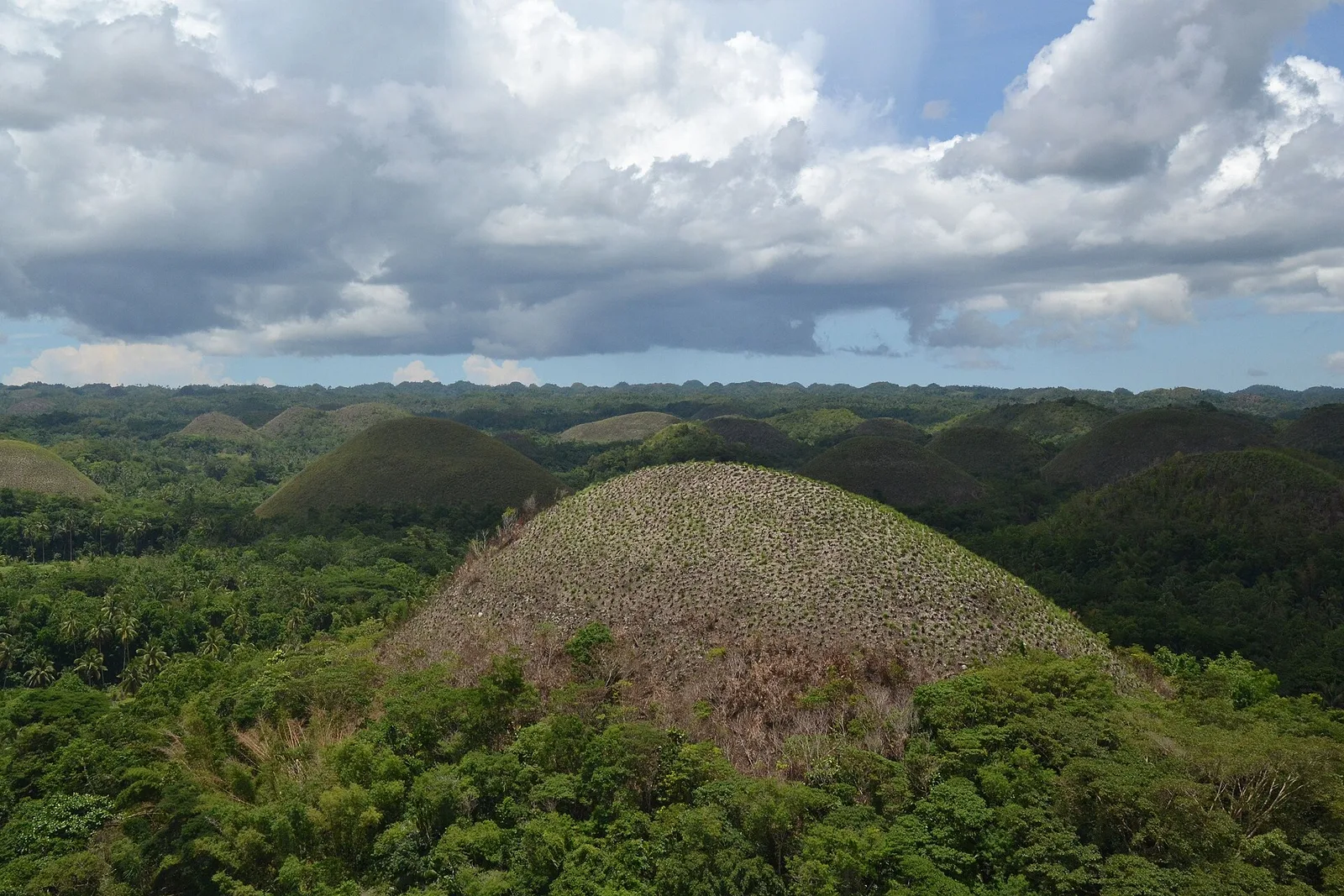
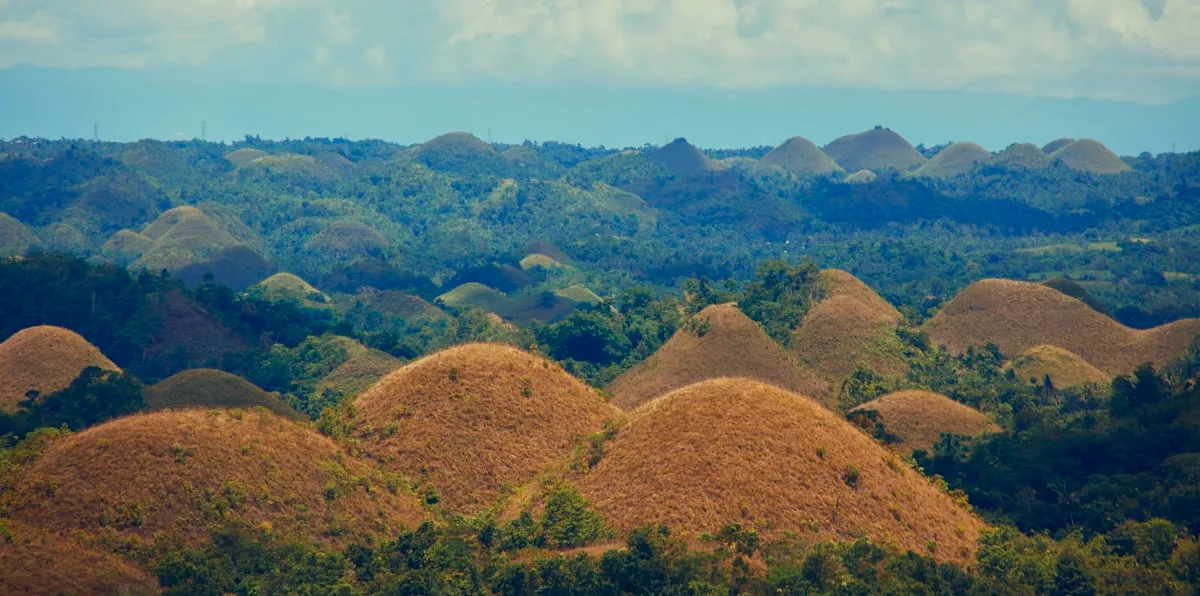
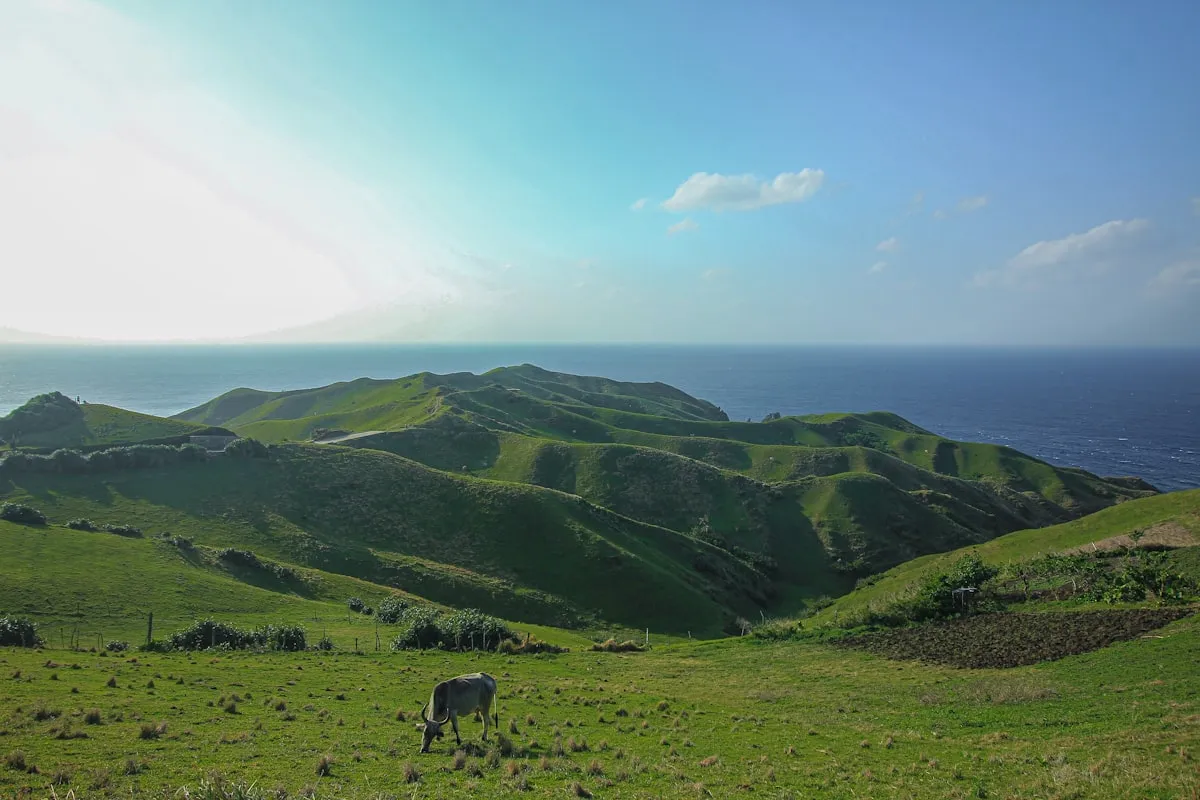
The headline attraction is the Chocolate Hills — an estimated 1,268 (some surveys count up to about 1,776) near-symmetrical conical mounds spread across roughly 50 square kilometers of Carmen, Batuan, and Sagbayan. In the dry season the grass covering them turns chocolate-brown, giving the formation its name. They are a declared National Geological Monument and a perennial nominee on "natural wonders" lists.
Chocolate Hills tour in Bohol
Hand-picked experiences in Bohol — book on Trip.com with instant confirmation.
How the hills formed
Despite the local legend of two warring giants hurling boulders (and the romantic tale of a giant's tears), the hills are a textbook example of karst weathering. They are composed of marine limestone — ancient coral reef deposits laid down underwater and later uplifted. Over millions of years, rainwater, mildly acidic from dissolved carbon dioxide, dissolved the soft limestone along joints and fractures, leaving behind these residual "haystack" or "cockpit" karst hills. A clay-rich impermeable layer beneath them is thought to have shaped the rounded, uniform profile. They range from about 30 to 120 meters high. The two main viewing platforms are the Chocolate Hills Complex in Carmen (the classic climb up a stairway to a 360-degree deck) and the Sagbayan Peak adventure park.
The Philippine Tarsier: Ethics Before the Selfie
The Philippine tarsier (Carlito syrichta) is one of the smallest primates on Earth, fitting in an adult palm, with enormous fixed eyes and the ability to rotate its head nearly 180 degrees. It is a nocturnal, insectivorous, intensely shy animal — and it is a conservation-dependent species, listed by the IUCN as Near Threatened due to habitat loss and the historic pet trade.
Go to the right sanctuary
This is the most important ethical decision of the whole tour. Visit the Philippine Tarsier Sanctuary in Corella, run by the Philippine Tarsier Foundation, where the animals live in a protected forest and rules are strictly enforced: no flash photography, no touching, no loud noise, and a respectful distance. Tarsiers are notoriously stress-prone; in captive or harassed conditions they have been documented to self-harm, and bright light damages their light-sensitive eyes. Some roadside "tarsier" stops near Loboc keep animals in smaller, more disturbed enclosures — if your driver tries to take you there, ask specifically for the Corella foundation site. Choosing the ethical option is exactly the kind of decision our destination guides are built to help travelers make.
Sandugo: The 1565 Blood Compact
On the Tagbilaran coast stands the Blood Compact Shrine (Sandugo), a bronze tableau commemorating one of the foundational events of Philippine-Spanish relations. On March 16, 1565, the Spanish conquistador Miguel Lopez de Legazpi and the local chieftain Datu Sikatuna performed a sandugo — a blood compact in which both men drew blood from their arms, mixed it with wine, and drank it to seal a pact of friendship.
Why it matters historically
The Sandugo is celebrated as the first recorded treaty of friendship between Spaniards and Filipinos, and it is commemorated each year in Tagbilaran's Sandugo Festival every July. The monument, sculpted by National Artist Napoleon Abueva (a Bohol native), is a quick photo stop, but it anchors the whole tour in the island's pivotal role at the start of the Spanish colonial era.
Baclayon Church and the 2013 Earthquake
The Church of Our Lady of the Immaculate Conception in Baclayon is one of the oldest stone churches in the Philippines, with construction of the coral-stone structure dating to the late 1500s and 1700s. Built from coral blocks cut from the sea and bound with lime mortar, it is a monument to the Jesuit and Recollect mission era and houses an ecclesiastical museum of centuries-old relics, vestments, and santos.
The Bohol earthquake of October 15, 2013
On the morning of October 15, 2013, a magnitude 7.2 earthquake struck Bohol, killing more than 200 people and damaging or destroying numerous heritage churches across the island. Baclayon's belfry and facade were heavily damaged; the Church of San Pedro in Loboc partly collapsed; and the Loon church (Bohol's largest) was almost completely destroyed. Painstaking restoration of these National Cultural Treasures has been ongoing for years using salvaged original coral stones. When you visit, you are seeing both centuries of colonial craftsmanship and a living lesson in heritage recovery — treat scaffolding and reconstruction areas with respect.
The Loboc River Cruise
The Loboc River cruise is the relaxed centerpiece of the day. Floating restaurants (large bamboo-decked pontoon rafts) drift slowly upriver through a corridor of coconut palms and jungle, while passengers eat a buffet lunch of Filipino dishes and grilled fish. Many cruises stop at a riverside platform where a local community group performs traditional songs and dances. The river's startling green color comes from its depth and the surrounding vegetation.
Loboc and the man-made forest
Between Loboc and Bilar lies the famous man-made mahogany forest — a dense, shaded two-kilometer stretch of towering trees planted as a reforestation project decades ago. It is a popular cool-down photo stop and a reminder that much of Bohol's interior is actively managed landscape, not untouched wilderness.
Practical How-To: Getting There, Fees and Timing
Getting to Bohol
Most travelers fly into Bohol-Panglao International Airport (Tagbilaran), or take the fast ferry from Cebu City to Tagbilaran (roughly 2 hours). If you are weighing the Cebu ferry against flying directly, our ferry vs flight comparison breaks down cost, time, and reliability. To check current air routes and fares into Panglao, see the flights page.
Real fees in pesos (approximate)
- Chocolate Hills Complex (Carmen): around PHP 50-100 environmental fee per person.
- Philippine Tarsier Sanctuary (Corella): roughly PHP 60-120 entrance.
- Loboc River cruise with buffet: about PHP 500-800 per person depending on operator.
- Baclayon Church museum: a modest entrance of around PHP 50-100.
- Blood Compact Shrine: free; tips appreciated for parking attendants.
- Whole-day private van/guide: commonly PHP 2,500-4,500 for the vehicle, split among your group, excluding the per-site fees above.
Prices shift with fuel costs and season, so treat these as planning ranges, not quotes. Bring enough cash — many rural stops do not take cards.
What to bring
Pack light, breathable clothing, a hat and reef-safe sunscreen, insect repellent for the forest stops, a refillable water bottle, and modest cover for entering the churches (shoulders and knees). Comfortable shoes help with the Chocolate Hills stairway. Carry small-denomination pesos for fees and tips.
Honest Caveats: Weather, Crowds and Wildlife
Season and storms
Bohol's driest, most reliable months run roughly from December to May, which is also when the Chocolate Hills are at their brownest and most photogenic. The habagat (southwest monsoon) and the typhoon season from around June to November can bring heavy rain, lush green hills, and the real risk of ferry suspensions when the Philippine Coast Guard halts sailings in rough seas — a genuine concern if you are connecting from Cebu by boat. Check our best time to visit guide and current Bohol weather before locking in dates, and build a buffer day if you are arriving by sea during storm season.
Crowds and pacing
The standard loop is heavily trafficked. To beat the tour-bus rush, start early — aim to reach the Chocolate Hills viewpoint before mid-morning and the tarsier sanctuary at opening. A private charter lets you reverse the typical order to dodge the crowds.
Wildlife ethics, restated
It bears repeating: tarsiers are fragile, stressed easily, and harmed by flash and handling. Never pay to hold one, never use flash, and keep your voice down. Skip any python or animal-display attraction that looks like a roadside cage. Responsible tourism is the only thing that keeps these species — and the island's reputation — intact.
Conclusion
The Bohol countryside tour earns its fame by compressing geology, ecology, colonial history, and living culture into a single unforgettable day. The 1,268-plus Chocolate Hills are a karst-weathering masterpiece; the Corella tarsier sanctuary is a chance to see one of Earth's rarest primates if you choose the ethical operator; Baclayon and Loboc churches carry the scars and the resilience of the 2013 earthquake; and the Sandugo shrine marks where Philippine and Spanish histories first met in 1565. Plan around the dry season, budget your pesos honestly, respect the wildlife, and you will come away with far more than a photo of brown hills — you will understand why Bohol sits at the heart of the Visayas.

Real local stays (book direct)
Hand-picked homestays and guesthouses — book direct, no markup.
Popular activities (book instantly)
Island hopping, canyoneering, whale sharks — real Klook/GetYourGuide options.
Plan your Philippines trip