 1 / 2
1 / 2
| Location | Pamilacan Island, Bohol |
|---|---|
| Duration | Full day |
| Languages | English |
| Cancellation | Free cancellation |
| Price from | ₱8,370 / person |
- Eco: Eco-conscious
- Instant confirmation
Best time for Bohol
Dec, Jan, Feb, Mar, Apr, May. See month-by-month
- Free cancellation — Cancel up to 24 hours in advance for a full refund
- Live tour guide — English
About this tour
Long before dawn fully breaks over Bohol, the sea between the mainland and Pamilacan Island lies flat and silver, the kind of calm that makes a small banca feel weightless. Then someone on the outrigger points, half-rising from the bench, and the surface tears open: a pod of dolphins arcing in unison, their dark backs catching the first light. This is the moment the Pamilacan Island Dolphin and Turtle Watching Tour is built around, and it never quite loses its magic, no matter how many times you have seen it. You are riding out over one of the richest stretches of water in the Bohol Sea, where deep channels funnel nutrients up from below and marine life gathers to feed.
What makes this trip special is not just the wildlife. It is the story of the island itself, a place that once hunted the very animals it now protects, and the fishing families who turned their harpoons into something gentler.
Where Pamilacan sits, and why the sea is so alive
Pamilacan is a small coral island lying off the southern coast of Bohol, roughly opposite the town of Baclayon, and administratively part of the municipality of Baclayon. It is tiny, home to only a few hundred residents, ringed by white sand and reef, with no cars and limited electricity. The boats leave from the mainland (commonly from Baclayon or nearby coastal barangays) and cross open water to reach it.
The reason for the abundance lies in the geography of the Bohol Sea. This body of water, also called the Mindanao Sea, is unusually deep, plunging into trenches well over a kilometre down in places. Cold, nutrient-rich water from these depths rises toward the surface, fuelling plankton blooms that feed small fish, which in turn draw the larger animals. The channel between Bohol, Pamilacan, and the islands to the south is a recognised corridor for cetaceans. Researchers have documented numerous species of whales and dolphins in the Bohol Sea, including spinner dolphins, bottlenose dolphins, Risso's dolphins, melon-headed whales, and, on rarer occasions, larger whales passing through. It is one of the more reliable places in the Philippines to encounter wild dolphins in their natural element.
The name tells the history
Pamilacan is widely said to take its name from "pilak," a local word for the harpoon or barbed spear once used to hunt large marine animals. For generations the islanders were renowned hunters of manta rays, whale sharks, and even whales, using hand-thrown harpoons from small boats in a tradition that was both extraordinarily skilled and extraordinarily dangerous. That history is real and it matters, because it explains the transformation at the heart of this tour.
From hunters to guardians
In the late 1990s, the Philippines moved to protect whales, whale sharks, and manta rays, and the traditional hunt was outlawed. For Pamilacan's fishing families, this meant losing a way of life that had defined the island for generations. Rather than push the trade underground, a community-based ecotourism effort grew up here: the former hunters, who knew the sea and the animals better than anyone, became the spotters and boat handlers for wildlife watching instead. The men who once read the water to throw a harpoon now read it to find a pod for visitors to admire. It is one of the more genuine conservation success stories you can witness on a day trip, and choosing a tour that uses local Pamilacan boatmen puts your money directly into that community.
What the day actually looks like, stop by stop
The trip runs early for a reason: dolphins feed and move most actively in the cool hours after sunrise, and the sea is usually calmest then. Expect a pre-dawn pickup and a boat departure not long after first light.
- The dolphin search. Once clear of the coast, the boatmen slow down and scan the horizon. Spinner dolphins, named for the spinning leaps they make clear of the water, often travel in large groups and are the most frequent sighting. The crew keep a respectful distance and let the animals approach the boat rather than chasing them. Some mornings you meet a handful; on a good day you may find yourself surrounded by dozens. Sightings are wild and never guaranteed, but the odds here are genuinely good.
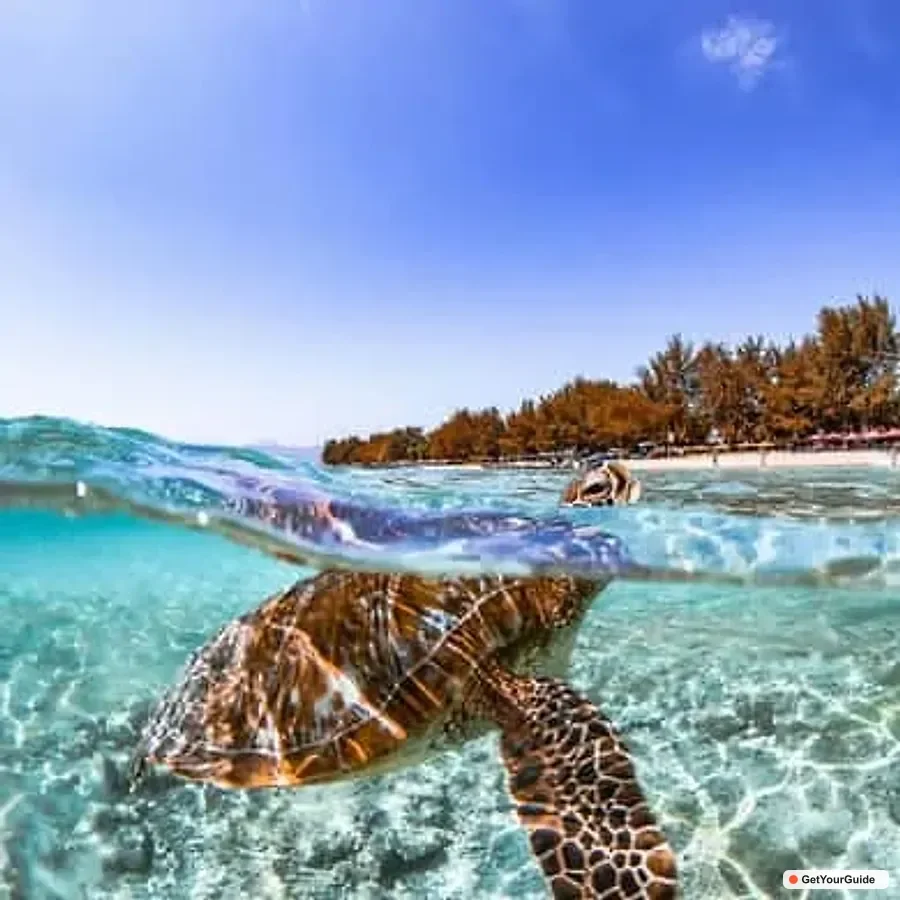
- Turtles and the reef. Pamilacan is fringed by healthy coral reef, and green sea turtles are regularly seen grazing on seagrass in the shallows around the island. The tour typically includes time to snorkel over the reef, where alongside turtles you can spot reef fish, sea stars, and coral gardens in clear water. There is also a protected sandbar and a marine sanctuary area near the island.
- The island itself. Most tours land on Pamilacan for a rest, a simple lunch (often freshly grilled fish and rice arranged by the community), and time to wander a sleepy island with no traffic. You will see the remains of an old Spanish-era watchtower and the bones and artefacts of the hunting era, a quiet reminder of how much has changed.
A full outing usually runs the better part of a day, with the on-water wildlife portion concentrated in the early morning and the island and snorkelling filling out the rest before an early-afternoon return.
Practical tips from experience
- Best time to go: The dry season, roughly November through May, brings the calmest seas and the most reliable boat crossings. Dolphin sightings happen year-round, but rough water in the wet months can cancel trips. Go as early in the morning as offered.
- What to bring: Reef-safe sunscreen, a hat, a light long-sleeve layer for the open boat, motion-sickness tablets if you are prone to seasickness (the open crossing can be choppy), water, swimwear, a towel, and a dry bag for your phone or camera. Bring your own snorkel and mask if you have one, though gear is often available.
- How strenuous: Low effort overall. The main demands are an early start, a potentially bumpy boat ride, and basic swimming or snorkelling ability. It suits families and casual travellers.
- What is typically included: Boat, local crew and spotters, and often a community lunch and reef snorkelling. Confirm whether transfers from your hotel, environmental or sanctuary fees, and gear are included, as these vary by operator.
Watching responsibly
This is wild dolphin watching, not a feeding or captive encounter, which is what makes it ethical in a way that some Philippine marine attractions are not. The honest debate worth knowing about lies elsewhere in the region: at Oslob on nearby Cebu, whale sharks are hand-fed daily to guarantee close encounters, a practice marine biologists widely criticise for altering the animals' natural behaviour and migration. Pamilacan is the opposite model: no baiting, no touching, no chasing. Good crews keep their distance, cut engines near pods, and never herd the animals. If you snorkel with turtles, keep well back, never touch them, and never block a turtle's path to the surface to breathe. Choosing operators who employ the local Pamilacan community keeps the conservation incentive alive.
A closing thought
There is a particular kind of quiet that settles over the boat on the ride home from Pamilacan, salt drying on your skin, the island shrinking behind you. You came for the dolphins, and with luck you saw them break the water in the gold of early morning. But what stays with you is the bigger picture: a community that chose to protect the sea it once hunted, and now lets visitors share in its wildness without taking anything from it. That is the rare travel experience that leaves the place better for your having come. Pamilacan offers exactly that.
Highlights
- Snorkelling or diving in clear, marine-rich water
- A chance to see reef fish, turtles or other marine life up close
- A guide on hand throughout for safety and to point out wildlife
What's included
- Boat transfer
- Snorkelling gear
- A guide
- Life vest
Not included
- Hotel pickup (unless stated)
- Underwater camera rental (unless stated)
- Marine park fees (where charged locally)
Good to know
Meeting point
Confirmed with your operator based on your Pamilacan Island, Bohol accommodation - check the listing for the exact meeting point and time.
Important information
What to bring
- Swimwear
- Reef-safe sunscreen applied well before entering the water
- A towel
- An underwater camera
Not allowed
- Touching or standing on coral or marine life
- Regular (non reef-safe) sunscreen
- Single-use plastics on marine-protected stops
Know before you go
Life vests are available for less confident swimmers, and the pace is set to be comfortable for most fitness levels. Scuba elements require the appropriate certification, which the operator will confirm when you book.
Guest reviews
No reviews yet
Be the first to share your experience!
Write a review
Share your experience to help other travellers
Traveller tips for Pamilacan Island Dolphin & Turtle Watching Tour
Local-knowledge from other travellers. Got a tip? Share it.
Loading tips…
Your notes & photos for Pamilacan Island Dolphin & Turtle Watching Tour
Loading…
Ready to book?
Instant confirmation · Free cancellation · Secure payment
Affiliate links — we earn a small commission at no extra cost to you.