Cebu Historical Street & Food Walking Tour
About this tour
There is a particular kind of magic in walking through Cebu City on foot. This is the oldest city in the Philippines, the place where the country's recorded history more or less begins, and yet most visitors blow through it in an air-conditioned van, glancing at Magellan's Cross through a car window before racing off to a beach resort on Mactan. A historical street and food walking tour does the opposite. It slows everything down to the pace of a leisurely stroll, lets the heat and the noise and the smell of charcoal-grilled pork settle into your skin, and threads together the city's 500 years of layered history with the food that locals actually eat. By the end you understand Cebu not as a checklist of monuments but as a living, breathing place.
Cebu City sits on the narrow eastern coastal strip of Cebu island, in the Central Visayas. It is hemmed in between the Bohol Strait and a spine of limestone hills that rise steeply just inland, which is why the historic old town clusters so tightly around the port. That geography is the whole story: Cebu became the natural harbor where Visayan trade, and later Spanish galleons, came ashore. The downtown core you walk through on this tour, the Parian and Colon districts, grew up exactly where ships once unloaded, and the streets still follow the cramped, organic logic of a 16th-century port rather than a planned grid.
Where the Philippines Began
To understand why these streets matter, you have to go back to 1521. Ferdinand Magellan's Spanish expedition reached Cebu in April of that year and made contact with Rajah Humabon, the local ruler. Humabon and his household were baptized, and Magellan presented them with an image of the Santo Nino, the Holy Child Jesus, that survives to this day. Magellan himself died only weeks later at the Battle of Mactan, killed by the forces of Lapu-Lapu, the chieftain now celebrated as the first Filipino to resist foreign conquest. Lasting Spanish settlement came in 1565 with Miguel Lopez de Legazpi, who founded what would become the first European settlement in the archipelago. Every stone in the old town carries some echo of that origin.
The Stops Along the Way
Routes vary by operator, but a good historical-and-food walking tour of downtown Cebu typically stitches together these landmarks on foot, since they sit remarkably close to one another:
- Magellan's Cross - a small chapel housing a wooden cross that, by tradition, encases the original planted on Magellan's orders in 1521. The painted ceiling above it tells the story of that first baptism.
- Basilica Minore del Santo Nino - the church built on the spot where the Santo Nino image was found, home to the oldest religious relic in the country and the heart of the wildly popular Sinulog devotion.
- Fort San Pedro (Fuerte de San Pedro) - the oldest and smallest tri-bastion stone fort in the Philippines, begun under Legazpi. Its coral-stone walls have served as a fort, a barracks, and even a zoo over the centuries.
- Colon Street - widely cited as the oldest street in the country, laid out in the Spanish era and named for Christopher Columbus (Colon in Spanish). Today it is a chaotic, thrumming commercial artery, less monumental than living.
- The Parian district and Heritage of Cebu Monument - the old Chinese-mestizo merchant quarter, anchored by a dramatic sculptural tableau depicting key scenes from Cebuano history. Nearby stands the Jesuit House, a rare surviving 18th-century residence tucked inside a hardware warehouse.
- Carbon Market - the city's largest and oldest public market, a sprawling, sensory overload of produce, dried fish, flowers, and street food that many tours use as the food climax.
Eating Your Way Through History
The food half of the tour is not an afterthought; it is the point. Cebuano cuisine is its own distinct tradition, and the city is famous nationwide for a handful of specialties you should come hungry for. Expect your guide to stop at hole-in-the-wall eateries, market stalls, and bakeries that no map would ever lead you to.
- Lechon - this is the big one. Cebu lechon, whole pig roasted slowly over charcoal, is legendary across the Philippines for its crackling skin and the way the meat is seasoned from the inside with lemongrass, garlic, and spices so it needs no dipping sauce. Many consider Cebu the lechon capital of the country, and tasting it at the source is a revelation.
- Puso - rice woven into diamond-shaped pouches of coconut palm leaf and boiled. This hanging rice is the perfect portable partner to grilled street food and a genuinely clever piece of folk engineering.
- Ngohiong - a Cebuano take on the Chinese spring roll, spiced with five-spice powder and deep-fried, a direct edible legacy of the Parian's Chinese-mestizo merchants.
- Tuslob-buwa - a communal, theatrical street dish in which pork brain and liver are simmered into a bubbling pot (the name means roughly to dip in bubbles) and shared by dunking puso straight into the pan.
- Sutukil and grilled seafood - a Cebuano word fusing the cooking methods sugba (grill), tula (stew), and kilaw (raw, ceviche-style).
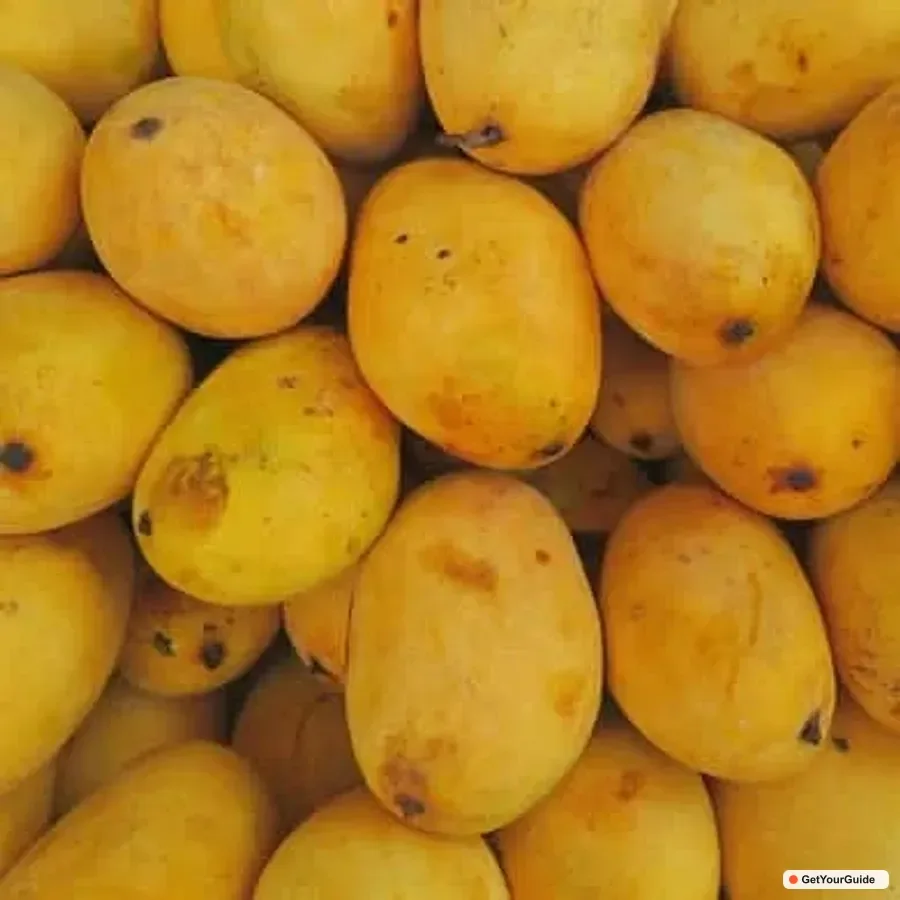
- Dried mangoes and budbud - Cebu's sweet, chewy dried mangoes are a national export, and sticky rice cakes wrapped in banana leaf make the perfect walking snack.
Why It Matters
What makes this walk more than a snack crawl is the way the food and the history are the same story. The Spanish brought Catholicism, which gave Cebu its basilica and its Santo Nino devotion, still celebrated each January in the enormous Sinulog festival. The galleon trade and Chinese merchants gave the Parian its mestizo culture, and that culture gave you ngohiong. The native Visayan tradition of roasting pig for feasts became, under all those influences, the lechon Cebu now defends fiercely as the best in the islands. Eating here is reading the city's history with your mouth.
Practical Tips
- Timing: Morning tours, starting early, let you cover the streets before the worst of the midday heat and catch markets at their freshest. Late-afternoon tours work well for street food and grilled dinners as the city cools.
- What to wear: Light, breathable clothing and genuinely comfortable closed walking shoes; sidewalks are uneven and crowded. Bring a hat, sunscreen, and a refillable water bottle, as Cebu's tropical heat and humidity are relentless year-round. Carry small peso bills for market stalls.
- Modesty: The basilica and other churches are active places of worship; cover your shoulders and knees out of respect, especially if you enter during Mass.
- How strenuous: Gentle to moderate. The distances are short and flat, but you will be on your feet for a few hours in the heat amid heavy foot and vehicle traffic, so pace yourself.
- Duration and inclusions: Most walking tours run roughly three to four hours. Tours generally include a knowledgeable local guide and several food tastings; confirm whether entrance fees (Fort San Pedro and some sites charge a small admission) and bottled water are included.
- Responsible travel: Eat at the small family-run carinderias and market stalls your guide recommends; this keeps your money in the neighborhood. Ask before photographing vendors, watch your belongings in crowded markets, and come genuinely hungry so the food does not go to waste.
A Final Word
Most people leave Cebu remembering a beach. The ones who take the time to walk its old streets leave remembering something deeper: the cool dark of the basilica, the heft of lechon crackling between their fingers, the roar of Colon Street, the strange communal joy of dunking rice into a bubbling pot with strangers. This is where the Philippines began, and the best way to feel that is one slow, hungry step at a time.
Highlights
- ✓A hands-on introduction to Filipino cooking or local produce
- ✓Fresh, local ingredients used throughout
- ✓A shared meal of what you help prepare or taste
What's included
- ✓Ingredients
- ✓A local instructor or host
- ✓Tastings or a meal
Not included
- ✗Hotel pickup (unless stated)
- ✗Alcoholic drinks
- ✗Recipe cards (unless stated)
📋 Good to know
📍 Meeting point
Confirmed with your operator based on your Cebu City, Cebu accommodation - check the listing for the exact meeting point and time.
ℹ️ Important information
What to bring
- ✓Comfortable closed shoes
- ✓A hat and sunscreen if outdoors
- ✓An appetite
- ✓Any allergy information for your host
Not allowed
- ✗Bringing outside food or drink to tastings
- ✗Photography restrictions where a home or family kitchen is involved
Know before you go
This is relaxed and family-friendly, suitable for all ages and fitness levels - a hands-on, unhurried experience rather than a strenuous one.
Guest reviews
No reviews yet
Be the first to share your experience!
Write a review
Share your experience to help other travellers
💡 Traveller tips for Cebu Historical Street & Food Walking Tour
Local-knowledge from other travellers. Got a tip? Share it.
Loading tips…
📝 Your notes & photos for Cebu Historical Street & Food Walking Tour
Loading…
Ready to book?
Instant confirmation · Free cancellation · Secure payment
Affiliate links — we earn a small commission at no extra cost to you.