Coron Cashew Processing and Butter-Making Experience
About this tour
Overview
Most visitors to Coron, Palawan come for the shipwrecks and the lagoons, but the island holds a quieter, equally compelling story in its cashew groves. This guided experience takes you through the full arc of the cashew - from the curious double-fruit that hangs on the tree to the silky butter ground from roasted kernels - inside a working processing facility near Coron town. You watch, you handle the raw material, you learn the chemistry behind why cashew processing is so laborious, and at the end you taste the product fresh. It is unhurried, educational, and genuinely illuminating for anyone who has ever eaten a cashew without thinking much about where it came from.
Cashews and Coron - A Natural Pairing
Palawan and the Calamian Islands that bracket Coron sit within the same tropical belt that made cashew cultivation practical across Southeast Asia. The cashew tree, Anacardium occidentale, arrived in the Philippines from the Americas via Portuguese and Spanish trade routes in the sixteenth century and naturalized readily in the sandy, well-drained soils of coastal Palawan. Today, the province is one of the country's consistent cashew-producing areas, with small family orchards and community processing cooperatives forming a real part of the local food economy alongside fishing and tourism.
What distinguishes Coron's cashew culture is its small-scale, artisanal character. You will not find industrial conveyor belts here. Processing is done in modest volumes, often by family groups or community cooperatives, and much of the output is sold directly to visitors as packaged nuts or flavored cashew butter - gifts that keep longer than mangoes and carry the island's identity in a jar.
The Botany of the Cashew - Why It Is So Unusual
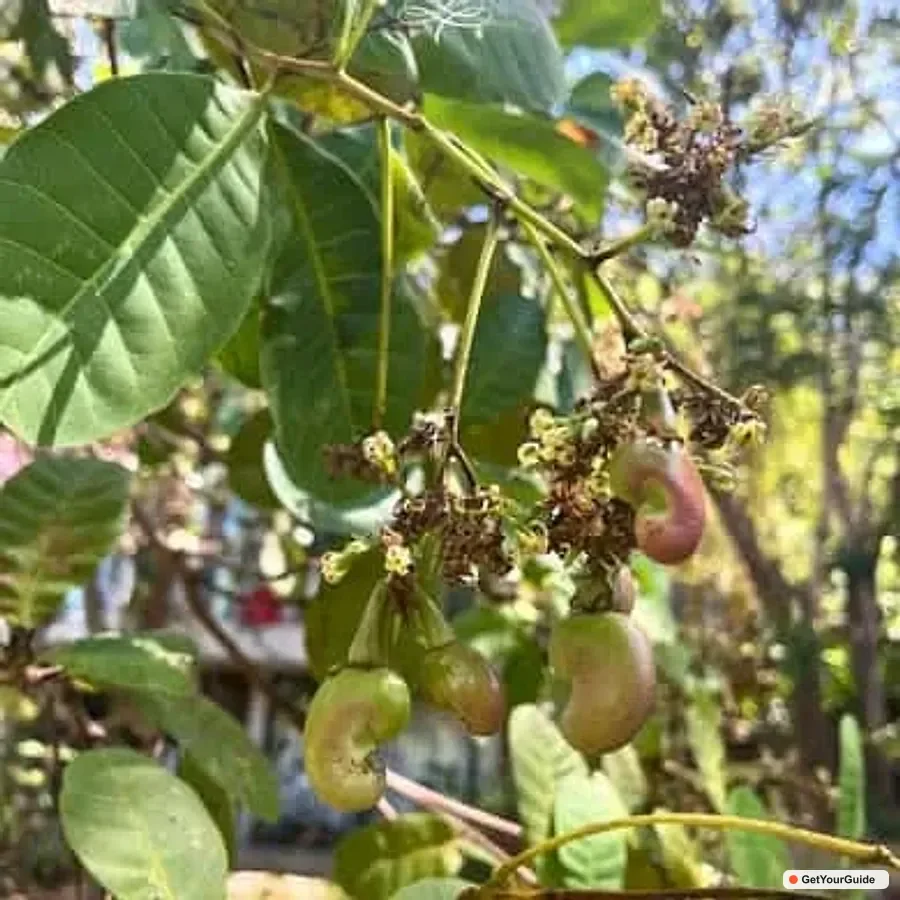
The cashew nut is botanically a seed, not a true nut. The tree produces a swollen, fleshy stalk called the cashew apple - a red or yellow pseudo-fruit that is entirely edible, mildly sweet, and astringent. The apple is popular in local juices and jams. Attached to the bottom of the apple hangs a kidney-shaped structure encasing the actual seed. That outer shell contains anacardic acid and urushiol compounds - the same chemical family responsible for poison ivy reactions - which is why raw cashew shells must never be broken open carelessly, and why processing demands a specific sequence of steps.
The Processing Journey - Step by Step
The guided tour walks you through the stages that transform the raw nut into something safe to eat and sell. Each step is explained with the reasoning behind it, so the experience feels more like a food-science class than a factory tour.
Steaming and Shell Removal
Raw cashew nuts in their shells are first steamed at high temperature. Heat neutralizes the caustic shell liquid and causes the outer shell to become brittle enough to crack without spattering the toxic oil. The steamed shells are then opened - traditionally by hand using a small mallet or blade - and the kernels extracted. Processors in Palawan typically wear gloves and work in well-ventilated spaces to avoid skin contact with residual shell liquid. This stage is the most time-intensive part of the whole operation, and watching it gives you an immediate appreciation for why cashews are never the cheapest nut on the shelf.
Peeling the Testa
Each extracted kernel is still covered by a thin papery skin called the testa. In the small-batch Coron model, this skin is loosened by a light second roasting and then peeled off by hand. The testa has a mildly tannic, bitter quality that would affect the final flavor if left on. Removing it manually - one nut at a time - adds another layer of labor that the tour makes tangible rather than abstract.
Roasting and Grading
Peeled kernels are roasted in dry heat until they develop the pale golden color and the familiar toasted aroma that most people recognize from packaged cashews. Roast time and temperature affect texture profoundly - longer roasting produces a crunchier nut with a deeper flavor, while lighter roasting keeps a softer, creamier character preferred for butter-making. At this stage, kernels are also sorted by size and checked for splits or discoloration. Whole, evenly roasted kernels are graded for direct sale; broken pieces go to the butter batch.
Grinding to Butter
Roasted cashews contain roughly 44 percent fat, which means they release their oils and collapse into a smooth paste relatively quickly when ground. The demonstration shows how dry-roasted kernels are fed into a grinder in batches, and how the operator adjusts the pass time to achieve different textures - from a coarse, slightly grainy spread to a fully smooth, almost liquid butter. No oil is added; the cashews are essentially grinding themselves. A touch of salt is the only seasoning in the plain version, though locally spiced variants sometimes include garlic or dried chili.
The Tasting
The tour closes with a tasting of fresh cashew butter, typically served with crackers or a slice of plain bread. Butter made from recently roasted Palawan cashews has a character noticeably different from imported supermarket versions - the fat is still warm, the flavor is more pronounced, and the texture can be adjusted on the spot based on your preference. Guides walk you through what affects the final taste: the roast level, the moisture content of the original nut, how long after roasting the butter is ground. It is a short but memorable sensory coda to the technical walkthrough.
Local and Cultural Context
Cashew processing in this part of Palawan is one of the few non-fishing, non-tourism livelihoods that has persisted through the decades of change Coron has experienced. The Tagbanwa people, the indigenous community whose ancestral domain covers much of Coron Island and the surrounding waters, have long used cashew trees planted along community land as a secondary income source alongside fishing and weaving. While this particular tour operates as a visitor experience rather than a direct Tagbanwa community program, the broader cashew economy it reflects is intertwined with indigenous land use in the Calamian archipelago. Buying locally produced cashew butter is a modest but direct way to support that economy.
Coron town itself has a lively market trade in packaged cashews and cashew-derived products, and the processing tour gives you the background to read those products differently - you will know what went into the labor, why certain grades cost more, and what makes freshly ground butter worth the extra step over a sealed jar.
Best Time to Visit
Coron's cashew season peaks between February and May, when trees fruit most heavily and fresh-harvest nuts are in active processing. Visiting during this window means you are more likely to see the full cycle from recently harvested raw nuts rather than dried stock. The dry season from November to May is also the ideal time to visit Coron in general, as seas are calmer and travel between the town and surrounding islands is easier. That said, processing facilities work through much of the year on stored nuts, so the experience is available outside peak season as well.
Practical Tips
- Wear closed shoes or sandals with straps - processing areas can have shells and nut debris on the floor.
- If you have a known allergy to tree nuts, consult your physician before attending - airborne particles are present during roasting and grinding.
- Bring a small bag or container if you plan to purchase butter or packaged nuts to take home - the products travel well.
- The experience is unhurried and mostly indoors, making it a good option on days when afternoon rain makes boat tours impractical.
Who This Experience Suits
The cashew tour works well for food-curious travelers who want something beyond beach and diving in Coron. It is genuinely suitable for families with older children - the chemistry of why you cannot eat a raw cashew directly from the tree is the kind of fact that tends to stick with young minds. Culinary travelers, food writers, and anyone interested in Philippine agriculture will find the depth of the demonstration satisfying. The pace is relaxed and there is no physical challenge involved, which also makes it an easy half-day activity to pair with something more strenuous in the morning or afternoon.
For repeat visitors to Coron who have already done Kayangan Lake and the wreck dives, this experience offers a completely different register - quiet, local, rooted in everyday island life rather than spectacle. It is the kind of thing that tends to become one of the stories people tell when they get home, precisely because it is unexpected.
Highlights
- ✓A well-organised day covering the area's best-known highlights
- ✓A knowledgeable local guide throughout
- ✓Convenient transport between stops
What's included
- ✓Guide
- ✓Transport
- ✓Entrance fees (where stated)
Not included
- ✗Hotel pickup (unless stated)
- ✗Meals (unless stated)
- ✗Personal expenses and tips
📋 Good to know
📍 Meeting point
Confirmed with your operator based on your Coron, Philippines accommodation - check the listing for the exact meeting point and time.
ℹ️ Important information
What to bring
- ✓Comfortable clothing
- ✓Sunscreen and a hat
- ✓Water
- ✓Some cash for fees and extras
Not allowed
- ✗Smoking in shared vehicles
- ✗Littering at natural sites
Know before you go
This suits a wide range of travellers; ask the operator about fitness or specific requirements if you are unsure whether it fits your group.
Guest reviews
No reviews yet
Be the first to share your experience!
Write a review
Share your experience to help other travellers
💡 Traveller tips for Coron Cashew Processing and Butter-Making Experience
Local-knowledge from other travellers. Got a tip? Share it.
Loading tips…
📝 Your notes & photos for Coron Cashew Processing and Butter-Making Experience
Loading…
Ready to book?
Instant confirmation · Free cancellation · Secure payment
Affiliate links — we earn a small commission at no extra cost to you.