Cebu City Sightseeing Group Tour
About this tour
Overview
Cebu City is the oldest Spanish-founded city in the Philippines and still carries visible layers of its long history alongside modern development. The Cebu City Sightseeing Group Tour links the key historic monuments of the downtown area with several elevated viewpoints and gardens in the hills above the city. The route balances colonial heritage, religious sites, and green escapes that offer cooler air and sweeping views over the urban basin and the Mactan Channel. It is an efficient way to understand how the city grew from a small trading settlement into the bustling metro area it is today.
Historical Core: Magellan's Cross and the Heritage Monument
The tour typically begins in the old city center. Magellan's Cross marks the traditional spot where Portuguese explorer Ferdinand Magellan planted a cross in 1521 during the first circumnavigation of the globe. The original cross is encased inside a larger wooden replica inside a small chapel beside the Basilica Minore del Santo Nino. The site remains a place of active devotion; you will often see locals lighting candles and offering prayers. The basilica itself houses the Santo Nino, a statue brought by the Spanish that has become the focus of one of the largest annual festivals in the country. Sinulog draws hundreds of thousands of pilgrims and visitors every January, filling the streets with dance and color.
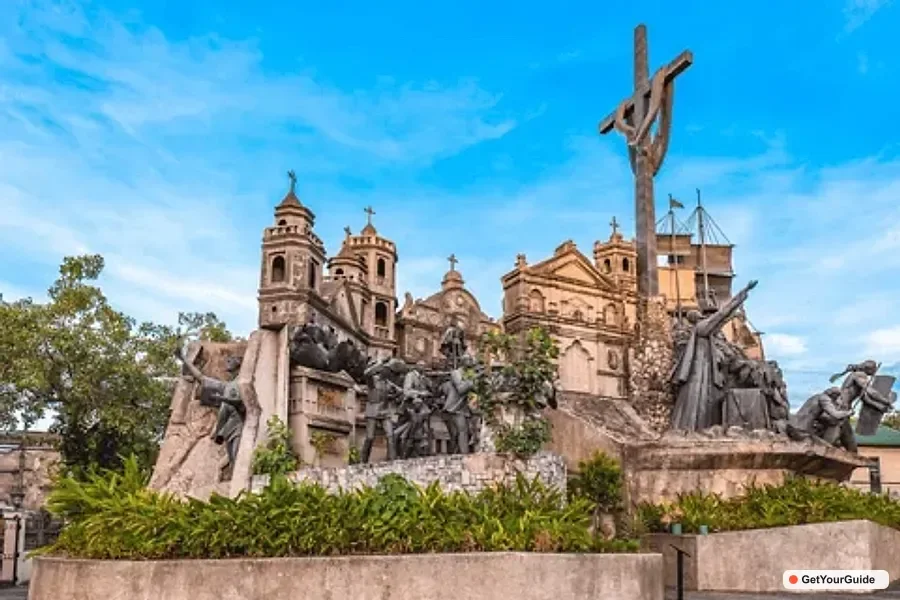
Nearby stands the Heritage of Cebu Monument, a large sculptural installation that compresses 500 years of the city's story into a single circular tableau. Carved figures depict pre-colonial rulers, the arrival of the Spanish, local resistance, and the growth of trade. Guides usually pause here to give context before the group moves on to other stops. The monument helps visitors understand that Cebu was already a significant trading port long before European contact, connected to networks that reached China and the rest of Southeast Asia. The downtown area still shows this layered past in its churches, forts, and street layout.
Chinese and Religious Heritage: Taoist Temple
Cebu has a substantial Chinese-Filipino community whose presence is visible in business districts and in the Taoist Temple on the hills above the city. The temple complex features traditional Chinese architecture, colorful guardian figures, and terraces with views back toward the harbor. Visitors may enter the main halls (modest dress is appreciated) and can light incense or simply enjoy the quiet atmosphere and intricate roof details. The stop offers a contrast to the Spanish-era monuments downtown and shows how multiple cultural traditions have shaped the city's identity over centuries. The temple is also a popular place for locals seeking good fortune or quiet reflection.
The Temple of Leah is a more recent addition. Built as a memorial, the structure draws inspiration from Greco-Roman architecture with columns, statues, and wide staircases. It is popular for photographs, especially at golden hour when the light hits the facade. Some tours include it as an optional extra stop with a small additional fee. The contrast between the ancient Taoist temple and this modern hilltop folly illustrates how Cebu continues to add new landmarks while preserving older ones. Both sites reward a slower pace than the typical photo stop allows.
Sirao Garden and the Flower Terraces
Sirao Garden, often called the "Little Amsterdam of Cebu," sits high in the hills of Busay. The site features terraced flower beds planted with celosia, chrysanthemums, and other colorful annuals that create striking patterns against the green slopes. The garden developed as a commercial flower farm and later opened to visitors. Paths wind between the beds, and there are several elevated platforms for photographs. Because the elevation is noticeably higher than the city, temperatures are several degrees cooler, making it a pleasant mid-morning or early afternoon stop. The terraces were carved into the hillside over years of agricultural work; the flower trade supports many families in the upland barangays. The colors are most intense after the rains when new plantings have had time to grow.
The drive up and back offers glimpses of suburban Cebu spreading across the coastal plain and the busy port area. On clear days the sea and the islands of Mactan and Olango are visible from the upper terraces. The garden is at its most colorful after the rainy season when new plantings mature. Many visitors buy small bouquets or simply enjoy the cooler air and the sound of wind through the flowers.
TOPS Cebu and City Panoramas
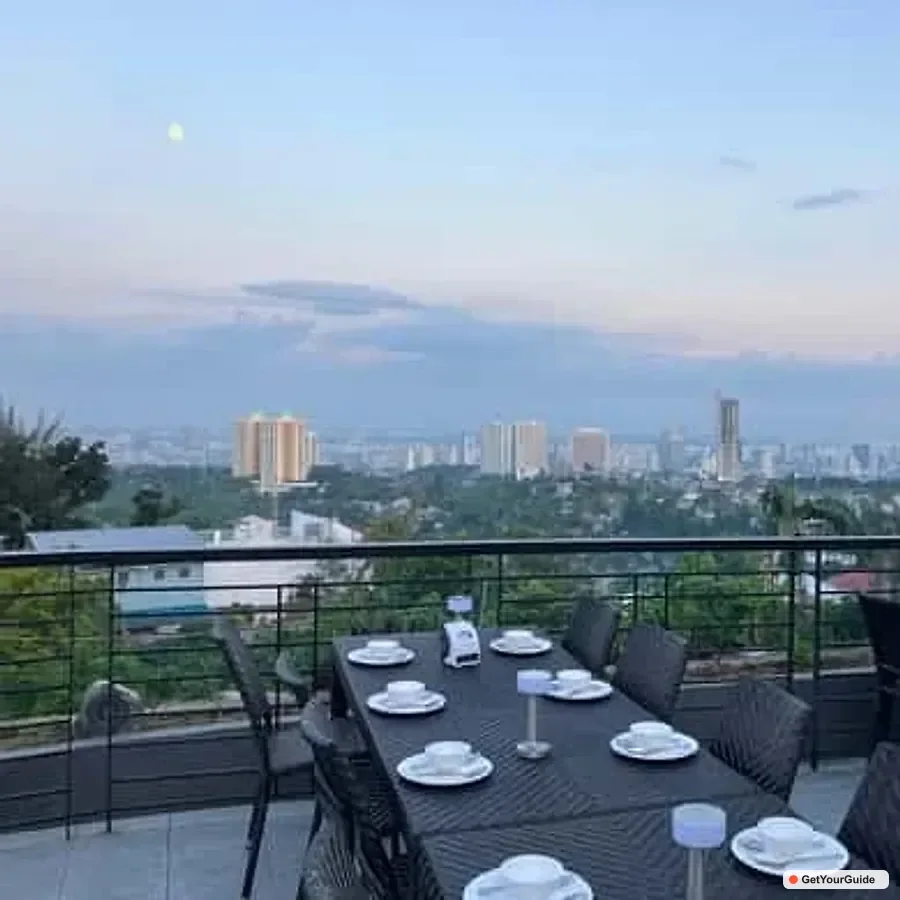
TOPS Cebu is another hilltop viewpoint, located at a similar elevation but on a different ridge. The name comes from the "top" of the mountain road. From the open deck and restaurant area you look directly down over the entire metro area: the historic downtown, the business district, the long bridges to Mactan, and the winding urban streets. Sunset visits are popular, but daytime tours still deliver clear orientation of how the city sits between the sea and the central mountains of Cebu island. The viewpoint also shows the scale of recent infrastructure projects, including the expressway bridges that have shortened travel times to the southern parts of the province. From here it is easy to see why Cebu has long been a major transport and trading hub for the Visayas and beyond.
Many groups combine TOPS with a short stop at a souvenir or snack area. The viewpoint itself is the main draw and gives visitors a useful mental map of the places they have already seen and the ones they may visit later in their trip. The panorama puts the morning's downtown monuments and the afternoon's market stop into a single geographic frame.
Taboan Public Market and Local Flavor
Taboan Public Market is the famous dried fish market of Cebu. Stalls overflow with danggit, pusit, and other Visayan dried seafood. The air carries a strong salty aroma. Visitors usually do not shop in volume, but the stop gives a sensory sense of the working city that exists beyond the tourist monuments. A quick walk through the market lanes shows how much of Cebu's economy still revolves around the sea and small-scale trade. You will see women sorting fish, vendors calling out prices, and the constant movement of small trucks and tricycles that keep the city fed. The market is loud, busy, and completely authentic, a counterpoint to the more polished heritage sites.
The final leg often includes a brief photo stop at the CCLEX (Cebu-Cordova Link Expressway) viewpoint or a simple drive-by of the modern infrastructure that now connects the city to the southern municipalities. The mix of centuries-old religious sites, living markets, and new engineering projects is typical of how Cebu City presents itself to visitors today. It is a city that wears its history openly while moving quickly into the future.
Practical Notes
The full circuit takes roughly four to five hours including travel time between stops. Comfortable walking shoes are useful for the garden paths and market visit. Bring a light jacket or long sleeves for the cooler hill air. Most tours provide bottled water; sun protection is still necessary even at elevation. The tour works well as a first-day orientation or as a half-day activity that leaves the afternoon free for the beach or other plans. Guides are generally knowledgeable about both the historical facts and the current life of the city, and they are happy to answer questions about local food or neighborhoods if you ask.
This tour gives a compact but coherent introduction to Cebu City's layered identity: its role as the cradle of Christianity in the Philippines, its long-standing Chinese commercial presence, and the agricultural and scenic hinterland that lies only a short drive above the urban core. It is an efficient way to see a broad cross-section of what makes the city distinct within the Visayas and why so many Cebuanos are proud of their home.
Highlights
- ✓A well-paced route covering the area's best-known sights
- ✓A guide handling logistics so you can relax and enjoy the views
- ✓Good photo stops along the way
What's included
- ✓Guide
- ✓Transport between stops
- ✓Entrance fees (where stated)
Not included
- ✗Hotel pickup (unless stated)
- ✗Meals (unless stated)
- ✗Souvenirs and personal expenses
📋 Good to know
📍 Meeting point
Confirmed with your operator based on your Cebu City, Philippines accommodation - check the listing for the exact meeting point and time.
ℹ️ Important information
What to bring
- ✓Comfortable shoes
- ✓Sunscreen and a hat
- ✓Water
- ✓Small cash for entrance fees and souvenirs
Not allowed
- ✗Straying from the group at restricted sites
- ✗Drone use where prohibited
Know before you go
This is gentle and family-friendly, involving only light walking - a comfortable way to see the highlights without a strenuous itinerary.
Guest reviews
No reviews yet
Be the first to share your experience!
Write a review
Share your experience to help other travellers
💡 Traveller tips for Cebu City Sightseeing Group Tour
Local-knowledge from other travellers. Got a tip? Share it.
Loading tips…
📝 Your notes & photos for Cebu City Sightseeing Group Tour
Loading…
Ready to book?
Instant confirmation · Free cancellation · Secure payment
Affiliate links — we earn a small commission at no extra cost to you.