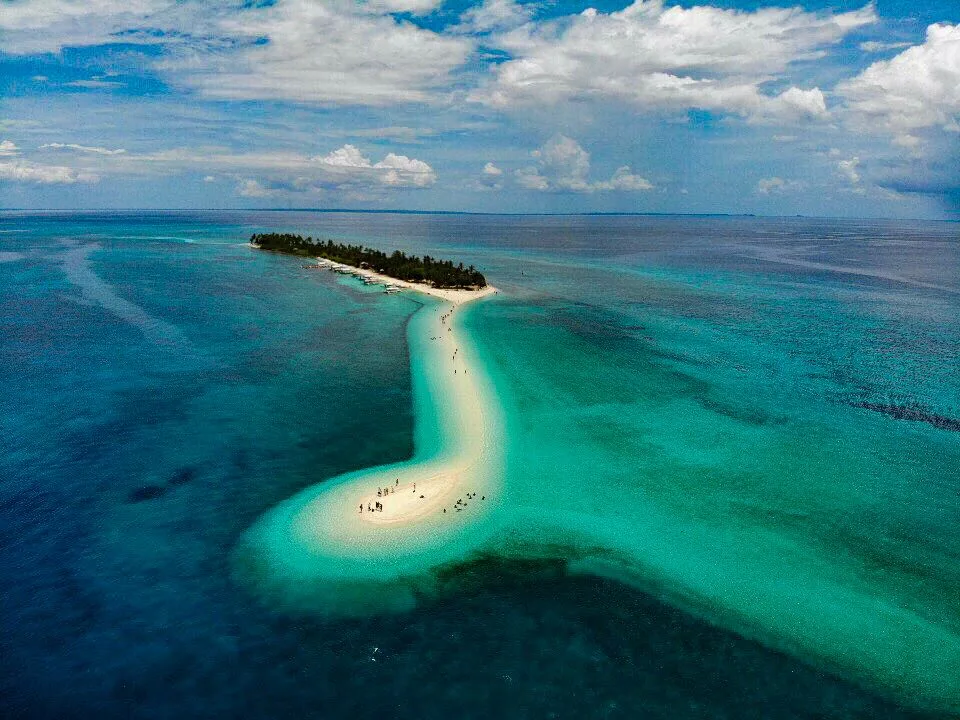
The sand itself is crushed coral and shell, so it is pale, fine, and stays cool underfoot in the morning. Unlike beaches with volcanic or river sand, it does not turn muddy after rain and reflects sunlight, which is why photographs often look overexposed. The contrast between the white sand, the green canopy, and the dark blue drop-off on the eastern side is one of the main reasons the island is used in regional tourism campaigns.
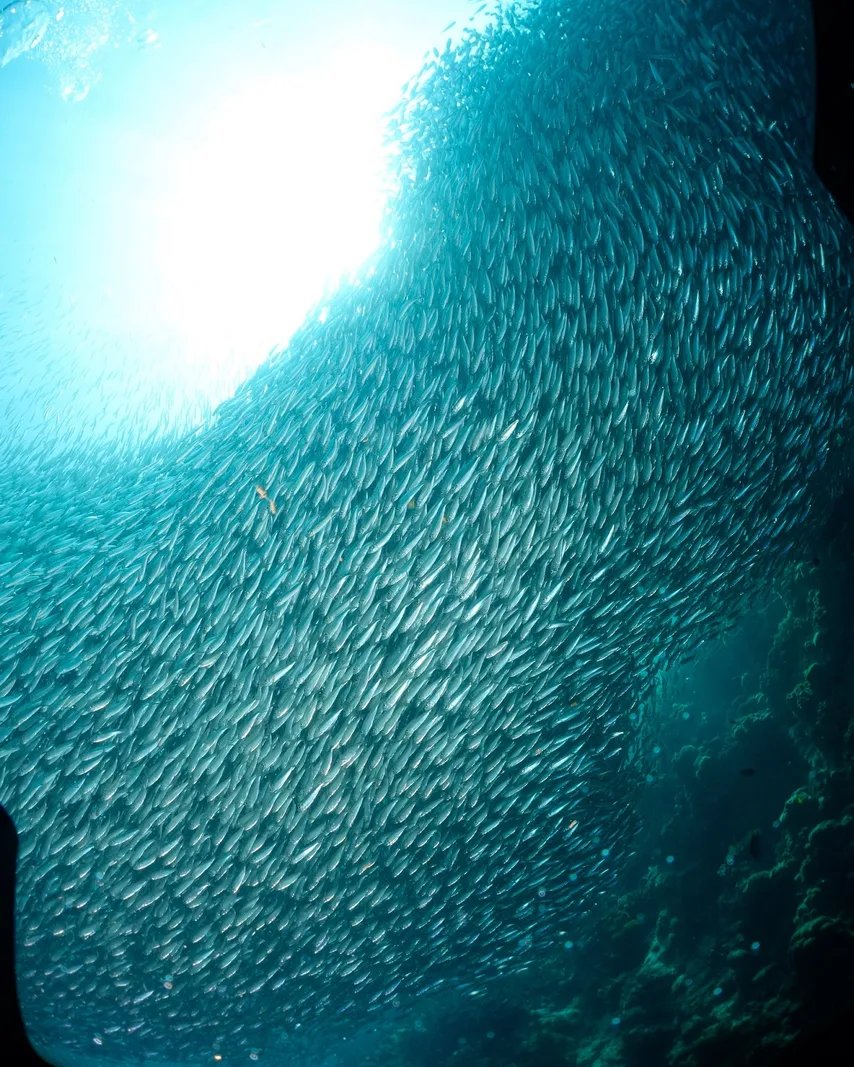
Marine life is best viewed on the drop-off side, where a shallow reef slope leads to a wall at around ten metres. Snorkellers can see damselfish, butterflyfish, parrotfish, and the occasional small shark. The western side, facing Palompon, is shallower and calmer, which makes it safer for children and beginner swimmers. The two sides give the island two distinct personalities, and many visitors spend the morning on the calm side and the afternoon on the wilder side.
Location and Geography
Kalanggaman Island is part of the municipality of Palompon in the province of Leyte. It lies approximately seventeen kilometres from the Palompon mainland and is reached by motorised outrigger boat in one to two hours, depending on sea conditions. The island is uninhabited except for a small ranger station and a few caretakers who rotate shifts to manage waste and monitor visitor numbers.
The interior is covered in low trees and scrub, which provide shade but little fresh water. Fresh water is brought from the mainland, so showers are limited and bathrooms are basic. The shoreline is mostly sand and small coral rubble, with the famous sandbar extending from the southern end. There are no hotels or restaurants on the island, so visitors must bring their own food or order packed meals through the tourism office.
The surrounding water is part of the Camotes Sea, which is generally calmer from March to June and more disturbed from November to February because of the amihan northeast monsoon. The island is small enough to walk around in under an hour, but most visitors stay within the central area near the sandbar because that is where the cottages, tents, and shade are located.
Best Time to Visit Kalanggaman
The best months to visit are April, May, June, and October, when the sea is usually flat and the sandbar is fully exposed during midday. April and May are the hottest months and also the busiest, so booking a boat at least two weeks in advance is recommended. June still offers good weather but with fewer visitors, while October is the start of the dry season in the eastern Visayas and often has clear water after the rainy months.
July to September is the rainy season, and while day trips are still possible, the boat ride can be rough and the sandbar may be partly covered by waves. December to February can be windy, which makes the eastern side unsuitable for swimming but excellent for photography because of the white-capped waves and dramatic sky. Sunrise and sunset are the most rewarding times for photographs, especially at low tide when the sandbar curves like a drawn-out ribbon.
Weekends and Philippine holidays are heavily booked, with some days reaching the island capacity before noon. If you want a quieter experience, schedule a weekday trip and ask the tourism office about overnight camping, which allows you to stay after the day-trip boats leave at around four in the afternoon.
How to Get to Kalanggaman Island
The standard starting point is the Palompon Eco-Tourism Office on the main highway in Palompon, Leyte. From Tacloban, the drive takes about two and a half to three hours by private car or van, and the bus from Tacloban to Palompon takes closer to four hours. From Cebu, you can take a ferry or fast craft to Ormoc or Hilongos and then continue by van to Palompon. The nearest airport with regular commercial flights is Daniel Z. Romualdez Airport in Tacloban.
Once you reach the tourism office, you pay the environmental fee and boat rental before boarding. Boats leave from the Palompon fish port or a nearby docking area. Small boats hold up to ten people and are the most common for small groups, while larger boats are available for bigger parties and company outings. Travel time is one to two hours, and the boats usually provide life vests, though you may want to bring your own if you prefer a specific fit.
It is important to register at the tourism office before you arrive at the port. Registration includes your name, emergency contact, and boat assignment. The office also provides a short briefing on waste disposal, designated swimming areas, and departure times. Do not rely on booking a boat on the spot during weekends, as available slots can sell out before midday.
Costs and Real PHP Prices
Kalanggaman Island is not a free destination, but the fees are reasonable for the experience and go directly to conservation and community wages. As of the last check in 2026, the environmental fee is PHP 150 for residents of Palompon, PHP 500 for other Filipinos, and PHP 1,000 for foreign visitors. These rates are set by the local government and are reviewed regularly, so verify the latest price before you travel.
Boat rental depends on the size of the boat and the number of passengers. A small boat for one to ten people costs around PHP 3,500 to PHP 4,000 for a day trip. A medium boat for eleven to fifteen people costs around PHP 5,000 to PHP 6,000. A large boat for groups of twenty or more can cost PHP 8,000 to PHP 10,000. Dividing the cost among a group brings the per-person price down significantly, which is why joining a public tour or assembling your own group is the most economical choice.
Cottage rental on the island costs PHP 500 to PHP 1,000 depending on size and location. Tent rental is PHP 500 to PHP 700 per night if you do not bring your own. Overnight stays require an additional overnight fee of PHP 100 to PHP 200 per person, and you must bring your own food or pre-order meals. Packed lunches arranged through the tourism office cost around PHP 200 to PHP 300 per person.
From Tacloban, a van to Palompon costs PHP 150 to PHP 200 per person, while a private van for up to twelve passengers costs PHP 2,500 to PHP 3,500 one way. If you are coming from Ormoc, the van fare is around PHP 100 to PHP 150. Bring extra cash for snacks, water, and tips for the boat crew, as there are no ATMs on the island.
Activities on the Island
Swimming and snorkelling are the most popular activities. The western side has gentle water and a gradual slope, making it safe for families. The eastern side has stronger currents and better visibility, but it is better suited to confident swimmers and those with fins. Snorkel masks and fins can be rented at the tourism office, though quality varies, so serious snorkellers may prefer to bring their own equipment.
Beach volleyball is available on the sandbar when the tide is low, and the long flat strip is also popular for jogging, yoga, and drone photography. The island is one of the better places in Leyte for aerial shots because the sandbar shape is visible from even a modest height. If you do not have a drone, you can still get excellent landscape photos from a small hill near the ranger station or from the end of the sandbar.
Overnight campers can watch the sunset, see bioluminescence in the sand on dark nights, and wake up to an empty island before the first day-trip boats arrive. Hiking is limited to a short loop around the trees, but birdwatchers may see kingfishers, swallows, and seabirds. Fishing is not allowed, and visitors are asked not to collect shells or coral.
What to Bring
Bring reef-safe sunscreen, a wide hat, sunglasses, and a dry bag. The sun is intense because of the white sand reflection, and regular sunscreen can wash into the water and damage coral. Bring at least two litres of water per person, as the only water available on the island is what you carry or what the boat brings. Snacks, a portable charger, and a first-aid kit are also recommended.
For snorkelling, bring your own mask, snorkel, and fins if possible. Waterproof footwear is useful because the beach has small coral fragments that can be sharp. If you are camping, bring a tent with good ventilation, a light sleeping bag or sheet, insect repellent, and a headlamp. Leave single-use plastics at home, since the island has a strict no-littering policy.
Safety and Conservation Rules
There is no full-time medical station on the island, so bring personal medication and notify the boat crew of any allergies or conditions. The eastern side can have strong currents, so do not swim beyond the marked area. Children should be supervised at all times, especially at high tide when the sandbar narrows and waves can wash over the centre.
The local government limits the number of visitors to prevent overcrowding and to protect the sandbar from erosion. Always follow the instructions of the eco-tourism staff, dispose of waste in the provided bins, and avoid picking shells or touching marine life. Taking sand, rocks, or plants off the island is prohibited and can result in fines.
Weather can change quickly on the open sea, so listen to the coast guard and tourism office advisories. Boats may be cancelled if the waves are too high or a storm signal is raised. Do not pressure boat operators to leave in unsafe conditions, and always wear a life vest while on the water.
Frequently Asked Questions
How long is the sandbar on Kalanggaman Island?
The sandbar is approximately three kilometres long from the tree line to the tip, although the exposed length changes with the tide. At low tide, the sandbar is at its widest and most visible, while at high tide the middle section narrows and may be partly covered by shallow water. The total island area is small, and the sandbar itself is the main attraction, so most visitors spend their time walking, swimming, and photographing along this strip.
Can I stay overnight on Kalanggaman Island?
Yes, overnight camping is allowed and is one of the best ways to experience the island. You can bring your own tent or rent one from the tourism office for PHP 500 to PHP 700. Overnight guests pay an additional overnight fee of around PHP 100 to PHP 200 on top of the environmental fee. There are no hotels, no electricity for charging, and only basic toilets, so prepare for a back-to-basics experience. The reward is a quiet sunset and a star-filled sky after the day-trip visitors leave.
How much should I budget for a day trip to Kalanggaman?
A solo traveller joining a shared tour can expect to spend PHP 1,500 to PHP 2,500, depending on the operator and what is included. A small private group sharing a boat should budget PHP 800 to PHP 1,200 per person for the boat and environmental fee, plus meals and transport to Palompon. Groups of six to ten people get the best value because the boat cost is split. Budget travellers who can join a public tour and bring their own food may keep the cost below PHP 1,500 for the day.
Is Kalanggaman Island safe for children?
The western side is safe for children because the water is shallow and calm. The eastern side is deeper and can have waves and currents, so it is less suitable for small children or weak swimmers. Parents should bring floaties, supervise children at the sandbar tip, and keep them away from the eastern drop-off. The white sand can also be very hot at midday, so water shoes and plenty of sun protection are essential.
Do I need to book in advance?
Yes, booking at least one to two weeks in advance is strongly recommended, especially for weekends, holidays, and the summer months of April and May. The number of boats and visitors is limited by the local government, and slots can sell out. Walk-in bookings are sometimes possible on quiet weekdays, but there is no guarantee. Contact the Palompon Eco-Tourism Office directly to reserve a boat and pay the environmental fee.
What should I do if the weather is bad on my booked date?
The tourism office and coast guard monitor sea conditions and may cancel trips if the weather is unsafe. In most cases, your boat can be rescheduled to the next available day, although refunds depend on the policy of the local office. Travel insurance that covers trip cancellation and weather delays is a good idea, especially during the rainy season. Always check the local weather forecast the night before and again on the morning of your trip.
Sample Day-Trip Itinerary
A well-planned Kalanggaman day trip starts with a five in the morning departure from Tacloban. Arrive in Palompon by eight, complete registration, and board a boat by nine. The boat ride takes ninety minutes to two hours, so you reach the island around eleven. Set up your spot, swim, snorkel, and take photos until one. Eat lunch under a cottage or in a shaded area, then walk the sandbar to the tip around two. Swim again on the western side until three thirty, then pack up and board the return boat by four. You will be back in Palompon by five thirty or six, with enough time to catch a van back to Tacloban in the evening.
Overnight itineraries are more relaxed. Arrive in the late morning, set up camp, and spend the afternoon snorkelling and walking the sandbar. Watch the sunset around six, have dinner, and rest early. Wake before six for sunrise photos and a quiet walk before the first day boats arrive. Pack up after breakfast and leave on the mid-morning boat.
Sources and Official References
Last checked 2026-08-25. Written by PANA.PH Visayas Desk for PANA.PH.