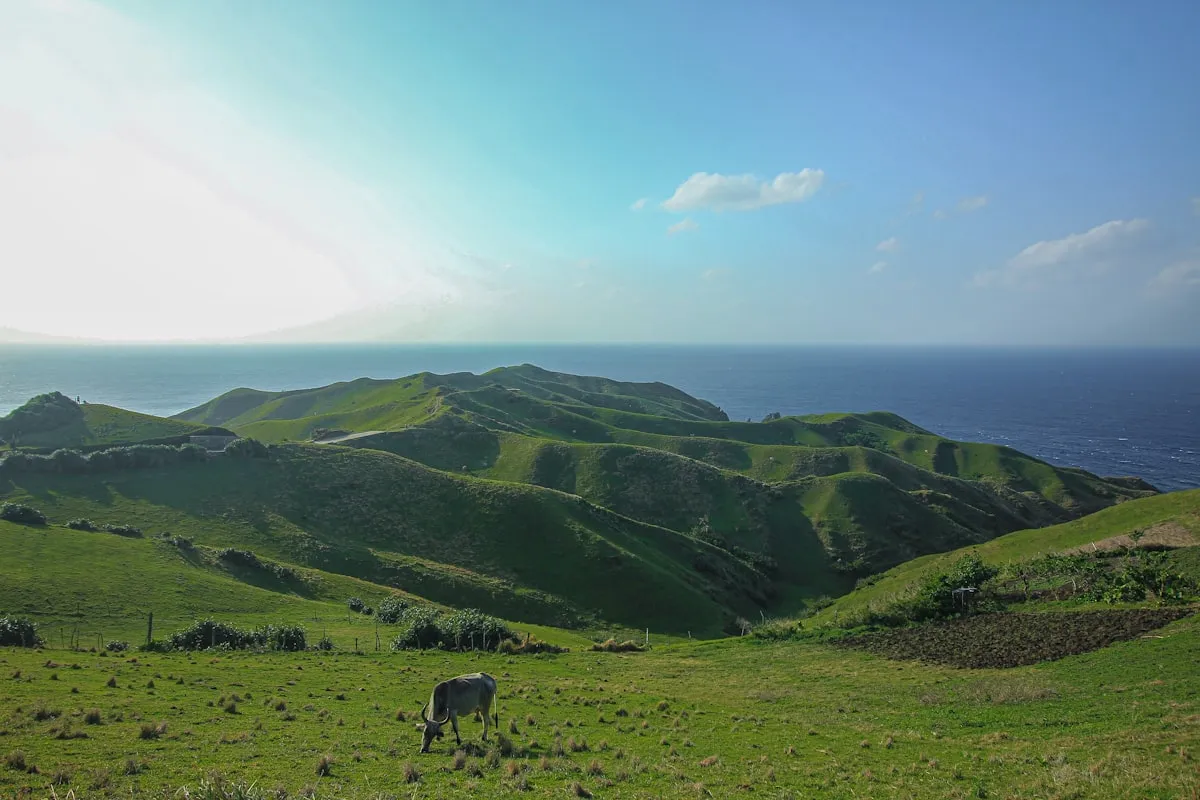
Along the northwest coast of Ilocos Norte, 20 massive white turbines stand in a single row facing the South China Sea, their blades turning slowly against the coastal wind. This is the Bangui Wind Farm, the first wind power generation facility in the Philippines and the Southeast Asian region. Since its completion in 2005, it has become one of the most iconic landmarks of the Ilocos Region, drawing travellers who come to marvel at the intersection of engineering and nature. In 2026, the windmills remain a must-see stop on any Ilocos road trip, and this guide covers everything you need to plan your visit.

Bangui Windmills: 20 Giant Turbines on the Ilocos Coastline
Trip.com
Search on Trip.comHotels in Bangui Windmills
Compare live prices via Travelpayouts — targeted for this guide.
The Origin of the Bangui Wind Farm
The Bangui Wind Farm was developed by the NorthWind Power Development Corporation as a response to the Philippine government's push for renewable energy under the Electric Power Industry Reform Act (EPIRA) of 2001. The project was financed through a combination of private investment and a loan from the Danish International Development Agency (DANIDA), which is why the turbines were manufactured by Vestas, a Danish wind turbine company.
The first phase, completed in 2005, installed 15 turbines along a nine-kilometre stretch of Bangui Bay. Each turbine stands 70 metres tall, with blades spanning 41 metres in diameter, giving a total height of 111 metres from base to blade tip. In 2014, five additional turbines were added, bringing the total to 20. Together, they generate approximately 33 megawatts of electricity, which is fed into the Ilocos Norte grid and powers thousands of households in the province.
The wind farm was a pioneering project that proved wind energy was viable in the Philippines. Its success paved the way for subsequent wind farms in Burgos (Ilocos Norte) and Pililla (Rizal), and it continues to serve as a model for renewable energy development across the country.
Trip.com
See all tours in Bangui Windmills on Trip.comTours & activities in Bangui Windmills
Hand-picked experiences in Bangui Windmills — book on Trip.com with instant confirmation.
How to Get to Bangui
Bangui is a fourth-class municipality in Ilocos Norte, located about 60 kilometres north of Laoag City, the provincial capital. The most common way to reach the windmills is by private vehicle or as part of an Ilocos road trip, typically combined with visits to Pagudpud, Vigan, and other northern attractions.
From Laoag City
The drive from Laoag to Bangui takes about one hour and 15 minutes via the Pan-Philippine Highway (AH26). If you do not have a private vehicle, you can take a bus heading north toward Pagudpud or Claveria. Partas, Florida, and RCJ Transit all operate buses on this route. A one-way bus ticket from Laoag to Bangui costs about PHP 80 to PHP 120. Ask the conductor to drop you off at the Bangui Wind Farm viewing area, which is along the main highway.
From Vigan
If you are coming from Vigan, Ilocos Sur, the drive to Bangui takes about two hours via the same highway. A bus ticket from Vigan to Bangui costs PHP 150 to PHP 200. Many travellers combine Vigan and Pagudpud in a two-day or three-day Ilocos itinerary, with Bangui as a mid-way stop.
From Pagudpud
From Pagudpud, the windmills are only about 20 minutes south by road. A tricycle from Pagudpud to Bangui costs PHP 200 to PHP 300 one way. Many Pagudpud tour packages include the Bangui Wind Farm as a standard stop alongside the Patapat Viaduct and the Cape Bojeador Lighthouse.
By Air
Laoag International Airport (LAO) is the nearest airport, served by Cebu Pacific and Philippine Airlines with daily flights from Manila. Flight time is about one hour, and round-trip fares in 2026 range from PHP 3,000 to PHP 6,000. From the airport, you can rent a car, hire a van, or take a tricycle to the city centre and then catch a northbound bus.
What to Expect at the Wind Farm
There is no formal entrance gate or ticket booth for the Bangui Wind Farm. The turbines are visible from the highway, and you can simply park along the roadside and walk toward the beach to get closer. A small visitor centre called the NorthWind Bangui Bay View Deck offers informational panels about the project, and there are a few souvenir stalls selling windmill miniatures, Ilocos woven products, and keychains.
Standing beneath the turbines is an experience of scale that photographs cannot convey. The towers are 70 metres tall, roughly the height of a 20-storey building, and the blades rotate with a deep, rhythmic whoosh that you can feel in your chest. The beach beneath the turbines is a mix of dark sand and smooth stones, and the wind is constant and strong, which is exactly why the turbines were placed here.
There is no shade near the turbines, so bring a hat, sunscreen, and water. The best times to visit are early morning (7:00 to 9:00 AM) or late afternoon (4:00 to 6:00 PM), when the light is soft and the temperature is manageable. At sunset, the turbines cast long shadows across the beach, creating one of the most dramatic landscapes in the Philippines.
Photography Tips for the Bangui Windmills
The Bangui Wind Farm is a photographer's dream, but getting the best shots requires some planning. Here are practical tips based on the geography of the site:
Wide-angle panorama: To capture all 20 turbines in a single frame, walk to the western end of the row and shoot eastward along the coastline. A wide-angle lens (16mm to 24mm equivalent) is ideal. The turbines are spaced about 326 metres apart, so the full row spans nearly nine kilometres.
Scale shot: To convey the size of the turbines, position a person in the foreground near the base of a tower. The contrast between the human figure and the 70-metre structure is striking.
Long exposure: If you have a tripod and a neutral density filter, try a long exposure of 10 to 30 seconds to blur the rotating blades into smooth arcs against the sky. This creates a surreal, painterly effect.
Sunset silhouette: The west-facing orientation of the beach means the sun sets directly behind the turbines. Arrive by 5:00 PM and shoot silhouettes of the towers against the orange sky.
Nearby Attractions to Combine with Bangui
Cape Bojeador Lighthouse
Also known as the Burgos Lighthouse, this Spanish colonial lighthouse sits on a hilltop about 10 kilometres south of Bangui. Built in 1892, it is the highest-elevated lighthouse in the Philippines at 162 metres above sea level. The entrance is free, though donations are accepted for maintenance. The view from the lighthouse deck spans the entire coastline, including the wind farm in the distance.
Kapurpurawan Rock Formation
About 15 kilometres north of Bangui in the town of Burgos, the Kapurpurawan Rock Formation is a striking white limestone outcrop sculpted by wind and waves. A short walk of about 10 minutes from the parking area leads to the formation. The entrance fee is PHP 20 per person. Visit at low tide for the best access and safety.
Patapat Viaduct
Further north, about 30 minutes from Bangui, the Patapat Viaduct is a 1.3-kilometre elevated coastal road that hugs the cliffs of the Ilocos Norte coastline. It is often called the "French Riviera of the Philippines" for its scenic curves and sea views. There is no entrance fee; you simply stop at one of the roadside viewpoints for photos.
Pagudpud Beaches
Pagudpud, about 45 minutes north of Bangui, is home to Saud Beach and Blue Lagoon, two of the finest white-sand beaches in northern Luzon. Saud Beach is calm and family-friendly, with resort accommodation from PHP 1,500 to PHP 4,000 per night. Blue Lagoon (Maira-ira Beach) is more secluded and has a few budget guesthouses starting at PHP 800 per night.
Where to Eat Near the Wind Farm
Dining options near the Bangui Wind Farm are limited. The most reliable option is the Kapurpurawan Burger House, a small eatery near the viewing area that serves burgers, noodles, and cold drinks for PHP 80 to PHP 200. For a proper meal, head to the town centre of Bangui, where you can find carinderias serving Ilocano dishes like bagnet (deep-fried pork belly), pinakbet (mixed vegetable stew with shrimp paste), and empanada (fried pastry filled with egg and longganisa). A full meal at a carinderia costs PHP 80 to PHP 150.
If you are on a guided tour, lunch is often arranged at a restaurant in Pagudpud or Burgos. For self-drive travellers, pack snacks and water, as the stretch between Laoag and Pagudpud has long gaps between food stops.
Where to Stay: Bangui and Surrounding Towns
Most travellers do not stay overnight in Bangui itself, preferring to base themselves in Laoag, Pagudpud, or Vigan. However, if you want to wake up to the windmills, there are a few homestays and guesthouses in Bangui town with rates from PHP 800 to PHP 1,500 per night. These are basic accommodations, often family-run, and they offer the advantage of being walking distance from the beach.
In Pagudpud, beachfront resorts range from PHP 1,500 for budget rooms to PHP 6,000 for air-conditioned suites. In Laoag City, mid-range hotels like Java Hotel and Plaza del Laoag charge PHP 2,000 to PHP 3,500 per night. For a heritage experience, Vigan offers Spanish colonial guesthouses from PHP 1,800 to PHP 5,000.
Sample Ilocos Norte Itinerary Including Bangui
Day 1: Arrive in Laoag. Visit the Laoag Sinking Bell Tower and St. William's Cathedral. Drive to Vigan for the afternoon and evening (callesa ride, heritage walk, dinner at a local empanadaan).
Day 2: Drive north from Laoag. Stop at Cape Bojeador Lighthouse. Visit Kapurpurawan Rock Formation. Arrive at Bangui Wind Farm for sunset photos. Overnight in Pagudpud.
Day 3: Morning at Saud Beach or Blue Lagoon. Afternoon drive to Patapat Viaduct. Return to Laoag for departure.
The Environmental Impact and Future of Wind Energy in Ilocos
The Bangui Wind Farm displaces approximately 56,000 tonnes of carbon dioxide per year that would otherwise be generated by fossil fuel power plants. It has become a point of pride for Ilocos Norte, which now generates a significant portion of its electricity from renewable sources, including wind and solar. The nearby Burgos Wind Farm, completed in 2014, adds another 150 megawatts to the grid.
As the Philippines continues to face the impacts of climate change, the Bangui Wind Farm serves as a visible reminder that clean energy is not just an abstract policy goal but a tangible, working solution standing on a beach in Ilocos Norte.
Frequently Asked Questions
Is there an entrance fee for the Bangui Wind Farm?
No, there is no entrance fee. The wind farm is visible from the highway and accessible via the beach. There is a small viewing deck with informational panels, and a few souvenir stalls operate nearby.
How many windmills are there at Bangui?
There are 20 turbines in total. The original 15 were installed in 2005, and 5 more were added in 2014. Each turbine stands 70 metres tall with 41-metre blades.
What is the best time to visit the Bangui Wind Farm?
Early morning (7:00 to 9:00 AM) or late afternoon (4:00 to 6:00 PM) offers the best light for photography and more comfortable temperatures. Sunset is particularly dramatic, as the sun sets directly behind the turbines.
Can I go inside the turbines?
No. The turbines are operational power generation facilities and are not open to the public. You can walk near the bases along the beach, but you cannot enter the towers.
How far is Bangui from Laoag City?
Bangui is about 60 kilometres north of Laoag City, roughly a one-hour and 15-minute drive along the Pan-Philippine Highway. Buses heading to Pagudpud pass through Bangui, with fares of PHP 80 to PHP 120.
Plan Your Trip With PANA
Build your Ilocos road trip with PANA.PH. Explore destinations, book tours, find hotels, and read more travel guides for Luzon and beyond.
Browse Destinations | Book a Tour | Find a Hotel | Read the Blog
Sources and Official References
Sources
Primary references for the figures and rules in this guide. Fees and schedules change — check the source before you travel.

PANA.PH Luzon Desk
Luzon travel logistics — Manila, Baguio and North Luzon
The Luzon Desk of the PANA.PH travel desk: it maintains and re-checks the luzon travel logistics — manila, baguio and north luzon data behind the site's guides — operator price lists, official fee schedules and posted timetables — and publishes what it can verify.
🏡 Real local stays (book direct)
Hand-picked homestays and guesthouses — book direct, no markup.
Browse all local stays →
🌊 Popular activities (book instantly)
Island hopping, canyoneering, whale sharks — real Klook/GetYourGuide options.
View all activities →