Philippines Travel Guide 2026: Everything First-Timers Need to Know
There is a moment, somewhere between watching the sun melt into the Sulu Sea and eating fresh mango on a bamboo bench, when you realize the Philippines has ruined you — gently, joyfully, permanently. No other destination in Southeast Asia delivers this cocktail of pristine beaches, volcanic mountains, colonial history, and warm-hearted people in quite the same way. If this is your first time, you are in for something extraordinary.
This guide is your one-stop briefing for a 2026 trip to the Philippines: what to expect, how to get around, where to sleep, what it costs, and which experiences you absolutely cannot miss.
Understanding the Philippines at a Glance
The Philippines is an archipelago of 7,641 islands spread across 300,000 square kilometers of Pacific and South China Sea. It is home to 115 million people, 185 languages, and a cultural DNA that blends Malay, Spanish, American, and Chinese influences into something utterly unique. The capital is Manila, but the soul of the country lives in places like El Nido, Siargao, and the rice terraces of Banaue.
Administratively the country is divided into three island groups: Luzon (north, including Manila and the Cordillera mountains), Visayas (central, including Cebu, Boracay, and Bohol), and Mindanao (south, including Davao and Siargao). For first-timers, Luzon and the Visayas offer the most accessible and tourism-ready experiences.
When to Go
The Philippines has two seasons: the dry season (amihan, November to May) and the wet season (habagat, June to October). For first-timers, the sweet spot is December through April. Skies are clear, seas are calm, and island-hopping is at its best.
That said, the wet season is not all doom and rain. Siargao gets its best surf swells from August to November. Prices drop by 20-40%. Crowds thin dramatically. If you are flexible and do not mind the occasional afternoon shower, June to September can be magical, especially in eastern Visayas and northern Palawan, where rain comes in short bursts rather than all-day grey. Avoid typhoon season peaks (August to October) for western and northern areas, though southern Mindanao is largely typhoon-free year-round.
Getting There
Manila Ninoy Aquino International Airport (MNL) is the main international gateway, served by dozens of airlines from Europe, the Middle East, the US, and across Asia. Cebu Mactan International Airport (CEB) is the second hub, with direct flights from Singapore, Hong Kong, Japan, and South Korea. Clark Airport (CRK), north of Manila, serves budget carriers including AirAsia.
From Europe, expect 13-20 hours of travel including a connection in the Gulf, Singapore, or Hong Kong. From Southeast Asia, it is a quick 2-4 hour hop. Book early: December through March sees peak demand, and fares from London or Frankfurt can reach 900 EUR without advance planning. Booked 3-4 months out, 500-650 EUR return is achievable.
Visa Situation 2026
Citizens of most Western countries (EU, UK, US, Canada, Australia, and 157 others) receive a free 30-day visa on arrival. No advance application required. Just show your passport, return ticket, and proof of funds. Extensions are available at any Bureau of Immigration office for PHP 3,000-4,000 per 60-day increment, up to a maximum of 3 years. Nationalities requiring a visa in advance include India, China, Pakistan, and a handful of others. Check the Philippine Bureau of Immigration website for the current list before you travel.
Getting Around the Islands
This is where the Philippines adventure really begins. With 7,641 islands, getting between destinations involves a mix of domestic flights, ferries, and local transport.
Domestic flights are the fastest option for long hops. Cebu Pacific and AirAsia connect Manila with 30-plus domestic airports. Book early — sale fares as low as PHP 500-800 one-way are common, though PHP 2,000-4,000 is more typical for standard booking windows.
Ferries and fast craft connect the major islands. 2GO Travel runs overnight boats between Manila, Cebu, Davao, and Palawan. Fast ferries link Cebu to Bohol, Dumaguete, and Ormoc in 1-3 hours. The slow boat from Manila to Coron (18 hours) is surprisingly pleasant — book a cabin, bring snacks, enjoy the sea.
Local transport is half the fun: jeepneys (converted US army jeeps turned into psychedelic community buses), tricycles (motorcycle sidecars for short hops), habal-habal (motorbike taxis for mountain roads), and bangka boats (outrigger canoes for island-hopping). Grab motorcycle is also widely available in cities and tourist areas.
The Best Islands and Destinations
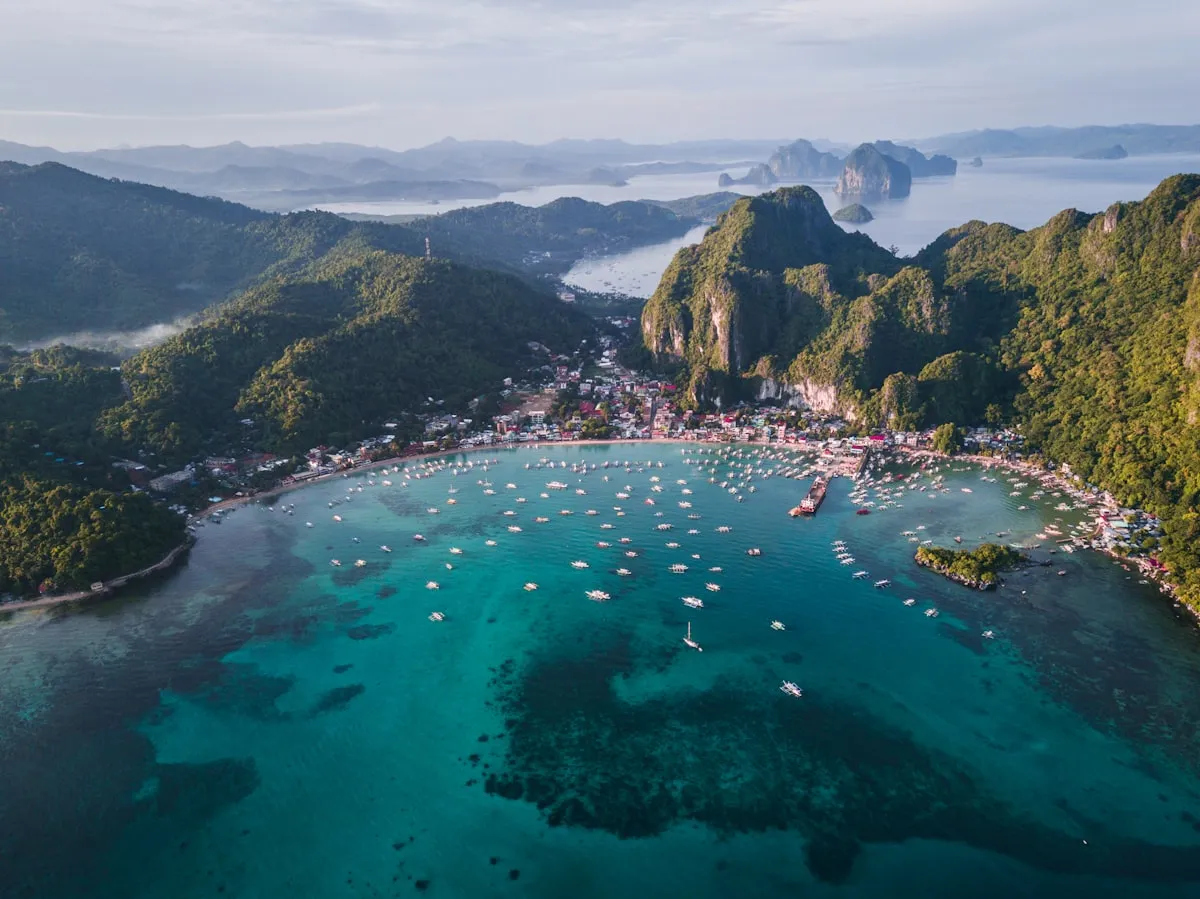
Palawan is the crown jewel. El Nido delivers the Instagram cliffs and lagoons you have seen a thousand times — they are worth it. Coron combines WWII wreck diving with emerald lakes and white sand. Puerto Princesa Underground River is a UNESCO World Heritage Site that genuinely earns the title.
Cebu is the Visayas hub: swim with whale sharks in Oslob, snorkel with sardines in Moalboal, party in the city. Bohol offers the surreal Chocolate Hills, tarsiers, and the Loboc River. Siargao is the surf capital. Cloud 9 is the most famous break in the archipelago, but the island has far more to offer beyond the beginner surf lessons.
For history, Manila is unavoidable. Intramuros, the walled city built by the Spanish in 1571, contains centuries of colonial drama. The Intramuros walking tour is one of the best urban experiences in Southeast Asia. Spend a couple of days here before flying south.
Budget Reality Check
The Philippines is one of the most affordable destinations in Asia for mid-range travelers. A realistic daily budget: budget backpacker at PHP 1,500-2,000 per day covering dormitory, local eateries (carinderias), jeepneys, and free beaches; mid-range at PHP 3,000-5,000 per day for a private room with AC, some restaurant meals, and occasional tours; comfortable travel at PHP 8,000-15,000 per day for boutique hotels, good restaurants, and private island tours.
Island-hopping tours, diving, and boat charters add significant cost. Budget PHP 1,200-2,500 per tour activity. The good news: experiences here are genuinely world-class at these prices.
Food: Your Edible Adventure
Filipino cuisine is the sleeper hit of Southeast Asian food. Start with lechon (roasted pig — Cebu style is the benchmark), adobo (braised in vinegar and soy), sinigang (tamarind broth soup), and kare-kare (oxtail peanut stew). Carinderias are turo-turo canteens where you point at the dishes you want. A full meal costs PHP 80-150. Markets are excellent for fresh tropical fruit: mangoes, jackfruit, rambutan, and the infamous durian in Davao.
Connectivity and SIM Cards
Buy a local SIM at the airport arrivals hall immediately. Globe and Smart both have booths. A prepaid SIM with 10GB of data costs PHP 200-300. Coverage is excellent in all tourist areas; some remote islands rely on satellite. Download offline maps as a backup. Wi-Fi in cafes and hotels is generally reliable in cities and major tourist hubs.
Health and Safety Essentials
No vaccinations are required to enter the Philippines, but Hepatitis A, typhoid, and tetanus are recommended. Malaria risk exists in remote parts of Palawan and Mindanao — consult your doctor for prophylaxis if visiting those areas. Dengue fever is present; wear mosquito repellent especially at dusk. Tap water is not safe to drink — bottled water is cheap and universally available. Travel insurance with medical evacuation cover is strongly recommended.
Practical Essentials
Currency is the Philippine Peso (PHP). PHP 56 equals approximately 1 USD as of 2026. ATMs are widespread in cities; carry cash in island areas. Most hotels and restaurants in tourist zones accept cards. Electricity is 220V, 60Hz with plug types A and B (standard flat-pronged US-style). European travelers need an adapter. Filipino (Tagalog) is the national language; English is widely spoken everywhere tourists go. Communication is rarely a barrier.
The First-Timer Mistake to Avoid
Trying to see too much. The Philippines is vast, and transport between islands takes real time. First-timers who try to hit Manila, El Nido, Boracay, Siargao, Bohol, and Cebu in two weeks end up exhausted and underwhelmed. Pick a region and go deep: spend a week in Palawan, or a week island-hopping the Visayas. You will leave satisfied — and already planning your return.
The Philippines does not reveal itself in highlights-tour snapshots. It reveals itself slowly: in the ferry crossing at golden hour, in the tarsier wide-eyed stare, in the laughing welcome from a stranger on a motorbike. Slow down. The islands will reward you for it.