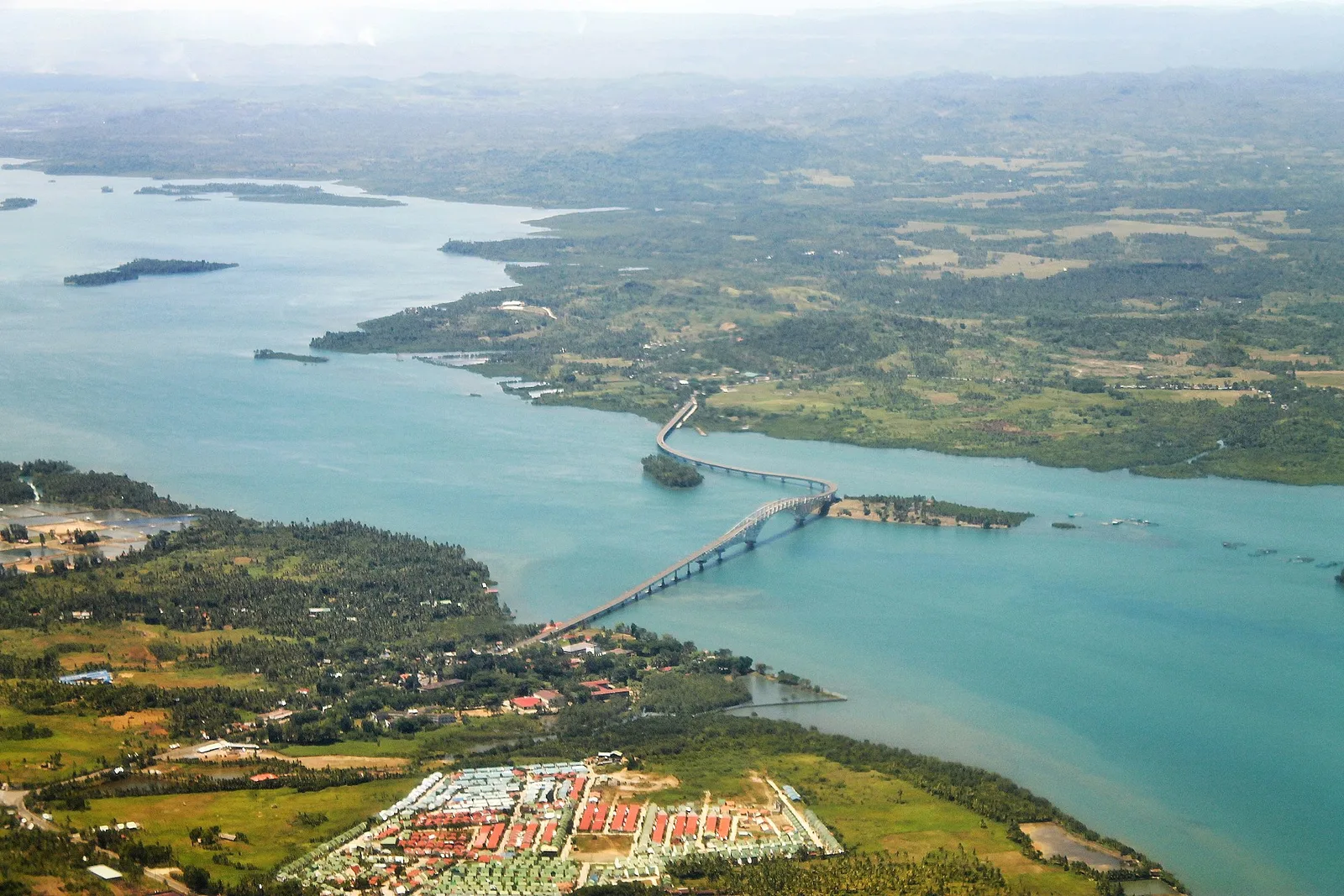
The San Juanico Bridge is the longest bridge in the Philippines, stretching 2.16 kilometers across the narrow San Juanico Strait that separates the islands of Leyte and Samar. Completed in 1973 under the administration of President Ferdinand Marcos, the bridge was built as part of the infrastructure program that connected the country's major islands. For more than five decades, it has carried cars, jeepneys, motorcycles, and pedestrians between Tacloban City in Leyte and the town of Santa Rita in Samar, serving as both a vital transport link and a tourist landmark in its own right.
San Juanico Bridge: The Longest Bridge in the Philippines
Trip.com
Search on Trip.comHotels in Philippines
Compare live prices via Travelpayouts — targeted for this guide.
This guide walks you through the history of the bridge, how to get there, what to expect when you cross it, where to take the best photographs, and how to build a full day around the surrounding attractions in Tacloban and Samar. Whether you are a first-time visitor to Eastern Visayas or a returning traveler chasing better light for your camera, the San Juanico Bridge deserves more than a quick drive-by.
What Makes the San Juanico Bridge Special
There are thousands of bridges in the Philippines, but only one holds the title of the longest. The San Juanico Bridge measures 2.16 kilometers from end to end, with a main span of 192 meters that arches over the deepest navigation channel of the strait. The structure is made of reinforced concrete and steel, and its design features a series of curved approaches that rise and fall with the contour of the strait, giving it a distinctive wave-like silhouette when viewed from the air.
The bridge is often called the "Bridge of Love" by locals, a nickname that comes from a story that the curve of the approaches resembles the letters S and L, standing for the first names of the former president and his wife. Whether or not the story is literally true, the nickname has stuck, and the bridge is a popular spot for couples, especially at sunset when the light turns the concrete golden and the water below reflects the sky.
Trip.com
See all tours in Philippines on Trip.comSpa experience in Philippines
Hand-picked experiences in Philippines — book on Trip.com with instant confirmation.

For engineers and infrastructure enthusiasts, the bridge is significant because it was one of the first large-scale inter-island bridges in the country. Before it was built, travelers between Leyte and Samar relied on ferries that crossed the strait in roughly 20 to 30 minutes, weather permitting. The bridge cut that crossing to a few minutes by road and opened up economic ties between the two provinces that had been limited by ferry schedules and capacity.
A Brief History of the Bridge
Construction of the San Juanico Bridge began in 1969 and was completed in 1973. The project was funded through a combination of national government appropriations and foreign assistance, and the engineering work was overseen by a consortium that included Japanese and Filipino firms. The bridge was formally opened to traffic as part of the broader infrastructure push of the early 1970s, which also included roads, ports, and irrigation systems across the country.
Over the years, the bridge has undergone several rounds of maintenance and reinforcement. The Department of Public Works and Highways (DPWH) regularly inspects the structure, and load limits have been enforced at various times to protect the deck and piers. In recent years, the bridge has also been fitted with lighting for night visibility and decorative lighting for special occasions, including the annual Leyte Gulf Landings anniversary every October.
The bridge survived the devastation of Typhoon Yolanda (Haiyan) in November 2013, one of the strongest tropical cyclones ever recorded. While Tacloban City was largely destroyed by the storm surge, the bridge itself remained structurally sound, though it required inspection and minor repairs. Its survival became a symbol of resilience for the region during the long recovery that followed.
How to Get to the San Juanico Bridge
The bridge is located roughly 10 minutes by vehicle from downtown Tacloban City, the regional capital of Eastern Visayas. Tacloban is accessible by air through Daniel Z. Romualdez Airport (TAC), which receives regular flights from Manila and Cebu. A one-way economy flight from Manila to Tacloban typically costs between PHP 2,500 and PHP 4,500 depending on the season and how far in advance you book. From Cebu, fares are generally lower, often between PHP 1,500 and PHP 2,800.
If you prefer to travel by sea, there are overnight ferries from Manila to Tacloban operated by 2GO Travel and other lines. A tourist-class ticket starts at around PHP 1,800 one way, with higher-tier cabins available for PHP 3,500 and above. The ferry ride takes roughly 24 to 30 hours, making it a slower but more budget-friendly option for travelers who are not in a rush.
Once you are in Tacloban, the easiest way to reach the bridge is by hiring a tricycle or a private car. A tricycle from the city center to the bridge approach costs about PHP 50 to PHP 80 per trip. If you want to stop for photos and cross to the Samar side, a chartered tricycle for half a day runs about PHP 400 to PHP 600. Taxis and ride-hailing cars are also available and typically charge PHP 200 to PHP 300 for a one-way trip to the bridge.
Driving and Walking Across the Bridge
If you are driving your own vehicle or a rental car, crossing the bridge takes about five minutes at normal speed. The road surface is paved and generally in good condition, though you should watch for motorcycles and occasional pedestrian traffic. There is no toll for crossing the San Juanico Bridge, which makes it one of the few major bridges in the country that is completely free to use.
Walking across the bridge is possible and is a popular activity for tourists and fitness enthusiasts. There is a narrow pedestrian lane on one side, separated from the vehicular lanes by a low barrier. The walk from one end to the other takes about 30 to 40 minutes at a leisurely pace. Be aware that there is no shade on the bridge, so if you plan to walk, do it early in the morning or late in the afternoon to avoid the heat. Bring water and wear a hat.
The views from the pedestrian lane are excellent. On the Leyte side, you can see the sprawling coastline of Tacloban and the mangrove areas near the strait. On the Samar side, the view opens up to the forested hills of Santa Rita and the river mouths that feed into the strait. In the middle of the bridge, you get a 360-degree panorama of the San Juanico Strait, which is especially beautiful at sunrise and sunset.
Best Photo Spots and Viewing Areas
There are several places to photograph the bridge, each offering a different perspective. The most popular viewpoint is from the Samar side, where a small clearing near the approach gives you a full view of the bridge curving toward Leyte. This is the spot where most postcard and calendar shots are taken, and it is especially photogenic in the late afternoon when the sun is behind you and the bridge is lit from the front.
Another good spot is from the Leyte side, near the barangay of San Juanico. From here, you can capture the bridge with the Samar hills in the background. There are also a few elevated spots along the road where you can pull over and take wide-angle shots. If you have a drone, the bridge is a spectacular subject from the air, but you should check current regulations and avoid flying near the airport approach path.
For a different kind of photo, try shooting from underneath the bridge on the Samar side, where the massive concrete piers rise out of the shallow water. This angle emphasizes the scale of the engineering and is a favorite of architecture and structural photography enthusiasts.
Things to Do Near the Bridge
The San Juanico Bridge is usually visited as part of a half-day or full-day tour of Tacloban and nearby Samar. On the Tacloban side, you can combine your bridge visit with stops at the MacArthur Landing Memorial in Palo, the Sto. Nino Shrine and Heritage Museum, and the Leyte Provincial Capitol. On the Samar side, the town of Santa Rita is a gateway to the Sohoton Caves and the natural attractions of Basey, including the Sohoton River and the bamboo raft tours through the limestone canyons.
If you have a full day, a popular itinerary is to cross the bridge in the morning, explore Basey and its caves and rivers, then return to Tacloban in the afternoon for a heritage walk around the city. Lunch can be had in Basey or in Tacloban, where local specialties include moron (a sticky rice chocolate roll), binagol (sweetened taro pudding), and fresh seafood from the Leyte Gulf.
For travelers with more time, the bridge is also the starting point for a longer road trip through Samar, which is one of the least-explored major islands in the Philippines. From Santa Rita, you can drive to Catbalogan City and onward to Calbayog, where you will find waterfalls, caves, and some of the most rugged coastline in the Visayas.
Practical Tips for Visiting
First, time your visit for the early morning or late afternoon. The light is better for photography, and the temperature is more comfortable if you plan to walk. Midday on the bridge can be very hot, with little protection from the sun.
Second, be mindful of traffic. The bridge is a working highway, and trucks, buses, and motorcycles cross it constantly. Stay within the pedestrian lane and do not stop in the vehicular lanes to take photos. If you are driving, use the designated pull-over areas rather than stopping on the bridge itself.
Third, bring small bills for tricycle fares and for snacks at the small stalls near the Samar approach. There are no formal restaurants or restrooms on the bridge, so plan accordingly. The nearest restrooms are at gas stations and eateries on the Tacloban side.
Fourth, check the weather before you go. The bridge is exposed to wind and rain, and during typhoon season (roughly June to November), conditions can change quickly. The bridge is generally safe in normal weather, but during severe storms, authorities may restrict traffic or close it temporarily.
Where to Stay in Tacloban
Tacloban has a range of accommodations from budget guesthouses to mid-range hotels. Budget rooms start at around PHP 600 to PHP 900 per night, while mid-range hotels typically charge PHP 1,500 to PHP 2,800. Higher-end options, including hotels with pools and conference facilities, range from PHP 3,000 to PHP 5,000 per night. Staying in the city center gives you easy access to restaurants, markets, and transport to the bridge.
Frequently Asked Questions
Is there a toll to cross the San Juanico Bridge?
No. Crossing the San Juanico Bridge is free for all vehicles and pedestrians. There are no toll booths at either end.
Can you walk across the bridge?
Yes. There is a pedestrian lane on one side of the bridge. The walk takes about 30 to 40 minutes one way. Bring water and sun protection, as there is no shade on the bridge.
What is the best time of day to visit?
Early morning and late afternoon offer the best light for photography and more comfortable temperatures. Sunset is especially popular because the bridge and the strait take on warm golden tones.
How long is the San Juanico Bridge?
The bridge is 2.16 kilometers long, with a main span of 192 meters. It is the longest bridge in the Philippines.
Is the bridge safe during typhoons?
The bridge is engineered to withstand strong winds, but during severe typhoons, authorities may restrict traffic or close it temporarily. Always check advisories from the DPWH and local government during typhoon season.
Plan Your Eastern Visayas Trip with PANA
Ready to cross the longest bridge in the Philippines and explore Leyte and Samar? PANA.PH has the tools to help you plan. Browse our destinations for more Eastern Visayas spots, book guided experiences through our tours marketplace, find a place to sleep in our hotels directory, and read more travel stories on our blog.
Sources and References
Sources
Primary references for the figures and rules in this guide. Fees and schedules change — check the source before you travel.

PANA.PH Visayas Desk
Visayas travel logistics — Cebu, Bohol, Boracay and Siargao
The Visayas Desk of the PANA.PH travel desk: it maintains and re-checks the visayas travel logistics — cebu, bohol, boracay and siargao data behind the site's guides — operator price lists, official fee schedules and posted timetables — and publishes what it can verify.
🏡 Real local stays (book direct)
Hand-picked homestays and guesthouses — book direct, no markup.
Browse all local stays →
🌊 Popular activities (book instantly)
Island hopping, canyoneering, whale sharks — real Klook/GetYourGuide options.
View all activities →