Long before sunrise, while the rest of Cebu is still asleep, a small fleet of vans is already winding down the island's southeastern coast. The road from Cebu City to Oslob hugs the sea for nearly the whole three-hour drive, and as the dark gives way to grey and then to gold, you start to understand why people get up at 3 or 4 in the morning for this. By the time you reach the water at Tan-awan, the surface is glassy and calm, fishermen are paddling out in narrow bancas, and somewhere just below you, the largest fish on Earth is gliding in to feed. This single day links four very different faces of southern Cebu: the gentle giants of Oslob, a waterfall that looks like it was poured from heaven, a sandbar that appears and disappears with the tide, and a marine sanctuary where a living silver river of sardines spins through the shallows.
Oslob Whale Shark, Tumalog, Sumilon & Moalboal Tour - Guide
Hotels in Philippines
Compare live prices via Travelpayouts — targeted for this guide.
Oslob and the gentle giants
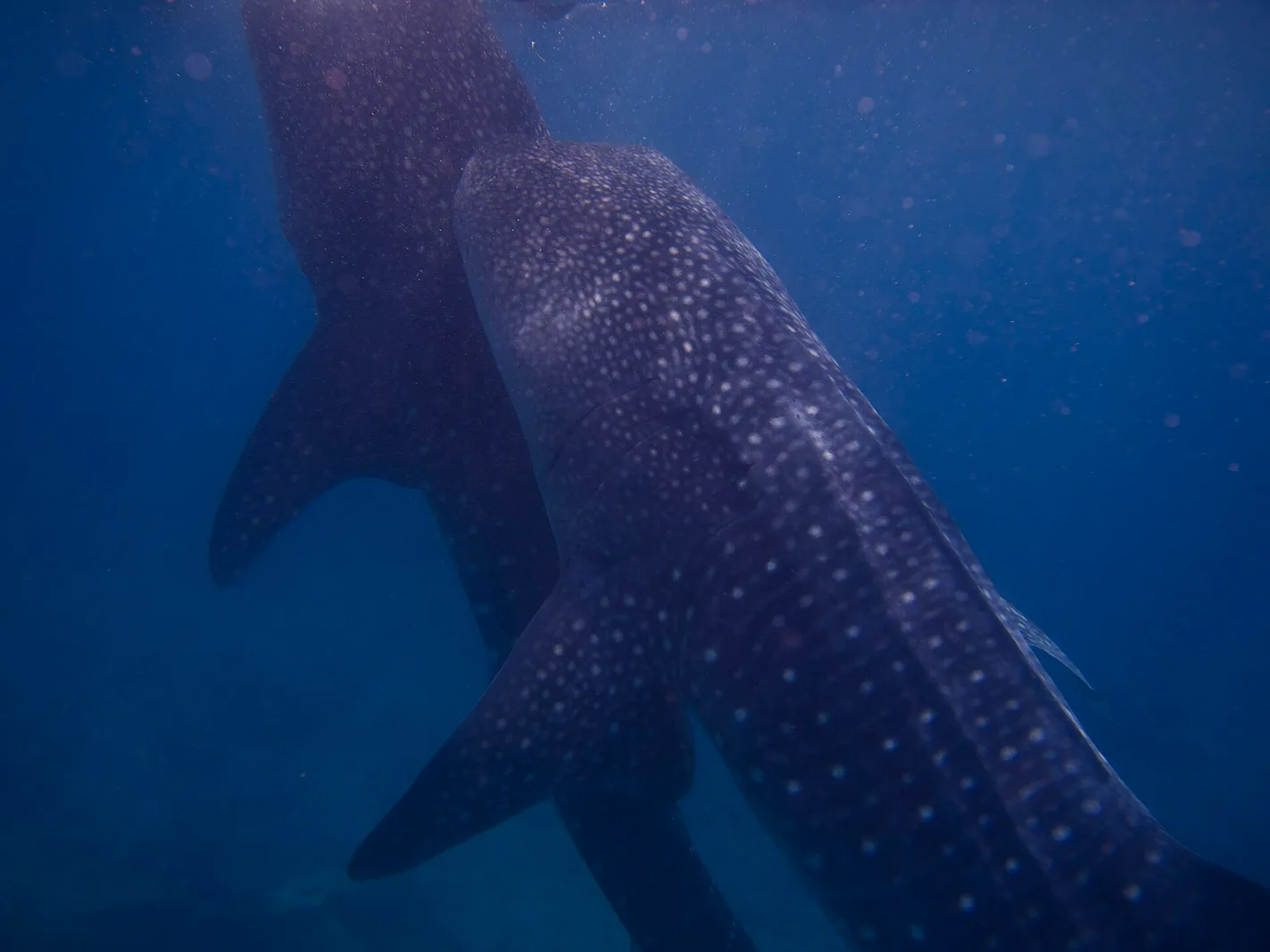
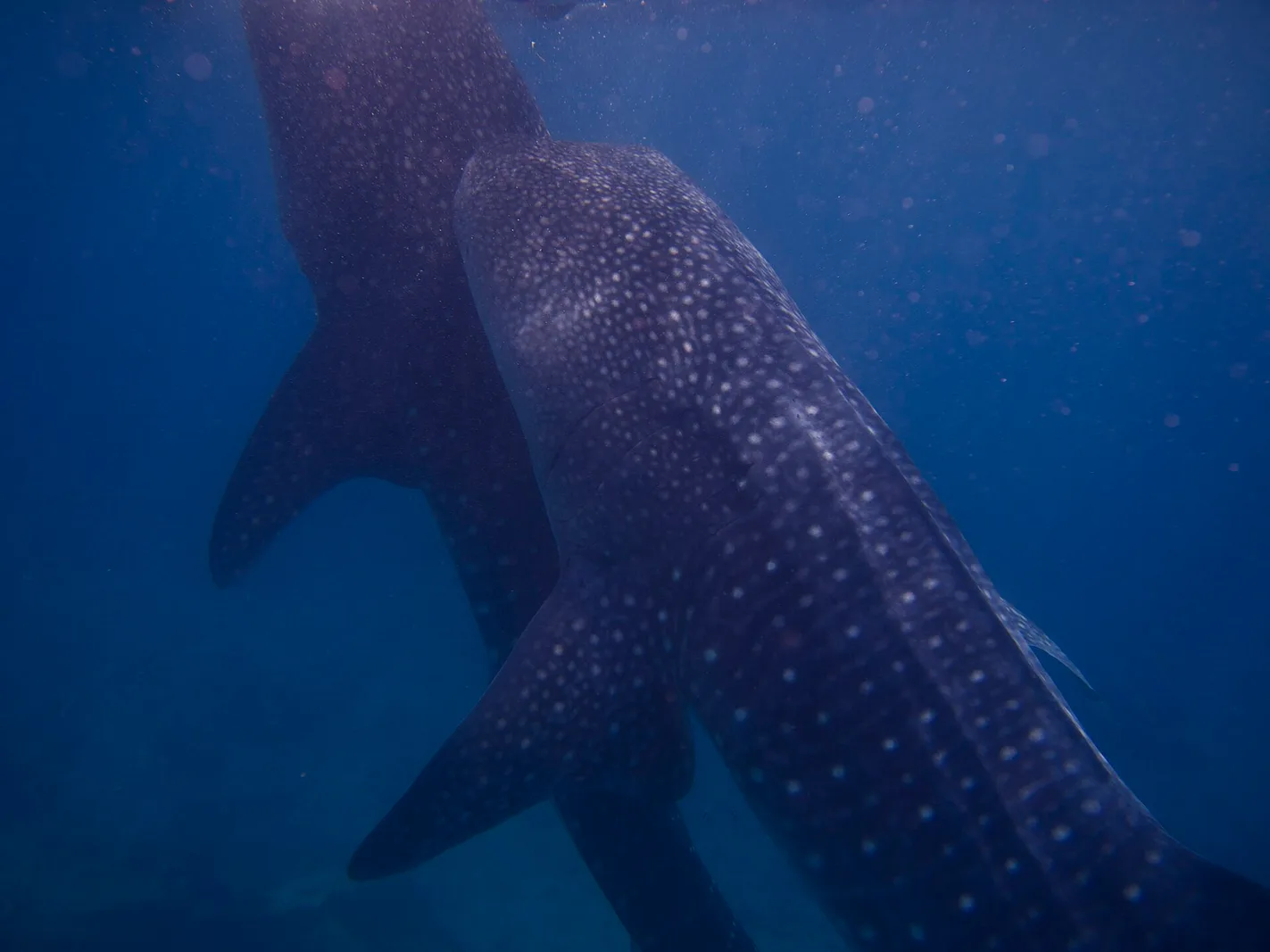
The star of the trip is the whale shark, or butanding in Filipino, called tuki by the local fishermen. Despite the name, it is not a whale at all but a shark, the biggest fish in the ocean, capable of reaching lengths of around 12 metres or more, though most of the individuals you see at Oslob are juveniles. They are filter feeders, completely harmless to people, drifting along with cavernous mouths open to strain tiny shrimp and plankton from the water. Each one carries a unique pattern of white spots across its grey back, almost like a fingerprint, which researchers use to tell individuals apart.
The Oslob encounter began around 2011, when local fishermen who had long shared the bay with these animals started hand-feeding them small shrimp (uyap) to keep them close. Word spread, and what was once a quiet fishing village of Tan-awan became one of the most famous wildlife sites in the Philippines. From your banca, paddled out only a short distance from shore, you slip into the water with a mask and snorkel and find yourself sharing the sea with creatures that can dwarf the boat itself. It is, for many people, the single most overwhelming animal encounter of their lives.
The ethics, honestly
It would be dishonest to write about Oslob without addressing the debate around it. The provisioning, the daily hand-feeding, is controversial among marine biologists. Critics argue it alters the sharks' natural migratory and feeding behaviour, conditions them to associate boats with food, and raises the risk of boat-strike injuries and over-reliance on a single, unnatural diet. Supporters point out that it has given the animals real economic value to the community and turned former fishermen into protectors rather than potential hunters. There are firm rules in place: swimmers must keep a minimum distance (around 4 metres), must not touch the sharks, and sunscreen is restricted because it harms the water and the animals. You are free to make your own choice. If you go, follow the briefing to the letter, never chase or grab an animal, and treat it as the privilege it is.
Whale shark watching in Philippines
Hand-picked experiences in Philippines — book on Trip.com with instant confirmation.
Tumalog Falls: the curtain of mist
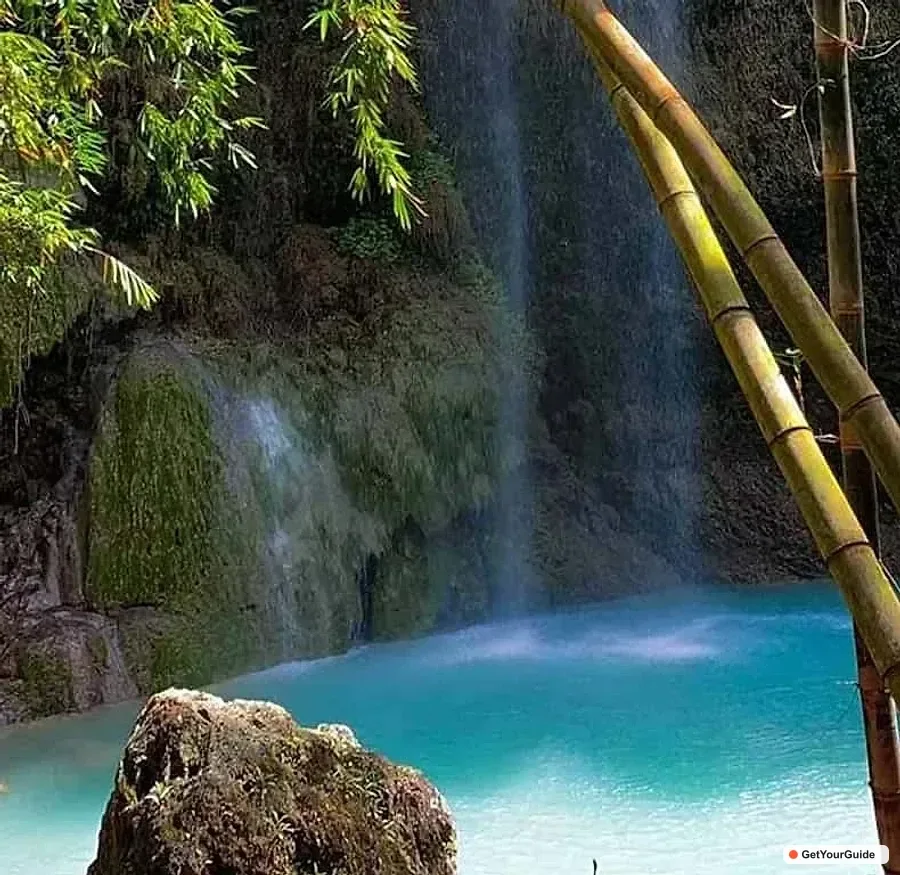
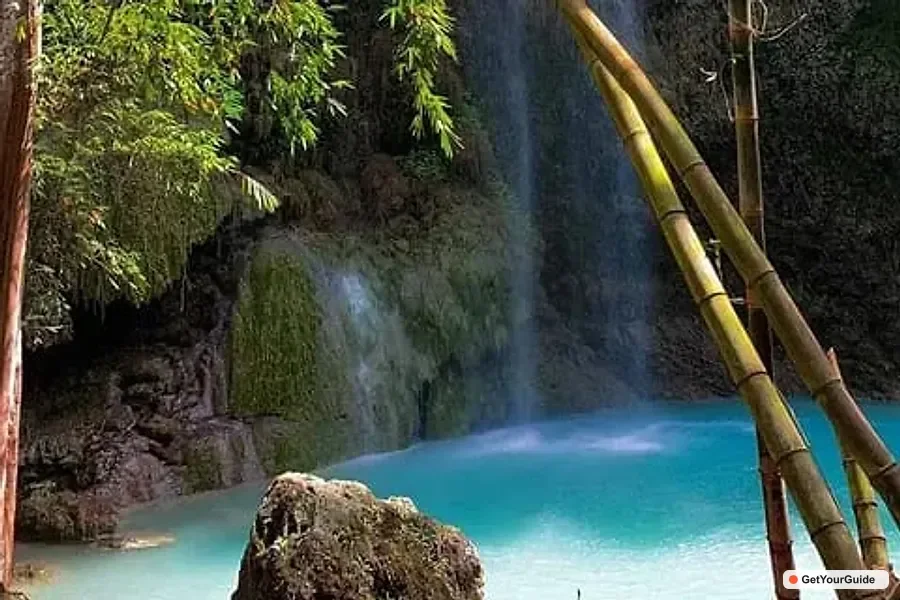
A short ride uphill from the whale-shark site, reached on the back of a habal-habal motorbike down a steep narrow lane, Tumalog Falls feels like another world entirely. This is not a single powerful plunge but a wide, fern-draped wall of rock over which countless thin ribbons of spring water spill, so fine that they break into mist before they even reach the pool below. The water emerges from the limestone hills, filtered cool and clear through the karst, and the whole grotto glows when morning light slants through the falling spray. The shallow, terraced basin at the bottom is perfect for a cooling dip after the salt of the sea. Wear sandals with grip, mind the slippery stone, and go early before the crowds and the harsher midday sun arrive.
Sumilon sandbar
Just off the southern tip of Cebu lies Sumilon Island, fringed by a sandbar of blindingly white sand that shifts shape and position with the seasons and the tides. Sumilon holds a special place in Philippine conservation history: its surrounding waters were declared the country's first marine protected area back in the 1970s, a pioneering experiment in letting reefs recover that has since been copied across the region. The reward today is gin-clear turquoise water over coral and seagrass, gentle for swimming and snorkelling, and a strip of sand that feels like a private island when the tide is right. Note that whether your tour stops here can depend on the day, the weather, and the tide, since the sandbar is sometimes wholly underwater, and entrance arrangements vary.

Moalboal and the sardine run
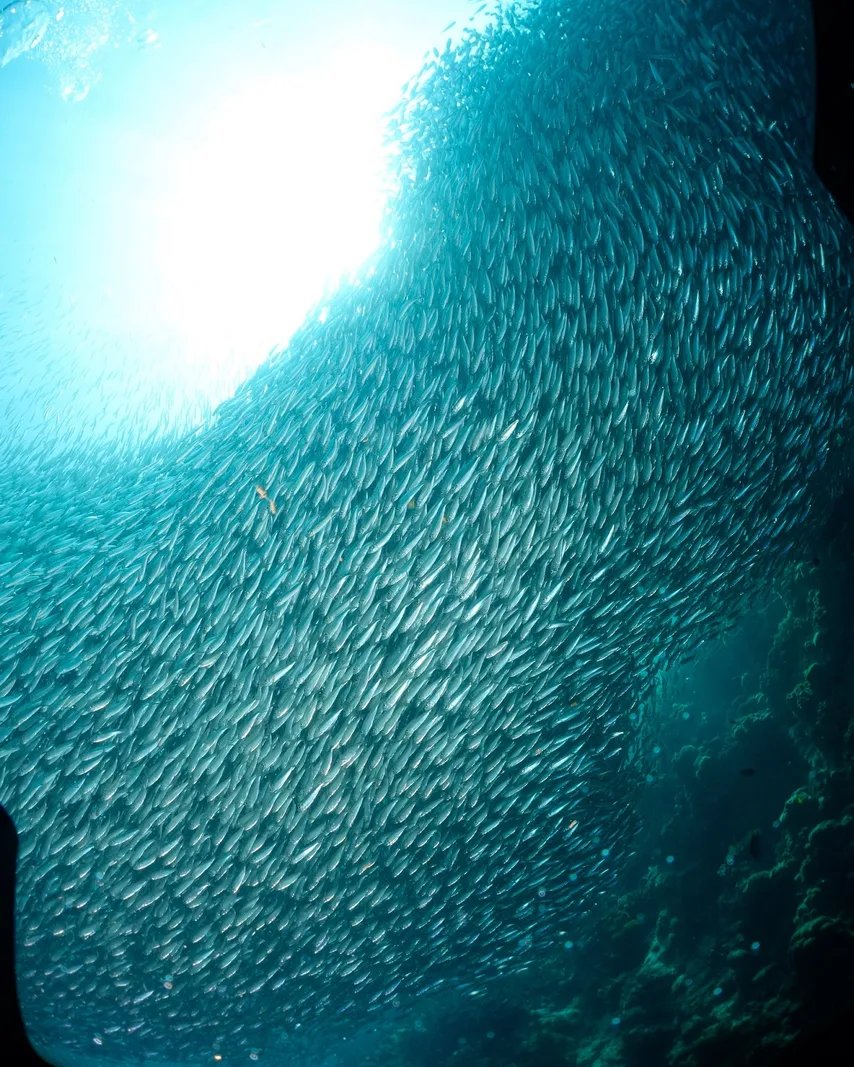
The final act takes you across to Cebu's western coast, to Moalboal, where the small barangay of Panagsama and the white sands of Basdiot have grown into one of the island's best-loved diving and snorkelling towns. The headline attraction here needs no scuba tank at all: just metres from the shore at Panagsama, the reef drops away into deep blue, and hovering along that wall is a vast, permanent shoal of sardines, millions of them, so dense they form a shimmering, shape-shifting wall. As you snorkel into them, they part and swirl around you, the light catching their silver flanks like a curtain of mercury. It is one of the few places on the planet where you can witness a true sardine run simply by swimming out from the beach.
Moalboal's house reef is genuinely good, with healthy coral, turtles that graze on the seagrass, and clouds of reef fish. If your day ends here at sunset, the western sky over the Tanon Strait can be spectacular, a fitting close to a day that started in the dark on the opposite coast.
Practical tips
- Timing: This is a long day, often 12 to 16 hours door to door from Cebu City, with a very early start (frequently 3 to 4 a.m.) because whale-shark interaction is limited to the morning hours.
- Dry and wet season: The driest, calmest months tend to be roughly December to May; June to November can bring rain and rougher seas that affect the Sumilon sandbar and crossings.
- What to bring: swimwear worn under your clothes, a towel, a dry change of clothes, a waterproof phone case or action camera, cash for entrance and optional fees, and motion-sickness tablets for the winding roads and boats.
- Sunscreen: reef-safe only, and avoid applying it before the whale-shark swim, where it is restricted to protect the animals and water.
- Fitness: the swimming is gentle and you can wear a life vest, but you should be comfortable in open water; non-swimmers can still float and watch.
- Typically included: hotel transfers and air-conditioned van transport, a driver/guide, and often the whale-shark entrance and boat. Some food, gear rental, and certain island fees may be extra, so confirm exactly what your package covers.
A day you will not forget
Few tours pack so much wonder into a single sunrise-to-sunset arc: a face-to-face moment with the ocean's gentle giant, a misty waterfall hidden in the hills, a sandbar of impossible white, and a living silver storm of sardines. Go with your eyes open, both to the beauty and to the honest questions around wildlife tourism, follow every rule the guides give you, and southern Cebu will reward you with a day that stays with you long after your skin has dried.
Good to know before you book
- Duration: typically a full day (around 8 to 10 hours including transfers), though half-day and multi-day options exist - check the listing.
- Best for: active travellers, couples and friends.
- What is included: the boat, snorkelling gear, a guide and often lunch; marine-park or environmental fees may be extra.
- Pickup: most tours offer hotel or central pickup; confirm your point and time when booking.
- Book through: the GetYourGuide button on this page, which shows live availability and pricing.
Frequently asked questions
How long does the Oslob Whale Shark, Tumalog, Sumilon & Moalboal Tour take?
Most departures run as a full day - roughly 8 to 10 hours including pickup, travel and the activities themselves - so plan to set aside the whole day. Some operators offer shorter or private versions; the exact timing for your date is shown when you book through the GetYourGuide button on this page.
What is included in the Oslob Whale Shark, Tumalog, Sumilon & Moalboal Tour?
Typically the price covers the boat, snorkelling gear, a guide and often lunch; marine-park or environmental fees may be extra. Inclusions vary by operator, so always read the specific listing - it spells out exactly what is provided and what you pay for separately, such as entrance or environmental fees.
What should I bring?
Pack swimwear, reef-safe sunscreen applied early and sparingly, a towel and an underwater camera. Snorkelling gear is normally provided. It is also worth carrying some cash for local fees, drinks and tips, plus any personal medication, since card facilities can be limited outside the cities.
Is the Oslob Whale Shark, Tumalog, Sumilon & Moalboal Tour suitable for beginners or families?
It is suitable for swimmers and snorkellers of most levels, with life vests available for the less confident. For scuba elements you will need the appropriate certification. Children can usually join with a vest and supervision. If you have specific concerns about age, fitness or swimming ability, message the operator before booking - they can advise on the best option for your group.
When is the best time to do this tour?
The best conditions are usually the dry months of December to May, with calm seas for snorkelling and diving. That said, the Philippines is a year-round destination, and many of these experiences run in any season - just expect the occasional shower and check the forecast for the day.
How do I get to Cebu?
To reach Cebu, fly into Mactan-Cebu International Airport, then drive south (about 3 to 4 hours to the southwest coast). Many tours include transfers from nearby towns or hotels, so confirm your pickup arrangement when you book so the day runs smoothly from the start.
Do I need to book the Oslob Whale Shark, Tumalog, Sumilon & Moalboal Tour in advance?
Yes - booking ahead is strongly recommended, especially in the dry-season peak and on weekends, when popular tours and the best operators sell out. Reserving online also locks in your spot and lets you compare timings and inclusions easily.
How much does the Oslob Whale Shark, Tumalog, Sumilon & Moalboal Tour cost?
Prices vary with the season, group size and exactly what is included, so we do not list a fixed figure here. Tap the GetYourGuide button on this page to see the current, accurate price and availability for your chosen date.
Can I do the Oslob Whale Shark, Tumalog, Sumilon & Moalboal Tour as a private or customised tour?
Many operators offer a private version of this experience for couples, families or small groups who want a flexible pace and a guide to themselves, and some can tailor the route or add stops. If a private or custom option matters to you, check the listing or message the operator before booking, as availability and prices differ from the standard shared tour.
Ready to explore Cebu?
From planning to the moment you arrive, the Oslob Whale Shark, Tumalog, Sumilon & Moalboal Tour is one of the most rewarding ways to experience this corner of the Philippines - and booking it is simple. Use the GetYourGuide button on this page to check live availability, compare timings and secure your spot, then turn up and let the local guides handle the rest while you focus on the views, the water and the memories.

PANA.PH Editorial Team
Philippines travel desk
The PANA.PH travel desk researches, books and re-checks Philippines travel logistics — fares, ferry schedules, government fees and permit rules — and publishes what it can verify.
🏡 Real local stays (book direct)
Hand-picked homestays and guesthouses — book direct, no markup.
Browse all local stays →


🌊 Popular activities (book instantly)
Island hopping, canyoneering, whale sharks — real Klook/GetYourGuide options.
View all activities →