Short answer: Vigan is inscribed on the UNESCO World Heritage List as the Historic City of Vigan, recognised as the best-preserved example of a planned Spanish colonial town in Asia. The inscription covers a living urban core, not a single street - and Calle Crisologo, the photograph everyone comes for, is a fraction of the protected area.
Trip.comHotels in Philippines
Compare live prices via Travelpayouts — targeted for this guide.
Search on Trip.comFor visitors planning a day or two in Ilocos Sur, usually as part of a northern Luzon loop. Heritage status last checked 30 July 2026 against the UNESCO inscription record. Vigan is roughly eight to ten hours by road from Manila, or a short flight to Laoag followed by a transfer.
| Assumption | Reality |
|---|
| Vigan means Calle Crisologo | The inscribed area is a whole urban core |
| It is a preserved museum town | People live and work in the heritage houses |
| Midday is when to photograph it | Early morning is empty and evening is lit |
| A kalesa ride is a neutral souvenir | Welfare varies sharply between operators |
| One afternoon covers it | Two nights lets you see it without crowds |
Mistake one: treating Calle Crisologo as the destination
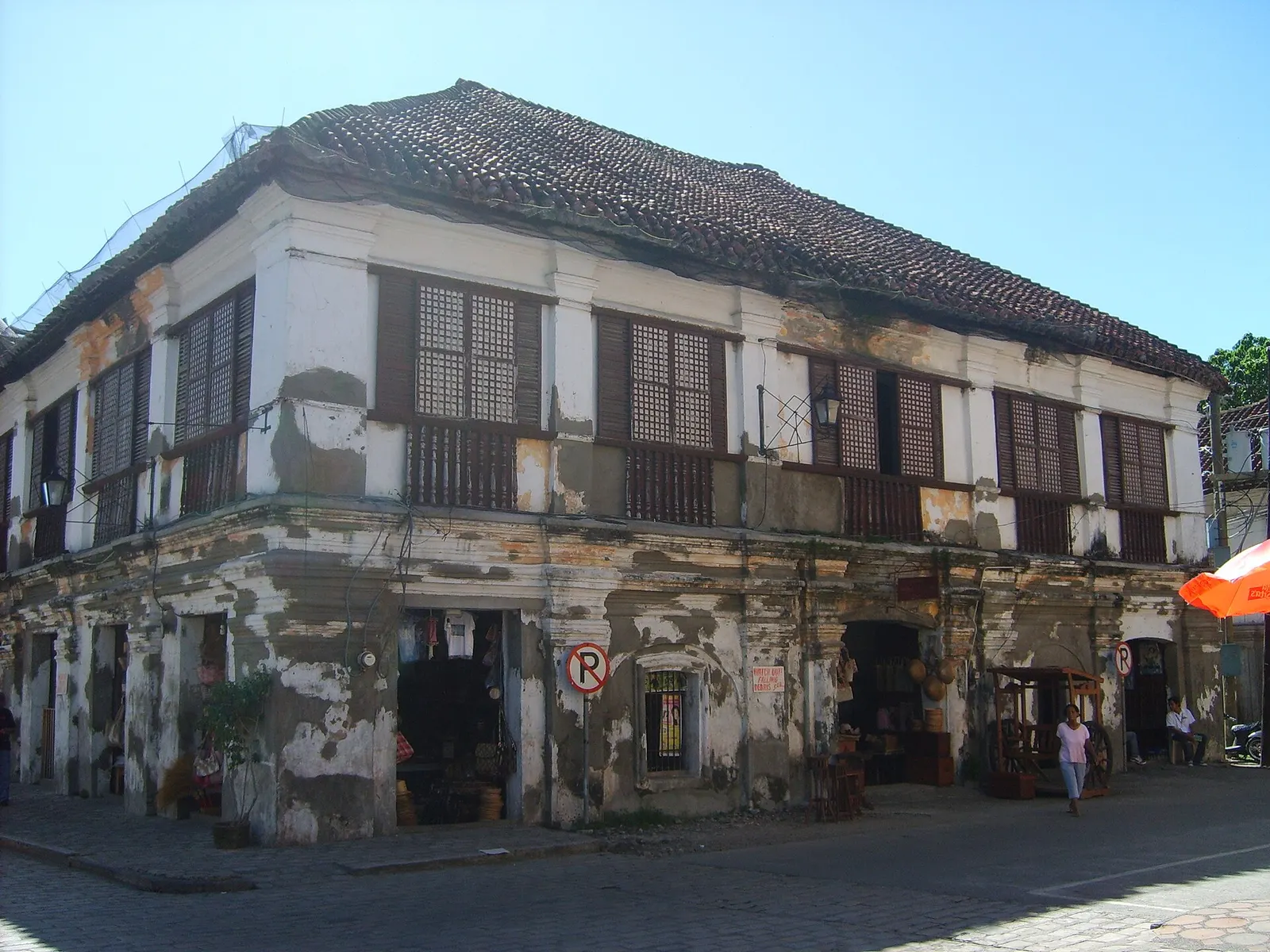
The cobbled street of colonial houses is the image that sells Vigan, and it occupies most visitors for the entire stay. The UNESCO inscription is considerably broader: it recognises the town plan itself, a Spanish colonial grid adapted to a Philippine setting, with a fusion of European colonial architecture and Asian building traditions.
What that means on the ground is that the heritage is the layout - the plaza complex, the cathedral, the mestizo district, the street pattern - and not one photogenic block. Walking two streets off Crisologo puts you in the same protected fabric with none of the crowd.
The fix: spend the first hour walking the grid without a destination. Plaza Salcedo and Plaza Burgos, the cathedral, and the streets behind the main run are where the town stops performing.
Mistake two: expecting a preserved museum town
Vigan is inhabited. The heritage houses have residents, businesses, air conditioning units and satellite dishes, and visitors sometimes read that as the site being spoiled.
It is the opposite. A living historic city is a harder conservation achievement than an evacuated one, and the inscription recognises a town that continued to function rather than one frozen for tourists. The trade is that it looks lived-in, because it is.
The fix: adjust the expectation before arriving. You are visiting a small provincial city with a protected core, not a heritage park, and the tricycles and shopfronts are part of what got preserved.
Mistake three: photographing at the worst possible hour
Tour groups arrive mid-morning and leave mid-afternoon, which is exactly when Calle Crisologo is fullest and the light is flattest. Visitors then report that the famous street is a tourist trap.
The street has two better hours. Just after dawn it is close to empty and the low light rakes along the facades. After dark the lamps come on and the cobbles reflect, which is the version in most of the photographs people came to reproduce.
The fix: stay overnight in Vigan rather than passing through. A day-trip itinerary structurally guarantees you see the street at its worst, and the fix costs one night in a town where accommodation is inexpensive.
Mistake four: booking a kalesa without looking at the horse
The horse-drawn kalesa is part of Vigan's identity and a legitimate way to see the town. Welfare standards vary sharply between operators, and a tourist economy that rewards volume creates pressure to keep animals working through the hottest hours.
Look before you book. A horse in reasonable condition has flesh over its ribs, unbroken skin under the harness, sound feet and access to water and shade at the stand. Thin, sore or heat-stressed animals are visible to anyone who takes thirty seconds to look.
The fix: choose the driver whose horse looks well kept, ride in the cooler parts of the day, and be willing to walk away. The market responds to which drivers get chosen, which makes this one of the few situations where a tourist's choice does something.
Mistake five: compressing Ilocos into a single stop
Vigan is usually one item on a northern loop that also promises Laoag, Pagudpud, the sand dunes and Bangui. Attempting all of it in two days produces a great deal of driving and very little time anywhere.
Ilocos Sur and Ilocos Norte are separate provinces with real distance between the highlights, and the coastal road is not fast. Vigan itself rewards unhurried time - the burnayan pottery workshops, the abel weaving, the empanada stands at Plaza Burgos in the evening.
The fix: give Vigan two nights and treat the rest of Ilocos as a separate trip, or accept that a whistle-stop loop is a driving holiday with photo stops.
What most guides get wrong about Vigan
The recurring error is describing Vigan as a Spanish colonial town and stopping there, which flattens what the inscription actually recognises: a fusion of European colonial town planning with Asian and Philippine building traditions, producing something that exists nowhere in Europe or in Latin America. The mestizo character is the reason it is on the list, not the Spanishness.
The second is the day-trip framing. Almost every itinerary treats Vigan as a stop between Manila and Pagudpud, which delivers visitors into the one window when the streets are most crowded and the light is worst, and then reports disappointment.
The third is silence on the kalesa horses. Guides recommend the ride as a charming must-do without a word about how to tell a well-kept animal from a mistreated one, in a town where both are working the same street. That omission is the difference between a recommendation and useful advice.
There is a fourth, quieter error worth naming: the claim that Vigan survived because it was too remote to matter. Ilocos Sur was not a backwater - Vigan was a trading centre whose merchant families built in stone precisely because they were wealthy, and the town came through the Second World War intact largely by circumstance rather than obscurity. Presenting the preservation as an accident of isolation erases the deliberate conservation work, much of it local and much of it since the 1990s, that produced the streets visitors photograph today.
Frequently asked questions
Why is Vigan a UNESCO World Heritage Site?
It is recognised as the best-preserved example of a planned Spanish colonial town in Asia, notable for fusing European colonial town planning with Asian and Philippine building traditions.
Is Calle Crisologo the whole heritage site?
No. The inscription covers the historic urban core - the street grid, the plaza complex, the cathedral and the mestizo district. Calle Crisologo is one photogenic part of a much larger protected area.
When should I photograph Calle Crisologo?
Just after dawn, when it is nearly empty, or after dark when the lamps are lit. Mid-morning to mid-afternoon is when tour groups fill it and the light is flattest.
Should I take a kalesa ride?
Only after looking at the horse. Welfare varies between operators, so check for body condition, harness sores and access to shade and water, and ride in the cooler hours.
How long should I spend in Vigan?
Two nights. A day trip guarantees you see the city only during its most crowded window, and staying over is what makes the empty dawn and lit evening streets possible.