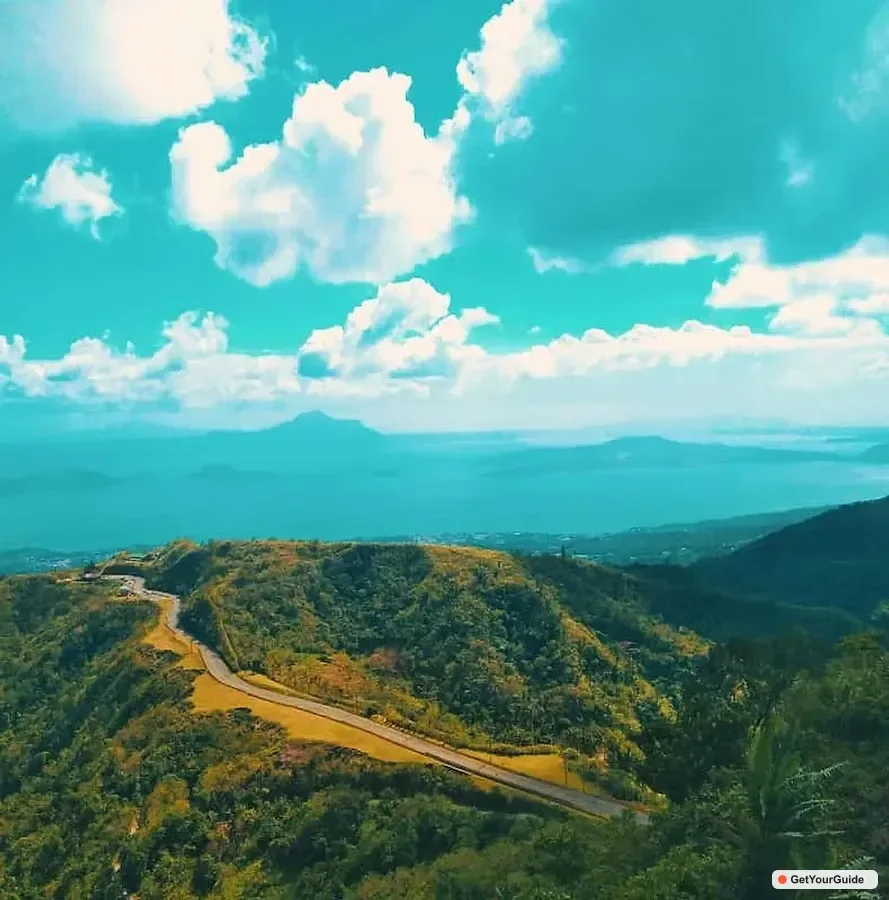
There is a moment, somewhere along the climb up the South Luzon Expressway, when the flat sprawl of Metro Manila gives way to something cooler and greener. The air thins, the temperature drops a noticeable few degrees, and pineapple fields begin to climb the slopes on either side of the road. Then you reach the ridge, the van slows, and the whole reason people fall in love with Tagaytay opens up beneath you in one breath: a vast caldera lake with a small, smoking island volcano resting in its center. That view is Taal, and a half-day Tagaytay countryside tour is the easiest, most rewarding way to trade the heat and traffic of the capital for one of the most dramatic natural panoramas in the Philippines.
Tagaytay Countryside Wonders Half-Day Tour - Guide
Trip.com
Search on Trip.comHotels in Philippines
Compare live prices via Travelpayouts — targeted for this guide.
Tagaytay sits on a ridge in Cavite province, only about 55 to 60 kilometers south of Manila, yet it feels like another world. At roughly 600 meters above sea level, the city enjoys a famously mild, breezy climate that has made it a weekend refuge for Manilenos for generations. A half-day tour is built around that easy proximity: you can leave the city in the morning, drink in the views, eat exceptionally well, and be back before the evening rush.
The geology beneath the view: what Taal really is
To understand why the scenery is so spectacular, it helps to know what you are actually looking at. Taal is one of the most active volcanoes in the Philippines, and its structure is genuinely unusual. What looks like a peaceful lake cradling a small island is in fact an enormous volcanic caldera, formed by a series of colossal prehistoric eruptions that collapsed the ground inward. That collapsed basin filled with water to become Taal Lake, and the island in the middle is Volcano Island, the still-active vent of the system.
This produces one of the most quoted geographic curiosities in the country: a lake within an island, an island within a lake, within an island. Volcano Island holds its own crater lake (Main Crater Lake), and that crater lake itself contains a tiny rocky islet. The whole nested arrangement sits inside Taal Lake, which sits on the island of Luzon. Taal is sometimes described as one of the world's smallest volcanoes by relative height, but do not let the modest size fool you. It is closely monitored by the Philippine Institute of Volcanology and Seismology (PHIVOLCS), and its 2020 eruption sent ash across the region and forced large evacuations. Access onto Volcano Island itself is restricted depending on the alert level, which is exactly why ridge-top viewing from Tagaytay is the safe, sensible, and frankly more photogenic way to experience it.
Trip.com
See all tours in Philippines on Trip.comTours & activities in Philippines
Hand-picked experiences in Philippines — book on Trip.com with instant confirmation.
What you see and do, stop by stop
A countryside half-day tour is less about ticking off ticketed attractions and more about savoring the ridge and its surroundings. The shape of the day typically looks like this:
- The Taal Lake viewpoints. The undisputed centerpiece. Tour vehicles pull over at the best lookout points along Tagaytay's ridge so you can take in the lake and volcano in full. On a clear morning the water is a deep blue-green and the island sits crisply against it; this is the photograph you came for.
- People's Park in the Sky. Perched on the highest point of Tagaytay (Mount Sungay), this is the unfinished shell of a 1980s mansion that was never completed. Today it serves as a breezy hilltop park with sweeping 360-degree views, a small chapel, and on clear days a glimpse of Laguna de Bay and even Manila Bay in the distance.
- Picnic Grove and the ridge promenade. A relaxed green space with viewing decks, ziplines and a cable car for the adventurous, and plenty of spots simply to stand at the railing and feel the wind.
- Local markets and the bamboo-craft and pineapple stalls. The countryside around Tagaytay grows pineapples, coffee, and cool-climate produce. Roadside stalls sell sweet local pineapples, buko (young coconut), and woven goods, and many tours fold in a stop to browse and snack.

Culture, history, and why Tagaytay matters
Tagaytay's story is woven into the broader history of Cavite, a province with deep significance in the Philippine struggle for independence. The ridge itself played a role in World War II as a strategic high ground. In peacetime, though, its destiny became leisure: as Manila grew hotter and more crowded through the twentieth century, the cool ridge became the obvious escape, and a culture of weekend day-tripping grew up around it.
That culture is inseparable from food. Tagaytay is famous for two dishes in particular. The first is bulalo, a rich beef-shank-and-bone-marrow soup that is the ultimate comfort food in the highland chill, simmered for hours until the marrow slides out of the bone. The second is the region's beef and the cool-climate vegetables that thrive here. Many half-day tours either include or pause near a bulalo restaurant, and skipping it would be a small tragedy. The local coffee tradition matters too: Cavite and neighboring Batangas are part of the country's historic kapeng barako (Liberica coffee) heartland, a strong, aromatic bean that nearly disappeared and is now being revived.
Practical tips for a smooth trip
A few things learned from doing this drive many times:
- Go early. The single most important tip. Tagaytay's views are clearest in the morning before clouds and afternoon haze roll in, and the road from Manila clogs badly on weekends. An early start means open roads and a sharp, unobstructed volcano.
- Best time of year. The cool, dry months from roughly November to February are ideal, with the clearest skies and the most pleasant temperatures. The rainy season (June to October) can shroud the lake in mist, though a clear gap between showers can be magical.
- What to bring. A light jacket or layer. Tagaytay is genuinely cooler than Manila, especially in the morning breeze and on the exposed hilltop at People's Park in the Sky. Bring sunglasses, sunscreen, and cash for stalls and food.
- How strenuous. Not very. This is a scenic, vehicle-based tour with short, easy walks at viewpoints. It suits families, older travelers, and anyone who simply wants the view without a hike. Comfortable walking shoes are plenty.
- What is typically included. Round-trip transport from Manila and a guide or driver are the core. Whether meals and entrance fees are bundled varies by operator, so confirm before booking; the small fees for People's Park or Picnic Grove are modest in any case.
- Duration. Allow most of a half day end to end. The drive each way runs roughly one and a half to two and a half hours depending on traffic, leaving a comfortable few hours on the ridge.
On responsible travel: because Taal is an active volcano, treat any PHIVOLCS alert-level guidance seriously, and understand that boat trips onto Volcano Island may be closed for safety reasons. Ridge-top viewing is unaffected. When you buy from local pineapple and craft stalls, you are putting money directly into the countryside communities the tour celebrates, which is the most natural way to give back.

A short closing
What makes a Tagaytay half-day so satisfying is how much it delivers for so little effort. In a single morning you swap the heat of Manila for a cool ridge, you stand above one of the planet's strangest and most beautiful volcanic landscapes, you eat a bowl of bulalo that warms you from the inside, and you are home before dark. It is the Philippines at its most generous: a world-class view, an easy drive, and a slow, breezy afternoon you will keep thinking about long after you have descended back into the city heat.
Good to know before you book
- Duration: typically a full day (around 8 to 10 hours including transfers), though half-day and multi-day options exist - check the listing.
- Best for: couples, families and first-time visitors.
- What is included: transport, a guide and the main stops; entrance fees and lunch are sometimes extra.
- Pickup: most tours offer hotel or central pickup; confirm your point and time when booking.
- Book through: the GetYourGuide button on this page, which shows live availability and pricing.
Frequently asked questions
How long does the Tagaytay Countryside Wonders Half-Day Tour take?
Most departures run as a full day - roughly 8 to 10 hours including pickup, travel and the activities themselves - so plan to set aside the whole day. Some operators offer shorter or private versions; the exact timing for your date is shown when you book through the GetYourGuide button on this page.
What is included in the Tagaytay Countryside Wonders Half-Day Tour?
Typically the price covers transport, a guide and the main stops; entrance fees and lunch are sometimes extra. Inclusions vary by operator, so always read the specific listing - it spells out exactly what is provided and what you pay for separately, such as entrance or environmental fees.
What should I bring?
Pack comfortable shoes, sunscreen, a hat, water and small cash for entrance fees and souvenirs. It is also worth carrying some cash for local fees, drinks and tips, plus any personal medication, since card facilities can be limited outside the cities.
Is the Tagaytay Countryside Wonders Half-Day Tour suitable for beginners or families?
It is gentle and family-friendly, suitable for all ages with only light walking involved - a comfortable way to see the highlights. If you have specific concerns about age, fitness or swimming ability, message the operator before booking - they can advise on the best option for your group.
When is the best time to do this tour?
The best conditions are usually the cooler, drier months of November to May. That said, the Philippines is a year-round destination, and many of these experiences run in any season - just expect the occasional shower and check the forecast for the day.
How do I get to Manila?
To reach Manila, fly into Manila (Ninoy Aquino International Airport), then travel by road - most of these day trips depart from Metro Manila. Many tours include transfers from nearby towns or hotels, so confirm your pickup arrangement when you book so the day runs smoothly from the start.
Do I need to book the Tagaytay Countryside Wonders Half-Day Tour in advance?
Yes - booking ahead is strongly recommended, especially in the dry-season peak and on weekends, when popular tours and the best operators sell out. Reserving online also locks in your spot and lets you compare timings and inclusions easily.
How much does the Tagaytay Countryside Wonders Half-Day Tour cost?
Prices vary with the season, group size and exactly what is included, so we do not list a fixed figure here. Tap the GetYourGuide button on this page to see the current, accurate price and availability for your chosen date.
Can I do the Tagaytay Countryside Wonders Half-Day Tour as a private or customised tour?
Many operators offer a private version of this experience for couples, families or small groups who want a flexible pace and a guide to themselves, and some can tailor the route or add stops. If a private or custom option matters to you, check the listing or message the operator before booking, as availability and prices differ from the standard shared tour.
Ready to explore Manila?
From planning to the moment you arrive, the Tagaytay Countryside Wonders Half-Day Tour is one of the most rewarding ways to experience this corner of the Philippines - and booking it is simple. Use the GetYourGuide button on this page to check live availability, compare timings and secure your spot, then turn up and let the local guides handle the rest while you focus on the views, the water and the memories.

PANA.PH Editorial Team
Philippines travel desk
The PANA.PH travel desk researches, books and re-checks Philippines travel logistics — fares, ferry schedules, government fees and permit rules — and publishes what it can verify.
🏡 Real local stays (book direct)
Hand-picked homestays and guesthouses — book direct, no markup.
Browse all local stays →

🌊 Popular activities (book instantly)
Island hopping, canyoneering, whale sharks — real Klook/GetYourGuide options.
View all activities →