Contents
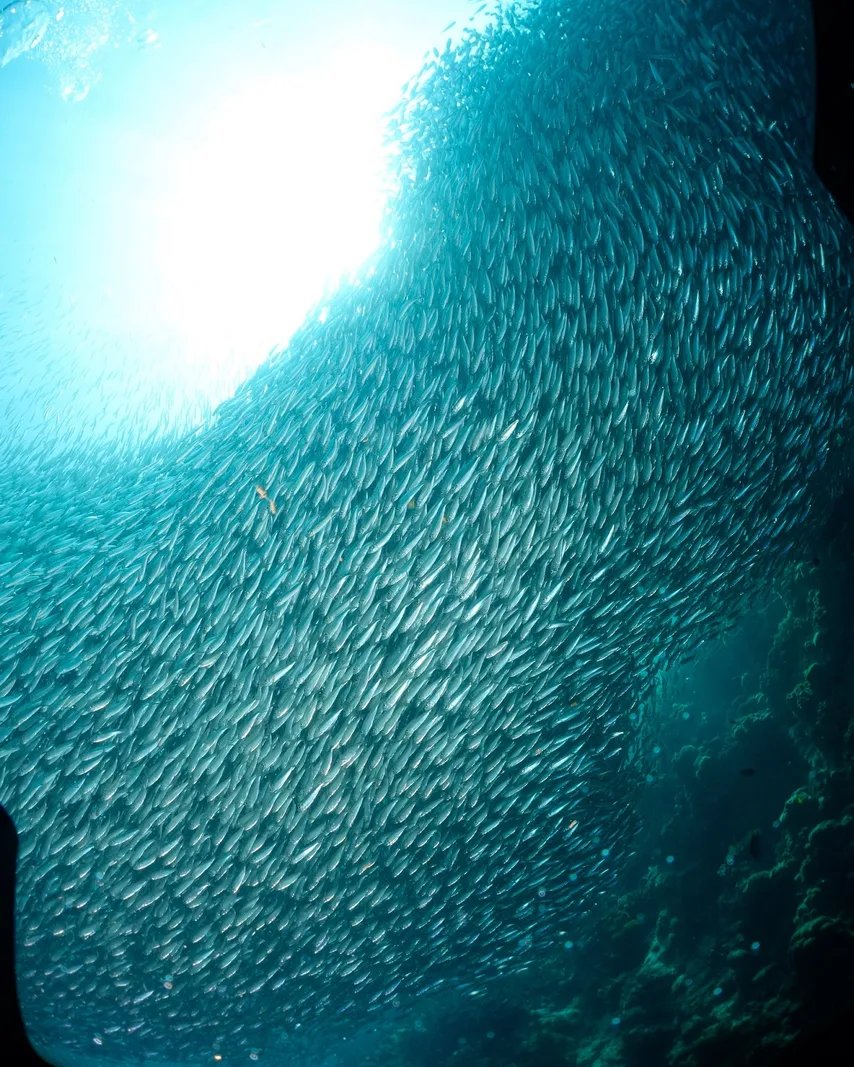
There is a moment, perhaps fifteen meters down off the wall at Panagsama Beach, when the blue water in front of your mask suddenly thickens. What looked like empty ocean a heartbeat ago becomes a living, shimmering wall of millions of sardines, wheeling and folding in on itself like a slow-motion tornado of silver. The shoal parts around you, closes behind you, and for a few minutes you are not watching the sea so much as standing inside it. This is the Moalboal sardine run, and the remarkable thing is that you do not have to chase a season or get lucky to see it. It is here, off this little Cebu coastline, more or less every single day of the year.
Hotels in Philippines
Compare live prices via Travelpayouts — targeted for this guide.
This dive trip pairs that headline act with the area's other great pleasure: cruising the reef and seagrass meadows in search of green sea turtles, which graze these shallows with the unbothered calm of animals that have learned divers mean them no harm. Together they make Moalboal one of the most rewarding, accessible, and reliably spectacular dive destinations in the Philippines.

Where you are: a town on the edge of a deep blue drop
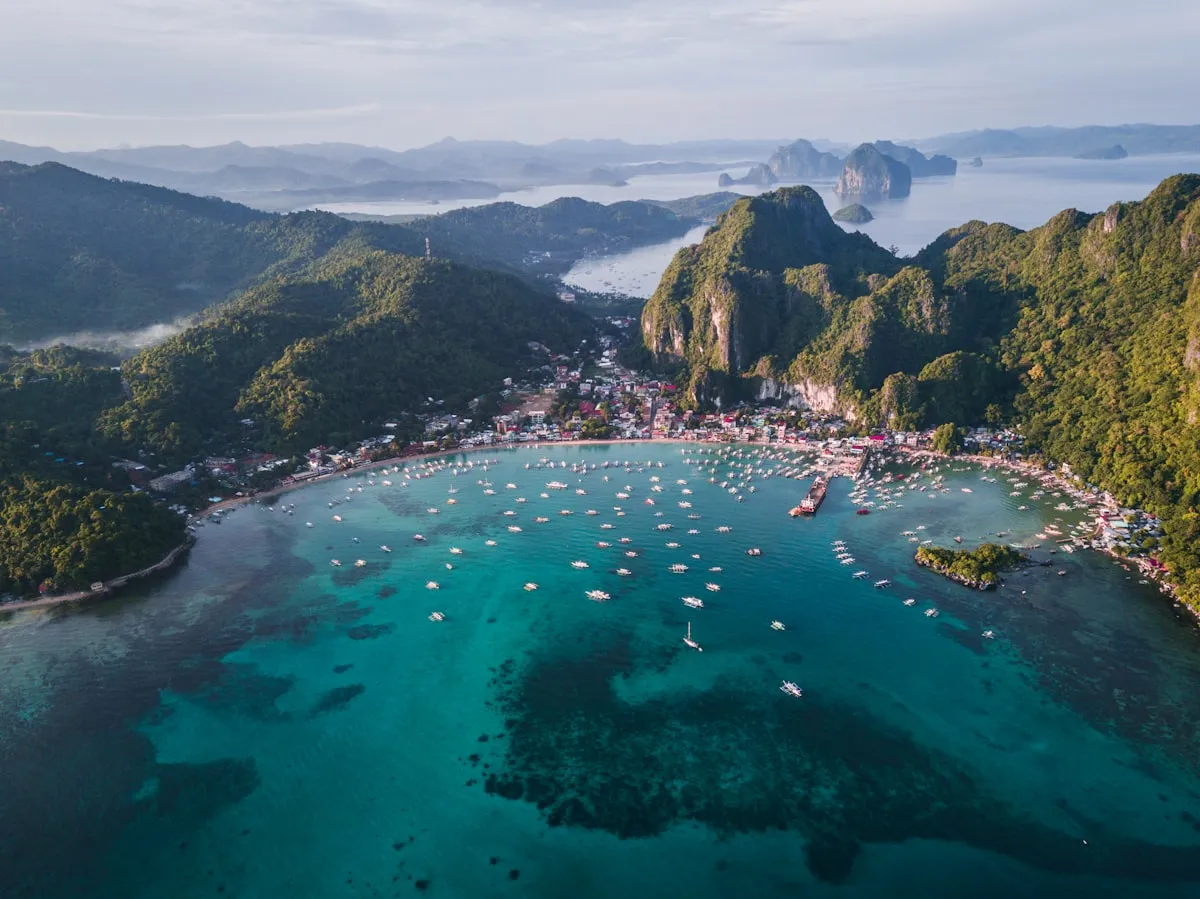
Moalboal sits on the southwestern coast of Cebu island, roughly a three-hour drive (about 90 kilometers) from Cebu City, facing the Tanon Strait that separates Cebu from Negros. Most diving happens off two adjacent spots: Panagsama Beach, the long-established dive-shop strip, and the white sand of nearby Basdaku, better known as White Beach.
What makes the diving so good here is geography. The reef shelf at Panagsama is narrow, and only a short fin-kick from shore the seabed plunges away into a steep wall that drops well past recreational depths. That wall is the secret to the whole experience. Cold, nutrient-rich water rises along it, feeding the coral and the plankton, and the plankton feeds the sardines. The combination of a sheltered, shallow reef top and an immediate vertical drop-off means you can be floating over coral gardens in five meters of water one minute and hanging in deep blue over an abyss the next, all within the same dive.
Diving in Philippines
Hand-picked experiences in Philippines — book on Trip.com with instant confirmation.
Why the sardines stay
The sardine run elsewhere in the world, like the famous South African event, is a seasonal migration. Moalboal's is different: it is a resident baitball. Vast numbers of sardines (the locals and dive guides usually mean a mix of small schooling fish, dominated by sardines) have made a permanent home along this stretch of wall, likely because the steady upwelling provides constant food and the reef offers shelter. They shoal tightly as a defense against predators such as trevally, mackerel, and the occasional thresher shark that sweeps through to feed. For divers and even snorkelers, that means the spectacle is available year-round, often just meters from the shoreline. It is genuinely one of the few places on earth where a phenomenon this dramatic is also this dependable.
What you actually do, dive by dive
A typical Moalboal dive day on this kind of trip runs two or three dives, usually as boat dives but sometimes as easy shore entries straight off Panagsama. Here is what those dives tend to deliver:
- The sardine run at Panagsama / Pescador wall. The centerpiece. You descend the wall and find the bait ball, often between 5 and 18 meters, where the light is still strong enough to set the silver flashing. Guides position the group so the shoal flows around you rather than scattering. Move slowly, breathe slowly, and let the fish come.
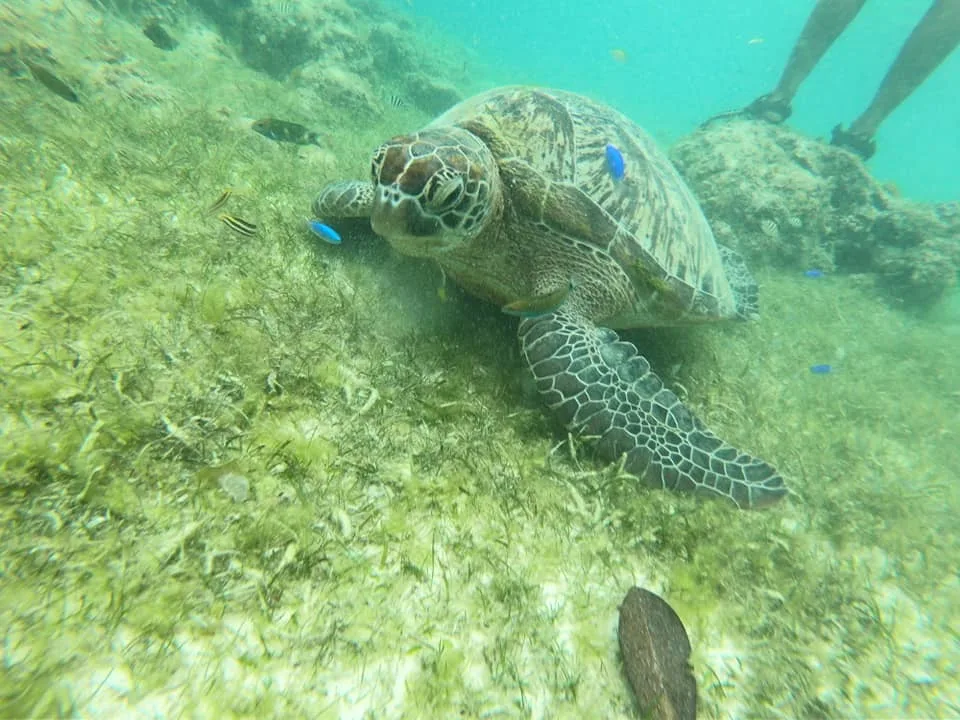
- Turtle hunting on the reef flats. Green sea turtles are frequently spotted resting on coral ledges or grazing seagrass in the shallows. Hawksbill turtles also appear. The etiquette matters here: you observe, you do not touch, you do not ride, and you give them room to surface to breathe.
- Pescador Island. Many trips include or offer this tiny islet a short boat ride offshore. Its walls and the famous "Cathedral" swim-through are draped in soft coral and gorgonians, with frequent jacks, snapper, and lionfish, and the sardines often gather here too.
- Macro life on the house reef. Between the big moments, Moalboal rewards slow eyes: frogfish, nudibranchs, mantis shrimp, scorpionfish, and seahorses all live on these reefs, making it a favorite for underwater photographers.
Conservation, and why it matters here
Moalboal is a conservation success story, and it is worth understanding the context. The reefs here suffered badly in past decades from dynamite fishing and the damage of a major typhoon. The recovery has come from a mix of marine protected areas, no-take zones, and the simple economics of dive tourism making a living reef worth more than a blasted one. Pescador Island and stretches of the Panagsama reef now sit within protected status, and you will typically pay a small environmental or marine-park fee as part of your diving.
This is the honest, responsible way to enjoy Moalboal: the sardines and turtles are wild and unfed. Unlike the much-debated whale-shark feeding at Oslob further south on Cebu, where animals are baited to the surface for tourists, nothing here is provisioned or manipulated. The animals are simply living their lives, and you are a guest. Keep good buoyancy so you never kick the coral, never chase or corner a turtle, and don't crowd the bait ball so tightly that you disrupt its natural behavior. Reef-safe sunscreen for the surface intervals is a small, real kindness to the ecosystem.
Practical tips for a great dive day
When to go
Because the sardines and turtles are resident, there is no bad season to dive Moalboal. That said, the dry months from roughly December through May tend to bring the calmest seas and best visibility, often 15 to 30 meters. The rainy season (around June to November) can mean occasional rougher days, but diving usually continues. Mornings generally offer the flattest water and the freshest light on the silver shoal.
What's typically included and what to bring
- Trips of this kind usually include tanks, weights, a dive guide, the boat, and often basic rental gear; confirm whether marine-park fees and lunch are extra.
- Bring or rent a 3mm wetsuit. Water temperatures here are warm, commonly in the high 20s Celsius, but you will be more comfortable over multiple dives with a thin suit.
- Pack reef-safe sunscreen, a rash guard, a hat, water to stay hydrated between dives, and a towel. A dive computer is strongly recommended given the easy temptation to drift deep along the wall.
- Bring your certification card and logbook. Standard recreational dives here require an open-water certification; if you are not certified, most shops offer discover-dives or full courses, and snorkelers can see the sardine run too.
How hard is it?
The diving is genuinely beginner-friendly. Entries are easy, the reef top is shallow, and the sardine run can be enjoyed at modest depth. The one thing to respect is the wall: it drops fast and deep, so good buoyancy control and attention to your depth and air keep things relaxed. Mild currents can run along the wall and around Pescador, which the guides plan around. A full dive day with surface intervals typically runs a few hours; a two-tank morning is the classic format.
The takeaway
Plenty of dive destinations promise something rare. Moalboal quietly delivers something rarer still: the same astonishing spectacle, day after day, a few fin-kicks from the beach. To hang weightless inside a turning galaxy of a million sardines, then drift off and find a green turtle grazing the shallows in the morning light, is the kind of dive memory that stays sharp for years. Add in a recovering, fiercely protected reef and some of the friendliest dive operators in the Philippines, and it is easy to see why divers come for a day and end up staying a week. Come with respect for the water and its creatures, and Moalboal will give you one of the best dives of your life.
Good to know before you book
- Duration: typically a full day (around 8 to 10 hours including transfers), though half-day and multi-day options exist - check the listing.
- Best for: active travellers, couples and friends.
- What is included: the boat, snorkelling gear, a guide and often lunch; marine-park or environmental fees may be extra.
- Pickup: most tours offer hotel or central pickup; confirm your point and time when booking.
- Book through: the GetYourGuide button on this page, which shows live availability and pricing.
Frequently asked questions
How long does the Moalboal Scuba Diving: Sardine Run & Turtle Chasing take?
Most departures run as a full day - roughly 8 to 10 hours including pickup, travel and the activities themselves - so plan to set aside the whole day. Some operators offer shorter or private versions; the exact timing for your date is shown when you book through the GetYourGuide button on this page.
What is included in the Moalboal Scuba Diving: Sardine Run & Turtle Chasing?
Typically the price covers the boat, snorkelling gear, a guide and often lunch; marine-park or environmental fees may be extra. Inclusions vary by operator, so always read the specific listing - it spells out exactly what is provided and what you pay for separately, such as entrance or environmental fees.
What should I bring?
Pack swimwear, reef-safe sunscreen applied early and sparingly, a towel and an underwater camera. Snorkelling gear is normally provided. It is also worth carrying some cash for local fees, drinks and tips, plus any personal medication, since card facilities can be limited outside the cities.
Is the Moalboal Scuba Diving: Sardine Run & Turtle Chasing suitable for beginners or families?
It is suitable for swimmers and snorkellers of most levels, with life vests available for the less confident. For scuba elements you will need the appropriate certification. Children can usually join with a vest and supervision. If you have specific concerns about age, fitness or swimming ability, message the operator before booking - they can advise on the best option for your group.
When is the best time to do this tour?
The best conditions are usually the dry months of December to May, with calm seas for snorkelling and diving. That said, the Philippines is a year-round destination, and many of these experiences run in any season - just expect the occasional shower and check the forecast for the day.
How do I get to Moalboal?
To reach Moalboal, fly into Mactan-Cebu International Airport, then drive south (about 3 to 4 hours to the southwest coast). Many tours include transfers from nearby towns or hotels, so confirm your pickup arrangement when you book so the day runs smoothly from the start.
Do I need to book the Moalboal Scuba Diving: Sardine Run & Turtle Chasing in advance?
Yes - booking ahead is strongly recommended, especially in the dry-season peak and on weekends, when popular tours and the best operators sell out. Reserving online also locks in your spot and lets you compare timings and inclusions easily.
How much does the Moalboal Scuba Diving: Sardine Run & Turtle Chasing cost?
Prices vary with the season, group size and exactly what is included, so we do not list a fixed figure here. Tap the GetYourGuide button on this page to see the current, accurate price and availability for your chosen date.
Can I do the Moalboal Scuba Diving: Sardine Run & Turtle Chasing as a private or customised tour?
Many operators offer a private version of this experience for couples, families or small groups who want a flexible pace and a guide to themselves, and some can tailor the route or add stops. If a private or custom option matters to you, check the listing or message the operator before booking, as availability and prices differ from the standard shared tour.
Ready to explore Moalboal?
From planning to the moment you arrive, the Moalboal Scuba Diving: Sardine Run & Turtle Chasing is one of the most rewarding ways to experience this corner of the Philippines - and booking it is simple. Use the GetYourGuide button on this page to check live availability, compare timings and secure your spot, then turn up and let the local guides handle the rest while you focus on the views, the water and the memories.

Real local stays (book direct)
Hand-picked homestays and guesthouses — book direct, no markup.

Popular activities (book instantly)
Island hopping, canyoneering, whale sharks — real Klook/GetYourGuide options.
Plan your Philippines trip