San Antonio and the Zambales coves: what 3 bookable trips actually cost
Prices for all 3 bookable trips in San Antonio and the Zambales coves, from PHP 500 to PHP 800 (median PHP 700), with what each one includes and where the real savings are. Checked 2026-08-16.
Short answer: Across the 3 bookable trips we list in San Antonio and the Zambales coves, prices run from PHP 500 to PHP 800, with a median of PHP 700. 3 of them cost PHP 1,500 or less, so a full day out here is cheaper than most visitors budget for. The cheapest is Capones Island Tour; the most expensive is Anawangin Cove Camping. Checked 2026-08-16.
Trip.com
Hotels in Antonio Trip
Compare live prices via Travelpayouts — targeted for this guide.
For travellers pricing a trip to San Antonio and the Zambales coves, Central Luzon (Region III). Figures come from our own bookable inventory, not from published rack rates. Last checked 2026-08-16.
Every San Antonio and the Zambales coves trip bookable through pana.ph, cheapest first. Checked 2026-08-16.
Trip
Category
Duration
Price
Checked
Capones Island Tour
Island Tour
1 day
PHP 500
2026-08-16
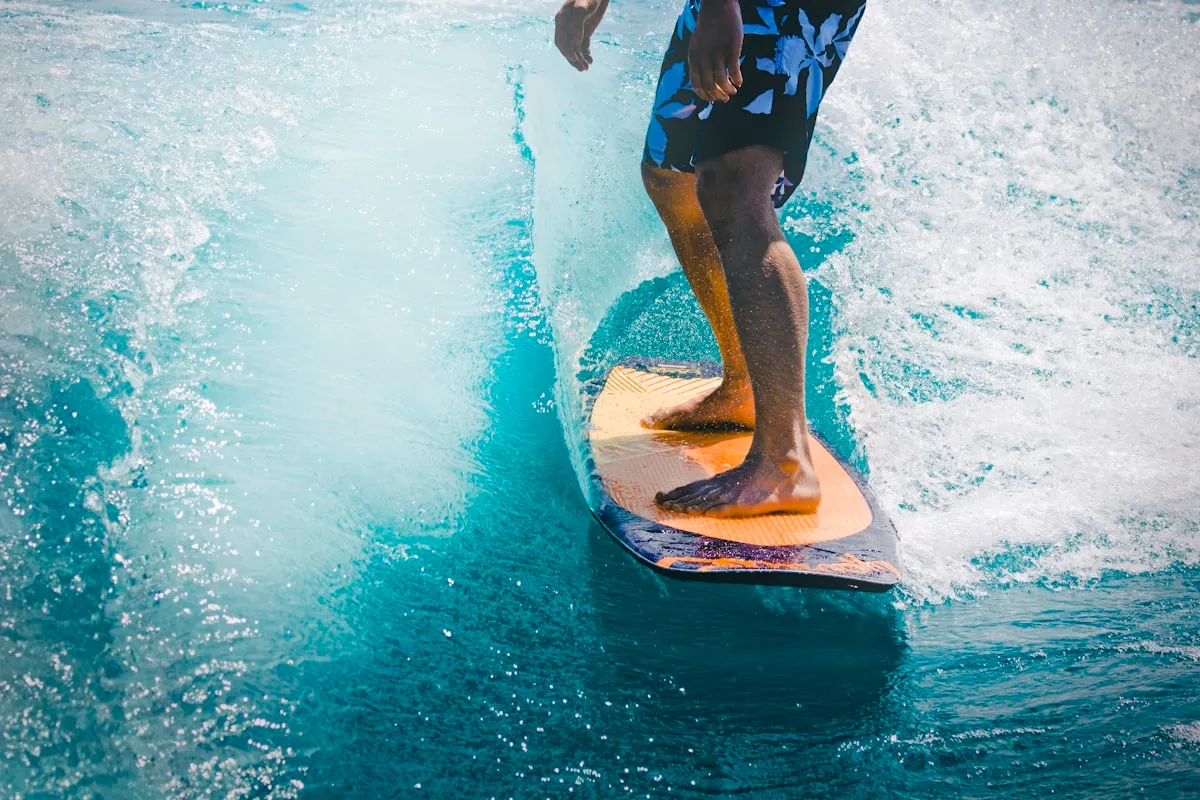
Zambales Surfing Tour
Water Sports
Full day
PHP 700
2026-08-16
Anawangin Cove Camping
Camping
2 days
PHP 800
2026-08-16
How this list was assembled
Every row above is a product we can actually book in San Antonio and the Zambales coves, exported from our own inventory on 2026-08-16 rather than collected from operator websites or other listings. That matters for two reasons. Published rack rates are frequently stale, and aggregated "average cost" figures usually mix day tours with multi-day packages, which makes the average meaningless.
The set is 3 products. We took the price each one actually sells at, sorted them, and report the median rather than the mean, because a single PHP 800 outlier drags an average upward and describes nobody's trip. Of these, 3 carry a customer rating, averaging 4.5 out of 5.
Trip.com
Tours & activities in Antonio Trip
Hand-picked experiences in Antonio Trip — book on Trip.com with instant confirmation.
What this does not cover: flights, accommodation, and anything arranged directly on arrival. Independent local transport and entrance fees paid in person are often cheaper than a packaged equivalent, so treat these figures as the ceiling for organised trips rather than the total cost of a visit.
A breakdown by type, not by fame
The 3 products break down as 1 camping, 1 island tour, 1 water sports. That distribution is worth reading before you plan, because it shows what this destination is actually organised to sell rather than what it is famous for.
3 of 3 priced trips come in at PHP 1,500 or under. Nothing here exceeds PHP 4,000, so there is no premium tier to budget around. The gap between the cheapest and dearest trip is PHP 300, which is mostly a question of whether transport and meals are bundled in.
Duration as the real limit
Of the 3 trips listed, 1 run 2 days, 1 run 1 day, 1 run full day. The full-day products are the ones that decide your itinerary, because they leave no room for a second booking.
Duration is the figure worth planning around here, more than price. With only 3 bookable products in San Antonio and the Zambales coves, the practical question is not which to choose but how many fit in the time you have. A full-day trip realistically consumes the day: pickups in the Philippines run early, and the return is governed by traffic or by the last boat rather than by the itinerary. Two full-day products booked back to back on consecutive days is a normal pace; two in one day is not.
Arrival, and the timing that follows from it
Access is about 4 to 5 hours by road from Manila to Pundaquit. Boats run best November to May; the coves are exposed in the habagat months. Both facts shape the price table above more than they look: products that depend on boats or on water conditions are the first to be cancelled, and a cancelled trip that has to be rebooked locally rarely costs what it did online.
The named sites here are Anawangin Cove, Capones Island, Nagsasa Cove, Camara Island. Not all of them appear in the bookable set - which is itself useful information, because it tells you what has to be arranged on the ground.
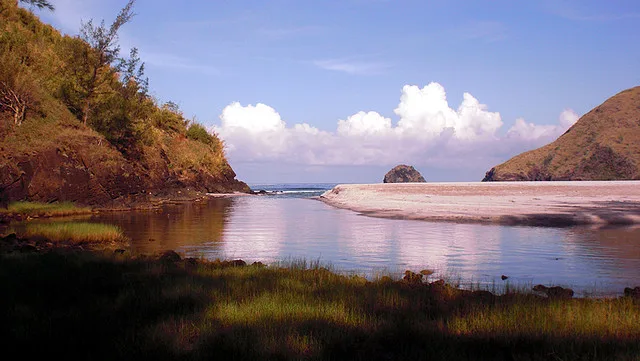
The agoho grove arrived with the 1991 Pinatubo eruption, which is also why the sand here is grey rather than white.
What nobody tells you about planning San Antonio and the Zambales coves
The claim to distrust is that the pine trees at Anawangin mean the cove has always looked like this.
The agoho trees behind the beach are the image the cove is known for, and they are usually described as though they had always been there. They arrived with the 1991 Pinatubo eruption: ash and lahar reshaped this coastline and the agoho colonised the new ground, which is why the sand here is grey rather than white and why the stand is so uniform. That history is also the practical warning. There is no grid power, no resort infrastructure and no reliable mobile signal in the coves - people camp, and the boat that dropped them off is how they leave. Trips are sold as a boat transfer plus camping rather than as a beach day, and the crossing from Pundaquit is cancelled outright in rough water. Going without booking the return leg is the mistake that strands people.
There is no grid power and no resort here - people camp, and the boat that dropped them off is how they leave.
Where advance booking runs out
The gap between what a place is known for and what can actually be booked in advance is usually the most practical thing to know about it, and it is invisible in guides that list attractions without asking whether you can reserve them. In San Antonio and the Zambales coves the named sites are Anawangin Cove, Capones Island, Nagsasa Cove, Camara Island, while the 3 bookable products cluster into 3 categories led by camping.
Anything on that list of sites without a matching product is arranged locally - at a tourism office, a barangay hall, or with a boatman at the pier. That is not a warning; for most of the Philippines it is simply how access works, and it is frequently cheaper. But it changes how you should plan your first day. Arriving with the boat-dependent and permit-dependent parts already booked, and leaving the walk-up sites for the days after, is the sequence that survives a weather change. The reverse - arriving with nothing booked and hoping to arrange everything on the morning - is what turns a short trip into a day spent negotiating instead of travelling.
Where the savings are, and where they are not
Using the median of PHP 700 as the anchor, a single organised trip plus local transport and a meal lands most people near PHP 1,300 for the day, before accommodation. Two organised trips in one day is usually a mistake in San Antonio and the Zambales coves unless both are half-days, because the transfer time between sites is the constraint rather than the cost.
Where the saving is: the 3 trips at or below PHP 1,500 are mostly the ones that do not include transfers. If you are already staying nearby, booking those and arranging your own transport is consistently cheaper than the bundled equivalent. Where it is not worth economising: anything involving a boat, a permit or a tide window, where an operator who knows the schedule is the difference between going and not going.
How much does a day trip in San Antonio and the Zambales coves cost?
The median across the 3 trips we list is PHP 700, with the range running PHP 500 to PHP 800. Checked 2026-08-16.
What is the cheapest thing to book in San Antonio and the Zambales coves?
Capones Island Tour at PHP 500, running 1 day. Checked 2026-08-16.
How do I get to San Antonio and the Zambales coves?
About 4 to 5 hours by road from Manila to Pundaquit.
When is the best time to go?
Broadly, boats run best November to May; the coves are exposed in the habagat months. Check PAGASA for the current outlook before booking anything that depends on a boat.
Are these prices per person?
Yes - every figure in the table above is the per-person price as listed on 2026-08-16. Boat hire in the Philippines is often charged per boat, so a group can land below these figures by arranging transport directly.
The PANA.PH travel desk researches, books and re-checks Philippines travel logistics — fares, ferry schedules, government fees and permit rules — and publishes what it can verify.