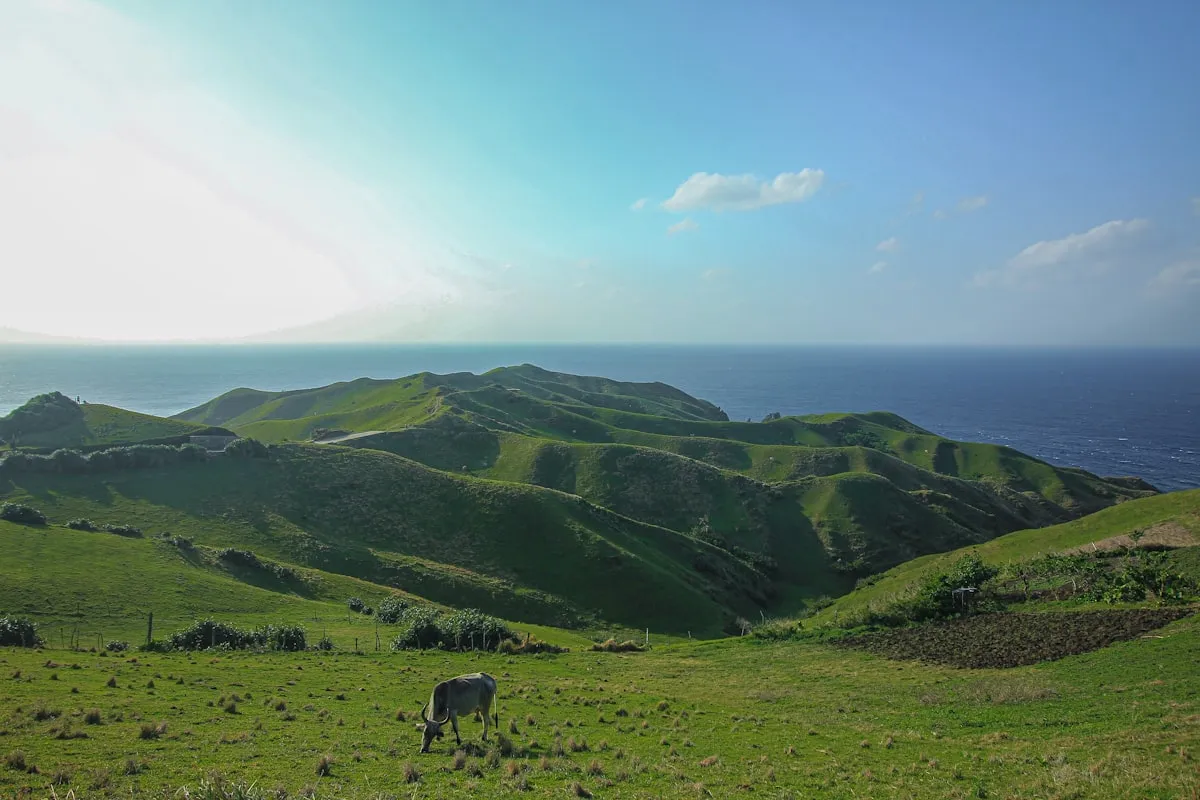
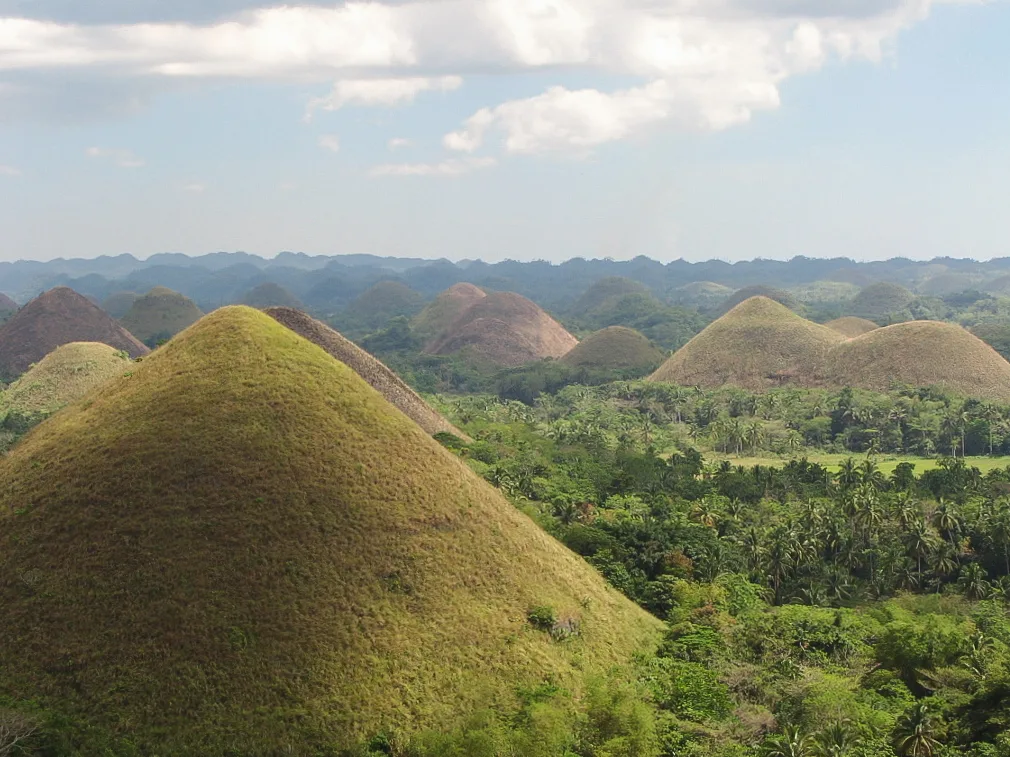
There is a moment, somewhere along the winding road that climbs into the heart of Bohol, when the landscape stops looking like anything you have seen before. The flat coconut groves give way, and suddenly the earth swells into hundreds of green domes, rolling toward the horizon like a sea frozen mid-wave. In the wet season they are a deep, almost luminous emerald. By the dry months they turn a sun-baked brown, and you understand at once why someone, long ago, looked out and thought of chocolate. This is the centerpiece of a private half-day Bohol tour, and seeing it for the first time tends to render people quiet.
Private Half-Day Tour: Chocolate Hills and Beyond - Guide
Trip.com
Search on Trip.comHotels in Philippines
Compare live prices via Travelpayouts — targeted for this guide.
A private half-day tour is, in many ways, the smartest way to meet Bohol. The island's headline sights cluster in the interior, a manageable drive from the resort strip of Panglao and Tagbilaran City, and with your own vehicle and driver-guide you can move at your own pace, linger where you want, and skip the tour-bus crush at the busiest hours. You trade the all-day marathon for a focused, comfortable morning or afternoon that still hits the things people travel across the world to see.
The geology: how the Chocolate Hills actually formed
The Chocolate Hills are not the work of any one legend, though Bohol has wonderful ones (a tale of two feuding giants hurling rocks, and a gentler story of a heartbroken giant's tears). The real explanation is a slow geological drama written over millions of years. The hills are made of marine limestone, laid down on an ancient seabed from coral, shells, and the bodies of countless tiny organisms. Tectonic uplift raised this limestone above the waves, and then rainwater, faintly acidic, went to work.
This is classic karst landscape: limestone is soluble, and over vast stretches of time rain dissolves it along cracks and weak points, sculpting the rock into rounded hummocks. What remains are these distinctive cone- and dome-shaped hills, their slopes covered in grasses that brown out in the dry season. There are well over a thousand of them spread across the municipalities of Carmen, Batuan, and Sagbayan, ranging from roughly 30 to 50 meters high, with the tallest pushing higher. The Chocolate Hills are recognized as a National Geological Monument, and they sit on the Philippines' tentative list for UNESCO World Heritage consideration. They are genuinely one of the great karst landforms on the planet, comparable in spirit to the cone karst of southern China or Vietnam, but with a uniformity of shape that is strikingly their own.
Trip.com
See all tours in Philippines on Trip.comChocolate Hills tour in Philippines
Hand-picked experiences in Philippines — book on Trip.com with instant confirmation.
The main viewing stop
Most tours bring you to the government-run Chocolate Hills Complex in Carmen, where a staircase climbs to a hilltop viewing deck. It is a short but real climb of a few hundred steps, rewarded with a sweeping 360-degree panorama over the cluster of hills. Go early in the morning and you may catch them wrapped in mist; the light is softest then, and the crowds thinnest. A growing number of visitors also stop at Sagbayan Peak, a quieter alternative viewpoint with a small park and a different, equally lovely angle on the formations.
And beyond: the other stops
The "and beyond" is what turns a single photo opportunity into a proper experience of Bohol's interior, and a private tour lets you tailor which of these you include.
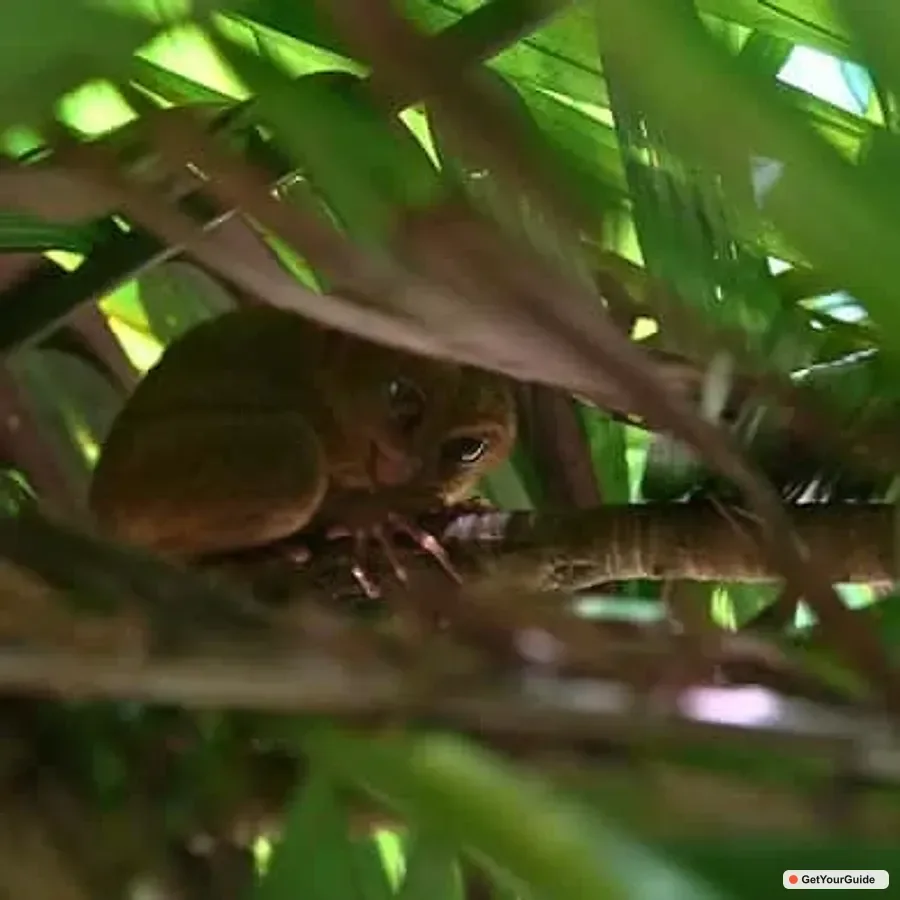
- The Tarsier Sanctuary. Bohol is home to the Philippine tarsier, one of the world's smallest primates, an ancient creature that can fit in a human palm. Its enormous eyes are fixed in their sockets, so it swivels its head almost owl-like to look around, and it is entirely nocturnal and insectivorous. Visit a properly run conservation sanctuary, such as the one operated by the Philippine Tarsier Foundation in Corella, rather than a roadside cage operation. Tarsiers are famously stress-sensitive, so the rules matter: no touching, no flash photography, hushed voices. Respecting them is part of why these tiny animals still survive here.
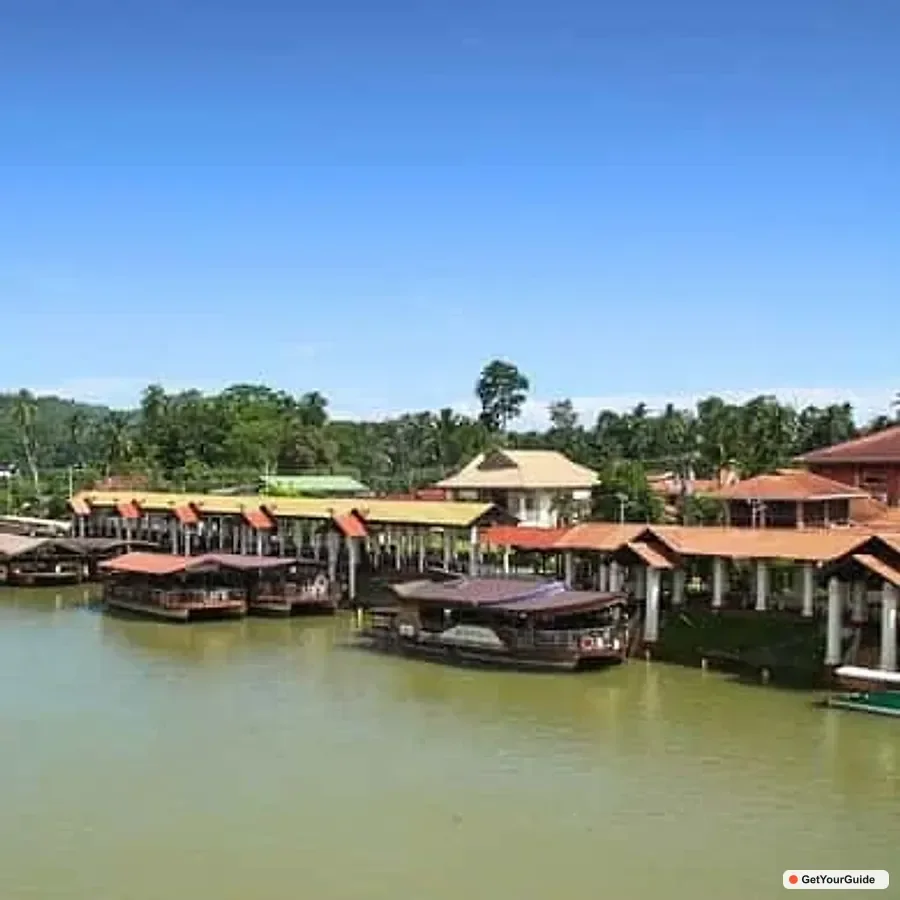
- The Loboc River. Many tours pair the hills with a floating-restaurant lunch cruise on the jade-green Loboc River, gliding past jungle banks and small riverside communities. It is gentle, scenic, and a pleasant counterpoint to the dry hills.
- The Man-Made Forest. Between Loboc and Bilar runs a remarkable two-kilometer stretch of densely planted mahogany trees, their canopy meeting overhead to form a cool green tunnel. It was planted as a reforestation project decades ago, and today it is one of the island's most photographed roads.
- Heritage and history. Depending on your route, you may pass the Blood Compact Shrine near Tagbilaran, marking the 1565 sandugo (blood pact) between Datu Sikatuna and the Spanish explorer Miguel Lopez de Legazpi, one of the earliest treaties of friendship in Philippine colonial history. Bohol's centuries-old stone churches, several damaged by the 2013 earthquake and since restored, also speak to a long and layered past.
Why it matters
Bohol's interior is more than a string of pretty stops. The Chocolate Hills are a textbook of deep time, a reminder that the ground beneath your feet was once an ocean floor. The tarsier is an evolutionary survivor, a primate so old and specialized that protecting it has become a point of provincial pride. The Loboc River and the man-made forest tell a story of a community that has learned, sometimes the hard way, to value and restore what it has. And the heritage shrines and churches anchor it all in human history, in the meeting of cultures that shaped the modern Philippines. A good guide weaves these threads together, so you leave understanding Bohol rather than just having photographed it.
Practical tips
- When to go. The dry season, roughly December to May, gives the most reliable weather. For the iconic "chocolate" brown coloring, the late dry months (around March to May) are best; in the wet season the hills are lush green instead, which many travelers actually prefer. For the hill viewpoints, an early-morning start beats both the heat and the crowds.
- How strenuous. The tour itself is easy and mostly seated in an air-conditioned vehicle. The main physical effort is the staircase to the Carmen viewing deck, a few hundred steps that take a few minutes at a relaxed pace. Anyone of reasonable fitness manages it; take your time in the heat.
- What to wear and bring. Light, breathable clothing, comfortable walking shoes, sun hat, sunglasses, and sunscreen. Carry water, a little cash in pesos for entrance fees and snacks, and insect repellent for the river and forest. A light rain layer is wise outside the peak dry months.
- What's typically included. Private tours usually cover round-trip hotel pickup from Panglao or Tagbilaran, the vehicle, fuel, and a driver-guide. Entrance fees to the hills complex, the tarsier sanctuary, and any river cruise or lunch are often separate, so confirm exactly what is bundled before you book.
- Duration. A half-day version generally runs around four to six hours door to door, depending on how many of the "beyond" stops you add and how long you linger.
Travel responsibly
The single most important choice you make here is where you see the tarsiers. Choose an accredited conservation sanctuary, keep your voice down, switch off your flash, and never ask to hold one; stressed tarsiers have been known to harm themselves, and your restraint directly supports their survival. More broadly, take your litter with you, support local guides and family-run eateries, and treat the heritage sites with care. Bohol's charm rests on a landscape and a wildlife heritage that are easy to love and surprisingly fragile.
The takeaway
A private half-day tour to the Chocolate Hills and beyond is Bohol distilled to its essence: a geological wonder that looks faintly unreal, a palm-sized primate that has outlasted ages, a green river and a forest tunnel, and the quiet weight of history along the way. You will be back at your resort by lunch or by sunset with time to spare, but the image of those hundreds of hills rolling away to the horizon tends to stay with you a great deal longer. Of all the ways to fall for Bohol, this is one of the easiest, and one of the best.
Good to know before you book
- Duration: typically a full day (around 8 to 10 hours including transfers), though half-day and multi-day options exist - check the listing.
- Best for: couples, families and first-time visitors.
- What is included: transport, a guide and the main stops; entrance fees and lunch are sometimes extra.
- Pickup: most tours offer hotel or central pickup; confirm your point and time when booking.
- Book through: the GetYourGuide button on this page, which shows live availability and pricing.
Frequently asked questions
How long does the Private Half-Day Tour: Chocolate Hills and Beyond take?
Most departures run as a full day - roughly 8 to 10 hours including pickup, travel and the activities themselves - so plan to set aside the whole day. Some operators offer shorter or private versions; the exact timing for your date is shown when you book through the GetYourGuide button on this page.
What is included in the Private Half-Day Tour: Chocolate Hills and Beyond?
Typically the price covers transport, a guide and the main stops; entrance fees and lunch are sometimes extra. Inclusions vary by operator, so always read the specific listing - it spells out exactly what is provided and what you pay for separately, such as entrance or environmental fees.
What should I bring?
Pack comfortable shoes, sunscreen, a hat, water and small cash for entrance fees and souvenirs. It is also worth carrying some cash for local fees, drinks and tips, plus any personal medication, since card facilities can be limited outside the cities.
Is the Private Half-Day Tour: Chocolate Hills and Beyond suitable for beginners or families?
It is gentle and family-friendly, suitable for all ages with only light walking involved - a comfortable way to see the highlights. If you have specific concerns about age, fitness or swimming ability, message the operator before booking - they can advise on the best option for your group.
When is the best time to do this tour?
The best conditions are usually the dry season from December to May, when the Chocolate Hills turn their famous brown. That said, the Philippines is a year-round destination, and many of these experiences run in any season - just expect the occasional shower and check the forecast for the day.
How do I get to Bohol?
To reach Bohol, fly into Bohol-Panglao International Airport, or take the fast ferry from Cebu (about 2 hours). Many tours include transfers from nearby towns or hotels, so confirm your pickup arrangement when you book so the day runs smoothly from the start.
Do I need to book the Private Half-Day Tour: Chocolate Hills and Beyond in advance?
Yes - booking ahead is strongly recommended, especially in the dry-season peak and on weekends, when popular tours and the best operators sell out. Reserving online also locks in your spot and lets you compare timings and inclusions easily.
How much does the Private Half-Day Tour: Chocolate Hills and Beyond cost?
Prices vary with the season, group size and exactly what is included, so we do not list a fixed figure here. Tap the GetYourGuide button on this page to see the current, accurate price and availability for your chosen date.
Can I do the Private Half-Day Tour: Chocolate Hills and Beyond as a private or customised tour?
Many operators offer a private version of this experience for couples, families or small groups who want a flexible pace and a guide to themselves, and some can tailor the route or add stops. If a private or custom option matters to you, check the listing or message the operator before booking, as availability and prices differ from the standard shared tour.
Ready to explore Bohol?
From planning to the moment you arrive, the Private Half-Day Tour: Chocolate Hills and Beyond is one of the most rewarding ways to experience this corner of the Philippines - and booking it is simple. Use the GetYourGuide button on this page to check live availability, compare timings and secure your spot, then turn up and let the local guides handle the rest while you focus on the views, the water and the memories.

PANA.PH Editorial Team
Philippines travel desk
The PANA.PH travel desk researches, books and re-checks Philippines travel logistics — fares, ferry schedules, government fees and permit rules — and publishes what it can verify.
🏡 Real local stays (book direct)
Hand-picked homestays and guesthouses — book direct, no markup.
Browse all local stays →

🌊 Popular activities (book instantly)
Island hopping, canyoneering, whale sharks — real Klook/GetYourGuide options.
View all activities →