Contents
- 1The Chocolate Hills: geology that looks like a fairy tale
- 2The Philippine tarsier: meeting one of the world's smallest primates
- 3The Loboc River cruise: lunch on the water
- 4Why Bohol matters, and a note on resilience
- 5Practical tips for the day
- 6A day you will keep replaying
- 7Good to know before you book
- 8Frequently asked questions
- 9Ready to explore Panglao?
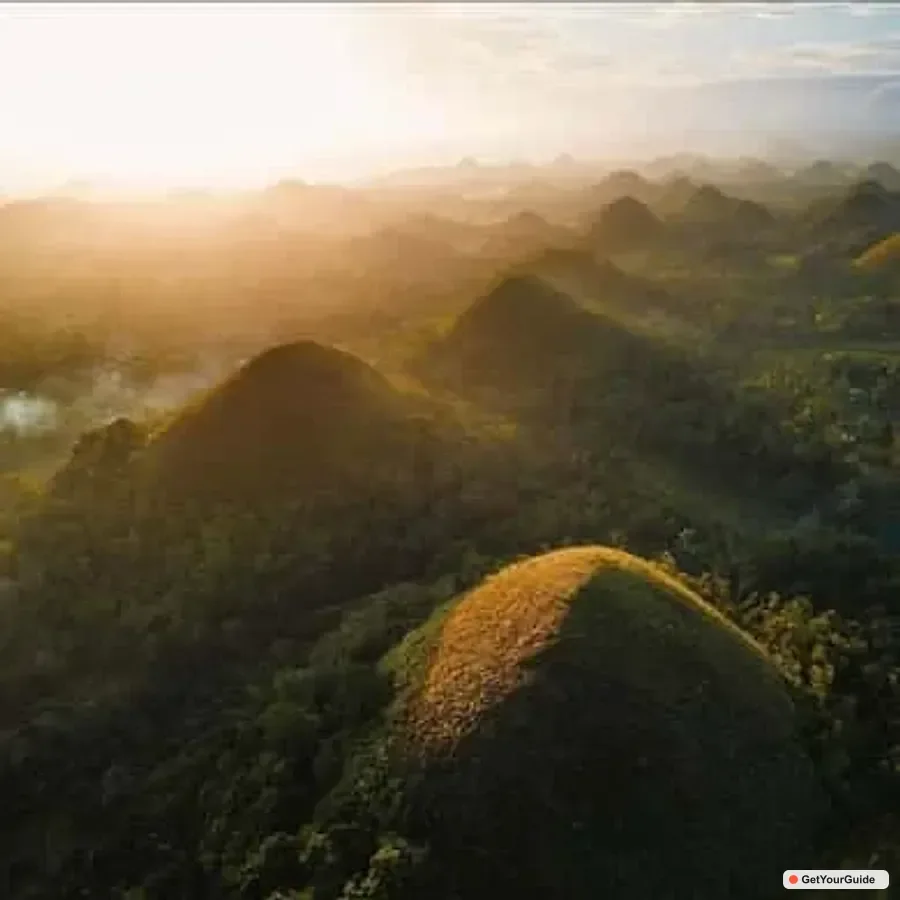
There is a moment, somewhere along the winding road that climbs into the heart of Bohol, when the landscape stops looking like anything you have seen before. The flat coastal plains give way to hundreds of softly rounded hills, marching toward the horizon in every direction like a sea of green domes. Come the dry season, those domes turn a sun-baked brown, and suddenly the local nickname makes perfect sense. This is the Chocolate Hills, and it is just the opening act of one of the Philippines' most rewarding day trips: a single loop that pairs Bohol's strangest geology with its tiniest, most enchanting primate and a lazy lunch cruise down a jade-green river.
Hotels in Philippines
Compare live prices via Travelpayouts — targeted for this guide.
This premium experience usually begins from Panglao or Tagbilaran, threading inland by van for roughly an hour to reach Carmen, then looping back through Loboc and Loay. Plan for a full day, often eight to ten hours door to door, and dress for warm, humid weather with the kind of shoes that can handle a few flights of steps.
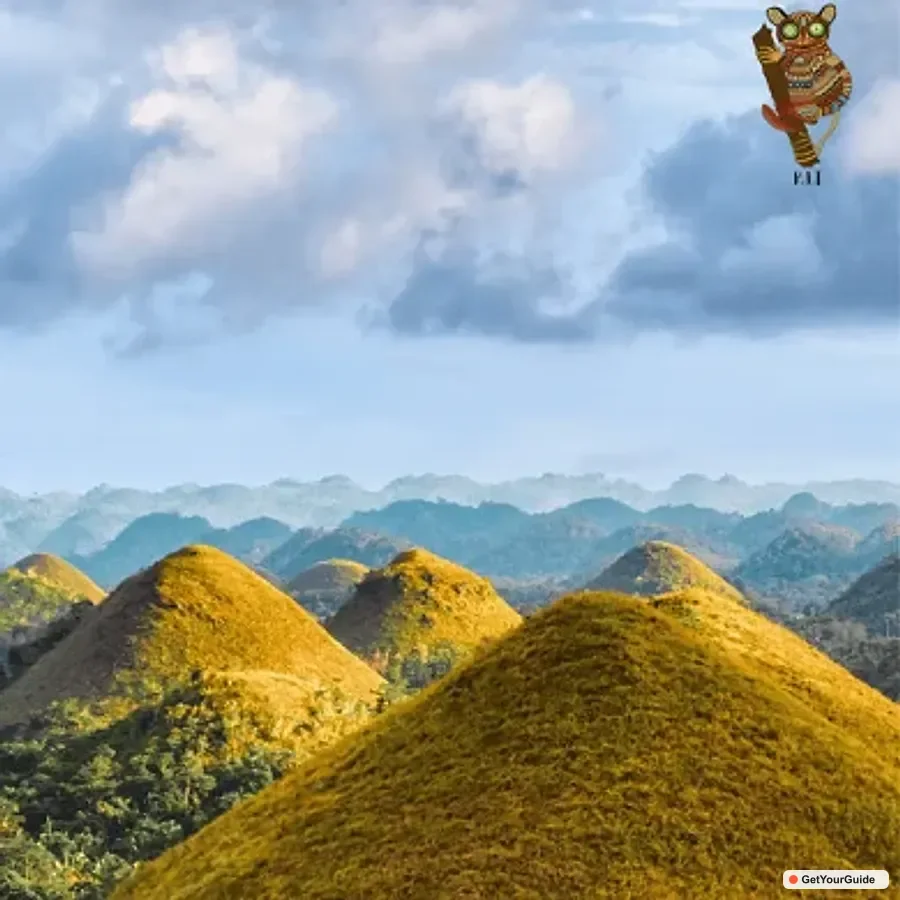
The Chocolate Hills: geology that looks like a fairy tale
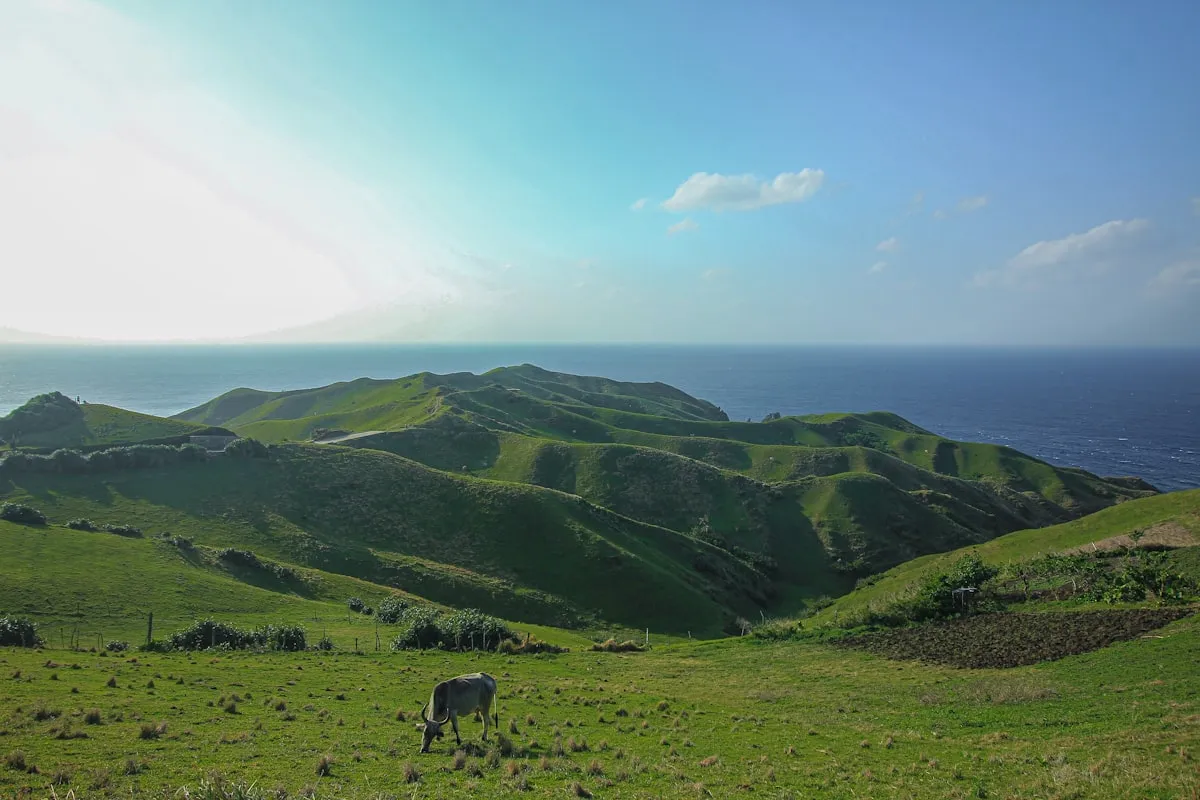
There are well over a thousand of these hills spread across the center of Bohol, concentrated around the towns of Carmen, Batuan, and Sagbayan. They are remarkably uniform, mostly between roughly 30 and 120 meters tall, and from a distance they look almost manufactured. They are not, of course. The hills are a textbook example of karst weathering: ancient marine limestone, laid down when this part of the island sat beneath the sea, was later uplifted and then slowly dissolved and sculpted by rainwater over a very long span of geological time. The grass that covers them dries out and browns during the hot months, which is where the chocolate name comes from. They are recognized as a National Geological Monument and have long been on the Philippines' tentative list for UNESCO World Heritage consideration.
What you actually do here
The classic stop is the official viewing complex near Carmen, where a stairway of a couple hundred steps climbs to a hilltop deck with a panoramic view across the formation. It is a short but genuinely steep little hike; take it slowly in the heat and bring water. From the top, the hills roll out in every direction, and on a clear day the scale of it is hard to overstate. Early morning is the magic window, when the air is cooler, the light is soft, and mist sometimes pools between the hills before the crowds arrive.
Chocolate Hills tour in Philippines
Hand-picked experiences in Philippines — book on Trip.com with instant confirmation.
The Philippine tarsier: meeting one of the world's smallest primates
From the hills, the route usually drops south toward Loboc and the tarsier sanctuary, and this is where the day shifts from epic to intimate. The Philippine tarsier is one of the smallest primates on Earth, small enough to sit comfortably in a human palm, with a body only around 9 to 12 centimeters long and a long, thin tail that is longer than its body. Its most famous feature is its enormous eyes: each eyeball is roughly the size of its brain and cannot rotate in the socket, which is exactly why the tarsier evolved the ability to swivel its head nearly all the way around to track movement. They are nocturnal, strictly carnivorous insect hunters, and they cling vertically to slender branches, launching themselves between trees with surprising power for something so tiny.
This matters for how you behave around them. Tarsiers are famously sensitive to stress, noise, and bright light, and in poorly run setups they have been known to harm themselves. The reputable sanctuaries take this seriously, which is why you will be asked to keep your voice to a whisper, switch off your camera flash, and never touch the animals. Choosing a genuine conservation sanctuary over a roadside photo-op is the single most responsible decision you can make on this trip. You walk a short forest trail while guides quietly point out tarsiers dozing in the foliage; the visit is gentle and easy, suitable for almost anyone.
The Loboc River cruise: lunch on the water
The third act is the most relaxing. The Loboc River winds through Loboc town in a deep, calm shade of green, fringed by coconut palms and dense riverbank jungle. The cruise is typically run on a flat floating restaurant, a kind of broad pontoon barge, that drifts slowly upstream and back over the course of about an hour. Lunch is usually a Filipino buffet served onboard, and live music is part of the tradition; many boats have a singer with a guitar, and at certain stops along the bank, local cultural groups perform.
It is unapologetically touristy, and that is part of its charm. After a hot morning of stairs and forest trails, sliding down a glassy river with a plate of grilled fish, pancit, rice, and fresh fruit in front of you is exactly the right pace. The water is calm and the boats are stable, so this part of the day is genuinely easy and accessible for all ages.
Why Bohol matters, and a note on resilience
Bohol carries its history close to the surface. This is the site of the Sandugo, the 1565 blood compact between the Spanish explorer Miguel Lopez de Legazpi and the local chieftain Datu Sikatuna, one of the earliest recorded acts of friendship between the islanders and the Spanish. The island is also home to centuries-old stone churches, several of which were damaged in the powerful 2013 earthquake and have since been the focus of careful restoration. Travelers often pass landmarks like the Loboc church and the man-made mahogany forest along this same route, woven into the day by most guides.

Practical tips for the day
- Best time of year: The dry season, roughly November to May, gives the most reliable weather. If you want the hills at their famous chocolate-brown, aim for the hotter months from around March to May; for lush green hills, come in or just after the wetter months.
- Best time of day: Start early. Reaching the Chocolate Hills viewpoint in the morning means cooler air, softer light, and thinner crowds.
- What to wear and bring: Light, breathable clothing, comfortable walking shoes for the viewpoint steps, a hat, sunscreen, insect repellent for the tarsier forest, and a refillable water bottle. Bring a little cash for small purchases and tips.
- How strenuous: Mostly easy, with one short steep climb at the Chocolate Hills deck. The tarsier walk is a gentle, flat forest stroll, and the river cruise requires no effort at all.
- What is typically included: Premium versions of this tour usually bundle hotel pickup and drop-off in Panglao or Tagbilaran, an air-conditioned vehicle, the buffet lunch on the Loboc cruise, and a guide. Confirm whether the various site entrance fees are included or paid on the day.
- Responsible travel: Whisper near the tarsiers, kill your flash, never touch them, and support only genuine conservation sanctuaries. On the river, take your rubbish with you. These small choices keep Bohol's wildlife and waterways healthy for the next visitor.
A day you will keep replaying
What makes this particular loop so satisfying is its range. In a single day you stand above one of the planet's oddest landscapes, lock eyes with a creature that looks like it wandered out of a storybook, and end it all drifting down a green river with music and a full plate. It is Bohol in miniature: strange, gentle, generous, and utterly unforgettable. Come early, move slowly, tread lightly, and let the island do the rest.
Good to know before you book
- Duration: typically a full day (around 8 to 10 hours including transfers), though half-day and multi-day options exist - check the listing.
- Best for: couples, families and first-time visitors.
- What is included: transport, a guide and the main stops; entrance fees and lunch are sometimes extra.
- Pickup: most tours offer hotel or central pickup; confirm your point and time when booking.
- Book through: the GetYourGuide button on this page, which shows live availability and pricing.
Frequently asked questions
How long does the Premium Chocolate Hills, Tarsiers & River Experience take?
Most departures run as a full day - roughly 8 to 10 hours including pickup, travel and the activities themselves - so plan to set aside the whole day. Some operators offer shorter or private versions; the exact timing for your date is shown when you book through the GetYourGuide button on this page.
What is included in the Premium Chocolate Hills, Tarsiers & River Experience?
Typically the price covers transport, a guide and the main stops; entrance fees and lunch are sometimes extra. Inclusions vary by operator, so always read the specific listing - it spells out exactly what is provided and what you pay for separately, such as entrance or environmental fees.
What should I bring?
Pack comfortable shoes, sunscreen, a hat, water and small cash for entrance fees and souvenirs. It is also worth carrying some cash for local fees, drinks and tips, plus any personal medication, since card facilities can be limited outside the cities.
Is the Premium Chocolate Hills, Tarsiers & River Experience suitable for beginners or families?
It is gentle and family-friendly, suitable for all ages with only light walking involved - a comfortable way to see the highlights. If you have specific concerns about age, fitness or swimming ability, message the operator before booking - they can advise on the best option for your group.
When is the best time to do this tour?
The best conditions are usually the dry season from December to May, when the Chocolate Hills turn their famous brown. That said, the Philippines is a year-round destination, and many of these experiences run in any season - just expect the occasional shower and check the forecast for the day.
How do I get to Panglao?
To reach Panglao, fly into Bohol-Panglao International Airport, or take the fast ferry from Cebu (about 2 hours). Many tours include transfers from nearby towns or hotels, so confirm your pickup arrangement when you book so the day runs smoothly from the start.
Do I need to book the Premium Chocolate Hills, Tarsiers & River Experience in advance?
Yes - booking ahead is strongly recommended, especially in the dry-season peak and on weekends, when popular tours and the best operators sell out. Reserving online also locks in your spot and lets you compare timings and inclusions easily.
How much does the Premium Chocolate Hills, Tarsiers & River Experience cost?
Prices vary with the season, group size and exactly what is included, so we do not list a fixed figure here. Tap the GetYourGuide button on this page to see the current, accurate price and availability for your chosen date.
Can I do the Premium Chocolate Hills, Tarsiers & River Experience as a private or customised tour?
Many operators offer a private version of this experience for couples, families or small groups who want a flexible pace and a guide to themselves, and some can tailor the route or add stops. If a private or custom option matters to you, check the listing or message the operator before booking, as availability and prices differ from the standard shared tour.
Ready to explore Panglao?
From planning to the moment you arrive, the Premium Chocolate Hills, Tarsiers & River Experience is one of the most rewarding ways to experience this corner of the Philippines - and booking it is simple. Use the GetYourGuide button on this page to check live availability, compare timings and secure your spot, then turn up and let the local guides handle the rest while you focus on the views, the water and the memories.

Real local stays (book direct)
Hand-picked homestays and guesthouses — book direct, no markup.
Popular activities (book instantly)
Island hopping, canyoneering, whale sharks — real Klook/GetYourGuide options.
Plan your Philippines trip