Short answer: Your first tourist visa extension in the Philippines adds 29 days and costs in the region of PHP 3,000 at a Bureau of Immigration district office, paid in cash. It takes one visit and roughly two hours if you arrive before 9am. Most nationalities can keep extending to a total stay of 36 months. The ACR I-Card requirement kicks in once your stay passes 59 days.
Trip.comHotels in Philippines
Compare live prices via Travelpayouts — targeted for this guide.
Search on Trip.comFor visitors already in the Philippines on a visa-free entry who want to stay longer. Fee ranges and process last checked 30 July 2026; the Bureau of Immigration revises its schedule of fees without much notice, so treat every figure here as an order of magnitude and confirm at the counter.
The stay ladder: 30, 59, then 30-day or 60-day blocks
Most visa-free nationalities land with 30 days. The extension ladder from there is fixed and it is worth understanding before you queue:
Typical extension ladder for visa-free tourist entries. Fees are indicative totals including the standard add-on charges; checked 30 July 2026.
| Step | Days added | Cumulative stay | Indicative cost | Notes |
|---|
| Arrival | 30 | 30 days | Free | Visa-free entry |
| First extension | 29 | 59 days | ~PHP 3,000 | No ACR I-Card yet |
| Second extension | 30 or 60 | 89 or 119 days | ~PHP 3,000-4,300 | ACR I-Card now required |
| Later extensions | 60 (typical) | up to 36 months | ~PHP 2,400-4,300 | Annual report if you cross a calendar year |
The 36-month ceiling applies to nationals of countries with visa-free arrangements; some passports are capped at 24 months. Once you hit the ceiling you must leave the country - a flight to almost anywhere resets the clock, and a same-day turnaround is not the loophole people claim it is.
The ACR I-Card trigger nobody explains clearly
The Alien Certificate of Registration Identity Card is a plastic ID card that becomes compulsory once your continuous stay exceeds 59 days. That is why the second extension costs noticeably more than the first: you are paying for the card on top of the extension.
Practical consequence: if you are deciding between leaving at day 55 and staying to day 75, the marginal cost is not one extension fee, it is one extension fee plus the card. Budget for it or plan your exit before day 59.
Which office to use, and when to arrive
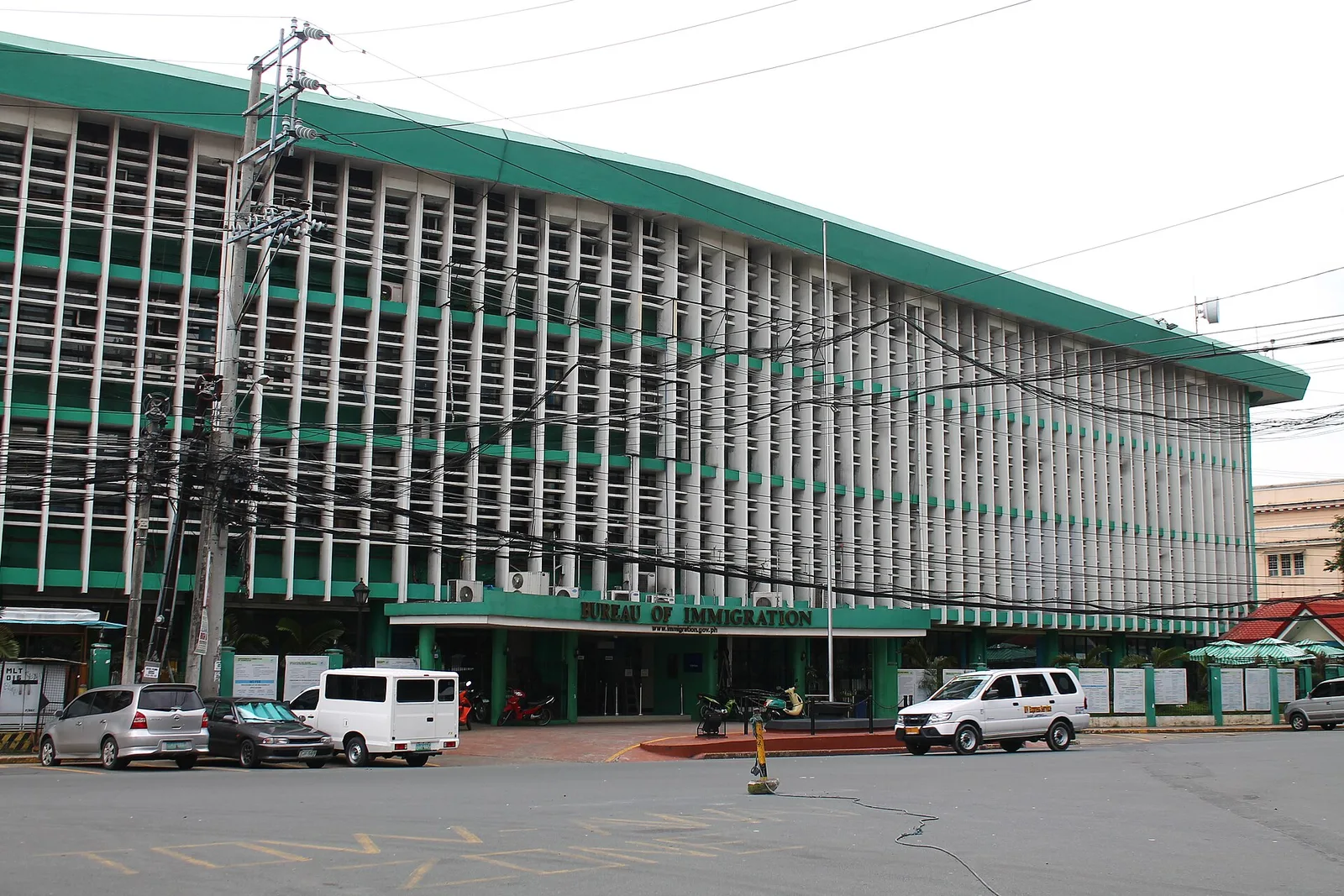
There are district and satellite offices across the country, not just the main office in Intramuros, Manila. Cebu, Angeles, Davao, Puerto Princesa, Dumaguete, Boracay and Tagbilaran all have offices that handle tourist extensions.
District offices are consistently faster than the main office. Our observed pattern in 2026: arrive at opening (usually 8am), be out inside two hours. Arrive at 11am and you can lose the afternoon, because applications received after the mid-day cutoff often roll to the next working day. Bring a book and do not schedule anything else that morning.
What to bring - the checklist that avoids a second trip
- Your passport, valid at least six months beyond your intended stay.
- A photocopy of the passport bio page and of the page with your arrival stamp.
- The completed consolidated general application form - available at the office, or downloadable from the Bureau of Immigration site.
- Cash in pesos. Most district offices do not take cards, and the ATM queue outside is not a plan.
- Passport-size photos if you are at the ACR I-Card stage.
- Your eTravel arrival record if your stamp is unclear.
Dress code is enforced at several offices: no shorts, no sleeveless tops, no flip-flops. People are turned away for this weekly.
The annual report catches long stayers out
If your stay crosses into a new calendar year and you hold an ACR I-Card, you are required to file an annual report with the Bureau of Immigration in the first 60 days of that year. It is a short in-person formality with a small fee, and it is completely separate from your extensions. People who arrived in October and are still around in March routinely miss it, then discover the penalty when they file their next extension.
Set a calendar reminder for the first week of January. The queues in the last week of February are the worst of the year, because everyone who forgot arrives at once.
Overstaying: what it actually costs
Overstaying is not a criminal matter for a few days, but it is expensive and it compounds. You pay the extension fees you skipped, plus a monthly fine, plus a motion-for-reconsideration charge if the overstay is long. A short overstay discovered at the airport turns a check-in into a two-hour administrative process at an immigration office, which is how people miss flights.
If you are close to the line, extend early. Extensions can be filed before your current permission expires, and doing it a few days ahead costs the same as doing it on the last day.
What most guides get wrong about visa extensions
The most repeated error is a single headline fee. You will read "PHP 3,030" or "PHP 2,430" quoted as the price, and then the counter asks for something different. That is because a Philippine extension is never one fee. It is a stack: the visa waiver or extension fee, a legal research fee, an application fee, sometimes an express lane fee, and at the right moment the ACR I-Card charge. Different offices bundle these differently and the schedule is revised periodically. Anyone quoting a single exact number to the peso either got lucky or copied it from a 2023 blog.
The second error is the "visa run" advice. Guides still recommend flying to Hong Kong or Kota Kinabalu for a day to reset your stay, framed as a routine tactic. It works mechanically, but repeated same-day turnarounds are exactly the pattern immigration officers are trained to look at, and a returning visitor with a history of them can be sent to secondary inspection. If you want to stay long, extend properly - it is cheaper than the flight anyway.
The third: that fixers are necessary. Agencies outside the offices offer to "handle" the extension for a markup. The process is a form and a queue. Handing your passport to a stranger on the pavement to save 90 minutes is a poor trade.
Frequently asked questions
How much is the first extension?
Around PHP 3,000 all-in at a district office, paid in cash. It is a stack of small fees, not one charge, so the exact total varies by office.
How long can I stay in total?
Most visa-free nationalities can extend to 36 months of continuous stay. Some passports are capped at 24 months. After that you must exit.
When do I need an ACR I-Card?
Once your continuous stay passes 59 days. It is issued at your second extension and is why that visit costs more than the first.
Can someone else extend my visa for me?
An accredited representative can file with a notarised authorisation, but you must appear in person for biometrics at the ACR I-Card stage.
Can I extend at any immigration office?
Any district or satellite office handling tourist extensions - Cebu, Davao, Angeles, Puerto Princesa and others - not only the main office in Manila.
What happens if I overstay by a week?
You pay the missed extension fees plus a monthly fine at the counter. A short overstay is administrative, but it can add two hours on departure day.