Short answer: Budget PHP 400 to PHP 700 a day for an automatic scooter, less on a weekly rate, plus roughly PHP 100 to PHP 150 a day in fuel for normal island riding. You need a licence valid for motorcycles plus an international driving permit, and checkpoints do ask. Never leave your passport as a deposit.
Trip.comHotels in Philippines
Compare live prices via Travelpayouts — targeted for this guide.
Search on Trip.comFor visitors renting a 110cc to 155cc automatic scooter on Philippine islands. Costs are from our own rentals in Siargao, Siquijor, Bohol and Camiguin, last checked 30 July 2026. Rates rise in peak season and in resort centres.
What a week actually costs
Observed costs for one automatic scooter, one week of normal island riding. Checked 30 July 2026. Amounts in Philippine pesos.
| Item | Low | Typical | Notes |
|---|
| Rental, per day | 350 | 500 | Weekly rates cut 20-30 percent |
| Rental, 7 days | 2,450 | 3,000 | Negotiate on arrival, not online |
| Fuel, per day | 80 | 150 | Depends on distance, not on time |
| Helmet hire | 0 | 100 per week | Often included; quality varies |
| Parking and small fees | 0 | 150 per week | Beaches and towns |
| Week total | ~3,000 | ~4,300 | Cheaper than three days of van hire |
For context, that week total is routinely less than a single day of private van hire with a driver, which is why scooters dominate island travel here.
The licence rule, and what happens at a checkpoint
The legal position is simple even though enforcement is uneven. To ride legally you need a driving licence from your home country that covers motorcycles, and for most visitors an international driving permit alongside it. A car-only licence does not make you legal on a scooter, and this is the single most common infraction among visitors.
Checkpoints are routine on island roads, particularly on approaches to towns and at weekends. In our experience they check helmet, licence and registration, in that order, and they are generally polite and quick. If your paperwork is right the stop takes two minutes. If it is not, you get a citation and, on some islands, the bike is impounded.
Helmets are mandatory nationwide and this is enforced. Wear the helmet even for the 400 metres to the shop, because that is precisely where people get stopped and, more to the point, where they crash.
The deposit practice to refuse
Many rental shops ask to hold your passport for the duration. Do not agree to it. Your passport is not yours to pawn - it remains the property of your issuing government - and recovering it from a shop in a dispute is a genuine problem, particularly at 6am on a departure day.
Offer instead a cash deposit, a photocopy of the passport bio page, or a photo of your licence. Reputable operators accept this without argument. A shop that insists on the physical passport and will not take a cash deposit is telling you how it intends to handle a disagreement, and the right response is to walk to the next shop.
The five-minute inspection that prevents the argument
- Photograph the whole bike from four angles before you ride away, including existing scratches, with the shop visible in frame.
- Test the brakes, both of them, and the horn. Worn brakes are the most common defect on rental scooters here.
- Check tyre tread and pressure. Bald tyres on a wet coastal road are how a good week ends.
- Confirm the fuel level and agree in writing whether you return it full or as found.
- Get the shop's phone number and ask what happens if the bike fails 30km away. A good operator sends someone; a bad one does not answer.
Riding conditions, honestly
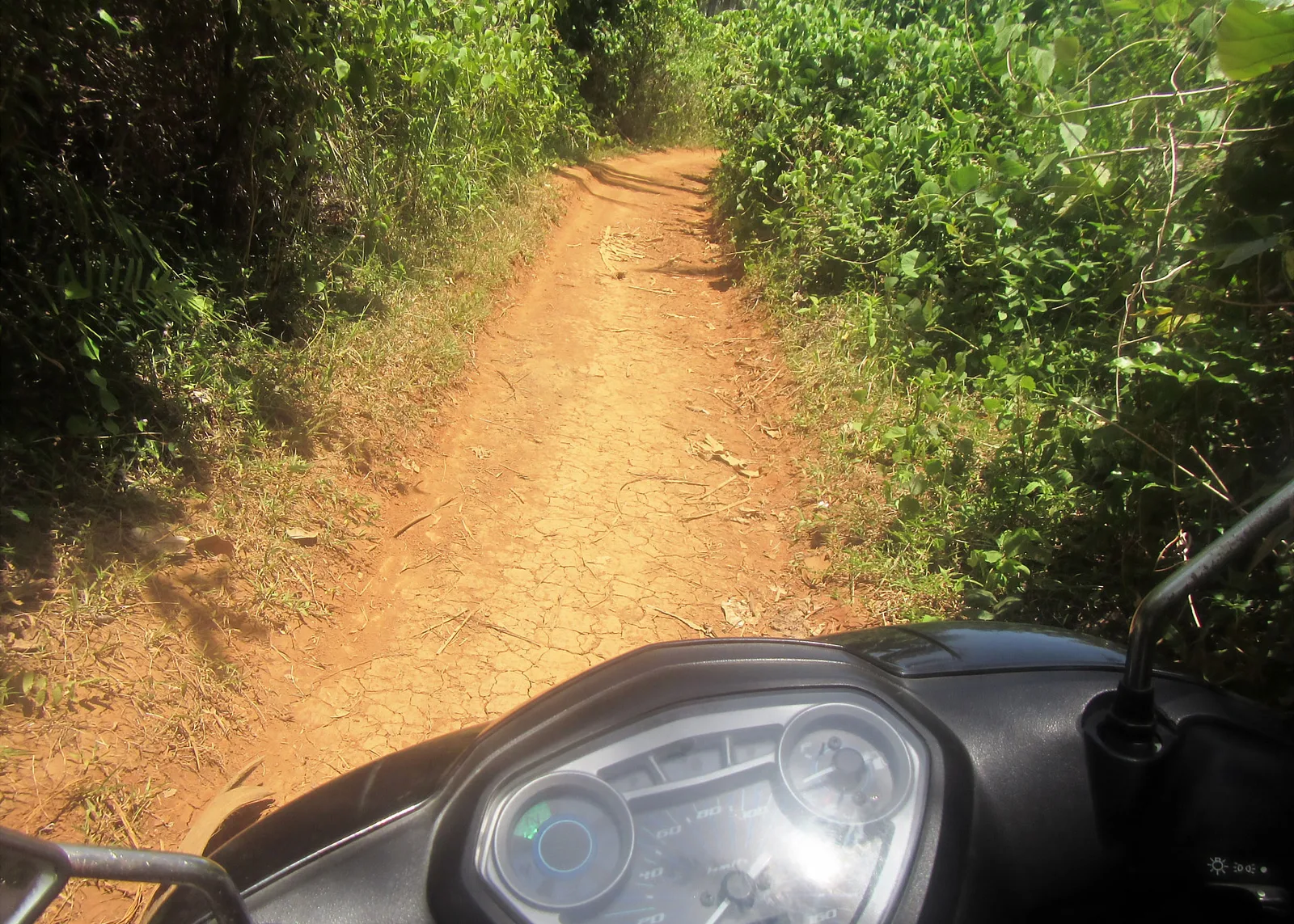
Philippine island roads are better than their reputation on main routes and worse than you expect off them. Realistic hazards, in order of how often they actually cause problems: dogs and chickens crossing without warning, sand and gravel on corners, unlit vehicles after dark, sudden heavy rain that turns a dry road slick in seconds, and potholes on secondary roads.
Two rules that matter more than any other advice. Do not ride at night outside town - unlit tricycles and animals make it a different activity entirely. And do not ride in the first ten minutes of heavy rain, when accumulated oil lifts off the surface; pull under a shelter and drink a coffee, which is what everyone local is doing.
Wear real shoes. The most common visitor injury here is not a collision, it is a low-speed drop with a bare foot or leg against a hot exhaust pipe. The burn scar has a nickname among expats for a reason.
One more habit worth building: fuel early and fuel often. Outside towns the supply is roadside bottles rather than stations, sold in one-litre soft drink bottles at a markup, and on a quiet stretch of Siquijor or northern Camiguin there may be nothing for twenty kilometres. Fill up when you pass a real station rather than when the gauge tells you to.
What most guides get wrong about scooters here
The pervasive error is the cheerful "just rent a scooter, no licence needed" line. It is repeated in hundreds of articles because rental shops genuinely do hand over keys without checking. That is a description of shop behaviour, not of the law. Riding without the correct licence class means any accident is uninsured, any injury claim is arguable, and any liability for injuring someone else falls on you personally. Two different things - what a shop asks for, and what you are legally and financially exposed to - get collapsed into one sentence, and readers pay for that.
The second error is quoting a national daily rate. There is no national rate. Siargao in high season and Siquijor in a quiet month are different markets, and the online quote is almost always above the walk-in price. Ask two shops in person and take the second offer.
The third: recommending the cheapest shop. The cheapest scooter on an island is cheap because the brakes and tyres have not been touched in a year. Pay the extra hundred pesos a day.
Frequently asked questions
How much does a scooter cost per day in the Philippines?
PHP 400 to PHP 700 a day typically, dropping 20 to 30 percent on a weekly rate. Fuel adds PHP 80 to PHP 150 a day.
Do I need a licence to rent a scooter?
Legally yes - a home licence covering motorcycles plus an international driving permit. Shops often do not check, but checkpoints do.
Should I leave my passport as a deposit?
No. Offer a cash deposit or a photocopy instead. A shop that refuses anything but the physical passport is not one to rent from.
Are helmets required in the Philippines?
Yes, nationwide, and it is enforced at checkpoints. Wear it even for short trips within town.
Is it safe to ride at night?
Outside towns, no. Unlit tricycles, animals on the road and poor street lighting make night riding a substantially different risk.
What is the most common scooter injury here?
Not a collision - a low-speed drop and a leg against the hot exhaust. Wear closed shoes and long trousers where you can.