Short answer: Ordinary prescription and over-the-counter medicines for personal use are allowed in reasonable quantities, ideally in original packaging with a copy of the prescription. Controlled substances are different: they need clearance arranged before you travel, and arriving with them unpermitted is treated as a drugs offence, not a paperwork error. Check your specific medicine, not the general rule.
Trip.comHotels in Philippines
Compare live prices via Travelpayouts — targeted for this guide.
Search on Trip.comGeneral guidance for visitors carrying personal medication into the Philippines. Rules last checked 30 July 2026 against Philippine FDA and Bureau of Customs guidance. This is not medical or legal advice - for a controlled medicine, confirm with the Philippine embassy in your country before you fly.
Three categories, three completely different outcomes
How Philippine rules treat personal medication. Checked 30 July 2026.
| Category | Examples | What you need | Risk if wrong |
|---|
| Over the counter | Paracetamol, antihistamines, rehydration salts | Nothing beyond reasonable quantity | Low |
| Prescription, not controlled | Antibiotics, blood pressure, asthma inhalers, contraceptives | Original packaging plus a copy of the prescription | Low - questions at most |
| Controlled substances | Strong opioid painkillers, some ADHD stimulants, some sedatives | Advance clearance arranged before travel | High - treated as a drugs offence |
The classification that matters is the Philippine one, not your home country's. A medicine sold over the counter or on a routine prescription at home can sit in the controlled category here, and that mismatch is the whole problem.
What to carry for ordinary prescriptions
- Keep medicines in their original labelled packaging. A weekly pill organiser with loose tablets is the worst way to carry medication through any border.
- Carry a copy of the prescription, or a letter from your doctor stating the condition, the generic drug name and the daily dose.
- Use generic names in that letter. Brand names differ between countries and mean nothing to an officer here.
- Bring only what the trip needs plus a modest reserve. Large quantities invite the question of whether it is genuinely personal use.
- Keep it in hand luggage. Hold baggage gets delayed, and a delayed bag with your only insulin in it is a medical problem, not an inconvenience.
Controlled substances: arrange it before you fly
If your medication is a controlled substance, the clearance has to exist before you arrive. It is not something that can be resolved at the airport, and the arrival hall is the worst possible place to discover the requirement.
The process, in outline: identify the classification of your medicine under Philippine rules, contact the Philippine embassy or consulate in your country, and follow the clearance route they specify, with your prescription and a doctor's letter. Start several weeks ahead. Philippine drug laws are strict and the penalties are severe, which is exactly why this is worth the administrative effort rather than a gamble on not being checked.
Buying medication locally
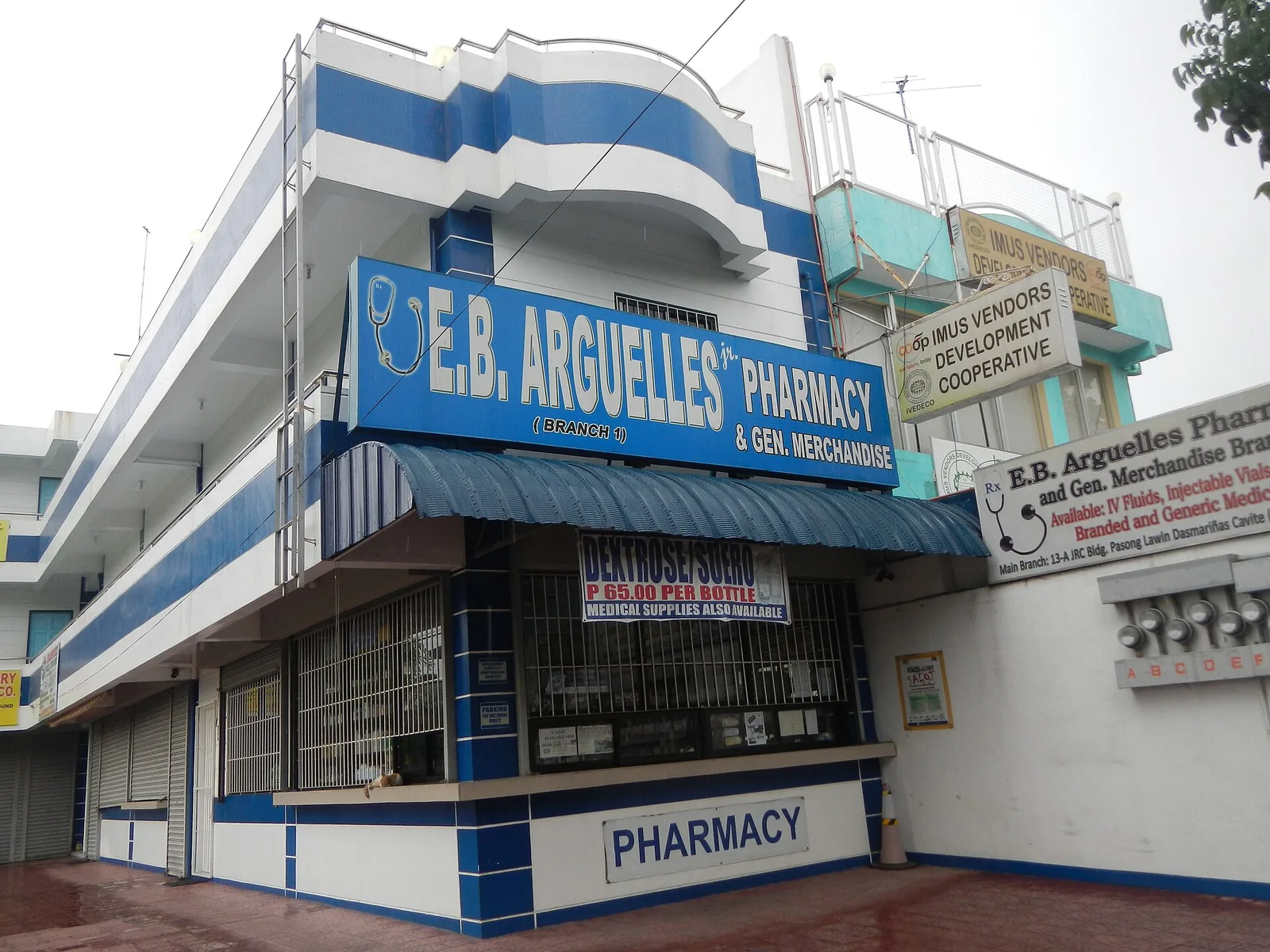
Pharmacy coverage is good in cities and adequate in most towns. Large chains are widespread, staffed by licensed pharmacists, and stock the common maintenance medicines under generic names at prices that are usually well below Western retail.
Two cautions. First, antibiotics and other prescription-only medicines are legally prescription-only here, and a pharmacy that dispenses them without one is not doing you a favour - self-prescribing antibiotics abroad is how people turn a mild illness into a resistant one. Second, buy from established pharmacy chains rather than market stalls; counterfeit medicines exist in informal channels, and packaging is not a reliable indicator.
For anything ongoing, bring your own supply. Formulations, doses and available brands differ, and matching your exact prescription locally can take a day you did not plan for.
What most guides get wrong about medication here
The main failure is silence. Country guides cover visas, currency and vaccinations at length and skip medication entirely, which leaves travellers to assume that whatever their home pharmacy handed them is fine to carry. For most medicines it is. For a specific and predictable set - strong painkillers, stimulant ADHD medication, certain sedatives - it is not, and those are precisely the medicines whose users cannot simply stop taking them for two weeks.
The second failure is the confident forum answer. Threads on this topic are full of people reporting that they carried a controlled medicine through without being asked, offered as evidence that the rule does not matter. It is evidence that they were not checked. The rule and the enforcement rate are different things, and the downside here is not a fine.
The third: advising travellers to declare nothing to avoid attention. The opposite is correct. If you are carrying a documented prescription medicine, having the paperwork ready and answering questions straightforwardly is a two-minute conversation. Concealment is what turns it into something else.
Vaccines, mosquitoes and the pharmacy kit worth packing
No vaccination is required for entry from most countries, but routine immunisations should be current and hepatitis A and typhoid are commonly recommended for travel here. Check with a travel clinic several weeks before departure, because some schedules need more than one dose.
Dengue is the mosquito-borne illness that actually affects visitors, and it is transmitted by a daytime-biting mosquito, which makes evening-only repellent the wrong strategy. Use repellent through the day in urban and lowland areas, particularly in the wet months. Malaria risk is limited to specific rural areas and is not a concern in the main tourist destinations.
A small kit saves a bad afternoon: rehydration salts, an antihistamine, antiseptic and plasters for coral scrapes, motion sickness tablets for fast craft, and any personal medication in original packaging. Coral cuts in particular go bad quickly in warm salt water - clean them properly the same day rather than the next.
Practical checklist before you fly
- Look up the Philippine classification of each medicine you carry, by generic name.
- Original packaging, hand luggage, prescription copy, doctor's letter with generic names.
- For anything controlled, contact the Philippine embassy several weeks out.
- Note the generic name of your medicine so a local pharmacist can help if you run short.
- Check your travel insurance covers your pre-existing condition - many policies exclude it unless declared.
Frequently asked questions
Can I bring prescription medicine into the Philippines?
Yes, in reasonable personal-use quantities, in original packaging with a copy of the prescription or a doctor's letter using generic names.
Which medicines need advance clearance?
Controlled substances - strong opioid painkillers, some ADHD stimulants and certain sedatives. Arrange clearance through a Philippine embassy weeks before travel.
Should I keep medicine in hand luggage?
Yes. Hold baggage can be delayed, and essential medication such as insulin should never be separated from you.
Can I buy antibiotics over the counter?
They are legally prescription-only. Use established pharmacy chains and see a doctor rather than self-prescribing abroad.
Is medication cheaper in the Philippines?
Common generics are usually well below Western retail at large chains, but exact formulations and brands may differ from your prescription.
What if I run out of my medication?
Take the generic name to a large pharmacy chain in a city. Clinics can issue a local prescription, but matching a specific formulation can take a day.