Europe is a long way from the Philippines. There is no getting around that. Frankfurt to Manila is roughly 11,000 kilometres, Amsterdam to El Nido is about the same, and Paris to Palawan is not a weekend hop. But here is the thing: the moment you land, clear immigration at NAIA Terminal 3, step outside into the thick tropical air, and hear a jeepney blasting OPM music at full volume -- you will understand immediately why more and more European travellers are putting the Philippines on their itineraries instead of, or alongside, the usual Southeast Asian circuit of Thailand, Bali, and Vietnam. The Philippines is warmer, friendlier, cheaper, more linguistically accessible (English is a national language), and frankly more stunning than its reputation in Europe suggests.
Philippines from Europe: Flights, Budget & Planning Guide for European Travellers (2026)
Hotels in Philippines
Compare live prices via Travelpayouts — targeted for this guide.
This guide is written specifically for travellers coming from Germany, France, the Netherlands, Scandinavia, and the broader EU/Schengen zone. We cover everything from flights and costs in EUR to power adapters, credit cards, travel insurance, and why your European winter is actually perfect timing for a Philippines trip.
Getting There: Flights from Europe to the Philippines
There are no non-stop flights from any European city to Manila. Every route involves at least one layover -- typically in Dubai, Doha, Istanbul, Hong Kong, Singapore, Kuala Lumpur, or Tokyo. The most popular options for European travellers in 2026 are:
Emirates via Dubai (DXB) -- The European Favourite
Emirates remains the most popular airline for Europeans flying to Manila. The Dubai hub connects almost every major European city -- Frankfurt, Amsterdam, Paris CDG, London Heathrow, Zurich, Vienna, Copenhagen, Stockholm, Madrid -- with seamless onward connections to Manila. Total travel time is around 14--16 hours including the Dubai layover. Emirates flies to Cebu as well as Manila. Fares range from EUR 450 to EUR 900 return depending on season, how far in advance you book, and your departure city. Booking 3--4 months ahead typically lands you in the EUR 500--650 sweet spot.
Tours & activities in Philippines
Hand-picked experiences in Philippines — book on Trip.com with instant confirmation.


Qatar Airways via Doha (DOH)
Qatar Airways is Emirates' main competitor on the Europe-Manila corridor and frequently beats it on price, especially from French cities (Paris CDG, Nice, Lyon) and smaller European airports. Doha makes for a compact, modern transit hub. Total journey time is 14--16 hours. Qatar flies to both Manila and Cebu. Fares are similar to Emirates: EUR 470--850 return. Qatar's premium economy (QSuite business class is extraordinary if you want to splurge) makes the journey genuinely comfortable.
Lufthansa + Cathay Pacific via Hong Kong (HKG)
A popular option particularly from Frankfurt and Munich. Lufthansa flies to Hong Kong, where Cathay Pacific connects to Manila, Cebu, or Clark. Total journey time is around 15--17 hours. This routing gives you the option of a Hong Kong stopover if you want to break the journey. Fares are EUR 550--900 return. Booking through the Lufthansa website often gives you the combined itinerary as a single ticket with checked baggage included.
Turkish Airlines via Istanbul (IST)
Turkish Airlines has an enormous European network -- it serves more European cities than any other carrier -- making it particularly useful for travellers from smaller European cities that Emirates and Qatar may not serve directly. Istanbul's new airport (IST) is large and modern but can feel overwhelming during layovers. Total journey time is around 15--17 hours. Fares are often among the cheapest: EUR 450--750 return, making Turkish Airlines the budget pick for European travellers who are price-sensitive.
KLM + Philippine Airlines or AirAsia via Various Hubs
KLM (Amsterdam-based) connects to Manila via various Asian hubs. Philippine Airlines itself flies Amsterdam--Manila but check frequencies, as this route has varied in availability. AirAsia connections via Kuala Lumpur or Kuala Lumpur International can be very cheap but often involve long layovers and separate bookings -- fine for experienced travellers, trickier for first-timers.
Best Booking Strategy for Europeans
Use Google Flights to search with your departure airport and Manila (MNL) as destination. Set the date grid view to scan a full month -- you'll find fares vary by EUR 150--300 depending on which day you fly. Tuesdays and Wednesdays are typically cheapest for departures. Book economy class 8--12 weeks out for the best combination of price and seat selection. For shoulder season (May--June or October--November), you can often find sub-EUR 500 return fares.
Money: EUR to PHP and What Things Cost
The exchange rate in 2026 sits at approximately 1 EUR = 62--65 PHP (check xe.com for the live rate). This is excellent news for European travellers: the Philippines is significantly cheaper than Europe by almost every measure.
To give you a practical sense of costs in European terms:
- Budget guesthouse / hostel: EUR 8--20 per night (PHP 500--1,200)
- Mid-range hotel or resort: EUR 35--80 per night (PHP 2,200--5,000)
- Luxury beachfront resort: EUR 100--250 per night (PHP 6,500--16,000)
- Local restaurant meal (turo-turo or carenderia): EUR 1.50--3 (PHP 100--180)
- Western-style restaurant meal: EUR 5--15 (PHP 300--900)
- San Miguel beer at a beach bar: EUR 0.80--1.50 (PHP 50--90)
- Island-hopping tour, full day: EUR 15--30 per person (PHP 1,000--1,800)
- Scuba diving, 2 boat dives with gear: EUR 25--45 (PHP 1,500--2,800)
- Cebu Pacific domestic flight (Manila to Cebu or Puerto Princesa): EUR 15--60 (PHP 900--3,800)
A couple travelling on a mid-range budget can live very comfortably in the Philippines on EUR 80--120 per day combined, including accommodation, meals, activities, and local transport. Budget backpackers can stretch a week on EUR 200--250 each. Luxury travellers will find world-class resorts at prices that seem laughably low compared to European equivalents.
Visa: The Good News for EU/Schengen Passport Holders
Here is one of the most traveller-friendly aspects of the Philippines for Europeans: all EU and Schengen passport holders enter visa-free for 30 days, extendable to 59 days and further extendable in-country. German, French, Dutch, Belgian, Swedish, Norwegian, Danish, Finnish, Austrian, Swiss -- all visa-free on arrival. You need:
- A valid passport (at least 6 months validity beyond your departure date from the Philippines)
- A return or onward ticket (immigration officers do check this -- have it accessible on your phone)
- Proof of sufficient funds (not always checked but technically required -- EUR 50/day is the guideline)
- Completed e-Arrival Card (filled online at etravel.gov.ph before you land -- mandatory)
Extensions: if you want to stay beyond 30 days, visit the nearest Bureau of Immigration office. The first extension (to 59 days) costs around PHP 3,030 (roughly EUR 48) and takes about 2 hours. Further extensions are possible up to a maximum visa-free stay of 36 months (yes, really) for most nationalities, paid in intervals.
Travel Insurance: Your EHIC Does Nothing Here
This is critical and European travellers sometimes overlook it: your European Health Insurance Card (EHIC) is valid only within the European Economic Area. The moment you board your flight out of European airspace, the EHIC covers nothing. In the Philippines, healthcare in tourist-area hospitals is generally competent, but it is not free and it can be expensive by local standards (though still far cheaper than the US). A medical evacuation to a major hospital in Manila, or back to Europe, can cost EUR 20,000--80,000 without insurance.
Buy private travel insurance before departure. Good options for European travellers include:
- World Nomads -- popular among independent travellers, covers adventure activities including diving and surfing
- Allianz Travel -- available across most European countries, strong medical cover
- AXA Schengen / AXA Travel -- particularly strong for French travellers
- ERGO Reiseversicherung -- popular in Germany and Austria
- Europaeische Reiseversicherung (ERV) -- widely used across DACH region
Budget EUR 30--70 for a 2--3 week policy covering the Philippines. Make sure your policy includes: medical expenses (minimum EUR 100,000 coverage), emergency evacuation, trip cancellation and interruption, and activity cover for whatever you plan to do (diving, surfing, motorcycling all typically require specific mention in the policy).
Power Adapters: Type C to Type A/B
The Philippines uses Type A (two flat parallel pins) and Type B (two flat pins plus a round ground pin) sockets running at 220V / 60Hz. European devices use Type C (two round pins) and operate at 220--240V / 50Hz.
The voltage is compatible (220V works fine) but the plug shape is different. You need a Type C to Type A/B travel adapter -- available at any European airport shop, Amazon, or Hema/MediaMarkt/Saturn. The frequency difference (50Hz EU vs 60Hz Philippines) is irrelevant for almost all modern electronics including phone chargers, laptop PSUs, and camera chargers, all of which are rated 50/60Hz universal.
Buy a small universal travel adapter before you leave -- it costs EUR 8--15 and removes any hassle. Most hotels and resorts in tourist areas also have a mix of socket types to accommodate international guests, but do not rely on this.
Credit Cards and Cash
European Visa and Mastercard credit and debit cards work well in the Philippines, particularly in cities and tourist areas. Always notify your bank before travel -- most European banks will block a card used unexpectedly in Southeast Asia as a fraud precaution. A quick message through your bank's app or a phone call before departure solves this.
ATMs are widely available at SM Malls, BDO, BPI, Metrobank, and 7-Eleven locations in tourist areas. Withdrawal fees are typically PHP 150--250 (EUR 2.50--4) per transaction, so withdraw larger amounts less frequently. Your European bank may also charge a foreign transaction fee (typically 1--2.5%). Cards like Revolut, Wise, or N26 (popular in Germany and the Netherlands) are excellent here -- they offer near-perfect exchange rates and low or zero foreign transaction fees.
Carry some cash (PHP) for local transport, small restaurants, and markets. EUR notes are not usable at most local shops -- exchange at airport exchange counters (rates are mediocre) or use ATMs on arrival.
Timing: European Winter = Philippines Dry Season
This is the single most compelling practical argument for European travellers: the Philippines dry season (November through April) corresponds almost exactly with European autumn and winter. When you are staring at grey skies in Amsterdam in January, or scraping ice off your car in Stuttgart in February, the Philippines is bathing in 28--32 degree sunshine with virtually zero chance of rain. The alignment could not be more perfect.
Key European holidays that coincide with Philippines peak season:
- Christmas / New Year (December 24 -- January 3): Philippines dry season, excellent weather. Book flights 4--6 months ahead -- prices surge dramatically for this window.
- Winter school holidays (February): Perfect weather in the Philippines. Popular with Dutch, French, and German families.
- Easter (March--April): Peak season in the Philippines coincides with European Easter school holidays. Extremely busy and expensive -- book early or consider shoulder season dates immediately before or after.
- May / early June (Pfingstferien, Ascension, etc.): Transition into the rainy season, but many islands (Siargao, Davao region) remain excellent. Prices start dropping.
European Travellers' Favourite Destinations
Palawan: El Nido and Coron
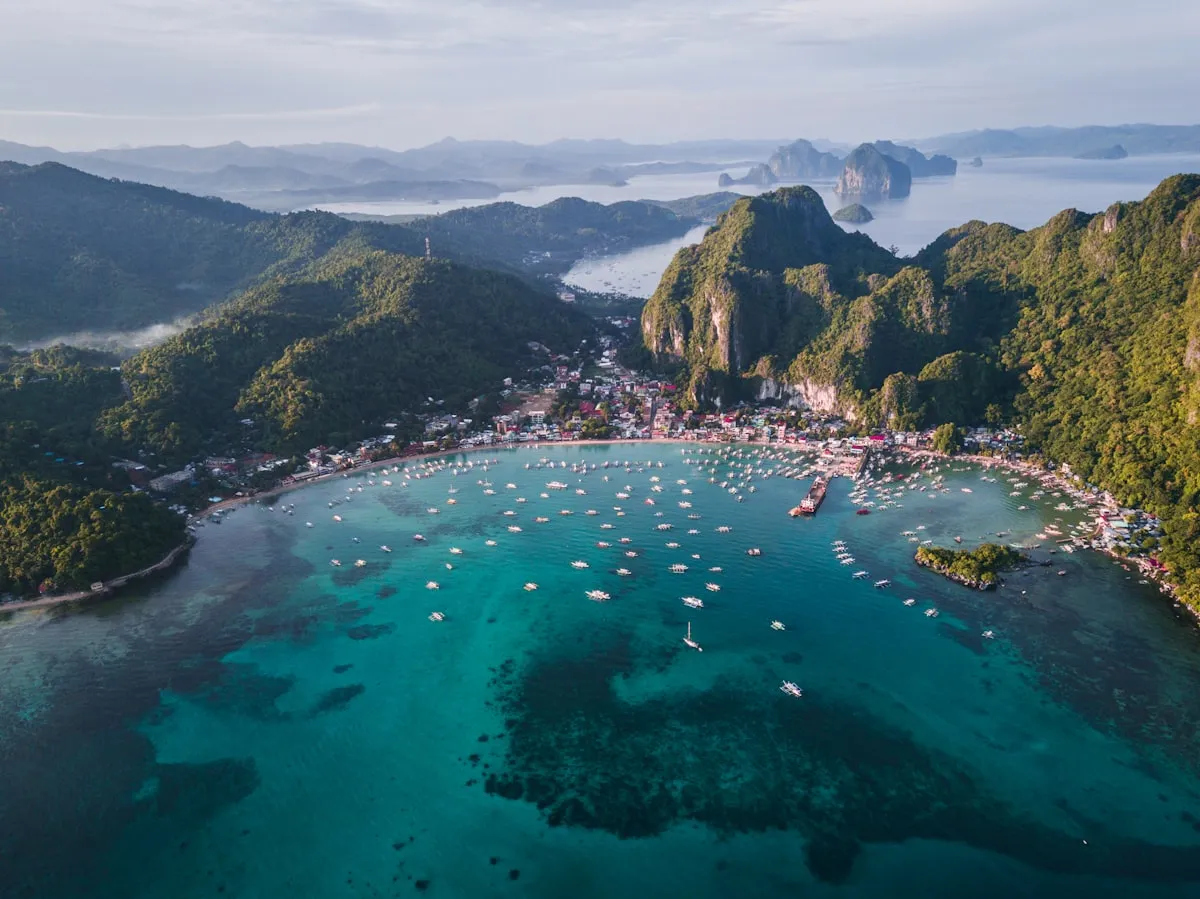
Palawan consistently tops European travel surveys of the Philippines. El Nido's limestone karst formations, turquoise lagoons, and island-hopping tours have become iconic among European Instagram and travel communities. Coron offers world-class wreck diving (Japanese WWII shipwrecks) and the extraordinary Barracuda Lake. Visit November through April for ideal conditions.
Boracay: White Beach Sunset
Boracay's White Beach is one of the world's finest stretches of white sand. The sunset here -- especially from the D'Mall area or from a beachfront bar -- is genuinely spectacular and has earned Boracay its reputation. After the 2018 government rehabilitation, the beach is cleaner and better managed than its wild pre-2018 peak. Best visited November through May.
Cebu and the Visayas
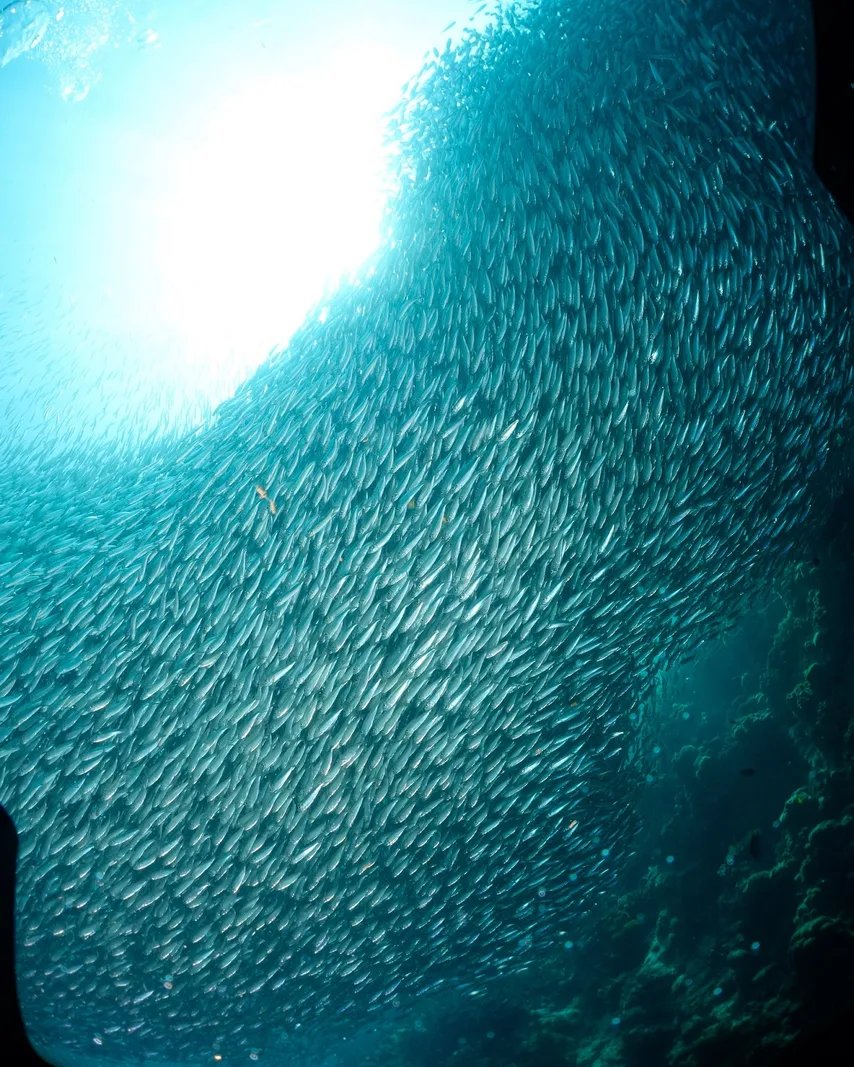
Cebu is the Philippines' second city and an excellent base for European travellers who want urban amenities and easy island access. Nearby: Bohol (Chocolate Hills, Tarsier sanctuary), Oslob whale shark interaction, Moalboal sardine run, and Malapascua for thresher shark diving. Cebu's airport (Mactan-Cebu International) has direct connections from several Asian hubs, sometimes saving a Manila transit.
Frequently Asked Questions
Do I need a visa to visit the Philippines as an EU citizen?
No. All EU and Schengen passport holders, including German, French, Dutch, Belgian, Swedish, Norwegian, Danish, Finnish, and Spanish nationals, enter the Philippines visa-free for an initial stay of 30 days. This can be extended at a Bureau of Immigration office. You need a valid passport (6 months beyond exit date), a return ticket, and a completed e-Arrival Card (etravel.gov.ph) before arrival.
What is the flight time from Europe to the Philippines?
Total travel time including layover is typically 14--18 hours depending on your European departure city, chosen airline, and connection hub. Emirates via Dubai and Qatar via Doha are the most popular options at around 14--16 hours total. There are no non-stop flights from any European city to Manila.
Can I use EUR in the Philippines?
Not practically in most shops and markets. You need Philippine Pesos (PHP). The exchange rate in 2026 is approximately 1 EUR = 62--65 PHP. Use ATMs on arrival for the best rates, or exchange at reputable money changers in tourist areas (avoid airports, which offer poor rates). Cards like Revolut, Wise, or N26 are excellent for minimising exchange fees.
Is travel insurance mandatory for visiting the Philippines from Europe?
Not legally mandatory for visa-on-arrival entry, but absolutely essential in practice. Your EHIC card is invalid outside the EEA. A medical emergency, hospitalisation, or evacuation in the Philippines without insurance could cost EUR 10,000--80,000. Buy a private travel insurance policy covering the Philippines before you leave. Expect to pay EUR 30--70 for a 2--3 week policy.
What is the best time of year for Europeans to visit the Philippines?
November through April -- which corresponds perfectly with European autumn and winter. This is the Philippines dry season: clear skies, calm seas, minimal rain across most of the archipelago. December through February is the coolest and most comfortable period. April is the hottest. If you must travel in European summer (June--August), choose southern and eastern destinations like Siargao or Davao, which are sheltered from the southwest monsoon and typhoon belt.

PANA.PH Editorial Team
Philippines travel desk
The PANA.PH travel desk researches, books and re-checks Philippines travel logistics — fares, ferry schedules, government fees and permit rules — and publishes what it can verify.
🏡 Real local stays (book direct)
Hand-picked homestays and guesthouses — book direct, no markup.
Browse all local stays →
🌊 Popular activities (book instantly)
Island hopping, canyoneering, whale sharks — real Klook/GetYourGuide options.
View all activities →