Freediving -- the practice of diving underwater on a single breath, without scuba equipment -- has been part of Philippine coastal culture for centuries. The butanding hunters of southern Cebu, the pearl divers of Sulu, the subsistence fishermen who still work the reefs of Batangas and Bohol on a single breath: breath-hold diving is not a sport imported from Europe in the last decade. It is something that has lived in the water culture of this archipelago for as long as people have lived on these shores.
Freediving in the Philippines: The Complete Guide (Schools, Sites & Whale Sharks)
Trip.com
Search on Trip.comHotels in Philippines
Compare live prices via Travelpayouts — targeted for this guide.
What is new is the international freediving community's discovery of what Filipino divers already knew: the Philippines offers some of the finest conditions for the sport anywhere on Earth. Warm, clear water. Extraordinary marine life encounters available at depths accessible to recreational freedivers. A growing network of world-class instruction. And a few specific experiences -- whale sharks, sardine tornadoes, crystal-clear lagoons -- that simply cannot be replicated anywhere else.
Why the Philippines for Freediving
The Water
The Philippine Sea and the waters of the Visayan Basin maintain year-round temperatures of 27-30 degrees Celsius. At these temperatures, the body's mammalian dive reflex activates efficiently, breath-hold times extend naturally, and cold stress (a significant factor limiting dive times in cooler water) is essentially eliminated. Visibility in peak conditions (dry season, January-May) commonly exceeds 20-30 metres at sites like Moalboal, Tubbataha, and the Coron lagoons. Currents at most recreational freediving sites are mild -- the reef systems of the Visayas are sheltered enough to allow proper relaxation between dives, which is where breath-hold performance is made or lost.
The Marine Life
The Philippines sits at the centre of the Coral Triangle -- the most biodiverse marine region on Earth. Freediving here means sharing space with creatures that scuba divers, weighted down with equipment and trailing bubble streams, often spook away. A freediver descending silently on a single breath interacts with pelagic fish schools, manta rays, and reef sharks on entirely different terms. The animals do not associate the silent, streamlined freediver with threat in the same way they register the mechanical noise and air bubbles of scuba. The encounters are closer, longer, and more natural.
Trip.com
See all tours in Philippines on Trip.comWhale shark watching in Philippines
Hand-picked experiences in Philippines — book on Trip.com with instant confirmation.
The Culture
The freediving community in the Philippines -- particularly in Cebu, Siargao, and Anilao -- has grown substantially in the past decade. World record holders have trained and competed here. Several AIDA-affiliated schools have established permanent operations. The community around freediving in the Philippines is genuinely international and genuinely welcoming of newcomers at any level. If you are a beginner who has never done a breath-hold course, you will find excellent instruction. If you are a trained freediver pushing personal depths, you will find training partners and site knowledge that can take your diving further.
Getting Certified: Freediving Schools in the Philippines
AIDA Courses: What to Expect
AIDA (Association Internationale pour le Developpement de l'Apnee) is the internationally recognised certification body for freediving, equivalent to PADI for scuba. AIDA certification levels run from AIDA 1 (introduction, pool and confined water only) through AIDA 4 (advanced, 40m depth) and higher for competitive athletes. For recreational freedivers, AIDA 2 is the most important milestone -- it certifies you as a competent open-water freediver and is the minimum requirement for most advanced dive sites, guide services, and liveaboard operations.
AIDA 1 (Introduction Course)
Cost: PHP 3,500-5,000 | Duration: 1 day | Pool/confined water only
The entry-level course covers the theory of freediving (physiology, physics, safety), basic breath-up techniques, pool static apnea (breath hold in the water while stationary), and dynamic apnea (swimming horizontally underwater). No open-water component. Most beginners move directly to AIDA 2, but AIDA 1 is available for those who want to test the water before committing to a full certification.
AIDA 2 (Freediver Course)
Cost: PHP 8,000-12,000 | Duration: 2-3 days | Open water to 20m
The standard entry point for most serious beginners. Theory covers equalisation (the technique for equalising ear pressure as you descend -- the single biggest technical challenge for new freedivers), the diving reflex, blackout prevention, and rescue breathing. Pool sessions cover static and dynamic apnea. Open water sessions progress to 10-20 metre depths using a descent line. A typical AIDA 2 graduate can comfortably reach 12-16 metres on a single breath after the course, with further improvement coming through practice and technique refinement.
Schools in Cebu (Malapascua, Moalboal, Mactan) and in Batangas (Anilao) offer AIDA 2 courses year-round. School selection matters: choose an AIDA-affiliated school with a registered AIDA Instructor. Ask to see the instructor's credentials before booking.
AIDA 3 (Advanced Freediver Course)
Cost: PHP 12,000-18,000 | Duration: 3-4 days | Open water to 40m
The advanced course covers deeper equalisation techniques (Frenzel manoeuvre for depths below 20m, which passive equalisation cannot reach), mouthfill equalisation theory for depths beyond 30m, no-fins diving technique, advanced rescue, and open-water sessions pushing to 30-40 metre depths. Requires AIDA 2 certification and demonstrated comfort with the foundational skills. This level opens access to the Philippine deep sites -- the walls at Tubbataha, the deep lagoon at Barracuda Lake in Coron -- that are simply beyond the reach of AIDA 2 level divers.
Top Freediving Schools in the Philippines
Freedive Flow (Moalboal, Cebu): One of the most established freediving schools in the Visayas, operating from Moalboal's Panagsama Beach. AIDA courses from 1 through 4. The school's location is ideal -- the Moalboal sardine run is a 5-minute swim from the beach and accessible to AIDA 2 level freedivers. Several of their instructors are competitive freedivers with personal bests below 40 metres.
Freedive Gato (Malapascua, Cebu): Based near Gato Island Marine Sanctuary in northern Cebu, with access to thresher shark cleaning stations and a diverse reef system. AIDA 2-3 courses with smaller class sizes than some Cebu City-area schools.
Anilao Freediving Hub (Batangas): Anilao is the closest dive destination to Manila and has developed a strong freediving scene alongside its historic scuba community. Several operators now offer AIDA courses specifically for the weekend Manila market. The macro life at Anilao -- nudibranchs, pygmy seahorses, frogfish -- makes it a premier site for shallow-depth freedive photography.
Oslob: Freediving with Whale Sharks
The Experience
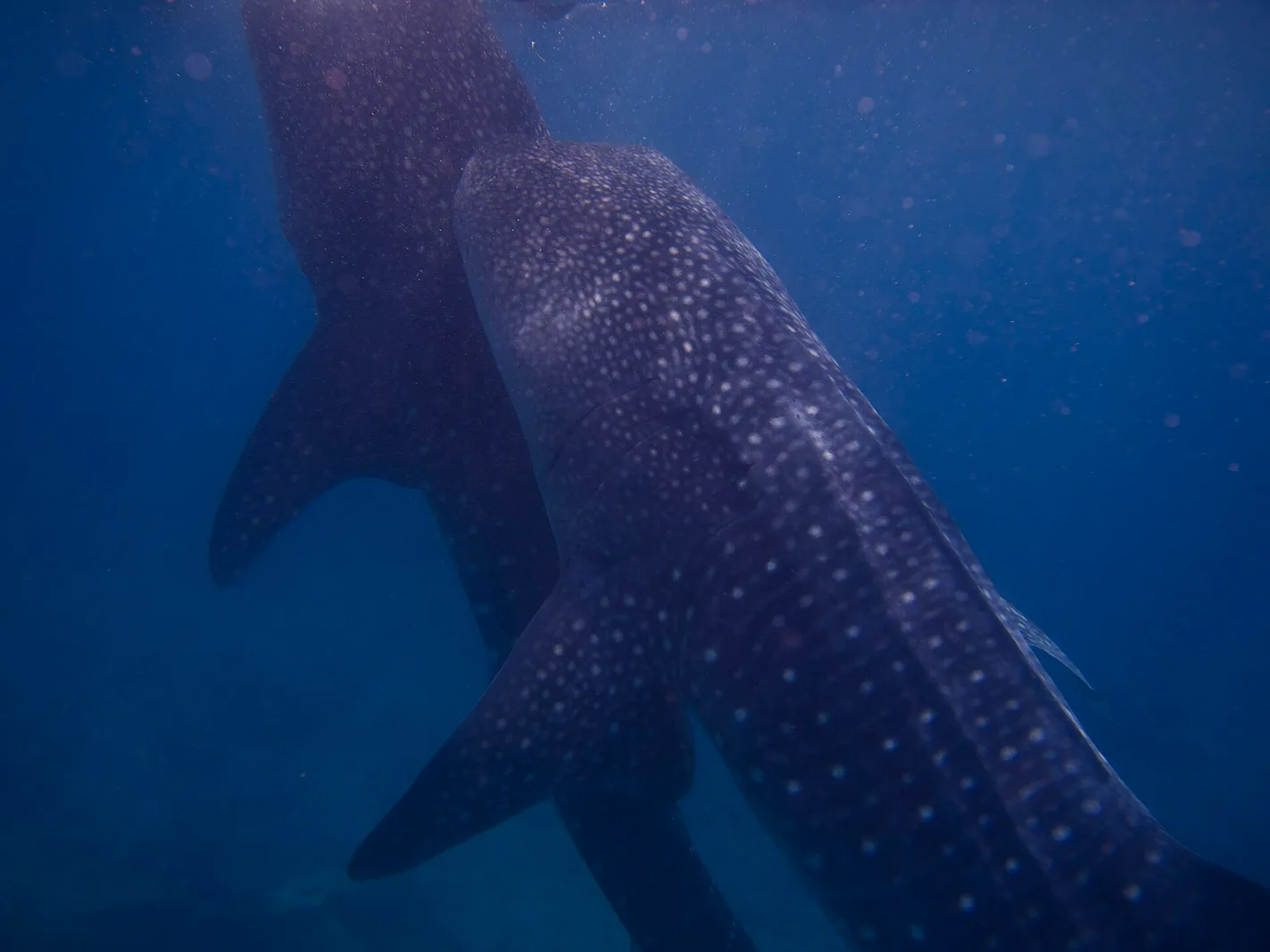
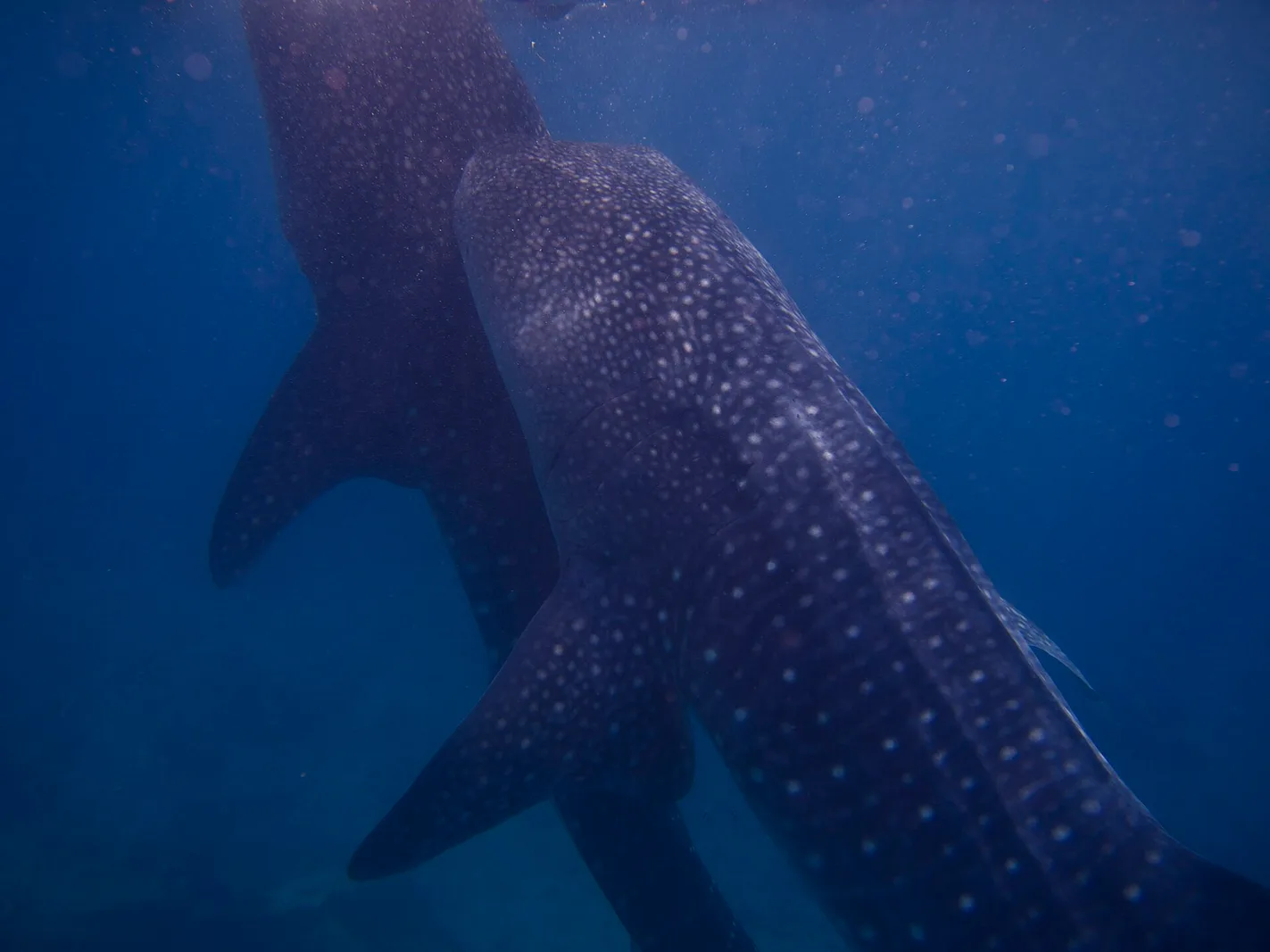
The whale shark interaction in Oslob (Tan-awan, southern Cebu) is one of the most debated wildlife tourism experiences in Southeast Asia. The whale sharks -- butanding -- are attracted to the area by local fishermen who feed them iyok (small shrimp), a practice that started informally and has become a formalised tourism operation generating significant income for the Tan-awan community.
The tourism management framework limits the number of daily participants and mandates a 3-metre distance rule from the animals. Guides enforce the distance regulation from the bangkas. For freedivers, the experience is fundamentally different from the snorkelling tourist approach: a freediver descending to 5-8 metres alongside a 10-metre whale shark, moving silently without bubbles, gets a proximity and naturalness of interaction that no snorkeller at the surface achieves. The animals are largely curious and unbothered by silent freedivers who stay within the distance rules.
Logistics
Cost: PHP 500 tourist registration + PHP 100-300 bangka + freediving gear rental PHP 300-500
The registration desk opens at 6am. Tourist numbers are theoretically capped but can feel crowded in high season (December-May). Arrive at 5:30am to register first and join the earliest bangka departure. The interaction is best in the first 90 minutes before the full tourist volume arrives. Freediving certification (AIDA 2 or equivalent) is the recommended minimum -- uncertified freedivers without snorkelling experience should stick to the surface snorkel. Bring your own freediving mask (low-volume) and fins for the best performance; rental equipment is available onsite for snorkellers.
Ethical Considerations
Conservation organisations are divided on Oslob. The feeding prevents the whale sharks from developing normal migration and foraging behaviour; several individuals have shown propeller scars from boats. On the other hand, the operation has essentially ended the subsistence hunting of whale sharks in the region and provides substantial livelihood to a previously very poor coastal community. A more ethically straightforward alternative is Donsol, Sorsogon (Luzon): whale sharks aggregate seasonally (November through May) without feeding, and the interaction is wilder, less predictable, and considered by most marine biologists to be less harmful to the animals. Donsol sightings are not guaranteed; Oslob is almost certain. Make your own considered choice with both facts in hand.
Moalboal: The Sardine Run on a Single Breath
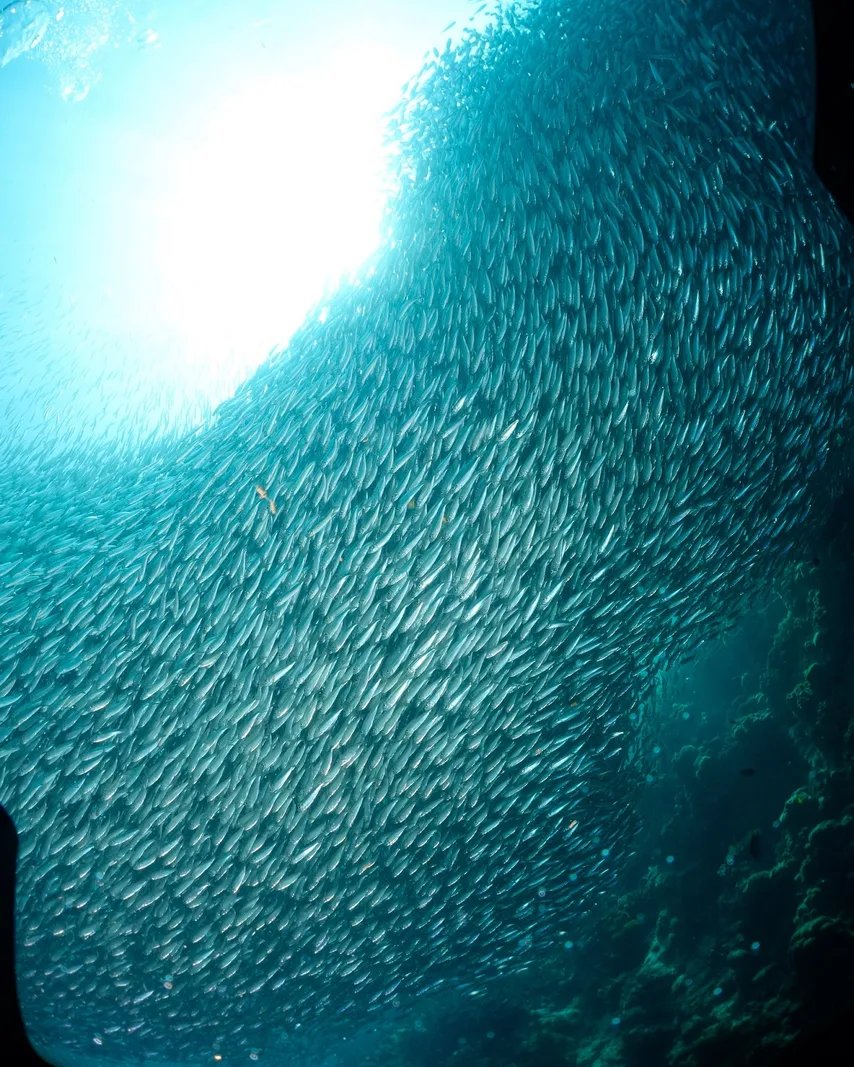
Moalboal's sardine run is among the most spectacular marine phenomena accessible to recreational freedivers anywhere in the world. Hundreds of millions of sardines form a living tornado column off Panagsama Beach -- rising from the sandy bottom at 20 metres to within 3 metres of the surface, rotating and shifting as a single fluid entity in response to the thunnies, jacks, and needlefish that hunt them from outside the school. The sardine column is so dense it blocks the light. Swimming through the edge of it -- silvery fish parting around you in a perfect, instantaneous wave -- is genuinely one of the most astonishing natural experiences available in this country.
The remarkable thing about Moalboal's sardines is that they are there year-round, not seasonally. The column is present every day. An AIDA 2 certified freediver can reach the base of the column comfortably. Snorkellers can interact at the surface. The site is a 5-minute swim or 2-minute paddle from Panagsama Beach -- no boat required. Entry is free.
Depth at the base of the sardine column: 18-22 metres. Best time: morning light (7am-10am) when the sun penetrates the water column and creates the light-and-shadow patterns through the school that produce the dramatic photography the site is famous for.
Coron: Twin Lagoon and Barracuda Lake on a Single Breath
Twin Lagoon
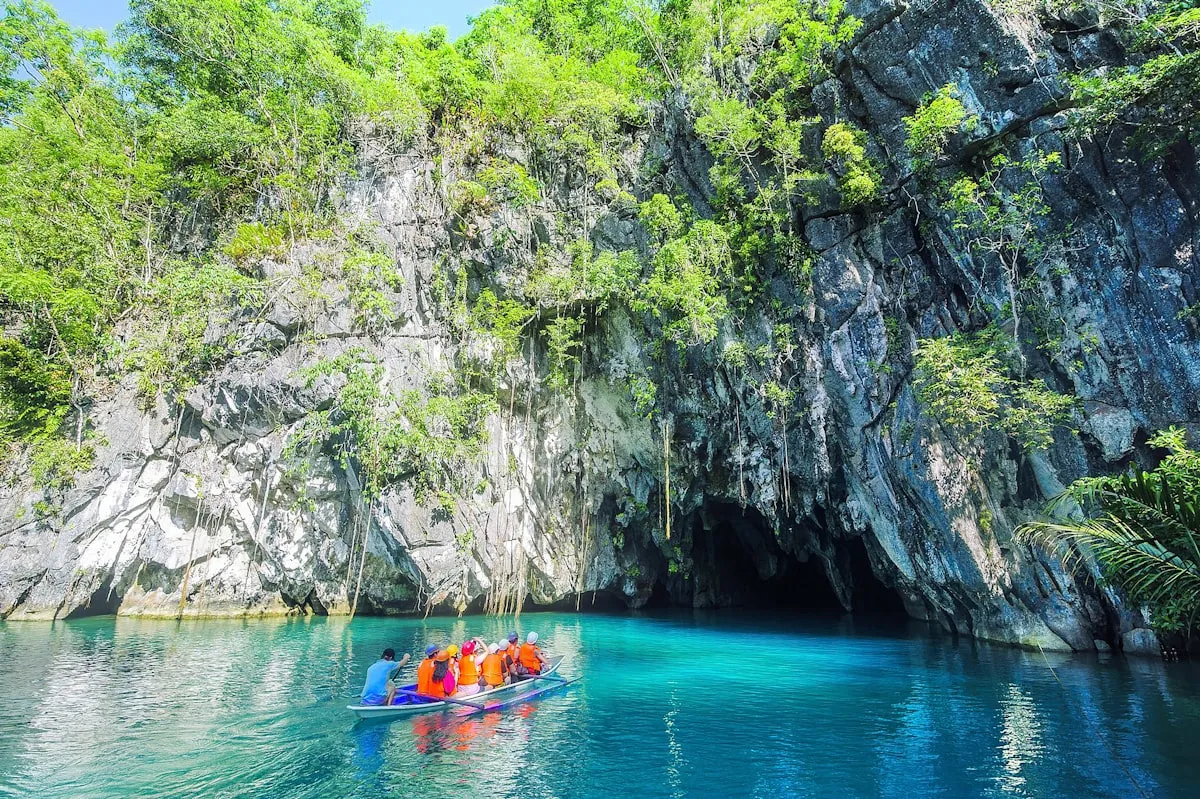
Twin Lagoon in Coron consists of two connected bodies of water separated by a low limestone wall -- the outer lagoon is sea-connected, the inner lagoon is brackish and thermocline-stratified (layers of water at different temperatures and salinity). Freediving through the narrow underwater passage between the two lagoons at approximately 4-5 metres depth and emerging into the enclosed inner lagoon -- cathedral-quiet, turquoise, surrounded by limestone walls -- is one of the most memorable freediving experiences in the Philippines accessible to beginners.
The thermocline in the inner lagoon (around 8-10 metres depth) is visible as a shimmering lens in the water column -- a halocline effect where freshwater and salt water meet. Diving through the halocline gives a disorienting and beautiful blurred-vision effect as the lens distorts the image of the bottom below.
Barracuda Lake
Barracuda Lake is the most scientifically unusual dive site in the Philippines -- a marine lake connected to the sea by subterranean channels, with a dramatic thermocline at 15 metres where the temperature jumps from 28 degrees Celsius (surface) to 38 degrees Celsius (below the halocline) before dropping again to cool at depth. Freediving through this warm zone feels surreal -- the water shimmers, colour perception shifts, and the halocline distorts the view of the lake floor. A large resident barracuda (reportedly 1.8 metres) patrols the thermocline zone. Depth record freedivers have used the exceptional visibility and still water of Barracuda Lake for competitive training.
Access: included in most Coron island-hopping tours (Tour C), or directly by speedboat from Coron town. PHP 200 entrance fee. Best with AIDA 2 certification or higher for freediving; snorkellers can access the surface and thermocline zone.
Best Months for Visibility and Conditions
January-May (Dry Season): Peak visibility across Visayas and Palawan sites. Calm sea conditions. Best for Tubbataha (March-May only), El Nido lagoons (January-May), Coron sites, and the Cebu freediving schools. Sardine run at Moalboal is year-round but photographically best with dry-season water clarity.
June-October (Wet Season): Visibility drops at some sites due to runoff, but Siargao and eastern Visayas remain accessible. Oslob whale sharks are year-round. Sea conditions become rougher for island-hopping and liveaboard access to remote sites. Cebu freediving schools operate year-round; course scheduling is more weather-dependent for open-water sessions.
November-December: The transition back to the dry season. Excellent value (lower prices, smaller crowds) with improving conditions through the period. One of the best times to book a freediving course in Cebu.
Gear Essentials for Philippine Freediving
Mask: A low-volume mask is the single most important piece of dedicated freediving equipment. Standard scuba masks have large internal volumes that require significant air to equalise at depth -- reducing your bottom time and increasing equalisation strain. Freediving-specific masks (Cressi Nano, Mares Sealhouette, Salvimar Noah) have very small internal volumes. If you are serious about freediving in the Philippines, buy a low-volume mask before you come.
Fins: Long blade fins (fibreglass or carbon fibre) produce significantly more propulsion per kick cycle than standard snorkel fins or scuba fins. For recreational freedivers down to 15-20 metres, fibreglass long blade fins (Cressi Gara, Mares Razor, Salvimar Metal) represent the best value. Carbon fibre fins (Molchanovs, Orca) are for performance and competition freedivers. Bifins are standard; monofins are used by competitive freedivers and require specific technique training.
Wetsuit: In Philippine water temperatures, a 1.5mm-3mm suit is sufficient. Even in warm water, a wetsuit provides thermal insulation over repeated dive sessions (the body cools progressively with each dive even in warm water), buoyancy control assistance, and protection from jellyfish. Open-cell wetsuits (used by spearfishermen and dedicated freedivers) provide better thermal performance at equivalent thickness but require a lubricant (Conditioner or soapy water) to put on. Standard closed-cell wetsuits are fine for recreational freediving.
Weight Belt: Precise weighting is critical for freediving. You want neutral buoyancy at 10-12 metres -- positively buoyant above, negatively buoyant below -- which allows you to freefall passively for the bottom portion of your dive rather than swimming down. Over-weighting (a common beginner mistake) makes the surface breath-up physically tiring. Your AIDA instructor will help you find correct weighting during your course. Rubber weight belts stay in place better than nylon when you exhale at depth.
Lanyard: A safety lanyard connecting you to the descent line is non-negotiable for depth training and strongly recommended for any diving beyond 15 metres. It is not restrictive -- it releases instantly -- but it is the safety mechanism that prevents a blacked-out diver from drifting off the line and out of reach of their buddy. Good freediving schools require it. If yours does not, find a different school.
Safety: The Buddy System and Blackout Awareness
Freediving is safe when practised correctly and extremely dangerous when the fundamental rules are broken. The two most important safety principles:
Never Freedive Alone
Shallow water blackout -- a loss of consciousness caused by hypoxia at or near the surface during the ascent phase of a dive -- can happen to any freediver on any dive, including experienced divers on conservative dives. It gives no warning. A freediver who blacks out underwater will drown unless their buddy is in the water, watching, and ready to respond within seconds. The buddy system is not a suggestion -- it is the non-negotiable foundation of freediving safety. Never enter the water for a breath-hold dive without an in-water buddy actively watching your ascent. Never.
Breathing Recovery
The recovery breath protocol after a dive (3 slow breaths with the airway protected before any distraction or conversation) exists because the oxygen level in a returning diver's blood continues to drop for several seconds after they surface. The surface is not safe until the first recovery breath confirms consciousness. AIDA courses drill this protocol repeatedly -- if you are not doing it, you have not fully internalised your freediving training.
The Philippines' freediving community is generally safety-conscious. Reputable schools run proper safety protocols. If you arrive at a dive site and observe freedivers diving alone, entering the water without a buddy, or practising hyperventilation before dives (which dramatically increases blackout risk), these are serious red flags -- find a different site or a different group.
Frequently Asked Questions
Do I need certification to freedive in the Philippines?
For basic snorkelling-depth interactions (Oslob whale sharks, Moalboal sardines at the surface), no formal certification is required -- life vests are provided and the water is shallow enough that surface-level interaction is safe without training. For any depth-oriented freediving -- descending to 10 metres or below, using a descent line, participating in guided freedive tours to reefs and lagoons -- AIDA 2 or equivalent certification is the strong recommendation and is required by responsible operators. Some Coron and El Nido tour operators now specifically require AIDA certification for freedive access to deep sites. Taking the AIDA 2 course before your trip is the single best preparation investment you can make for freediving in the Philippines.
How long does it take to get AIDA 2 certified in Cebu?
The standard AIDA 2 course is 2-3 days with full commitment (theory session plus pool session day one, open water days two and three). Some schools offer 3-day paced versions preferred by many students. Add one additional practice day after certification before diving independently -- the course teaches the skills, but practice consolidates them. A 5-day Cebu freediving trip (2-3 days course, 2 days practice diving at Moalboal or Oslob) is the ideal introduction for visitors with no prior freediving experience.
Is freediving with whale sharks better than scuba?
For the quality of the wildlife encounter, most experienced underwater practitioners prefer freediving for whale sharks. The absence of bubbles and mechanical noise means the animals do not associate you with a threat signal. You can position yourself alongside the animal without the buoyancy and equipment management challenges that scuba gear imposes. The interaction feels peer-to-peer rather than observer-to-exhibit. The limitation is time: a freediver has 1-2 minutes per dive at the whale shark level; a scuba diver has 30-40 minutes in a single water entry. For photography requiring multiple angles and long exposure windows, scuba wins. For the quality of each individual moment in the water, freediving wins -- and almost everyone who tries both agrees.
What is the freediving depth record at Barracuda Lake Coron?
Barracuda Lake has been used for training and record attempts by Philippine-based competitive freedivers. The lake's exceptional stillness and clarity make it ideal for constant weight (CWT) and free immersion (FIM) depth training. The lake bottom is approximately 30-32 metres deep in the deepest section. Notable competitive freedivers including Norman Lim and other Asia-Pacific athletes have used the lake for training sessions. The still, warm upper layer and dramatic thermocline make it a unique environment for developing freefall technique and equalization at depth.
What equipment should I buy before coming to the Philippines to freedive?
If budget is limited, prioritise in this order: (1) a low-volume freediving mask -- rental masks at most sites are standard snorkel masks that are suboptimal for freediving and make equalisation harder; (2) long blade fins -- if you have your own quality fins, your kick efficiency will be dramatically better than with rental equipment; (3) a 2-3mm wetsuit if you plan to do multiple days of serious depth training. Everything else -- weight belt, weights, descent line -- is reasonably available to rent at established freediving schools. Your own mask and fins make the largest single difference to your in-water performance and comfort.

PANA.PH Editorial Team
Philippines travel desk
The PANA.PH travel desk researches, books and re-checks Philippines travel logistics — fares, ferry schedules, government fees and permit rules — and publishes what it can verify.
🏡 Real local stays (book direct)
Hand-picked homestays and guesthouses — book direct, no markup.
Browse all local stays →
🌊 Popular activities (book instantly)
Island hopping, canyoneering, whale sharks — real Klook/GetYourGuide options.
View all activities →