Short answer: Book fast craft on the operator's own site for popular routes like Cebu to Tagbilaran, and buy RORO and small-boat tickets at the pier on the day. Third-party aggregators frequently sell a reservation that still needs manual conversion at the counter, which is why people with a confirmation email get turned away. Arrive 60 to 90 minutes before departure either way.
Trip.comHotels in Philippines
Compare live prices via Travelpayouts — targeted for this guide.
Search on Trip.comFor independent travellers moving between Philippine islands by sea. Based on twelve crossings booked and taken between November 2025 and July 2026. Fares change and are not quoted; process and failure modes last checked 30 July 2026.
How we tested this
We booked twelve crossings across four operators and three channels: the operator's own website, a third-party aggregator, and the pier counter. Routes covered Cebu to Tagbilaran, Cebu to Ormoc, Batangas to Calapan, Coron to El Nido, Iloilo to Bacolod and Bohol to Siquijor. For each we recorded whether the booking produced a boarding pass without counter intervention, how long the counter step took, and whether the vessel departed within 30 minutes of schedule. Two crossings were cancelled for sea conditions; both are included below because that is the part nobody documents.
What we found, by channel
Twelve crossings, November 2025 to July 2026. "Counter step needed" means the online booking alone was not sufficient to board.
| Channel | Crossings | Boarded on the online ticket alone | Counter step needed | Typical counter time |
|---|
| Operator website | 6 | 4 | 2 | 10-15 min |
| Third-party aggregator | 3 | 0 | 3 | 25-40 min |
| Pier counter on the day | 3 | n/a | n/a | 15-30 min queue |
The pattern was consistent enough to act on: a booking made on the operator's own site is a ticket. A booking made through a reseller is a reservation that a human converts into a ticket, and that human works at one desk with a queue in front of it.
Route by route: book ahead or turn up
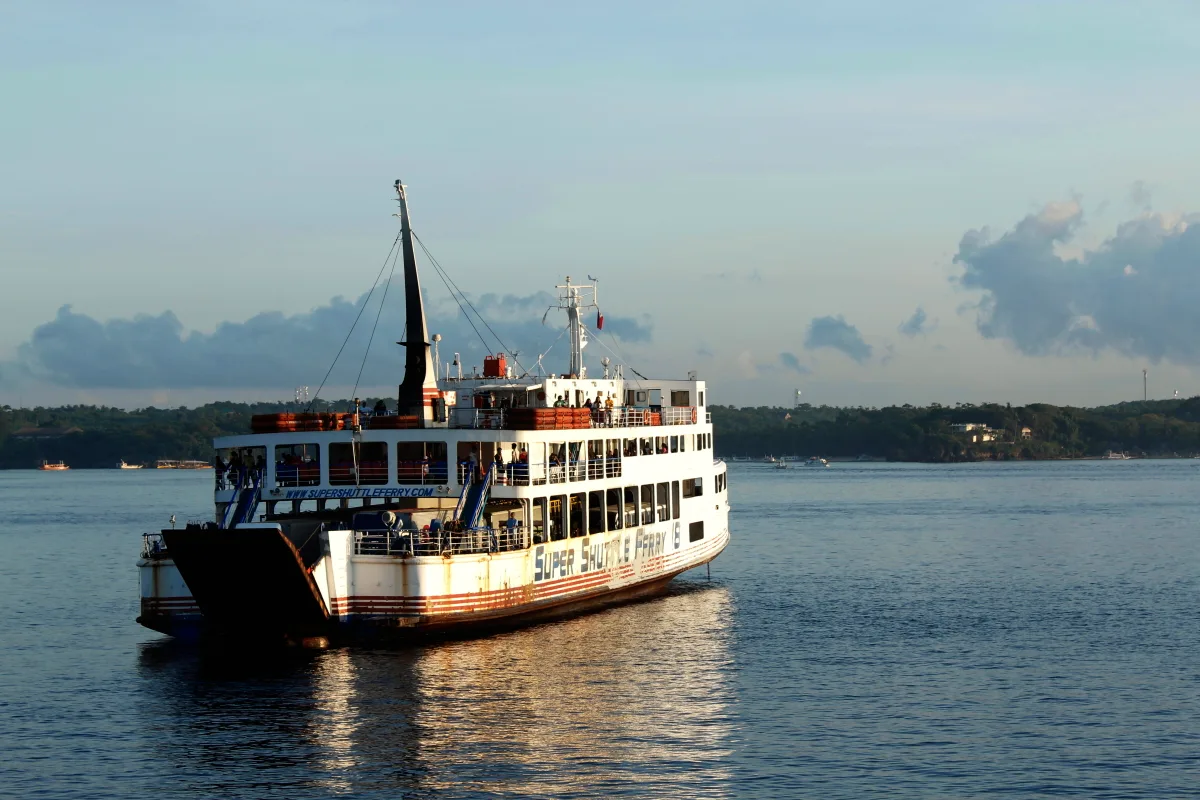
- Cebu to Tagbilaran and Cebu to Ormoc - book online. Fast craft on these routes genuinely sell out on weekends and holidays.
- Coron to El Nido - book ahead in high season, but expect weather cancellations from June to September. Never make it the day before an international flight.
- Batangas to Calapan or Puerto Galera - turn up. Departures are frequent and the counter is faster than any website.
- Iloilo to Bacolod - turn up. Multiple operators, high frequency, short crossing.
- Long-haul RORO on 2GO - book online for a cabin. Deck class can be bought at the pier.
- Small bancas between neighbouring islands - there is nothing to book. Ask at the pier the day before.
The pier process, in the order it actually happens
- Terminal fee booth. A separate cash payment, typically PHP 25 to PHP 100, not included in your ticket.
- Ticket counter or ticket validation, if you booked through a reseller.
- Baggage check and, on larger vessels, a porter who will take your bag whether you asked or not. Agree a tip before handing it over.
- Manifest and boarding. Bring photo ID; the passenger manifest is a Coast Guard requirement, not a formality.
Sixty minutes before departure is enough for a fast craft with an operator ticket. Ninety is right for anything involving a reseller voucher, a vehicle, or a long-haul RORO.
Weather cancellations and how they are announced
The Coast Guard suspends sailings when sea conditions or a storm signal warrant it, and small craft are suspended long before large ones. This is a safety system that works, and it is the reason overloaded vessels are far less common than they were twenty years ago.
The weakness is communication. Cancellations are announced at the pier and on operator social media, often not by email or SMS, and rarely in English first. Both of our cancelled crossings were announced on a Facebook page roughly two hours before departure. Follow the operator's page before travel days in the June-to-September window, and never plan a sea crossing on the day before an international departure.
What most guides get wrong about Philippine ferries
The dominant error is presenting inter-island ferries as a single bookable system, the way European rail is described. There is no unified network, no shared timetable, and no interoperable ticket. There are dozens of independent operators, each with its own website of varying quality, and a lot of routes that exist only as a schedule chalked on a board at the pier.
The second error is publishing schedules as fact. Ferry timetables here are intentions. Departure times shift with tide, sea state, load and vessel maintenance, and a schedule copied into an article in 2024 is actively misleading in 2026. We deliberately do not publish departure times in this guide for that reason - check the operator on the day.
The third: treating a reseller confirmation as a boarding pass. It reads like one. It is not one on most Philippine operators, and the difference is a 40-minute queue you did not budget for. If your reseller voucher says "present at counter for issuance", believe it and arrive early.
Cabin classes on the long-haul RORO
On overnight 2GO sailings the class you book changes the trip more than the route does. Deck class is an open hall of bunks with no lockable storage and constant light and noise; it is cheap and it is fine for a short hop, but not for fourteen hours. Tourist and cabin classes give you a bunk in a smaller room, air conditioning that works, and a door.
If you are taking an overnight crossing, book a cabin. The price difference is usually less than a mid-range hotel room, and you arrive able to function. This is the single upgrade we would not skip, and it is also the one thing that has to be booked online in advance - cabins sell out long before deck class does.
Practical things that make the crossing better
- Air conditioning on fast craft is aggressive. Bring a layer; the crossing is two hours and the cabin is cold.
- Sit at the back on small fast craft in rough weather. The bow slams.
- Take motion sickness medication before boarding, not after you feel it.
- Keep valuables in a small bag on your lap. Hold luggage is stacked and not individually tagged on many vessels.
- Carry cash. Terminal fees, porters and pier food are cash-only almost everywhere.
Frequently asked questions
Should I book Philippine ferries in advance?
For fast craft on Cebu to Tagbilaran, Cebu to Ormoc and Coron to El Nido in high season, yes. For Batangas and Iloilo routes, turn up.
Is a third-party ferry booking valid for boarding?
Often not on its own. In our twelve crossings, all three aggregator bookings needed a counter conversion taking 25 to 40 minutes.
How early should I get to the pier?
Sixty minutes with an operator-issued ticket, 90 minutes with a reseller voucher, a vehicle or a long-haul RORO.
What happens if my ferry is cancelled for weather?
Operators rebook or refund, but the announcement usually comes via the pier or their Facebook page about two hours ahead.
Do I need ID to board a ferry?
Yes. Photo ID is checked against the passenger manifest, which is a Philippine Coast Guard requirement on every vessel.
Can I take a ferry the day before an international flight?
Do not. Between June and September especially, a single suspended sailing can cost you the flight. Fly the connection instead.