The Philippines is not just one of the best diving destinations in Asia — it consistently ranks in the global top three, alongside the Maldives and the Red Sea. The reason is simple: the country sits at the epicenter of the Coral Triangle, the 6-million-square-kilometer swath of tropical ocean that scientists call the Amazon of the seas. Within its waters live more than 600 species of coral, 2,000 species of reef fish, six of the world's seven sea turtle species, and enough marine biodiversity to keep a marine biologist busy for several lifetimes.
Philippines Diving Guide: The 10 Best Dive Sites (For All Levels)
Trip.com
Search on Trip.comHotels in Philippines
Compare live prices via Travelpayouts — targeted for this guide.
Whether you have never strapped on a tank, are a seasoned wreck diver, or you just want to snorkel with the biggest fish in the ocean, the Philippines has a dive site built for you. Here are the ten best — with honest logistics, current prices, and the practical details that actually matter when you're booking a trip.
1. Tubbataha Reef — The Crown Jewel
Location: Sulu Sea, Cagayancillo, Palawan | Season: March to June only | Level: Intermediate to Advanced
If there is one place in the Philippines that every serious diver must see before they die, it is Tubbataha. This UNESCO World Heritage Site sits 150 kilometers from Puerto Princesa in the middle of the Sulu Sea, accessible only by liveaboard — and that inaccessibility is precisely why it is extraordinary. No day-trippers. No resort development. Just pristine atoll reefs rising from 1,000-metre-deep ocean, bathed in nutrient-rich upwellings that attract everything from hammerhead sharks to manta rays to Napoleon wrasse the size of golden retrievers.
Trip.com
See all tours in Philippines on Trip.comWhale shark watching in Philippines
Hand-picked experiences in Philippines — book on Trip.com with instant confirmation.
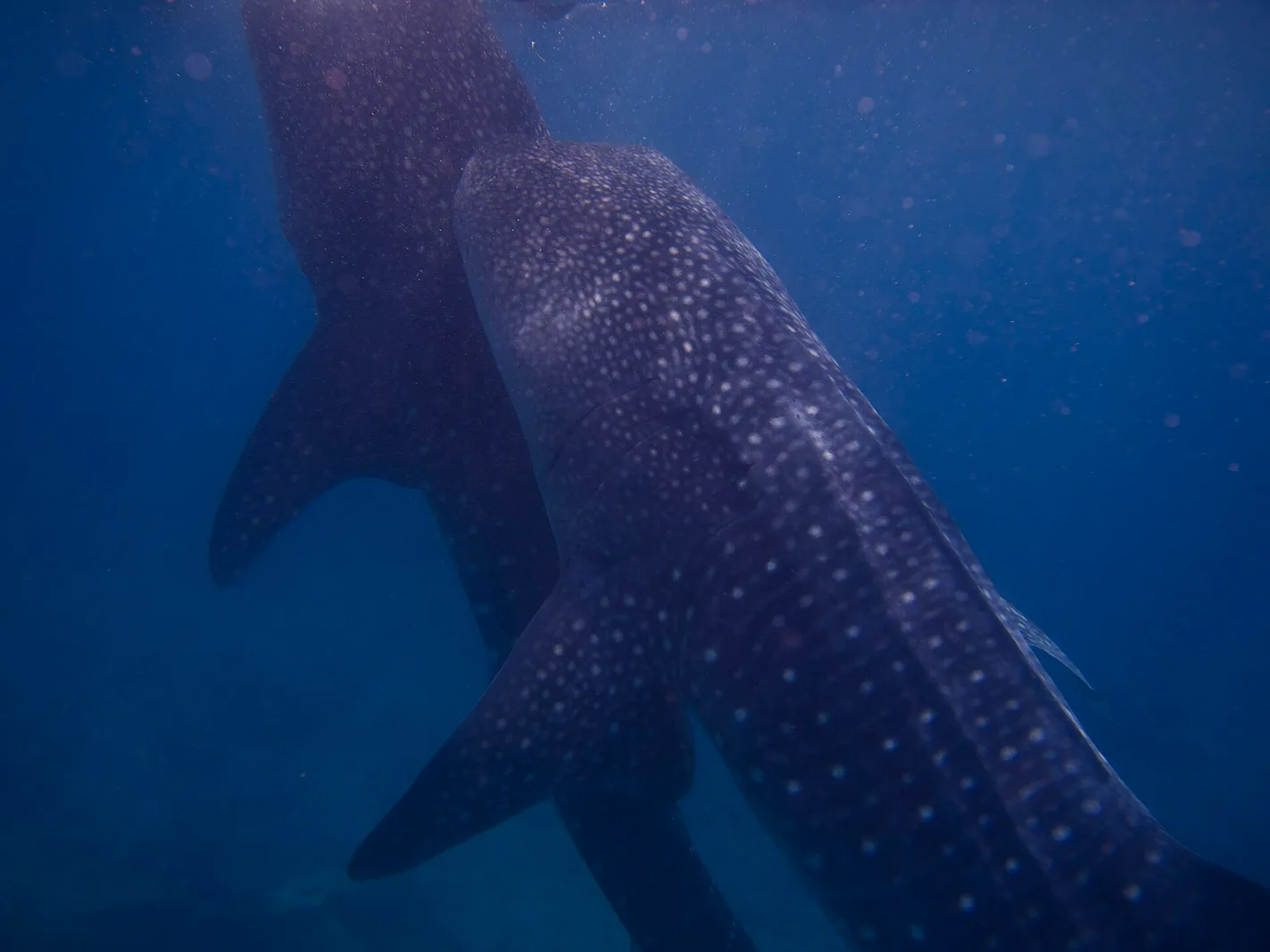
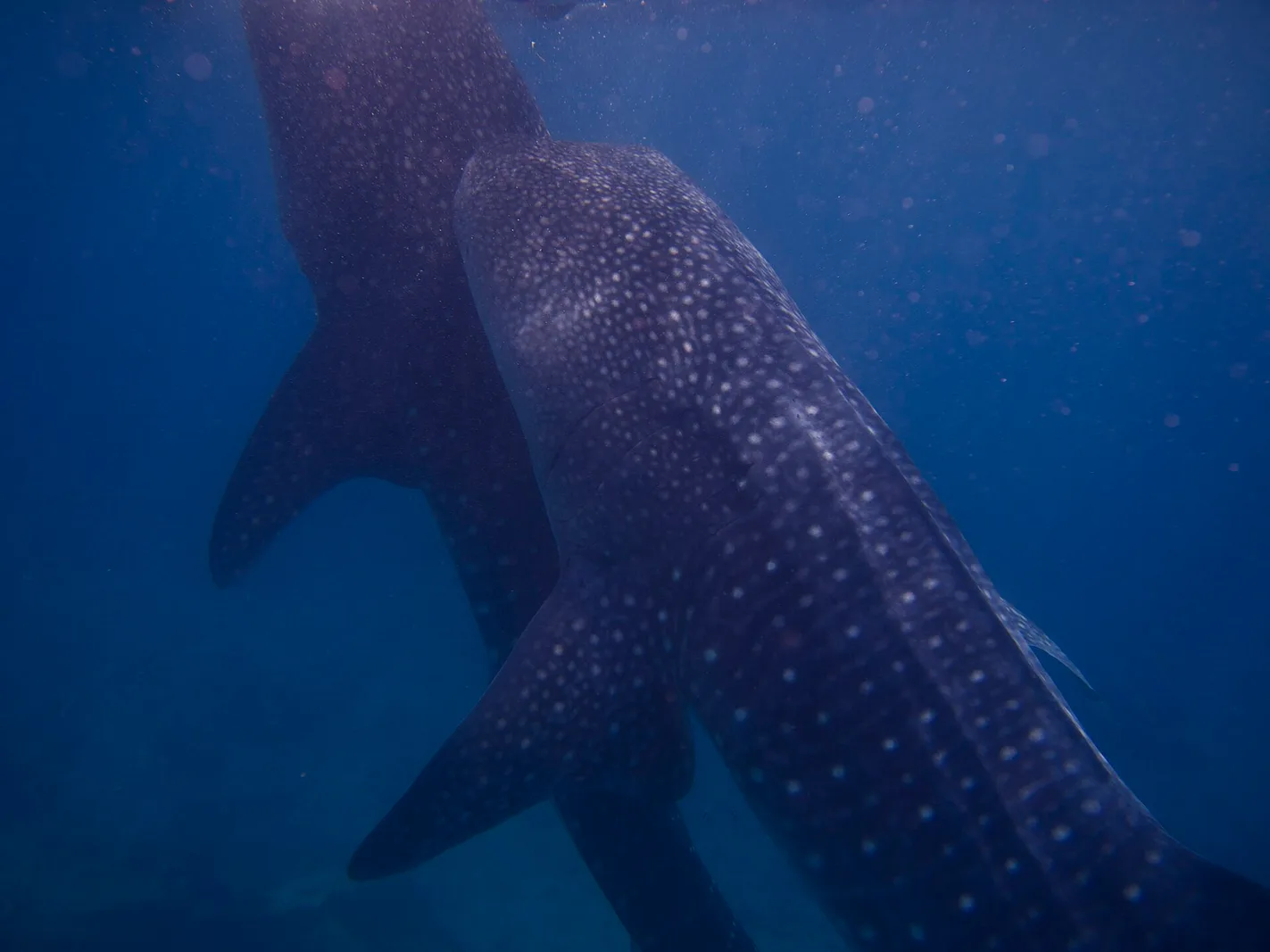
The walls at Tubbataha are legendary among technical divers — sheer coral curtains dropping hundreds of metres, every surface encrusted with gorgonian fans, sea whips, and soft corals in electric colors. Visibility regularly exceeds 30 metres. You will share the water with blacktip and whitetip reef sharks on virtually every dive, and pelagic sightings — whale sharks, thresher sharks, schools of barracuda — are common.
The logistics: Tubbataha is only reachable during the liveaboard season from late March through early June, when the Sulu Sea calms down enough for safe passage. Expect to pay PHP 30,000–50,000 for a 4-day liveaboard package departing from Puerto Princesa, including all dives, meals, and the mandatory Tubbataha Reef Natural Park fee. Book at least four to six months in advance — boats fill up fast, and the season is short. Operators worth researching include M/Y Stella Maris, M/V Resolute, and SY Tiburones.
2. Coron WWII Wrecks — Diving Through History
Location: Coron Bay, Palawan | Season: Year-round (best October–May) | Level: Beginner to Advanced (depending on wreck)
On September 24, 1944, American carrier-based aircraft from Task Force 38 sank a fleet of Japanese military vessels sheltering in Coron Bay. Today those ships — the Okikawa Maru, Olympia Maru, Kogyo Maru, Irako, and nine others — lie between 10 and 40 metres deep, encrusted in 80 years of coral growth and teeming with fish life. It is one of the world's great wreck diving destinations, and unlike many wreck sites, several of the Coron wrecks are shallow enough for Open Water certified divers.
The Okikawa Maru, a 183-metre oil tanker, is the most famous — its superstructure rises to within 2 metres of the surface at low tide, making it accessible to snorkelers. The Irako, a refrigerator ship, sits deeper (42 metres) and rewards advanced divers with intact interiors, engine rooms, and a bridge still recognizable after eight decades. The Kogyo Maru is beloved for its cargo hold full of gas masks and military equipment, hauntingly preserved. Every wreck is a different story.
Day dive prices run PHP 1,800–2,500 per fun dive including equipment rental, boat, and divemaster. Most dive shops in Coron Town offer two-tank wreck packages for PHP 3,000–4,000. The water temperature hovers around 27–29°C year-round, so a 3mm shorty is more than adequate. Recommended shops: Sangat Island Dive Resort, Sea Discoverer, and Rocksteady Dive Center.
3. Apo Island — Sea Turtle Paradise
Location: Off Dauin, Negros Oriental | Season: Year-round (best March–June) | Level: Beginner to Intermediate
Apo Island is a 72-hectare volcanic island that has become one of the Philippines' most celebrated marine sanctuaries — and one of the world's most-cited examples of community-based marine conservation. In the 1980s, local fishermen were persuaded to stop dynamite fishing and designate a no-take zone. Forty years later, the results are staggering: fish biomass inside the sanctuary is more than 25 times higher than in comparable unprotected areas, and green sea turtles have rebounded to the point where you are virtually guaranteed to encounter them on every dive.
The dive sites around Apo — Mamsa Point, Chapel Point, Rock Point East — feature sloping coral gardens, sea fans, and walls with excellent visibility. But the turtles are the star attraction. They are habituated to divers and often cruise past at arm's length. Hawksbill turtles also appear regularly. Macro life is rich: frogfish, nudibranchs, and ghost pipefish are common finds.
Dive prices: PHP 1,200–1,500 per dive, plus a PHP 200 marine sanctuary entrance fee per person (which goes directly to the local community). Day trips from Dauin or Dumaguete are easy to arrange; the boat ride takes 45–60 minutes. Staying overnight on the island at one of the small family-run homestays (PHP 600–1,200/night) is highly recommended — you get to dive before the day-trip crowds arrive.
4. Moalboal Sardine Run — The Wall of Silver
Location: Moalboal, Cebu | Season: Year-round | Level: Beginner
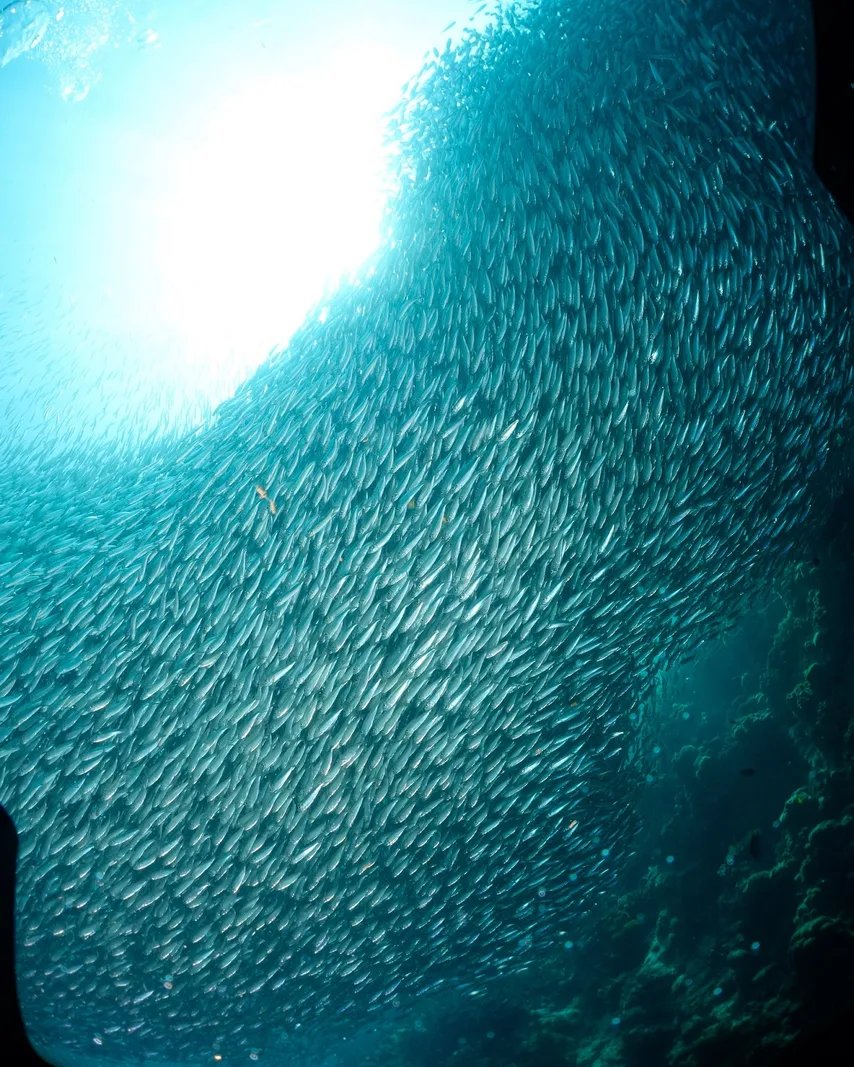
Most sardine runs happen seasonally and require precise timing to witness. In Moalboal, on Cebu's southwestern coast, the sardine run is permanent. A school estimated at several million sardines has taken up residence at Panagsama Beach, moving as a single shimmering entity just offshore. You can wade in from the beach, put your head underwater, and immediately find yourself engulfed in a tornado of silver. It is one of the most accessible marine spectacles in the world.
Beyond the sardines, Moalboal sits on the edge of a dramatic wall dropping to 40+ metres, with hard and soft coral cover that is among the best on Cebu's coast. Thresher sharks are sighted regularly at Pescador Island, a 20-minute boat ride away — particularly on early morning dives before the boat traffic increases. Resident sea turtles browse the shallows at Panagsama Beach itself.
Dive prices: PHP 1,000–1,400 per fun dive, with equipment rental included at most shops. The sardine dive is technically a shore dive and often costs less — some shops charge PHP 500–700 for a guided sardine experience without a boat. Top operators in Moalboal include Ocean Safari and Last Frontier Dive Shop.
5. Malapascua — Thresher Sharks at Dawn
Location: Northern Cebu | Season: Year-round (threshers most reliable October–May) | Level: Intermediate
Malapascua is the only place in the world where thresher sharks can be reliably seen on a daily basis. These deep-water sharks — recognizable by their scythe-like tails, which can equal the length of their entire body — ascend each morning to a seamount called Monad Shoal to be cleaned by wrasse. If you are in the water at first light, at around 25–30 metres depth, and you remain still and patient, threshers will glide past you. It is an otherworldly experience.
The dive requires an early start (boats leave around 5:30 AM) and a certain amount of cold water patience. But Malapascua is not a one-trick destination — the island also has excellent muck diving for macro life (frogfish, flying gurnards, mimic octopus), reliable sightings of mandarin fish at dusk on specific rubble patches, and occasional visits by whale sharks and manta rays at Gato Island.
Dive prices: PHP 1,200–1,500 per dive, with the Monad Shoal thresher dive often priced slightly higher (PHP 1,500–1,800) due to the early boat departure. Equipment rental is included at most shops. Recommended operators include Evolution Diving and Thresher Shark Divers.
6. Oslob Whale Sharks — Snorkeling With Giants
Location: Oslob, Southern Cebu | Season: Year-round (best November–May) | Level: Non-divers welcome
Let us be transparent: the Oslob whale shark interaction is controversial. Local fishermen feed the sharks to keep them present for tourists, which creates dependency and alters natural behavior. Marine biologists and conservation organizations including WWF have raised concerns. That context belongs on the table.
With that said, it remains one of the most staggering wildlife experiences in Southeast Asia — and one of the few on earth where non-divers can participate fully. Whale sharks (butanding) are the largest fish in the ocean, reaching 12 metres and beyond. Swimming alongside one, watching its spotted flank pass just below you as it vacuums up plankton, is genuinely humbling. The experience costs PHP 1,000 for snorkeling (PHP 1,500 with a life jacket), with a strict 30-minute time limit per group. You cannot use fins, flash photography, or touch the sharks. Be there early — the queue forms before 6 AM, and the experience deteriorates as boats multiply through the morning.
If the ethical concerns weigh on you, note that whale sharks can also be encountered in the wild — without feeding — at Southern Leyte (Sogod Bay) and occasionally off Donsol in Sorsogon, where the interaction model is more conservation-focused.
7. Verde Island — Where Biodiversity Records Are Broken
Location: Verde Island Passage, Puerto Galera, Oriental Mindoro | Season: Year-round (best November–June) | Level: Intermediate
The Verde Island Passage — the strait between Luzon and Mindoro that Verde Island sits in — was declared the "center of the center of marine biodiversity" by the California Academy of Sciences. Per unit area, it contains more species of fish and invertebrates than anywhere else on Earth. That is not marketing copy. It is a peer-reviewed scientific finding, and diving here makes the claim feel entirely plausible.
The main dive sites around Verde Island — The Washing Machine, The Drop-Off, Coral Garden — offer a bewildering variety of marine life in a small area. Nudibranchs of extraordinary variety, pygmy seahorses on sea fans, schools of jacks and trevally, and regular visits by eagle rays characterize the diving. Current can be strong at some sites (hence "The Washing Machine"), making this better suited to intermediate divers comfortable in moving water.
Dive prices from Puerto Galera: PHP 1,200–1,600 per fun dive including the boat transfer to Verde Island. Puerto Galera itself has dozens of dive shops along the Sabang and Small La Laguna beach areas. Recommended operators include Action Divers and South Sea Divers.
8. Southern Leyte (Sogod Bay) — Remote and Rewarding
Location: Sogod Bay, Southern Leyte | Season: Year-round for diving; whale sharks October–May | Level: Beginner to Advanced
Southern Leyte is the Philippines' best-kept diving secret. Sogod Bay — a deep, sheltered bay on Leyte's southern coast — hosts an extraordinary range of marine life, including resident populations of whale sharks that visit the bay between October and May. Unlike Oslob, these encounters are unbaited and genuinely wild: boats wait offshore and the sharks surface naturally. Sightings are less guaranteed but far more meaningful.
The diving around Padre Burgos and Liloan features seamounts, walls, and coral gardens with impressive large-animal traffic: whale sharks, thresher sharks (sighted near the seamounts), hammerheads, and large schools of pelagics. Pygmy seahorses and rare nudibranchs reward the macro-focused diver. The infrastructure is simpler than Cebu or Palawan, which keeps prices reasonable and crowds minimal.
Dive prices: PHP 1,000–1,400 per fun dive. Peter's Dive Resort in Padre Burgos is the most established operator and also offers whale shark snorkeling trips during season.
9. Anilao — The Macro Photography Capital of the World
Location: Anilao, Batangas | Season: Year-round (best November–June) | Level: Beginner to Advanced
Anilao is where underwater photography was born in the Philippines — and possibly where some of the greatest macro photographs in diving history have been taken. Just three hours from Manila by road, this small fishing town has become a pilgrimage site for photographers chasing rare and bizarre marine life: flamboyant cuttlefish, mimic octopus, hairy frogfish, mandarin fish, and nudibranch species found almost nowhere else.
The diving is primarily muck and reef — not dramatic walls or massive pelagics — but what it lacks in scale it compensates with extraordinary detail. A single dive in Anilao can produce 20 species of nudibranch. The famous Mandarin Fish Dive at Ligpo Island at dusk, when mandarin fish emerge from the rubble to mate in a blaze of psychedelic color, is worth the trip to Batangas alone.
Dive prices: PHP 800–1,200 per fun dive, making Anilao one of the most affordable dive destinations in the country. Many resorts offer full packages (accommodation + 3 dives/day) from PHP 3,500–5,500/person/day. Top resorts include Aiyanar Beach and Dive Resort, Atmosphere Resorts' Anilao location, and Crystal Blue Resort.
10. El Nido — The Beginner's Paradise
Location: El Nido, Palawan | Season: November to June | Level: Beginner (ideal first dive destination)
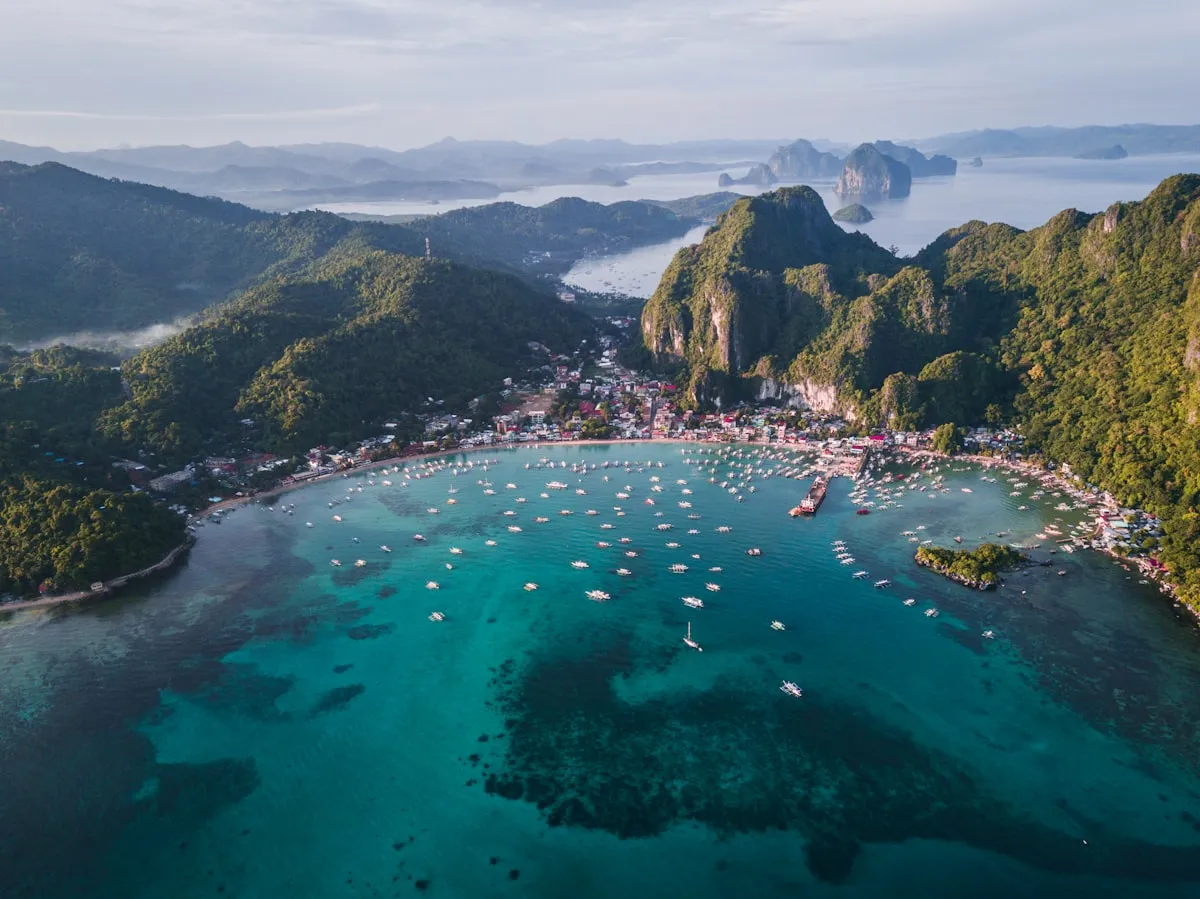
El Nido is globally famous for its limestone karst scenery and island-hopping tours — but its diving is quietly excellent, particularly for beginners. The lagoons and bays formed by the karst islands create calm, sheltered dive sites where novice divers can explore rich coral gardens without current, swell, or the anxiety of more exposed locations. Visibility is good (10–20 metres typically), water temperature is comfortable at 27–30°C, and the marine life — clownfish, reef sharks, Napoleon wrasse, turtles, moray eels — is abundant without being overwhelming.
Popular sites like Dilumacad Island (Helicopter Island), Snake Island, and the reefs around the Bacuit Archipelago offer easy 10–18 metre dives ideal for Open Water certification dives or first-time fun dives. More advanced divers can push out to sites like Tualen Cave, which features a cavern dive accessible to Advanced Open Water divers.
Dive prices: PHP 1,500–2,000 per fun dive, slightly higher than elsewhere in the Philippines due to El Nido's premium pricing. Two-tank packages run PHP 2,800–3,500. Recommended operators include El Nido Resorts' dive center and Submariner Diving Center.
Learn to Dive in the Philippines
The Philippines is one of the best places in the world to earn your PADI Open Water certification. Warm, clear water, abundant marine life, and a well-developed dive industry mean you will log your certification dives in conditions that most divers only dream of. PADI Open Water courses run PHP 12,000–18,000 and take 3–4 days, covering theory (now done online via PADI eLearning before you arrive), pool/confined water skills, and four open water dives.
The best places to learn:
- Puerto Galera (Sabang Beach, Mindoro): Three hours from Manila, excellent visibility, well-established dive schools, and enough post-dive nightlife to make the certification week memorable. Multiple competing operators keep quality high and prices competitive.
- Cebu City / Moalboal: Fly directly to Cebu and transfer to Moalboal (2 hours by bus). Certification here gets you the sardine run as one of your open water dives — a story you will tell for years.
- Coron, Palawan: Learn to dive and then immediately put your new certification to use on the WWII wrecks. Several wrecks are within the 18-metre depth limit of Open Water certification. A more expensive option but an extraordinary experience.
If you already have your Open Water and want to advance, the PADI Advanced Open Water (PHP 8,000–12,000) adds 5 specialty dives — typically including deep (30 metres), navigation, and three electives like wreck, night, or peak performance buoyancy. The Philippines rewards investment in training: every additional certification unlocks access to more extraordinary sites.
Best Time to Dive — Seasonal Guide by Site
| Dive Site | Peak Season | Avoid | Key Wildlife |
|---|---|---|---|
| Tubbataha Reef | March–June | July–February (closed) | Hammerheads, whale sharks, mantas |
| Coron Wrecks | October–May | July–September (rough seas) | WWII wrecks, reef fish, sea turtles |
| Apo Island | Year-round | August (rough conditions) | Green sea turtles, reef sharks |
| Moalboal | Year-round | None (sardines always present) | Sardine run, thresher sharks, turtles |
| Malapascua | October–May | July–September (typhoon risk) | Thresher sharks, mandarin fish, mantas |
| Oslob Whale Sharks | November–May | September–October (rough) | Whale sharks (butanding) |
| Verde Island | November–June | August–September | Nudibranchs, pygmy seahorses, eagle rays |
| Southern Leyte | Oct–May (whale sharks) | None for general diving | Wild whale sharks, threshers, hammerheads |
| Anilao | November–June | July–September (habagat waves) | Nudibranchs, frogfish, mandarin fish |
| El Nido | November–June | July–October (monsoon) | Reef sharks, turtles, Napoleon wrasse |
What to Bring
Most Philippine dive shops provide full equipment rental (BCD, regulator, wetsuit, mask, fins, tank) included in the dive price. However, bringing your own gear pays dividends:
- Your own mask and fins: Rental masks leak and rarely fit perfectly. A well-fitted personal mask costs PHP 2,000–4,000 and eliminates the single most common source of diving frustration. Fins are less critical but personal fins mean you get your preferred blade stiffness.
- Dive log: Keep a paper log (or use an app like DiveBuddy or Subsurface). Many dive shops will stamp and sign it, and some exclusive dive sites (including Tubbataha) check certification cards and dive logs before allowing entry.
- Reef-safe sunscreen: Regular sunscreen containing oxybenzone and octinoxate is toxic to coral and now banned in several Philippine marine sanctuaries. Use mineral sunscreen (zinc oxide or titanium dioxide) or simply wear a rash guard. A 3mm shorty wetsuit doubles as sun protection in the Philippines' warm water.
- Underwater torch/flashlight: Even on day dives, a small torch transforms crevice exploration — revealing sleeping whitetip sharks, lobsters, moray eels, and nudibranchs tucked into the reef. A compact canister light runs PHP 1,500–3,000.
- Surface Marker Buoy (SMB): Mandatory for drift dives and strongly recommended everywhere. Carry your own — it signals your position to the boat during ascent and is a critical safety device.
Dive Insurance: Do Not Skip This
Decompression sickness (DCS, or "the bends") is a genuine risk in diving, and treatment requires a hyperbaric recompression chamber — expensive equipment that is not available at every dive destination. The nearest chamber to some remote Philippine dive sites can be hours away by boat and car. DAN (Divers Alert Network) insurance covers emergency hyperbaric treatment, air evacuation, and dive accident medical expenses for approximately USD 50 per year for the basic plan. For context: a single recompression session can cost USD 1,000–3,000 or more. DAN's annual premium is the best value-for-money insurance purchase in diving, full stop. Enroll at diversalertnetwork.org before your trip.
Frequently Asked Questions
Do I need a certification to dive in the Philippines?
To go scuba diving independently (fun dives with a divemaster), yes — you need at least a PADI Open Water certification or equivalent from another recognized agency (SSI, NAUI, CMAS). Without a certification, you can do a Discover Scuba Diving (DSD) experience, which involves a brief pool orientation and then a shallow (maximum 12 metres) supervised dive with an instructor. DSD experiences cost PHP 1,500–2,500 and are available at virtually every Philippine dive shop. If you enjoy it, your DSD dive can be credited toward your full Open Water certification.
Is diving in the Philippines safe for beginners?
Yes — the Philippines offers some of the best beginner diving conditions in the world. Sites like El Nido, Anilao, and Apo Island have calm, warm, clear water with minimal current on many sites. The dive industry is well-developed and generally professional. As with anywhere, beginner divers should stay within Open Water depth limits (18 metres), dive with a qualified divemaster, and never dive alone. Avoid exposed or current-heavy sites (Verde Island's Washing Machine, Tubbataha) until you have 20+ logged dives and an Advanced certification.
What is the water temperature in Philippine dive sites?
Philippine waters are consistently warm year-round: 26–30°C at surface level, dropping to around 24°C at 30 metres depth and cooler at deeper sites like Tubbataha (thermoclines can bring it to 20°C below 40 metres). A 3mm shorty wetsuit is comfortable for most divers at typical recreational depths. Divers who run cold, or who plan multiple dives per day over a week, often prefer a 3mm full suit. Wetsuits are included in most dive shop equipment rentals.
Can I see whale sharks while diving (not just snorkeling)?
Yes — in several locations. Tubbataha Reef has excellent whale shark encounter rates during liveaboard season (March–June). Southern Leyte's Sogod Bay offers wild (unbaited) whale shark encounters October–May, and SCUBA divers have the advantage of being able to descend deeper and observe the animals feeding without the surface commotion of snorkelers. Donsol in Sorsogon is the original Philippine whale shark destination and uses a snorkeling-only interaction model. The Oslob experience is snorkeling and freediving only — tanks are not permitted during the interaction sessions.
How many dives can I do per day in the Philippines?
Most recreational divers do 2–3 dives per day in the Philippines. Three dives per day is a comfortable sustainable pace that allows sufficient surface interval time between dives to off-gas nitrogen safely. Some dive resorts (particularly in Anilao and Puerto Galera) offer 4-dive days, but this requires careful attention to no-decompression limits, especially on the deepest dives. Night dives are offered as a fourth or fifth dive at many resorts and count toward your daily nitrogen load — factor them in when planning. On liveaboards like Tubbataha trips, expect 4–5 dives per day including a night dive, with the itinerary designed around safe dive profiles.
The Bottom Line
There is no diving country on Earth that offers this combination: extraordinary biodiversity, accessible logistics, year-round warm water, and prices that make a two-week, 30-dive trip genuinely affordable. Whether you're chasing thresher sharks in the pre-dawn darkness off Malapascua, hovering over a ghost ship encrusted with 80 years of coral growth in Coron Bay, or watching a sardine tornado spiral around you off a Moalboal beach — the Philippines delivers moments that stay with divers for the rest of their lives.
Pick your site. Book your liveaboard early for Tubbataha. Get your DAN insurance. Pack reef-safe sunscreen. The Coral Triangle is waiting.

PANA.PH Editorial Team
Philippines travel desk
The PANA.PH travel desk researches, books and re-checks Philippines travel logistics — fares, ferry schedules, government fees and permit rules — and publishes what it can verify.
🏡 Real local stays (book direct)
Hand-picked homestays and guesthouses — book direct, no markup.
Browse all local stays →
🌊 Popular activities (book instantly)
Island hopping, canyoneering, whale sharks — real Klook/GetYourGuide options.
View all activities →