Germans and the Philippines: it is a combination that makes more sense than many Europeans realise. German travellers are known for thorough planning (gruendlich reisen), long holiday allowances (the German minimum of 20 paid vacation days, with most workers taking 28--30), and a genuine appetite for adventure beyond the obvious tourist circuit. The Philippines -- vast, English-speaking, affordable, and breathtakingly beautiful -- ticks every box. And yet it remains significantly underdiscovered by German travellers compared to Thailand, Indonesia, or Vietnam.
Philippinen fur Deutsche: Fluge, Kosten und Reisetipps 2026 | Philippines for Germans
Trip.com
Search on Trip.comHotels in Philippines
Compare live prices via Travelpayouts — targeted for this guide.
This guide covers everything a German traveller needs to know before booking a Philippines trip: flights from Frankfurt, Munich, and Berlin; costs in EUR; what the German government says about travel safety; health insurance realities; and why the Philippines diving scene resonates so deeply with German underwater culture.
Flights from Germany to the Philippines
No airline operates a non-stop service between Germany and Manila (as of 2026). Every route requires at least one connection. Here are the best options from major German airports:
Emirates via Dubai -- From Frankfurt and Munich
The most popular option for German travellers. Emirates operates multiple daily departures from Frankfurt (FRA) and Munich (MUC) to Dubai (DXB), with seamless connections to Manila. Frankfurt--Dubai is approximately 6.5 hours; Dubai--Manila is around 8 hours. Total door-to-door time from Frankfurt to NAIA: roughly 15--16 hours. Fares from EUR 520--900 return depending on season. Book through emirates.com or compare on Google Flights. Emirates also flies to Cebu -- worth checking if Cebu is your entry point.
Trip.com
See all tours in Philippines on Trip.comTours & activities in Philippines
Hand-picked experiences in Philippines — book on Trip.com with instant confirmation.
Lufthansa + Cathay Pacific via Hong Kong
A natural German option: fly Lufthansa from Frankfurt, Munich, or Berlin (BER) to Hong Kong, then connect on Cathay Pacific to Manila, Cebu, or Clark (Angeles City). This routing works particularly well if you want to add a Hong Kong city break to your itinerary. Total journey time: 15--17 hours. Fares: EUR 550--900 return. The advantage is booking as a single Lufthansa-coded ticket through LH.com, which gives you full Lufthansa Miles & More points accrual and one combined checked baggage allowance.
Turkish Airlines via Istanbul
Turkish Airlines serves a remarkable range of German cities -- Frankfurt, Munich, Berlin, Dusseldorf, Hamburg, Cologne, Stuttgart, Hanover, Bremen, Nuremberg -- making it the best option for travellers not based near Frankfurt or Munich. Istanbul's new airport (IST) is large and modern. Total journey time: 15--17 hours. Fares are often the cheapest available: EUR 480--750 return. Particularly good for Germany-based travellers looking for the best price.
Qatar Airways via Doha
Qatar Airways flies from Frankfurt, Munich, Berlin, and Hamburg to Doha, connecting to Manila. Doha's Hamad International Airport is consistently rated one of the world's best airports -- pleasant for layovers. Total journey: 14--16 hours. Fares: EUR 500--850 return. Qatar's Business Class (QSuite) is extraordinary if you want to treat yourself -- prices are still significantly below comparable European premium products.
Booking Tips for Germans
Compare on Google Flights, Kayak.de, or Skyscanner.de. Set price alerts 3--4 months before your intended travel date. The cheapest months for Germans to fly to Manila are typically September--October (outside German school holidays) and May (after Easter). Flying out on a Tuesday or Wednesday saves EUR 50--150 versus weekend departures. Avoid peak German holiday periods (Sommerferien, Weihnachtsferien, Osterferien) for the best fares -- these overlap with Philippines high season, creating a double pricing pressure.
Auswartiges Amt (German Foreign Office) and Travel Safety
The German Federal Foreign Office (Auswartiges Amt -- auswaertiges-amt.de) maintains travel advisories (Reise- und Sicherheitshinweise) for the Philippines. As of 2026, the general advisory for the Philippines is partial travel warning (Teilreisewarnung) -- meaning specific regions carry warnings (Mindanao conflict areas, Sulu archipelago, Marawi vicinity) while the main tourist destinations are considered safe for travel.
Areas the German government advises against visiting:
- Western and Central Mindanao (including Marawi City and surrounding areas)
- Sulu Archipelago and Tawi-Tawi Province
- Zamboanga Peninsula (advisory to exercise high caution)
Areas the Auswartiges Amt considers safe for tourists (no specific warning):
- Manila and Metro Manila (general urban caution advised, as in any major city)
- Palawan (El Nido, Coron, Puerto Princesa)
- Cebu, Bohol, Boracay, Siargao, Davao City
- All main tourist circuits
The practical reality: millions of tourists visit the Philippines every year without incident. The conflict areas in Mindanao are geographically far from the tourism circuit and are not places tourists visit under normal circumstances. Standard urban street sense applies in Manila (watch bags, avoid poorly lit areas at night, use Grab app rather than random taxis). The beach and island areas where German tourists spend 95% of their time are genuinely safe.
Health Insurance: Your GKV Does Not Cover the Philippines
This is the single most important practical point for German travellers: your German statutory health insurance (gesetzliche Krankenversicherung / GKV) provides zero coverage outside the EU/EEA and countries with bilateral social security agreements. The Philippines has no such agreement with Germany. Privately insured Germans (PKV) should check their policy -- most PKV policies include worldwide emergency coverage but with annual limits that may be insufficient for evacuation costs.
Buy Auslandsreisekrankenversicherung (foreign travel health insurance) before departure. Top options for German travellers:
- ERGO Reiseversicherung -- strong brand recognition in Germany, good online booking
- Europaeische Reiseversicherung (ERV) -- widely available, covers diving if declared
- HanseMerkur -- popular for long-trip annual policies
- Allianz Travel -- comprehensive, available at many German banks and travel agencies
- World Nomads -- popular among German adventure travellers; explicitly covers scuba diving, surfing, and motorcycling
- DAN Europe (Divers Alert Network) -- essential for serious divers; covers recompression chamber treatment, which standard policies may exclude
A 3-week Auslandsreisekrankenversicherung covering the Philippines costs approximately EUR 25--60 depending on coverage level. Annual policies (Jahres-Reisekrankenversicherung) covering multiple trips are available from EUR 50--100/year and are excellent value if you travel more than once a year.
The German Diving Tradition in the Philippines
Germany has one of the strongest technical and recreational diving cultures in Europe. German diving federations (VDST, NAUI Germany, DAN Europe) are well established, and German divers are known internationally for their methodical, safety-conscious approach to the sport -- exactly the disposition that suits Philippine diving conditions.
The Philippines has some of the world's finest dive sites:
- Tubbataha Reef (Palawan): UNESCO World Heritage Site, accessible only by liveaboard. Pelagic action (hammerheads, whale sharks, manta rays), pristine walls. German liveaboard operators run dedicated Tubbataha expeditions March--June.
- Coron (Palawan): WWII Japanese fleet wreck diving. Irako, Okikawa Maru, Akitsushima -- massive wrecks in 25--40m, some penetrable. A German diver's paradise. Water visibility 15--25m.
- Malapascua (Cebu): Thresher shark dives at Monad Shoal. Early morning dives in 20--30m to see these elegant pelagic creatures. One of only a handful of reliable thresher shark dive sites on Earth.
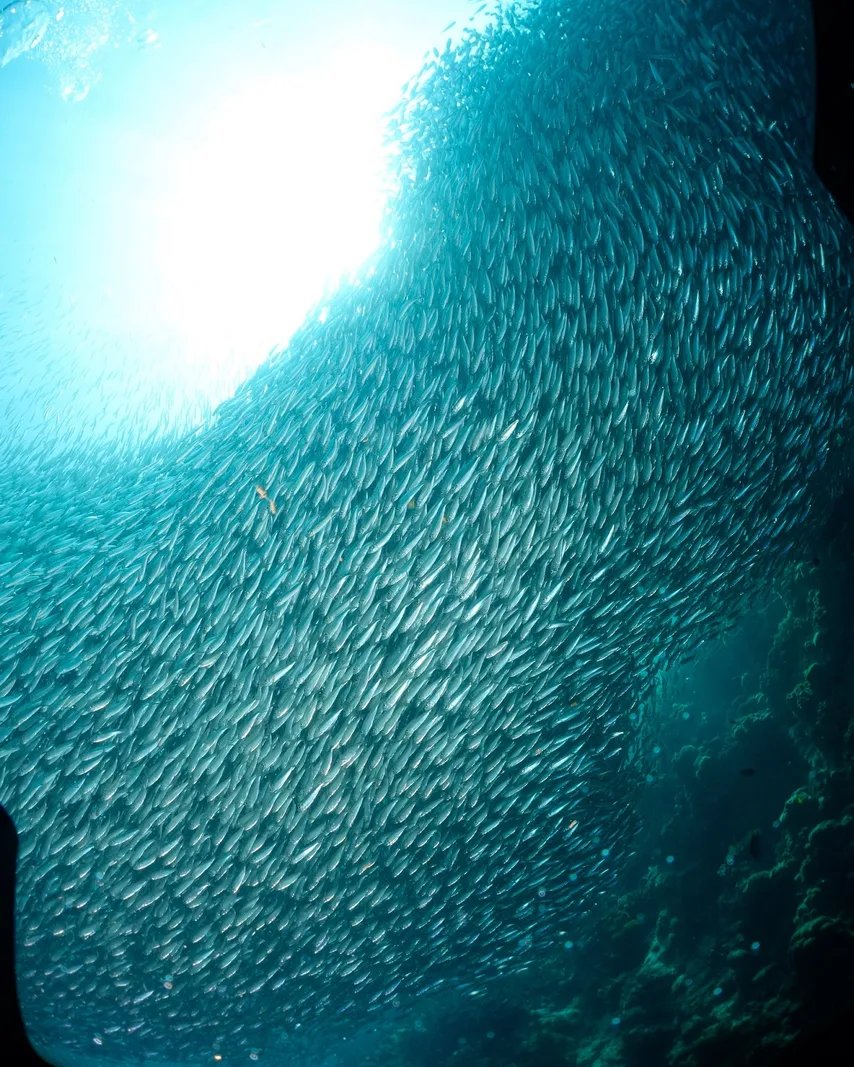
- Moalboal (Cebu): Sardine run -- billions of sardines forming hypnotic bait balls, with tuna, jacks, and dolphins hunting through them. One of the most spectacular marine spectacles in Asia.
- Apo Island (Negros Oriental): Marine sanctuary with extraordinary turtle density and hard coral cover -- one of the best-managed reef systems in Southeast Asia.
Most PADI/SSI certified German divers will find their qualifications fully accepted across Philippines dive operators. Technical diving (tec diving) operators -- primarily in Coron and around Manila for wreck penetration -- are increasingly common and professionally run.
Siargao vs Bali: The German Traveller's Dilemma
Among German travellers in their 20s and 30s, a recurring debate has emerged: Bali or Siargao? Both are surf-and-lifestyle island destinations. Here is an honest comparison:
- Price: Siargao wins clearly. Daily costs in Siargao run EUR 25--60 vs EUR 35--80+ in Bali Canggu-area. Beer, food, and accommodation are all significantly cheaper.
- Surf: Cloud 9 in Siargao is a world-class right-hand reef break that Bali cannot match for sheer quality (though Bali has more consistent beginner-friendly spots and more variety overall).
- Crowds: Siargao is dramatically less crowded than Bali's southern tourist zone, though this gap is narrowing fast.
- Language: Philippines wins emphatically -- everyone speaks English. In Bali, English is common in tourist areas but less universal outside them.
- Visa: Similar for Germans -- both visa-free or easy-on-arrival. Philippines allows 30 days, extendable; Bali/Indonesia 30 days, also extendable.
- Flight connection: Bali is slightly easier to reach from Germany; Siargao requires Manila connection + domestic flight (about 2 hours extra total travel time).
Verdict for most German travellers: if surfing and budget are priorities, Siargao wins. If you want more infrastructure, established yoga-and-brunch scene, and easier logistics, Bali still has advantages. The Philippines overall offers far more diversity -- 7,641 islands versus one Bali.
German Community in the Philippines
There is a small but established German expat community in Manila, particularly in the Makati and BGC (Bonifacio Global City) districts. Manila has several German-run or German-friendly restaurants and establishments -- look for the occasional currywurst or schnitzel in expat areas, though the selection cannot compare to what you find in Thailand's German-heavy beach towns. The German Club Manila (Deutsches Haus Manila) has existed for over a century -- one of the oldest European social clubs in Asia. Boracay has a small German expat and long-stay visitor community, particularly older German retirees drawn by the warm climate and cost of living.
Practical German-Specific Details
German credit cards: German EC/Girocard (Maestro-network) is increasingly difficult to use internationally as the Maestro network winds down. Bring a Visa or Mastercard credit card instead -- or get a Revolut or N26 card before departure (both popular with German digital-native travellers and excellent for international spending). Notify your bank before travel regardless of which card you use.
German plugs to Philippine outlets: German Type C/F plugs (Schuko) need a Type C to Type A/B adapter. Available at Saturn, MediaMarkt, Amazon.de for EUR 5--15. Do not leave without one.
ADAC travel insurance: ADAC (the German automobile club) offers travel insurance products including ADAC Auslandsschutzbrief. Check coverage extent for the Philippines -- medical emergency and repatriation coverage is the critical component.
Frequently Asked Questions
Brauche ich ein Visum fur die Philippinen als Deutscher? (Do Germans need a visa for the Philippines?)
Nein -- no visa required. German passport holders enter the Philippines visa-free for 30 days on arrival, extendable. You need a valid passport (6 months validity beyond exit date from Philippines), a return or onward ticket, and a completed e-Arrival Card (etravel.gov.ph) before landing. The e-Arrival Card is mandatory and takes about 5 minutes to fill in online.
Is the Philippines safe for German tourists?
Yes, in the main tourist areas. The Auswartiges Amt issues a partial travel warning (Teilreisewarnung) for specific conflict areas in Mindanao and the Sulu archipelago -- these are far from any standard tourist itinerary. The main destinations (Manila, Palawan, Cebu, Boracay, Siargao, Bohol, Davao City) are safe for tourists. Apply the same common sense you would in any major city: be aware of your surroundings, use Grab app for taxis, keep valuables secured. Register your trip with the German Embassy in Manila at auswaertiges-amt.de for emergency notification capability.
Welche Fluggesellschaft ist am besten von Deutschland auf die Philippinen? (Which airline is best from Germany to the Philippines?)
It depends on your priority. For comfort and service, Emirates (via Dubai from Frankfurt or Munich) and Qatar Airways (via Doha) are the top choices. For price, Turkish Airlines often wins -- it serves the most German cities and frequently has the lowest fares (EUR 480--750 return). For frequent flyers collecting Miles and More points, Lufthansa via Hong Kong makes sense. Use Google Flights or Kayak.de to compare current prices from your specific departure airport.
Does my German health insurance cover the Philippines?
For GKV (gesetzliche Krankenversicherung / statutory health insurance): No. Coverage stops at the EEA border. For PKV (private health insurance): possibly, but check your policy for worldwide emergency limits and whether medical evacuation to Germany is included. Regardless of your insurance type, buy a separate Auslandsreisekrankenversicherung before departure. It costs EUR 25--60 for 3 weeks and is non-negotiable for a destination this far from home.
What is the EUR to PHP exchange rate and is the Philippines cheap for Germans?
In 2026, 1 EUR = approximately 62--65 PHP. Yes, the Philippines is very affordable for German travellers. A mid-range couple can travel comfortably on EUR 100--150/day including accommodation, meals, and activities. Budget travellers can manage EUR 30--50/day per person. A San Miguel beer costs under EUR 1. A full scuba diving day with two boat dives costs EUR 25--45. An island-hopping tour runs EUR 15--30 per person. By German standards, everything feels extraordinarily good value.

PANA.PH Editorial Team
Philippines travel desk
The PANA.PH travel desk researches, books and re-checks Philippines travel logistics — fares, ferry schedules, government fees and permit rules — and publishes what it can verify.
🏡 Real local stays (book direct)
Hand-picked homestays and guesthouses — book direct, no markup.
Browse all local stays →
🌊 Popular activities (book instantly)
Island hopping, canyoneering, whale sharks — real Klook/GetYourGuide options.
View all activities →