There are taller waterfalls in the Philippines. There are wider ones, and ones harder to reach. But there is only one where the journey to see it is the attraction itself. Pagsanjan Falls (officially Cavinti Falls, though everyone still calls it Pagsanjan) is reached by a two-hour upstream paddle through 14 rapids in a wooden canoe, crewed by two boatmen who have spent their lives reading this river. Then you ride back down. That return trip, shooting the rapids at speed, is one of the oldest adventure experiences in the country and still one of the best.

Pagsanjan Falls: Shooting the Rapids in a Wooden Canoe
Trip.com
Search on Trip.comHotels in Pagsanjan Falls
Compare live prices via Travelpayouts — targeted for this guide.
The Name Confusion
First, a clarification. The waterfall is officially named Cavinti Falls because it is located in the municipality of Cavinti, Laguna. The name Pagsanjan Falls comes from the town of Pagsanjan, which is the traditional jump-off point for the boat ride. In 2026, both names are used interchangeably by operators and tourists. The government uses Cavinti Falls in official documents. Do not let this confuse you when booking. If a tour says Pagsanjan Falls, it is the same place.
How the Rapids Shooting Works
You board a wooden banca (a narrow canoe-style boat) with two boatmen. One stands at the bow with a pole, the other sits at the stern with a paddle. You sit in the middle. The boatmen navigate the Pagsanjan River upstream, pushing off rocks, dodging boulders, and pulling the boat through shallow sections. There are 14 named rapids between the town and the falls. The upstream trip takes about 1.5 to 2 hours.
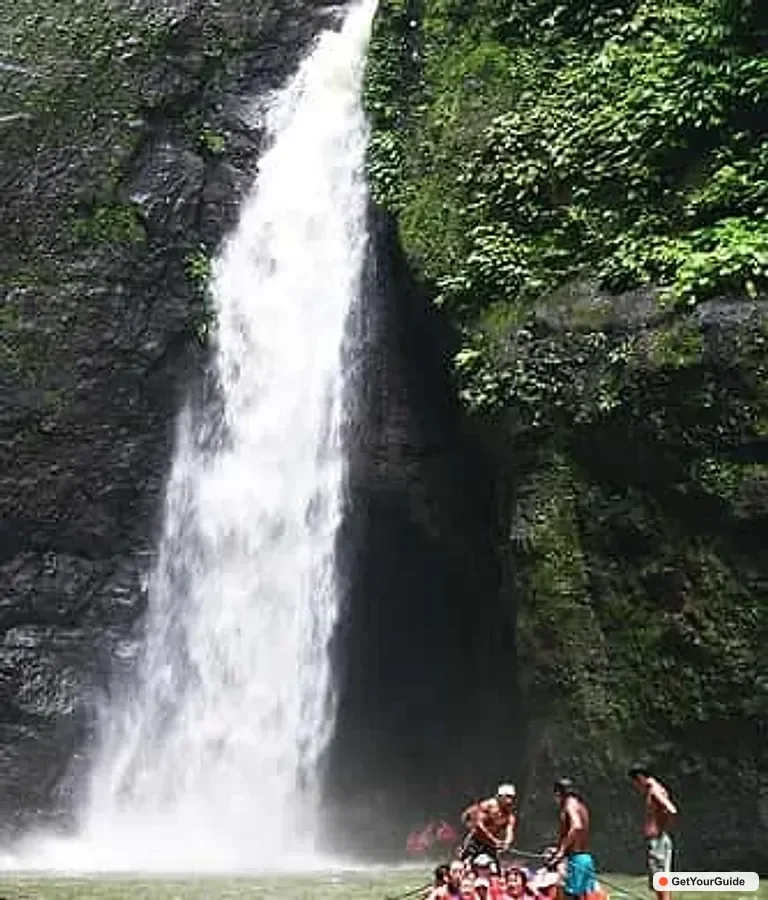
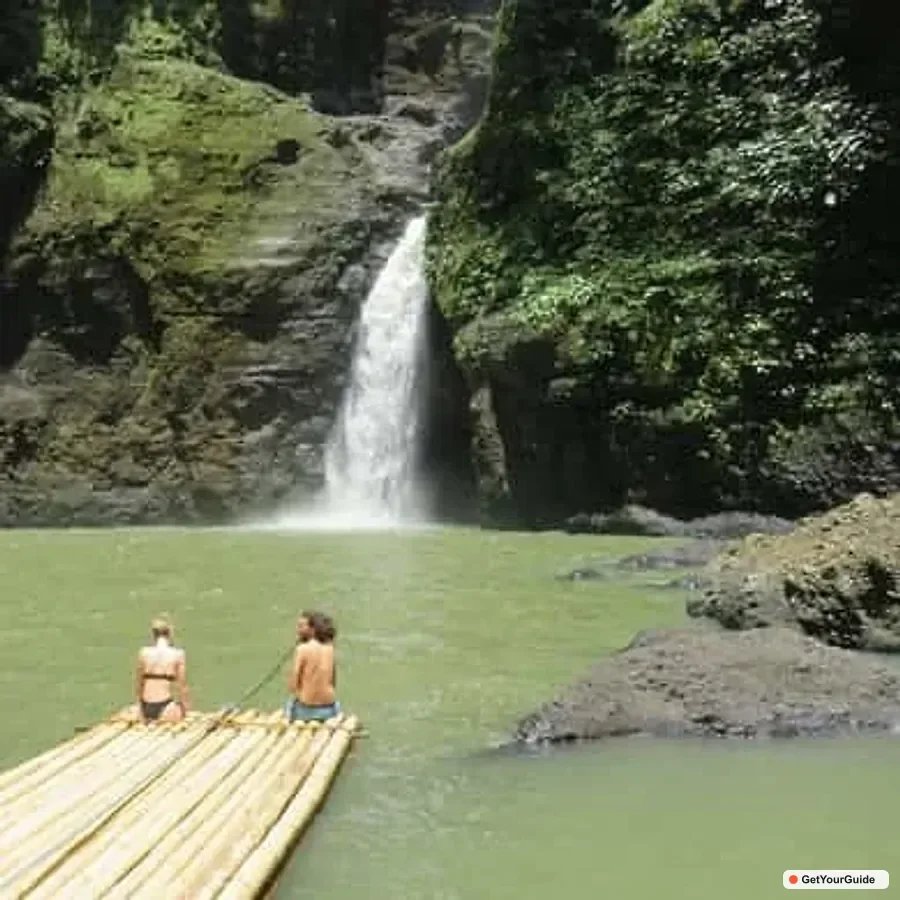
At the falls, you transfer to a bamboo raft that pulls you under the cascading water. This is the "shower" part of the experience. The water drops from about 60 meters, and the force is significant. You will get fully soaked. After the falls, you board the banca again and ride downstream. This is the "shooting the rapids" part. The boatmen ride the current, steering between rocks at speed. It is fast, wet, and loud. The downstream trip takes about 45 minutes to 1 hour.
Trip.com
See all tours in Pagsanjan Falls on Trip.comTours & activities in Pagsanjan Falls
Hand-picked experiences in Pagsanjan Falls — book on Trip.com with instant confirmation.

What It Costs in 2026
Pagsanjan Falls has a regulated pricing structure set by the local tourism office and the boatmen association. Here is what you should expect:
- Standard boat ride (upstream and downstream, 2 persons): PHP 1,400 to PHP 2,800 per person depending on the package
- Environmental fee: PHP 50 per person
- Bamboo raft at the falls: PHP 50 to PHP 100 per person (optional but recommended)
- Shower and changing facility: PHP 20 to PHP 50
- Parking at the jump-off: PHP 50 to PHP 100
The wide price range for the boat ride reflects whether you book directly at the Pagsanjan Tourism Center or through a hotel or travel agency. Booking directly is cheaper. A package that includes transfers from Manila, lunch, and the boat ride can run PHP 3,500 to PHP 5,000 per person.
Tipping the boatmen is customary. They work hard. A tip of PHP 200 to PHP 500 per boat is standard for good service. The boatmen split their earnings with the association, so the tip is a meaningful part of their income.
How to Get to Pagsanjan
Pagsanjan is in Laguna, about 100 kilometers south of Manila. The drive takes 2 to 3 hours depending on traffic. The most common route is via SLEX to Calamba, then the national road through Los Banos, Calauan, and Lumban to Pagsanjan.
If you do not have a car, take a bus bound for Sta. Cruz, Laguna from Buendia or Cubao. The fare is PHP 130 to PHP 180. From Sta. Cruz, take a jeepney to Pagsanjan for PHP 30 to PHP 50. The tourism office and boat jump-off are near the town center, walking distance from the jeepney terminal.
If you are coming from Calamba or Los Banos, you can also take a jeepney to Pagsanjan via Lumban. Travel time is about 1 hour from Calamba.
What to Expect on the River
The Pagsanjan River is not a wild whitewater river. The rapids are shallow and technical, not big and violent. The skill is in navigation, not in surviving huge waves. That said, you will get wet. Water splashes into the boat regularly, especially on the downstream run. Wear clothes you do not mind soaking.
The boatmen are called "bangkeros" and they are highly trained. Most come from families that have worked the river for generations. They know every rock and every current. Listen to their instructions. When they tell you to duck, duck. When they tell you to lean, lean. The banca is narrow and can tip if weight shifts badly.
You will pass through a gorge with limestone walls covered in vegetation. The scenery alone is worth the trip. There are small waterfalls feeding into the river from the cliffs, and the boatmen will point them out.
At the Falls
When you arrive at the main falls, there is a small pool where the bancas dock. You transfer to a bamboo raft manned by a separate crew. The raft pulls you through the pool and directly under the waterfall. You can stay under the cascade for a few seconds or longer, depending on your tolerance for cold water hitting your head at speed.
Behind the waterfall is a cave called Devil's Cave. The raft can take you inside briefly. The cave is small and dark, and the sound of the water is deafening. It is a quick stop, not a long exploration.
After the falls, there is time to swim in the pool before heading back. The water is cold and deep in places. Wear a life vest if you are not a confident swimmer.
When to Go
The best time is the dry season, November to May. During this period the river level is manageable and the water is clearer. March to May is peak season, so expect crowds and higher package prices.
The rainy season from June to October changes the river dramatically. Water levels rise, the current gets stronger, and the rapids become more intense. Some operators still run trips, but they may skip certain rapids or cancel if the river is too high. The falls are more powerful after rain, but the ride is rougher and riskier. If you go during this period, check conditions the morning of your trip.
What to Bring
- Quick-dry clothing (you will be soaked)
- Water shoes or sandals with straps - no flip-flops, they will be lost
- Waterproof phone case or dry bag
- Change of clothes and towel (left in the changing area or your vehicle)
- Sunscreen applied before departure, as the upstream ride is in the sun
- Cash for fees, raft, and tips
Do not bring valuables on the boat. There is no secure storage on the banca. Leave wallets and electronics in your car or at the tourism office if they offer storage.
Who Should Not Do This
The rapids shooting is not extreme, but it is not for everyone. Avoid it if you:
- Have back or neck problems (the boat ride is bumpy)
- Cannot swim and are anxious about water
- Are pregnant
- Have very young children under 5 (the ride is jarring)
- Have mobility issues that prevent sitting in a narrow canoe
For visitors who want to see the falls without the rapids, there is an alternative: a hike from the town of Cavinti. This involves a descent of over 600 steps and is a different experience entirely. Ask at the Cavinti Tourism Office for details.
The Town of Pagsanjan
The town itself is worth a short walk. Pagsanjan has a Spanish colonial church, the Pagsanjan Arch (a stone gate built in 1958 to honor returning war veterans), and a riverside promenade. There are small restaurants along the river serving Laguna specialties like buko pie, espasol, and fried itik. If you have time after the boat ride, eat lunch in town before heading back to Manila.
Plan With PANA
Make the most of your Laguna trip:
Frequently Asked Questions
Is Pagsanjan Falls the same as Cavinti Falls?
Yes. The waterfall is officially named Cavinti Falls because it is located in the municipality of Cavinti. The name Pagsanjan Falls comes from the town of Pagsanjan, the traditional jump-off point. Both names refer to the same waterfall.
How long is the boat ride?
The upstream paddle takes 1.5 to 2 hours. The downstream run takes 45 minutes to 1 hour. Add 30 to 45 minutes at the falls for swimming and the bamboo raft. Total time on the water is about 3 to 4 hours.
Do I need to know how to swim?
No, but you should be comfortable in water. Life vests are available. The boat can be tippy, and you will get wet. If you are afraid of water, this may not be the right activity.
Can children join the rapids shooting?
Children 5 and older can usually join. The ride is bumpy but not dangerous with experienced boatmen. Check with the operator about age limits, and always ensure children wear life vests.
What happens if it rains during the trip?
Light rain is fine and the trip continues. Heavy rain can raise the river level and make the rapids unsafe. Operators monitor conditions and will cancel or cut short a trip if the river is too high. You can reschedule or get a partial refund depending on the operator.
Sources
Sources
Primary references for the figures and rules in this guide. Fees and schedules change — check the source before you travel.

PANA.PH Luzon Desk
Luzon travel logistics — Manila, Baguio and North Luzon
The Luzon Desk of the PANA.PH travel desk: it maintains and re-checks the luzon travel logistics — manila, baguio and north luzon data behind the site's guides — operator price lists, official fee schedules and posted timetables — and publishes what it can verify.
🏡 Real local stays (book direct)
Hand-picked homestays and guesthouses — book direct, no markup.
Browse all local stays →
🌊 Popular activities (book instantly)
Island hopping, canyoneering, whale sharks — real Klook/GetYourGuide options.
View all activities →