Few single-day itineraries in the Philippines pack as much natural spectacle into one route as this south Cebu circuit. Starting before dawn in Cebu City or Mactan, you travel roughly 180 kilometres down the island's southwestern coast to three completely different ecosystems - a sheltered bay where the world's largest fish surfaces at sunrise, a limestone canyon carved by a glacier-blue freshwater river, and an open reef just off Moalboal town where millions of sardines swirl in a tight, shimmering column that draws sea turtles and thresher sharks alike. The geography alone makes this possible: Oslob, Badian, and Moalboal lie roughly in sequence along the Cebu West Coast Road, so the route flows south to north on the return leg without backtracking.
Trip.com
Hotels in Philippines
Compare live prices via Travelpayouts — targeted for this guide.
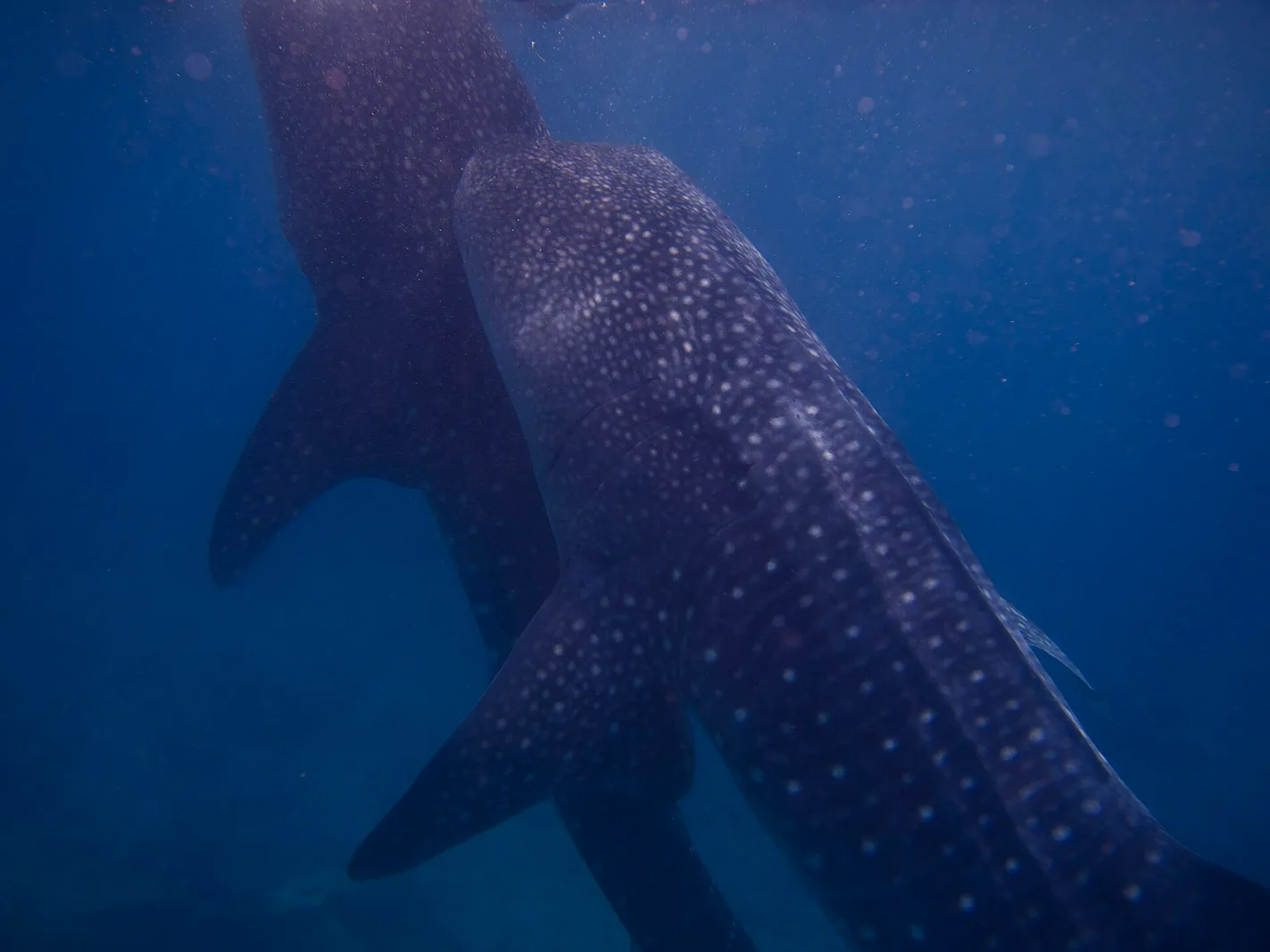
The day begins in the barangay of Tan-awan in Oslob municipality, roughly 120 kilometres south of Cebu City. Local fisherfolk here have fed butanding - whale sharks, Rhincodon typus - for over a decade, and the gentle giants arrive in the shallows before sunrise, hovering just metres from a floating bamboo platform in water rarely deeper than six metres. You enter the water with a certified guide; no touching, no flash photography, no fins - these are the rules enforced on-site by accredited boatmen to minimise stress on the animals.
Whale sharks are filter feeders, not predators. The ones in Oslob are typically juvenile males, ranging from four to eight metres in length, and their spotted grey-blue skin catches the early morning light in a way that stops conversation entirely. The permitted time in the water is approximately 30 minutes, during which you can observe the sharks feeding, swimming in slow arcs, and occasionally surfacing to vent through their enormous gills. Visibility is clearest in the first hour after dawn, before boat traffic stirs the sediment, which is one reason an early start from Cebu City is essential.
Oslob sits along the southeastern tip of Cebu island, sheltered from Pacific swells by Negros Oriental directly across the Tanaon Strait. The bay's warmth - sea surface temperatures hover around 27 to 29 degrees Celsius year-round - and the reliable supply of krill-rich water drawn up by coastal upwelling make the area a natural aggregation site even without supplemental feeding.
Trip.com
Whale shark watching in Philippines
Hand-picked experiences in Philippines — book on Trip.com with instant confirmation.
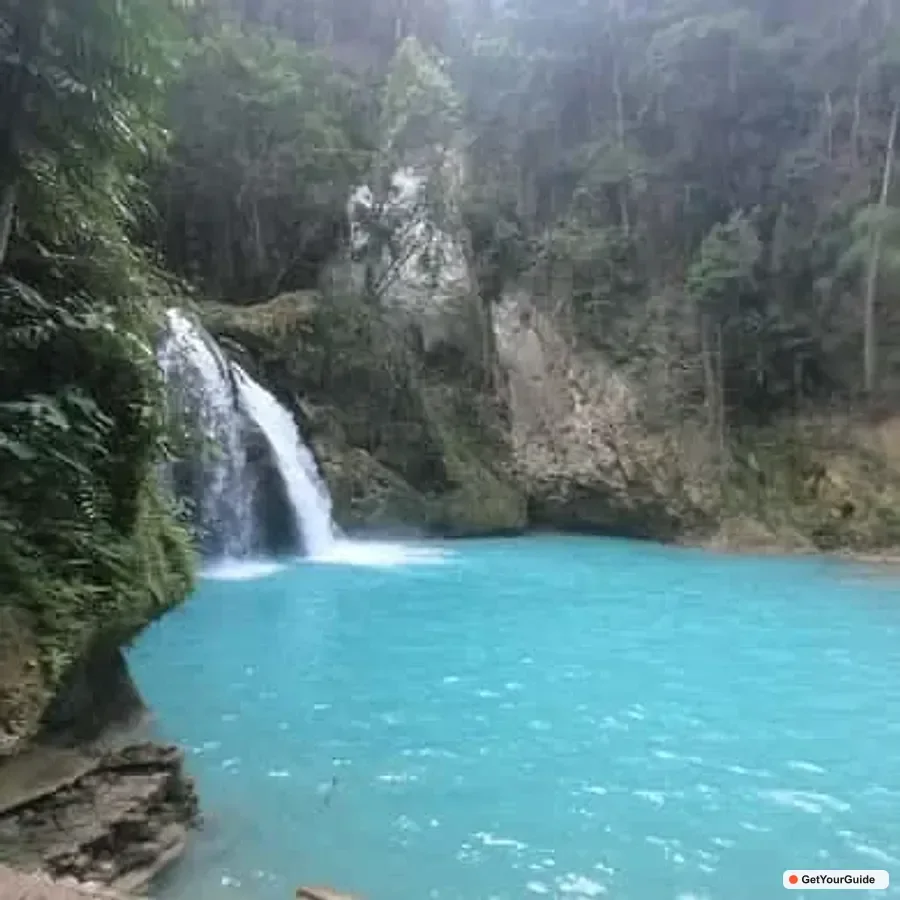
From Oslob the convoy heads north along the coast road into Badian municipality, where the Matutinao River drains the interior limestone highlands of southern Cebu before plunging over a series of travertine ledges to form Kawasan Falls. The falls are genuinely three-tiered: the lowest and most visited level is the largest, with a main curtain that drops around 40 metres into a wide, jade-green pool. The water's extraordinary colour comes from dissolved calcium carbonate in the limestone, which scatters short-wavelength light and tints the river an almost artificial turquoise.
The canyoneering route traces approximately three kilometres of the upper Matutinao canyon, wading chest-deep through narrow gorges, climbing over boulders smoothed by millennia of flood events, and descending via cliff jumps or rope-assisted rappels into pools of varying depth. Guides assess each participant's comfort level at every jump point; lower entry routes exist at each stage for those who prefer to wade or swim rather than leap. The canyon walls in places rise ten to fifteen metres on either side, and the air temperature drops noticeably in the shade, making the experience refreshing even in the hottest months.
What to expect on the canyon route
The trek begins at a registration point in barangay Matutinao, where guides and life jackets are assigned. The canyon floor alternates between fast-moving shallow rapids and deep, still pools. Cliff jumps range from one metre to around ten metres at the certified sites; a 30-metre jump exists but is only offered to experienced swimmers in good physical condition and is entirely optional. The route ends at the second level of Kawasan Falls, where lunch is served on bamboo platforms built over the river. The sound of the water here is constant and loud, and the mist from the falls keeps the temperature comfortable throughout the meal.
Moalboal Sardine Run and Reef Snorkeling
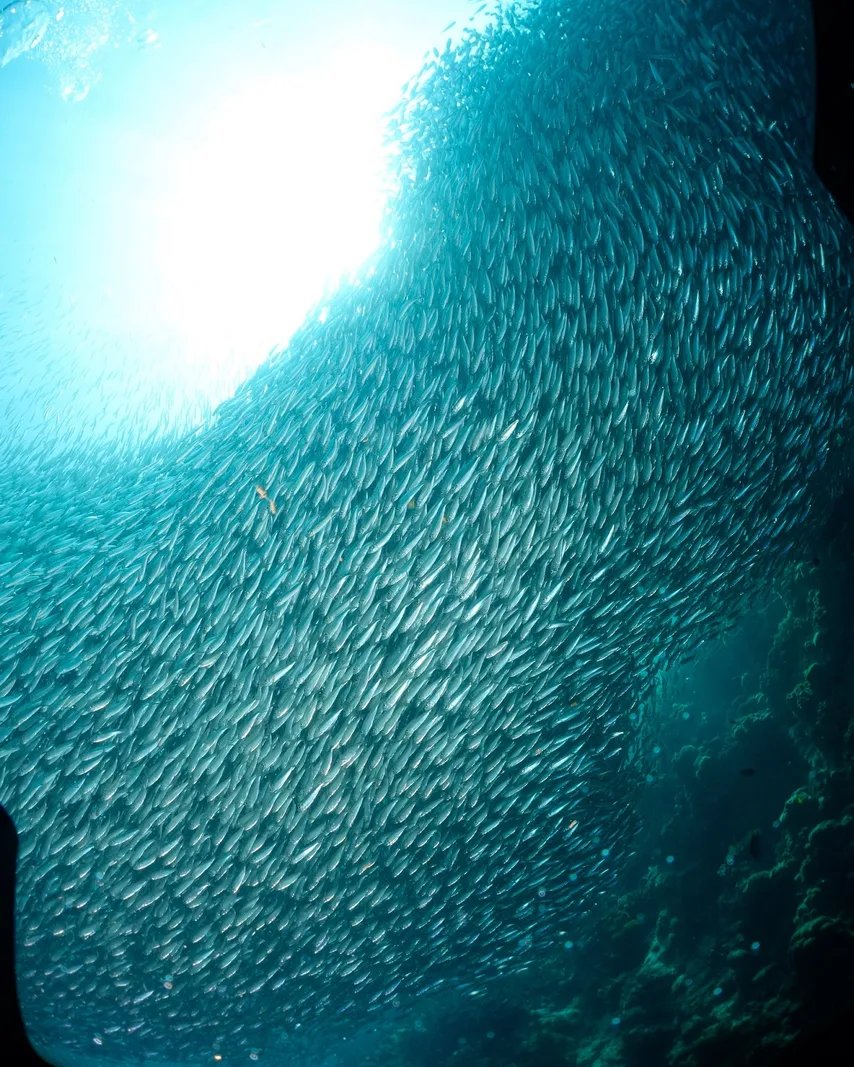
The final stop, Moalboal, sits on a narrow peninsula on Cebu's southwest coast, about 90 kilometres from Cebu City. The sardine run - locally called the sardine tornado - is one of the Philippines' most extraordinary marine phenomena. An estimated ten million to several billion sardines of the species Sardinella lemuru form a dense, coordinated bait ball that hovers between the surface and approximately 15 metres depth, just 20 to 50 metres from Panagsama Beach. No boat trip is required - you can simply wade in from the shoreline.
The school moves as a single organism, twisting and compressing in response to predators. Sea turtles, which are resident rather than seasonal in Moalboal, pass through the sardine column with apparent indifference, foraging on jellyfish nearby. Thresher sharks occasionally appear in the blue water beyond the reef edge. The phenomenon is driven by the upwelling nutrient currents off the Tanaon Strait, which concentrate phytoplankton and draw the sardines in enormous numbers to this particular stretch of coastline year-round.
Best Time to Go
The route operates year-round, but conditions vary by season. The Habagat (southwest monsoon, roughly June to October) brings rougher seas to the western coast, which can affect sea visibility at Moalboal and make the coastal road journey slower. The Amihan (northeast monsoon, November to April) is the dry season and brings calmer waters, better underwater visibility, and cooler early-morning temperatures that make the pre-dawn drive from Cebu City more comfortable. Whale sharks are present in Oslob throughout the year, though sightings are generally shorter and more erratic during strong weather events. Kawasan Falls runs highest and most dramatic during and just after the wet season, when rainfall in the interior mountains is heaviest.
Practical Tips
Bring biodegradable sunscreen - chemical sunscreens are prohibited at Oslob and discouraged at Moalboal reef sites to protect coral and the whale sharks' skin.
Pack a dry bag for electronics during the canyoneering section; the route involves full submersion and your belongings will get wet.
Wear water shoes or secure sandals - the canyon floor has uneven rocks and submerged ledges that can be slippery barefoot.
A change of dry clothes and a small towel are essential; you will be wet for most of the day between the falls and snorkeling stops.
Eat lightly before the canyoneering section - exertion on a full stomach in the canyon is uncomfortable. Lunch is served at Kawasan after the route ends.
Who This Tour Suits
The combined Oslob-Kawasan-Moalboal day is designed for active travellers comfortable in open water and on uneven terrain. The canyoneering section requires reasonable fitness - sustained wading against current, boulder scrambling, and optional jumping. Participants who are pregnant, have recent joint injuries, or have significant cardiovascular conditions should consult a doctor before booking. Non-swimmers can participate in the Oslob whale shark watch from the boat platform if preferred, and Moalboal's sardine run is accessible in very shallow water near the shore. Children are generally accommodated at Oslob and Moalboal but the canyoneering route has minimum age and fitness requirements that guides enforce on-site.
For first-time visitors to Cebu who want to understand what makes the island exceptional - its marine biodiversity, its dramatic limestone geology, and its freshwater highland rivers - this south Cebu circuit delivers all three in a single, well-paced day. It is also one of the only tours in the Philippines where you can transition from snorkeling with the ocean's largest fish in the morning to swimming inside a freshwater canyon by noon and watching a million-strong sardine school in the afternoon.
Good to know before you book
Duration: typically a full day (around 8 to 10 hours including transfers), though half-day and multi-day options exist - check the listing.
Best for: active travellers, couples and friends.
What is included: a local guide, safety gear (helmet and life vest), entrance fees and usually transfers; lunch is often included or available nearby.
Pickup: most tours offer hotel or central pickup; confirm your point and time when booking.
Book through: the GetYourGuide button on this page, which shows live availability and pricing.
Frequently asked questions
How long does the Oslob Whale Sharks, Kawasan Falls and Moalboal Sardines Tour take?
Most departures run as a full day - roughly 8 to 10 hours including pickup, travel and the activities themselves - so plan to set aside the whole day. Some operators offer shorter or private versions; the exact timing for your date is shown when you book through the GetYourGuide button on this page.
What is included in the Oslob Whale Sharks, Kawasan Falls and Moalboal Sardines Tour?
Typically the price covers a local guide, safety gear (helmet and life vest), entrance fees and usually transfers; lunch is often included or available nearby. Inclusions vary by operator, so always read the specific listing - it spells out exactly what is provided and what you pay for separately, such as entrance or environmental fees.
What should I bring?
Pack quick-dry clothes, secure water shoes or sandals with grip, reef-safe sunscreen and a floating or waterproof camera. Helmets and life vests are provided and must be worn. It is also worth carrying some cash for local fees, drinks and tips, plus any personal medication, since card facilities can be limited outside the cities.
Is the Oslob Whale Sharks, Kawasan Falls and Moalboal Sardines Tour suitable for beginners or families?
It suits reasonably fit travellers who can swim and are comfortable in moving water; every cliff jump has a lower, optional alternative, so you set your own intensity. It is not designed for non-swimmers or very young children. If you have specific concerns about age, fitness or swimming ability, message the operator before booking - they can advise on the best option for your group.
When is the best time to do this tour?
The best conditions are usually the dry months of December to May, with calm seas for snorkelling and diving. That said, the Philippines is a year-round destination, and many of these experiences run in any season - just expect the occasional shower and check the forecast for the day.
How do I get to Badian?
To reach Badian, fly into Mactan-Cebu International Airport, then drive south (about 3 to 4 hours to the southwest coast). Many tours include transfers from nearby towns or hotels, so confirm your pickup arrangement when you book so the day runs smoothly from the start.
Do I need to book the Oslob Whale Sharks, Kawasan Falls and Moalboal Sardines Tour in advance?
Yes - booking ahead is strongly recommended, especially in the dry-season peak and on weekends, when popular tours and the best operators sell out. Reserving online also locks in your spot and lets you compare timings and inclusions easily.
How much does the Oslob Whale Sharks, Kawasan Falls and Moalboal Sardines Tour cost?
Prices vary with the season, group size and exactly what is included, so we do not list a fixed figure here. Tap the GetYourGuide button on this page to see the current, accurate price and availability for your chosen date.
Can I do the Oslob Whale Sharks, Kawasan Falls and Moalboal Sardines Tour as a private or customised tour?
Many operators offer a private version of this experience for couples, families or small groups who want a flexible pace and a guide to themselves, and some can tailor the route or add stops. If a private or custom option matters to you, check the listing or message the operator before booking, as availability and prices differ from the standard shared tour.
Ready to explore Badian?
From planning to the moment you arrive, the Oslob Whale Sharks, Kawasan Falls and Moalboal Sardines Tour is one of the most rewarding ways to experience this corner of the Philippines - and booking it is simple. Use the GetYourGuide button on this page to check live availability, compare timings and secure your spot, then turn up and let the local guides handle the rest while you focus on the views, the water and the memories.
The PANA.PH travel desk researches, books and re-checks Philippines travel logistics — fares, ferry schedules, government fees and permit rules — and publishes what it can verify.