Two of Cebu's Wildest Mornings, Stitched Into One Day Few day trips in the Philippines pack the raw, wide-eyed wonder of this one. You start before sunrise
Two of Cebu's Wildest Mornings, Stitched Into One Day
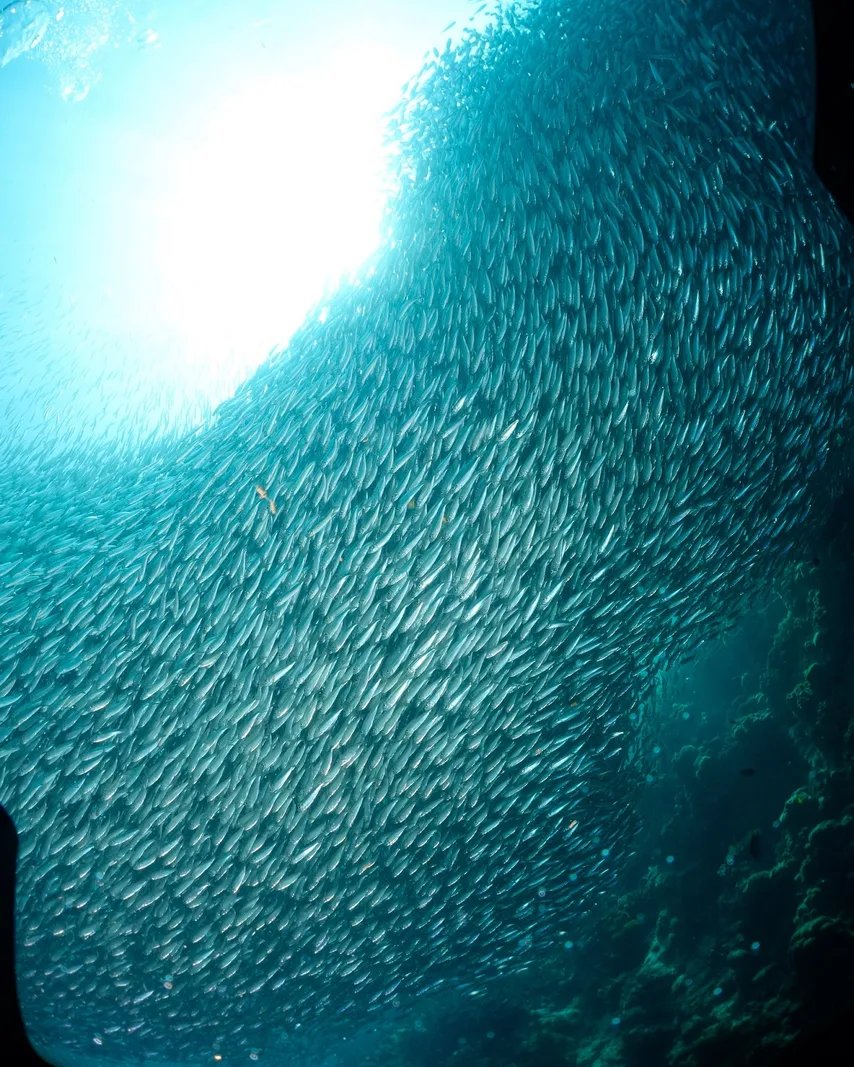
Few day trips in the Philippines pack the raw, wide-eyed wonder of this one. You start before sunrise on the calm southern coast of Cebu, slipping into the sea beside the largest fish on the planet. Then you trade the open ocean for a narrow jungle gorge, where turquoise water has carved the limestone into a watery obstacle course of jumps, slides, and swims. By the time you are toweling off in the late afternoon, you have looked a whale shark in the eye and thrown yourself off a waterfall ledge into a glowing blue pool. It is a long, ambitious day, and it is one most travelers never forget.
Trip.com
Hotels in Philippines
Compare live prices via Travelpayouts — targeted for this guide.
This guide walks you through both halves honestly, including the conservation debate around the whale sharks, so you can decide how you want to experience it.
Where You Are: The Geography of Southern Cebu
Cebu is a long, narrow island in the central Visayas, and both highlights of this tour sit at its southern tip. Oslob is a coastal town on the southeast shore, facing the Bohol Sea across the Tanon Strait region. Alegria lies on the opposite, southwest coast, roughly an hour's drive across the island's spine. A good day tour links them precisely because they are close together yet face two different seas.
The whole southern peninsula is built of uplifted coral limestone. That single fact explains almost everything you will see: the steep karst hills, the cave-riddled cliffs, the freshwater springs that gush from the rock, and the impossibly clear, mineral-tinted river you will soon be swimming down. Rainwater filtered through limestone picks up dissolved minerals and a faint blue-green cast, which is why Kawasan Falls and the Badian-Alegria canyon glow that famous Gatorade-blue color.
Trip.com
Whale shark watching in Philippines
Hand-picked experiences in Philippines — book on Trip.com with instant confirmation.
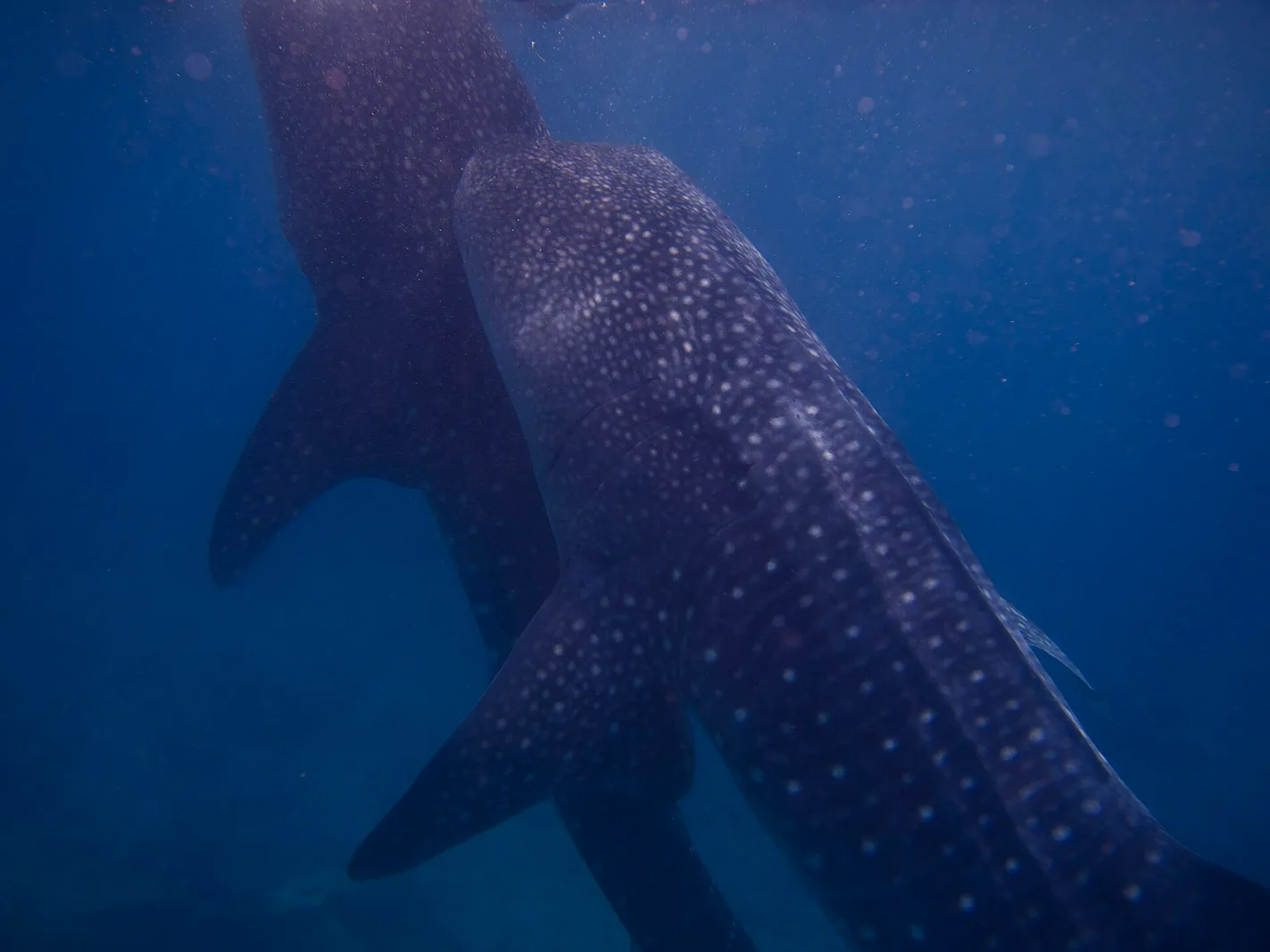
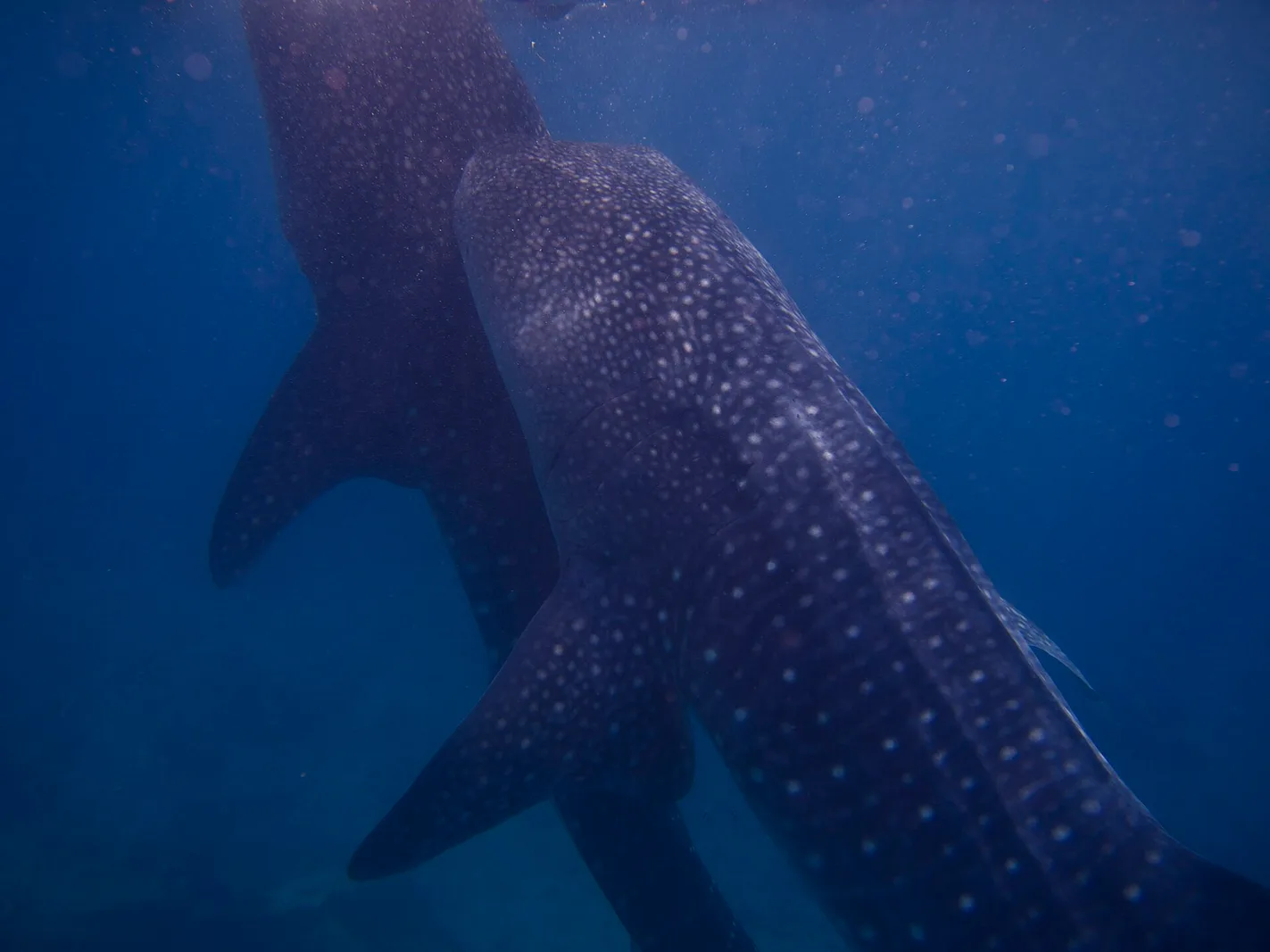
The whale shark (Rhincodon typus) is not a whale at all. It is the world's largest living fish, a shark that can grow well beyond ten meters long, though the animals you typically see at Oslob are juveniles in the four-to-eight-meter range. Despite the size, they are gentle filter feeders. They cruise with their cavernous mouths open, straining tiny plankton, fish eggs, and small krill from the water through sponge-like filter pads. They have thousands of tiny teeth that play no role in feeding. Each individual carries a unique pattern of pale spots and stripes across its grey back, like a fingerprint, which researchers use to identify and track them. Locally they are called butanding or, in Cebuano, tuki. They are globally listed as endangered, which is exactly why the Oslob arrangement deserves an honest look.
The Morning: Swimming with Giants at Oslob
The whale-shark interaction takes place at Barangay Tan-awan, just outside Oslob proper. Because the sharks are most active and the sea is calmest at dawn, tours leave Cebu City or the south-coast resorts very early, often around 3 to 5 a.m., to reach the beach soon after sunrise. After a short safety briefing, you board a small paddled outrigger (no motors are used in the interaction zone) and head a short distance offshore.
What follows is genuinely surreal. Local fishermen in small boats hand-feed the sharks small shrimp called uyap, and the animals gather to feed in the shallows. You slide into the water, snorkel or dive mask on, and within moments a creature the size of a bus glides past close enough to touch, though touching is strictly forbidden. The in-water time is short by design, typically around 30 minutes, and the scene can be crowded with other swimmers. Even so, hovering above a slow-moving whale shark as it filters the water is the kind of moment that recalibrates your sense of scale.
The Honest Conservation Debate
You should understand what you are participating in. The Oslob attraction is built on provisioning, deliberate daily hand-feeding that keeps wild sharks in one spot. Marine scientists and conservation groups have raised real concerns: feeding can alter the sharks' natural migratory and feeding behavior, habituate them to boats (raising the risk of propeller injuries and skin abrasions elsewhere), and concentrate animals unnaturally. Strict rules exist to limit harm, no touching, no sunscreen in the water, no flash, a safe distance, and no motorized boats in the zone, and the feeding does provide income that gives the town a strong reason to protect the animals rather than fish them. But it is not a fully wild encounter, and many responsible travelers choose to skip it for that reason. If you go, follow every rule scrupulously; if it does not sit right with you, that is a legitimate choice too.
The Afternoon: Canyoneering to Kawasan Falls
After the morning swim, you transfer across the island to the Alegria-Badian area for the canyoneering. This is the adventure that put southern Cebu on the global map, and it more than lives up to the hype. You suit up in a life vest and helmet, get a safety briefing, and then descend into the gorge of the Matutinao River near Kanlaob.
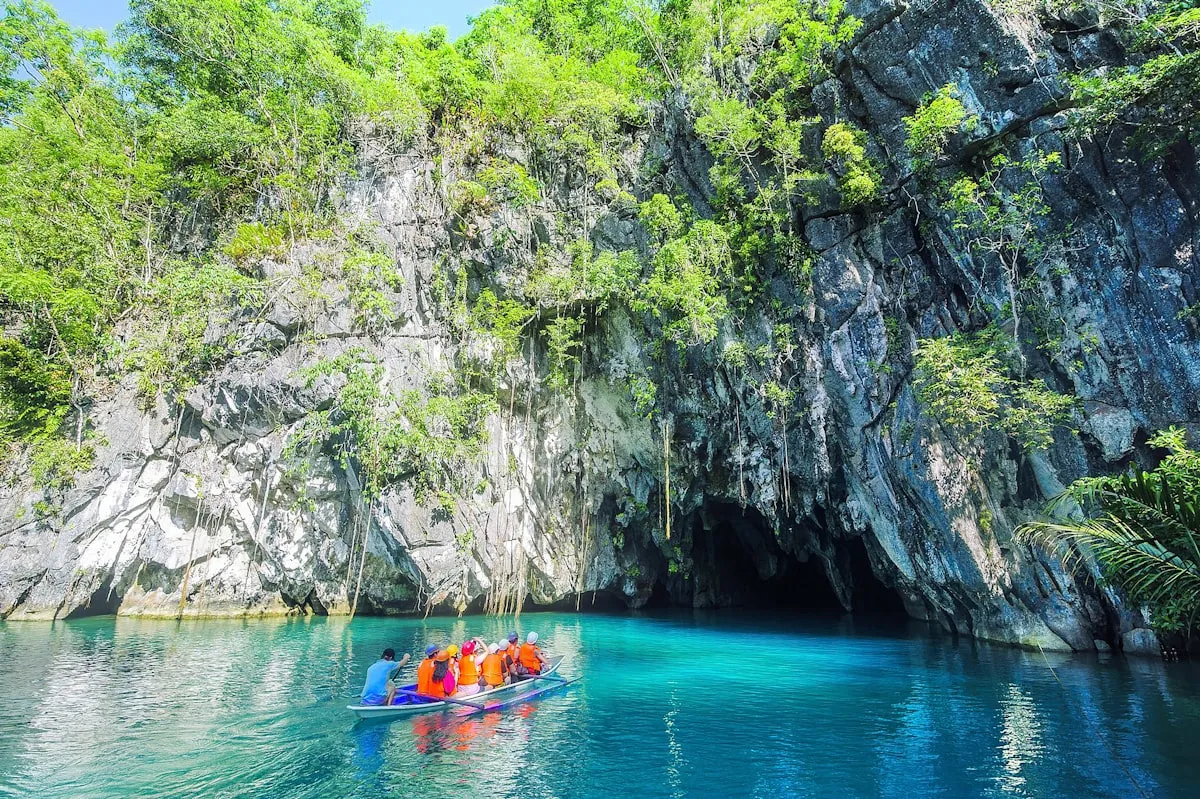
From there, the only way out is downstream. You make your way through the canyon by every means the river allows: scrambling over boulders, swimming through deep blue pools, sliding down natural rock chutes, wading through shallows, and, the part everyone talks about, leaping off limestone ledges into the water below. The jumps range from gentle, knee-high hops to genuinely intimidating drops of several meters; bigger jumps are always optional, and a guide will show you a safe path around any you would rather skip.
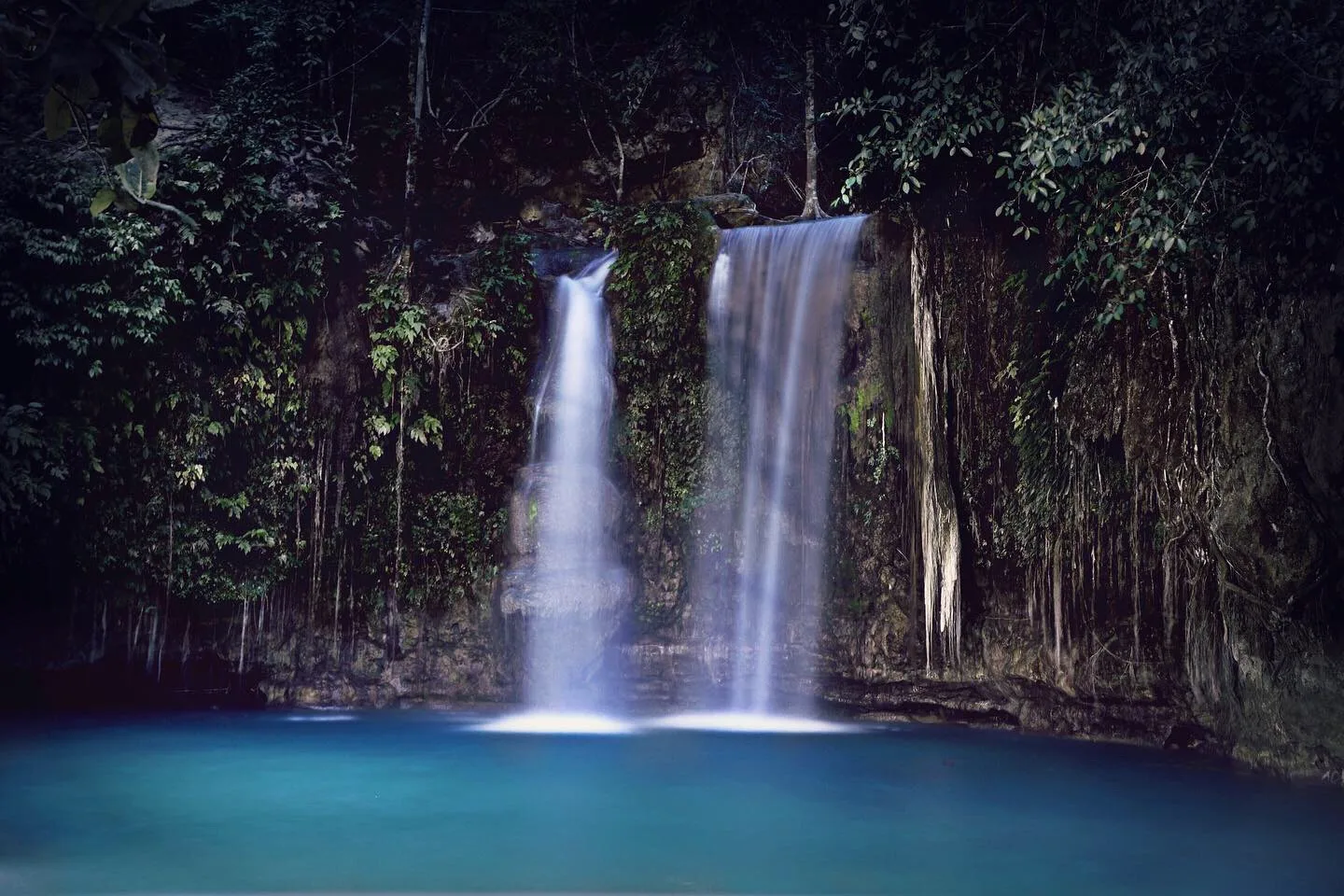
The walls of the canyon rise steeply on either side, draped in jungle, with the river an electric turquoise from the dissolved limestone. The route ends at the multi-tiered Kawasan Falls, a series of milky-blue cascades and swimming pools that is one of the most photographed waterfalls in the country. You can swim in the basin, sit under the falling water, and catch your breath before the short walk out.
How Strenuous Is It?
This is a real physical activity, not a gentle stroll. Expect two to three hours in and on the water, with swimming, jumping, scrambling over slippery rocks, and a hike out at the end. You do not need to be an athlete, but you must be a confident swimmer and reasonably fit, and you should be comfortable in deep water and with heights if you want to do the big jumps. It is not suitable for very young children, pregnant travelers, or anyone with heart, back, or joint problems.
Practical Tips for the Day
Best time of year: The drier months, roughly December through May, generally bring calmer seas for the whale sharks and clearer river conditions. Whale sharks at Oslob can be seen year-round. After heavy rain, canyoneering may be paused for safety when the river runs high, so build in flexibility.
Best time of day: Dawn for the whale sharks, calmer water and more active animals; canyoneering in the late morning or early afternoon.
What to wear and bring: Swimwear under quick-dry clothes, water shoes or sturdy sandals with a strap (you will be on sharp rock), a towel, a dry change of clothes, and cash. Reef-safe is the rule, but for the whale sharks avoid sunscreen entirely in the water. A secured action camera with a float strap is ideal; loose phones get lost in the canyon.
What is typically included: Round-trip transport, the whale-shark entrance and boat, the canyoneering guide, helmet and life vest, and usually entrance and environmental fees. Confirm whether lunch, a GoPro, and gear like aqua shoes are included or extra.
Duration: Plan for a very long day, often 12 hours or more door to door from Cebu City, given the pre-dawn start and the cross-island drives.
Responsible travel: Never touch the wildlife, take all trash out with you, respect the no-flash and no-sunscreen rules, and tip the local guides who know the river intimately.
A Day You Will Be Telling Stories About
This tour is demanding, it starts before the sun and ends with aching legs, but that is precisely why it stays with you. In a single day you swim beside an endangered ocean giant and then throw yourself through a glowing blue canyon to a waterfall. Go in with your eyes open about the whale-shark feeding, follow every rule the rivers and reefs ask of you, and you will come away with the rare feeling that you really lived the day, not just visited it. Southern Cebu does not do things by halves, and neither should you.
Good to know before you book
Duration: typically a full day (around 8 to 10 hours including transfers), though half-day and multi-day options exist - check the listing.
Best for: active travellers, couples and friends.
What is included: a local guide, safety gear (helmet and life vest), entrance fees and usually transfers; lunch is often included or available nearby.
Pickup: most tours offer hotel or central pickup; confirm your point and time when booking.
Book through: the GetYourGuide button on this page, which shows live availability and pricing.
Frequently asked questions
How long does the Oslob Whale Shark & Alegria Canyoneering take?
Most departures run as a full day - roughly 8 to 10 hours including pickup, travel and the activities themselves - so plan to set aside the whole day. Some operators offer shorter or private versions; the exact timing for your date is shown when you book through the GetYourGuide button on this page.
What is included in the Oslob Whale Shark & Alegria Canyoneering?
Typically the price covers a local guide, safety gear (helmet and life vest), entrance fees and usually transfers; lunch is often included or available nearby. Inclusions vary by operator, so always read the specific listing - it spells out exactly what is provided and what you pay for separately, such as entrance or environmental fees.
What should I bring?
Pack quick-dry clothes, secure water shoes or sandals with grip, reef-safe sunscreen and a floating or waterproof camera. Helmets and life vests are provided and must be worn. It is also worth carrying some cash for local fees, drinks and tips, plus any personal medication, since card facilities can be limited outside the cities.
Is the Oslob Whale Shark & Alegria Canyoneering suitable for beginners or families?
It suits reasonably fit travellers who can swim and are comfortable in moving water; every cliff jump has a lower, optional alternative, so you set your own intensity. It is not designed for non-swimmers or very young children. If you have specific concerns about age, fitness or swimming ability, message the operator before booking - they can advise on the best option for your group.
When is the best time to do this tour?
The best conditions are usually the dry months of December to May, with calm seas for snorkelling and diving. That said, the Philippines is a year-round destination, and many of these experiences run in any season - just expect the occasional shower and check the forecast for the day.
How do I get to Cebu City?
To reach Cebu City, fly into Mactan-Cebu International Airport, then drive south (about 3 to 4 hours to the southwest coast). Many tours include transfers from nearby towns or hotels, so confirm your pickup arrangement when you book so the day runs smoothly from the start.
Do I need to book the Oslob Whale Shark & Alegria Canyoneering in advance?
Yes - booking ahead is strongly recommended, especially in the dry-season peak and on weekends, when popular tours and the best operators sell out. Reserving online also locks in your spot and lets you compare timings and inclusions easily.
How much does the Oslob Whale Shark & Alegria Canyoneering cost?
Prices vary with the season, group size and exactly what is included, so we do not list a fixed figure here. Tap the GetYourGuide button on this page to see the current, accurate price and availability for your chosen date.
Can I do the Oslob Whale Shark & Alegria Canyoneering as a private or customised tour?
Many operators offer a private version of this experience for couples, families or small groups who want a flexible pace and a guide to themselves, and some can tailor the route or add stops. If a private or custom option matters to you, check the listing or message the operator before booking, as availability and prices differ from the standard shared tour.
Ready to explore Cebu City?
From planning to the moment you arrive, the Oslob Whale Shark & Alegria Canyoneering is one of the most rewarding ways to experience this corner of the Philippines - and booking it is simple. Use the GetYourGuide button on this page to check live availability, compare timings and secure your spot, then turn up and let the local guides handle the rest while you focus on the views, the water and the memories.
The PANA.PH travel desk researches, books and re-checks Philippines travel logistics — fares, ferry schedules, government fees and permit rules — and publishes what it can verify.