Fly into Cebu, and you'll find dozens of competing tour desks pushing Boracay, Bohol, and Palawan. Nobody is pushing Negros. The Philippines' fourth-largest island — bigger than Bohol, comparable in size to Taiwan's main island — sits just across the Tañon Strait from Cebu, visible on a clear day from the Cebu City waterfront, and yet it remains almost entirely absent from mainstream tourist itineraries. This is one of the best things about it.
Negros Island Guide: Sugar Capital, Whale Sharks & The Philippines' Hidden Gem
Trip.com
Search on Trip.comHotels in Philippines
Compare live prices via Travelpayouts — targeted for this guide.
Negros is two provinces stitched together along a central mountain spine. Negros Occidental to the west is the sugar capital of the Philippines — a world of plantation haciendas, the Masskara Festival, and Bacolod City's extraordinary food culture. Negros Oriental to the east is the domain of Dumaguete City, Apo Island's turtles, and dive sites that marine biologists rank among the finest in the world. Together they make a destination that rewards a week or more of exploration, at prices that will make you feel vaguely guilty about how cheap everything is.
Getting to Negros
There are two main entry points, each serving a different half of the island:
Bacolod (Negros Occidental): Bacolod-Silay International Airport receives direct flights from Manila on Philippine Airlines and Cebu Pacific. Flight time is roughly 1 hour and 15 minutes; fares run PHP 2,000–5,000 one-way booked in advance. You can also reach Bacolod by fast ferry from Iloilo City (1 hour, PHP 320–380) or by ro-ro ferry from Manila (overnight, for budget travellers with serious time).
Trip.com
See all tours in Philippines on Trip.comWhale shark watching in Philippines
Hand-picked experiences in Philippines — book on Trip.com with instant confirmation.
Dumaguete (Negros Oriental): Sibulan Airport, technically just north of Dumaguete City, receives direct flights from Manila (1 hour 20 minutes, PHP 2,200–5,500) and connections via Cebu. The cheaper and often faster option from Cebu City is by fast ferry from Pier 1 — several operators (Oceanjet, George & Peter Lines, Montenegro) run the Cebu-Dumaguete crossing in 4–5 hours for around PHP 450–600. For travellers already in the Visayas, this makes Dumaguete extremely accessible.
The trans-Negros route — crossing the island from Bacolod to Dumaguete by bus over the mountains — is a scenic 4-hour journey and a great way to experience the island's interior if you're doing a loop trip.
When to Go
The two halves of Negros have different climate patterns, which is one of the quirks of visiting a large island with a central mountain range acting as a weather divider. Negros Occidental (Bacolod) has a drier pattern with a pronounced dry season from December through May. Negros Oriental (Dumaguete, Apo Island) is drier from roughly November through May, with the best diving visibility typically from March through June. October hosts the Masskara Festival in Bacolod, which is worth timing a visit around despite it being the tail end of wet season on the western side. For diving and marine wildlife, March through May is the peak.
Dumaguete: The Friendliest City in the Philippines
Dumaguete City is frequently cited in expat forums as the most liveable city in the Philippines — and after spending an afternoon on Rizal Boulevard watching the sea while eating cheap grilled fish from a sidewalk stall, it's hard to argue. Four universities anchor the city — Silliman University (founded 1901, one of the oldest in the Philippines), Foundation University, St. Paul University, and Negros Oriental State — giving the city a permanent population of students that keeps it young, intellectually active, and unexpectedly international in feel.
The cost of living in Dumaguete is dramatically lower than Manila, Cebu City, or any of the major tourist centres. A good sit-down meal with drinks at a decent restaurant runs PHP 200–350 per person. Air-conditioned guesthouses near the boulevard start from PHP 600–1,000 per night. Espresso coffee from proper cafes (several of which are run by Silliman alumni) costs PHP 80–120. A generation of digital nomads has figured this out — Dumaguete has reliable fibre internet, a good cafe scene, and practically nothing in the way of the tourist inflation that plagues Boracay and El Nido.
Apo Island: World-Class Turtle Encounters
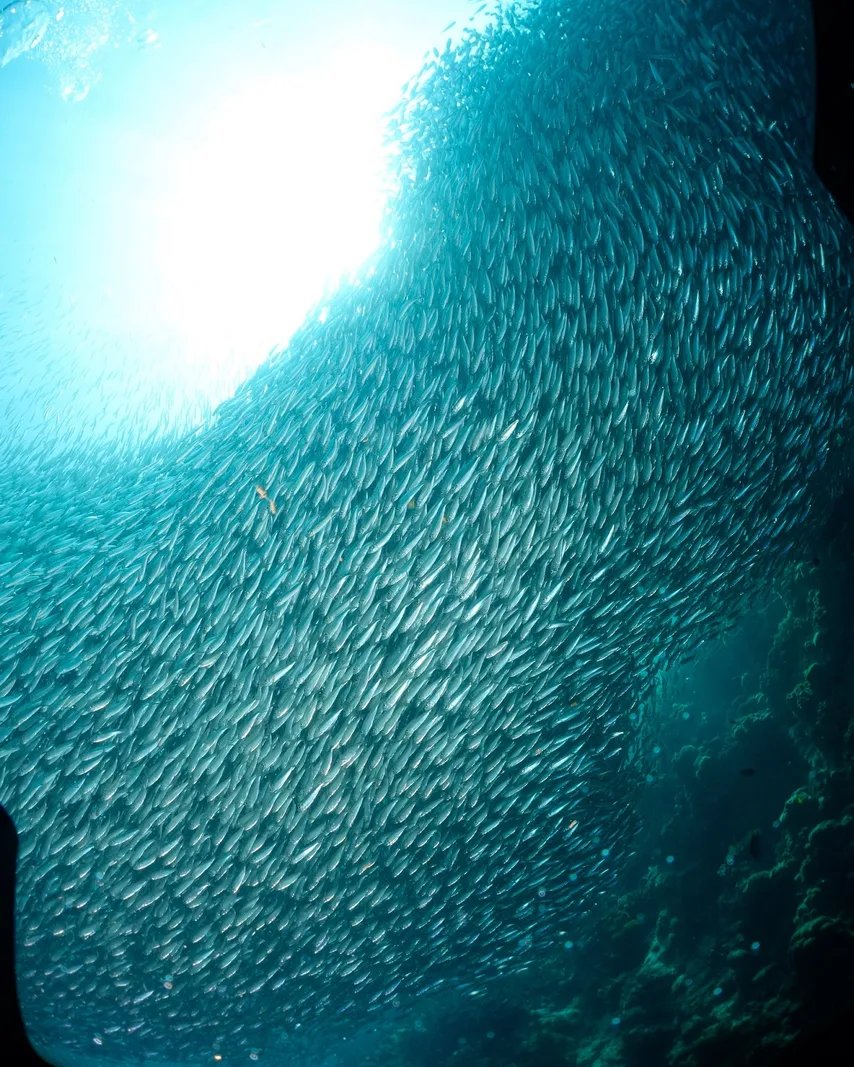
Twenty-five kilometres south of Dumaguete, accessible by a 30-minute bangka ride from Malatapay market pier, Apo Island Marine Sanctuary is one of the most celebrated conservation success stories in the Philippines. Since the 1980s, the island community has managed the surrounding reef as a no-take zone, and the results are staggering: coral coverage and fish biomass that rival anything in the Coral Triangle, and a population of green sea turtles so habituated to snorkellers and divers that encounters at close range are virtually guaranteed.
The experience of drifting slowly along the reef wall while a metre-long green turtle cruises past at arm's length, utterly indifferent to your presence, is one of those travel moments that resets your sense of what "good snorkelling" actually means. Entry fee is PHP 200 per person; snorkel hire from the island is around PHP 100–150. For divers, fun dives with the island's local dive operators run PHP 1,000–1,400 per dive including equipment — considerably cheaper than equivalent dive operations in Boracay or El Nido, and the quality of the site is genuinely comparable to the Tubbataha Reef ecosystem. Day trips from Dumaguete cost around PHP 800–1,200 all in including the bangka and entrance fee.
Whale Sharks at Oslob (Day Trip from Dumaguete)
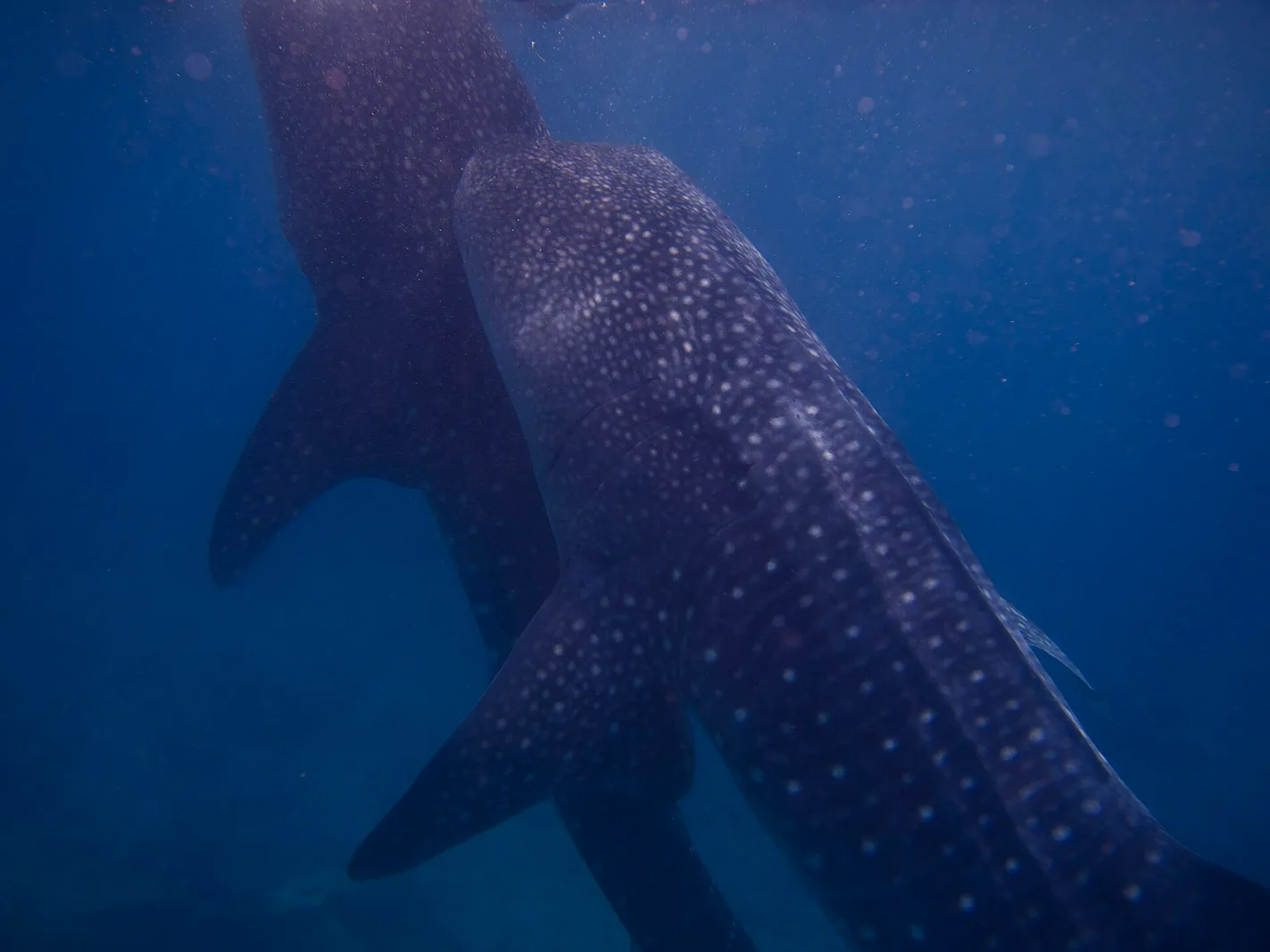
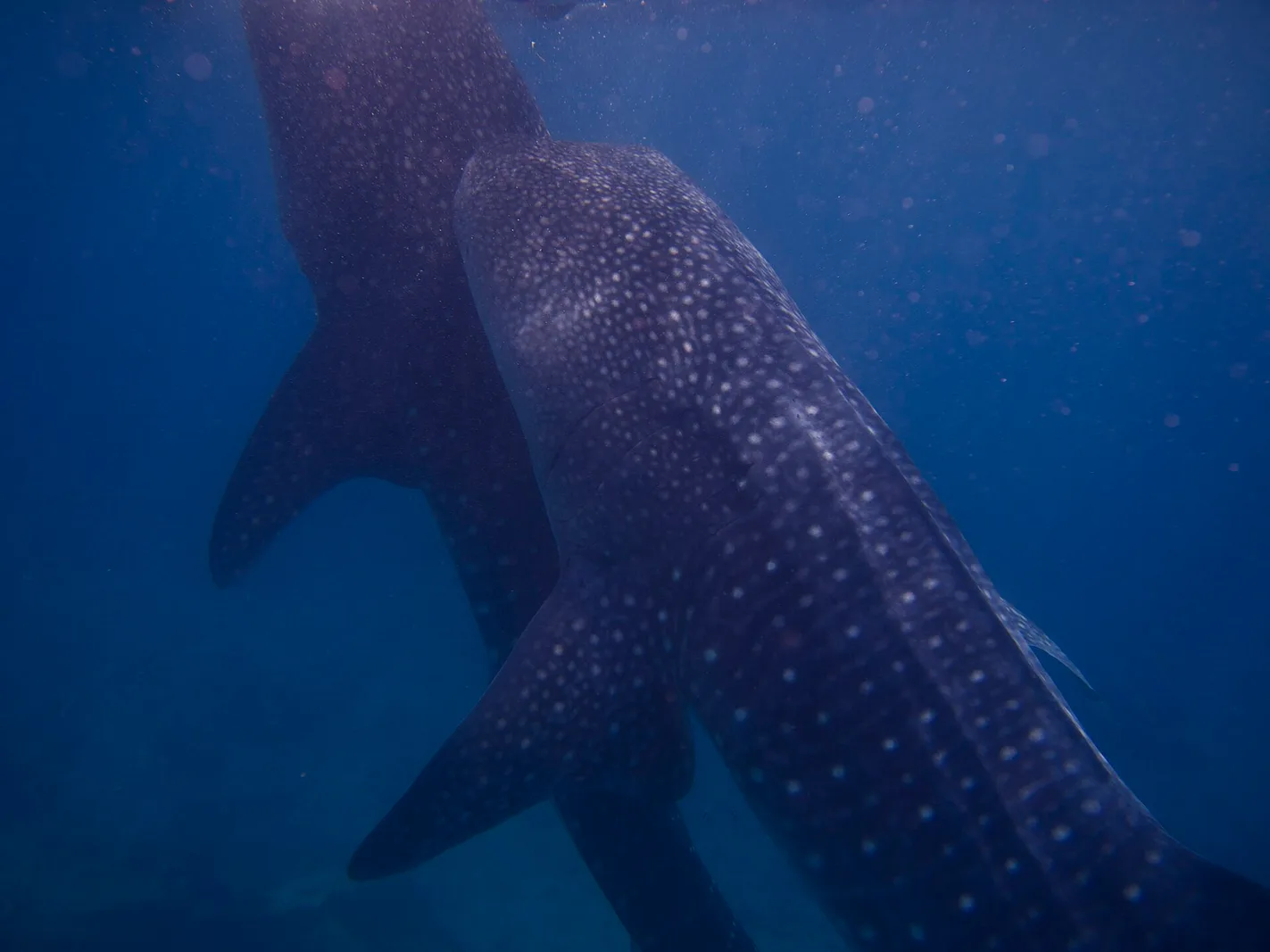
Oslob whale shark watching is technically in Cebu province, but it is a straightforward day trip from Dumaguete — 2 hours by bus from the South Bus Terminal, or a faster private van charter for PHP 2,500–3,000. The ethical dimensions of Oslob whale shark interaction are well-documented and worth understanding before you go: the sharks are fed by local fishermen (bugsay), which keeps them artificially in the bay and disrupts their natural feeding and migration behaviour. International marine conservation bodies have criticized the practice, and several dive operators in Dumaguete decline to organize trips there as a matter of policy.
With that context clearly stated: for travellers who want to see whale sharks without the multi-day journey to Donsol or the expense of a Tubbataha liveaboard, Oslob remains the most accessible option in the country. If you go, choose the snorkel-only option rather than diving (which stresses the animals more), respect the no-touch rule, and limit your time in the water. The interaction fee is around PHP 1,000 for snorkelling and PHP 1,500 for scuba diving.
Casaroro Falls
Inland from Dumaguete, in the foothills of the central mountain range, Casaroro Falls drops roughly 30 metres into a narrow gorge lined with lush rainforest vegetation. The trek to reach it — about 20–30 minutes each way, including a descent of roughly 300 steps that are steep enough to require both hands — is part of the experience. A local guide is mandatory (PHP 100–150 per group) and genuinely useful for navigating the final river crossing to the falls base. The pool at the bottom is deep and cold enough for swimming. Entry to the Valencia municipal parks area is PHP 50. Combined with a visit to the Pulangbato Red Falls nearby, this makes for a full morning excursion from Dumaguete.
Bacolod and the Sugar Heritage
Bacolod City is the capital of Negros Occidental and the undisputed sugar capital of the Philippines — at its peak in the 20th century, Negros Occidental produced more than 60% of the country's sugar, and the hacienda (plantation) culture shaped everything from the city's architecture to its food traditions. Today the sugar industry has contracted, but Bacolod remains a wealthy, well-functioning city with a food culture that some Filipino food writers regard as the richest in the country outside of Manila.
The Negros Museum in Bacolod city centre gives excellent context on the sugar industry's history and the social dynamics of hacienda life — including its uncomfortable reliance on landless labour and the agrarian conflicts that periodically shook the province in the 20th century. Entry is PHP 60. The Ruins in Talisay (15 minutes from Bacolod by taxi) — the skeletal remains of a vast Italianate mansion built by a sugar baron and torched by retreating Filipino forces during World War II to prevent Japanese occupation — is one of the most photogenic sites in the Western Visayas, particularly at sunset when it's lit from within. Entry is PHP 100.
Masskara Festival
Held every October, the Masskara Festival is Bacolod's answer to Mardi Gras — a week of street dancing, smiling mask parades, live music, and a general citywide party that draws visitors from across the Philippines and a growing number of international tourists. "MassKara" means "mass of faces" in Filipino, and the festival was created in 1980 as a deliberate act of collective resilience after a year in which the province suffered both a devastating sugar price crash and a ferry disaster that killed hundreds of Negrenses. The smiling masks became a symbol of persisting joy in the face of tragedy, and the festival has grown in scale and colour every decade since.
If you're in the Visayas in October, time your visit to Bacolod around the third or fourth weekend of the month when the main street parade and competition finals take place. Book accommodation at least 6 weeks in advance — Bacolod's hotels fill up completely, and prices double during festival week.
Budget and Digital Nomad Scene
Negros Oriental around Dumaguete is one of the genuinely best-value destinations in the Philippines. Budget backpackers can live well on PHP 1,000–1,500 per day (guesthouse fan room, canteen meals, local transport). Mid-range travellers with diving, air-conditioned accommodation, and restaurant meals will spend PHP 2,000–3,500 per day not counting the diving itself (budget an additional PHP 3,000–5,000 for a 3-dive day at Apo Island).
The digital nomad community in Dumaguete is real and growing. Reliable fibre broadband is available at most guesthouses and all of the city centre cafes. The combination of low living costs, walkable city centre, good coffee, and world-class diving 30 minutes away has made Dumaguete a consistent fixture on best-places-for-digital-nomads lists — and unlike similar lists that overstate their subjects, this one genuinely holds up.
Frequently Asked Questions
Is Dumaguete better than Cebu City as a base for the southern Visayas?
For divers and nature-focused travellers, yes, significantly. Dumaguete puts you 30 minutes from Apo Island, 2 hours from Oslob whale sharks, and within easy reach of Siquijor Island (45 minutes by ferry) and the pristine reefs of the Tañon Strait. It is quieter, far cheaper, and less chaotic than Cebu City. Cebu City is the better base for shopping, nightlife, international flight connections, and access to the northern Cebu islands. For a week or more of diving and nature travel in the southern Visayas, Dumaguete wins.
How do you get from Dumaguete to Siquijor?
Siquijor Island — famous for its white beaches, coral gardens, and its reputation (mostly mythological and delightfully maintained by locals) as the island of witchcraft and healing — is a 45-minute to 1-hour fast ferry from Dumaguete Port. Several operators run the crossing multiple times daily; tickets cost PHP 200–280. It makes an excellent 2–3 day side trip from Dumaguete and is often added to the Negros Oriental loop. Siquijor's San Juan beach and Cambugahay Falls are the highlights.
What is the best dive site near Dumaguete?
Apo Island is the headline act and deservedly so — the turtle encounters alone make it unmissable. For technical divers, the underwater walls of Dauin (a 30-minute tricycle ride south of Dumaguete) are equally celebrated; Dauin's muck diving — a discipline focused on finding bizarre and tiny critters in sandy, rubble-strewn substrate — is considered some of the best in Southeast Asia, with pygmy seahorses, frogfish, and ornate ghost pipefish regularly recorded. Several dedicated dive resorts operate out of Dauin and Malatapay specifically for the Apo Island and Dauin circuit.
Is Negros safe for tourists?
The tourist areas of Dumaguete, Bacolod, and Apo Island are safe and welcoming. Negros has experienced historical tensions related to land reform and the NPA (New People's Army) insurgency, but these conflicts have been concentrated in the mountainous interior and rural barangays far from tourist circuits; the cities and coastal tourist areas operate normally and are not affected. Standard travel sensibility applies: don't flash expensive items, use registered taxis or ride-share apps (Grab operates in Dumaguete and Bacolod), and check local news before hiking into remote mountain areas.
Can you do Apo Island as a day trip from Cebu City?
Technically yes, but it makes for an exhausting day and you'll spend more time travelling than diving. The practical route is: fast ferry Cebu to Dumaguete (4-5 hours), overnight in Dumaguete, Apo Island day trip the next day. Far better to treat Dumaguete as a 3-4 night destination in its own right, which gives you Apo Island, Casaroro Falls, and the city's food scene without the travel fatigue.

PANA.PH Editorial Team
Philippines travel desk
The PANA.PH travel desk researches, books and re-checks Philippines travel logistics — fares, ferry schedules, government fees and permit rules — and publishes what it can verify.
🏡 Real local stays (book direct)
Hand-picked homestays and guesthouses — book direct, no markup.
Browse all local stays →
🌊 Popular activities (book instantly)
Island hopping, canyoneering, whale sharks — real Klook/GetYourGuide options.
View all activities →