Short answer: Mount Pulag needs a pre-booked DENR permit, a fit-to-climb medical certificate and a mandatory local guide. Daily slots are capped at 500 trekkers and group size at ten. On the Ambangeg trail the DENR environmental fee runs PHP 250 on weekdays and PHP 350 at weekends, with guide and local fees on top. A two-hour orientation at the visitor centre is compulsory.
Trip.comHotels in Philippines
Compare live prices via Travelpayouts — targeted for this guide.
Search on Trip.comFor first-time climbers doing Ambangeg, the easiest of the Pulag trails and the one most day-tour operators use. Permit requirements and fees last checked 30 July 2026. Rates quoted are the Philippine-national bands; foreign visitor rates differ, so confirm when you book.
| Requirement | Detail | Where it happens |
|---|
| DENR permit | Pre-booked, slot-limited | Mt. Pulag protected area office |
| Daily visitor cap | 500 trekkers | Applies across all trails |
| Group size limit | 10 hikers per group | Enforced from 2026 |
| Medical certificate | Fit-to-climb, from a physician | Baguio clinic or your own doctor |
| Environmental fee | PHP 250 weekday, PHP 350 weekend | Visitor centre, on the day |
| Guide fee | About PHP 1,200 per group of 1-5 | Assigned at the visitor centre |
| Orientation | About 2 hours, compulsory | Visitor centre before entry |
Pulag is a national park with a gate, not an open mountain
At 2,926 metres Mount Pulag is the highest peak in Luzon and the third highest in the Philippines, and it sits inside a national park administered under the protected-area system that the DENR oversees. That designation is the reason for every requirement below.
The mountain is also culturally significant to the Ibaloi, Kalanguya and Kankanaey communities around it, and parts of it are regarded as sacred ground. The guiding requirement is not only a safety measure - it is how the communities retain a role in what happens on their mountain.
The practical translation is that you cannot simply drive to a trailhead and walk. There is a permit, a cap, a briefing and a guide, and each of them is a gate.
Booking the permit, step by step
- Fix your dates first, then apply for the DENR permit through the Mt. Pulag protected area office. Slots are capped at 500 trekkers per day across the trails, and weekends in the cold months go early.
- Get a medical certificate stating you are fit to climb. A clinic in Baguio City can issue one, or your own physician can. Without it you are not admitted, whatever your permit says.
- Assemble a group of no more than ten. The group-size limit tightened to ten hikers in 2026 to reduce impact, so larger parties are split.
- Arrange transport to the Ranger Station via Ambangeg. Most climbers route through Baguio, and the road beyond it is rough enough that a chartered jeepney or van is normal.
- Attend the orientation at the visitor centre. It runs about two hours and is compulsory - no briefing, no entry to the national park.
- Pay the fees and meet your assigned guide. Environmental fee PHP 250 on a weekday or PHP 350 at a weekend for Philippine nationals, with the guide fee around PHP 1,200 per group of up to five, plus local and green fees.
Ambangeg is the easy trail, and easy is relative
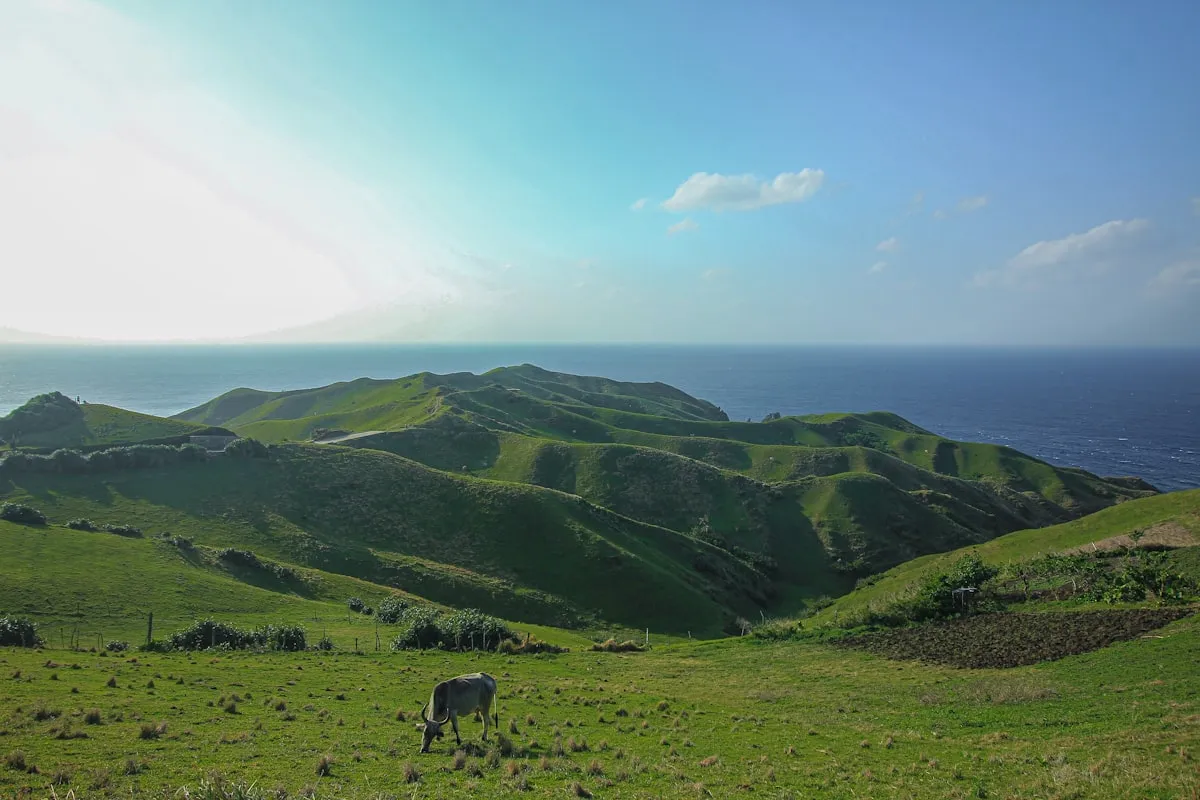
Ambangeg is the gentlest of the Pulag routes and the reason the mountain has a reputation as a beginner climb. The gradient is forgiving, the trail is well established, and the standard itinerary is an overnight at a camp with a pre-dawn push to the summit.
What makes it demanding is not the walking, it is the altitude and the cold. Nearly three thousand metres is high enough that some climbers feel it, and the summit push happens in the dark in the coldest hours.
The other trails - Akiki in particular, known locally as the killer trail - are a different proposition entirely, with far more elevation gain and no comparable margin for inexperience. If a package does not specify the trail, ask.
The cold is the thing people underestimate
Pulag records some of the lowest temperatures in the Philippines, and in the cold months summit-area temperatures can approach or reach freezing with frost on the grassland. Visitors arriving from a beach itinerary are frequently underequipped in a way that is genuinely dangerous rather than merely uncomfortable.
Layers, a proper insulating jacket, gloves, a hat and a sleeping bag rated for near-zero are the baseline. Cotton is the wrong fabric - it holds sweat from the walk and then chills you at camp.
Check PAGASA before travelling. Heavy rain closes the mountain, and the cold-plus-wet combination at altitude is the scenario the medical certificate requirement exists for.
The sea of clouds is a condition, not a feature
Pulag is famous for a summit view above a layer of cloud filling the valleys at sunrise. It is a meteorological event that requires the right combination of humidity, temperature inversion and clear air above.
It does not happen on demand and it does not happen every morning. The cold dry months from roughly December to February give the best odds, which is also when the mountain is coldest and the permits hardest to get.
Climbers who go for the photograph and get fog are disappointed; climbers who go for the mossy forest, the dwarf bamboo grassland and a night at altitude are not. Set the expectation accordingly.
What most guides get wrong about Mount Pulag
The most common error is calling it a beginner-friendly hike and stopping there. Ambangeg is gentle underfoot, but the mountain requires a permit, a medical certificate, a guide and a compulsory briefing, and it gets cold enough to be hazardous. Beginner-friendly terrain with a genuine cold-exposure risk is not the same as an easy trip.
The second is omitting the caps. Slots are limited to 500 trekkers a day and groups to ten from 2026, which means a large party cannot simply turn up, and a peak-season weekend is not available on short notice.
The third is treating the sea of clouds as what you have bought. It is a weather condition with better odds in the cold dry months and no guarantee on any given morning. Guides that lead with the photograph produce climbers who summit in fog and feel cheated by a mountain that owed them nothing.
Frequently asked questions
Do I need a permit for Mount Pulag?
Yes, a pre-booked DENR permit, plus a fit-to-climb medical certificate and a mandatory local guide. Daily slots are capped at 500 trekkers across the trails.
How much does climbing Mount Pulag cost?
For Philippine nationals on Ambangeg, the DENR environmental fee is PHP 250 on weekdays and PHP 350 at weekends, with a guide fee around PHP 1,200 per group of up to five plus local fees.
How big can my group be?
Ten hikers per group, tightened in 2026 to reduce environmental impact. Larger parties are split into separate groups with separate guides.
How cold does Mount Pulag get?
Cold enough for frost on the summit grassland in the coldest months, with temperatures near freezing. Bring insulation, gloves and a sleeping bag rated for near-zero rather than beach-trip clothing.
Am I guaranteed to see the sea of clouds?
No. It requires a temperature inversion and the right humidity, with the best odds between December and February. Plan the trip around the mountain rather than around the photograph.
Book tours, hotels & stays in Mount Pulag
Top tours
Top hotels
Top stays