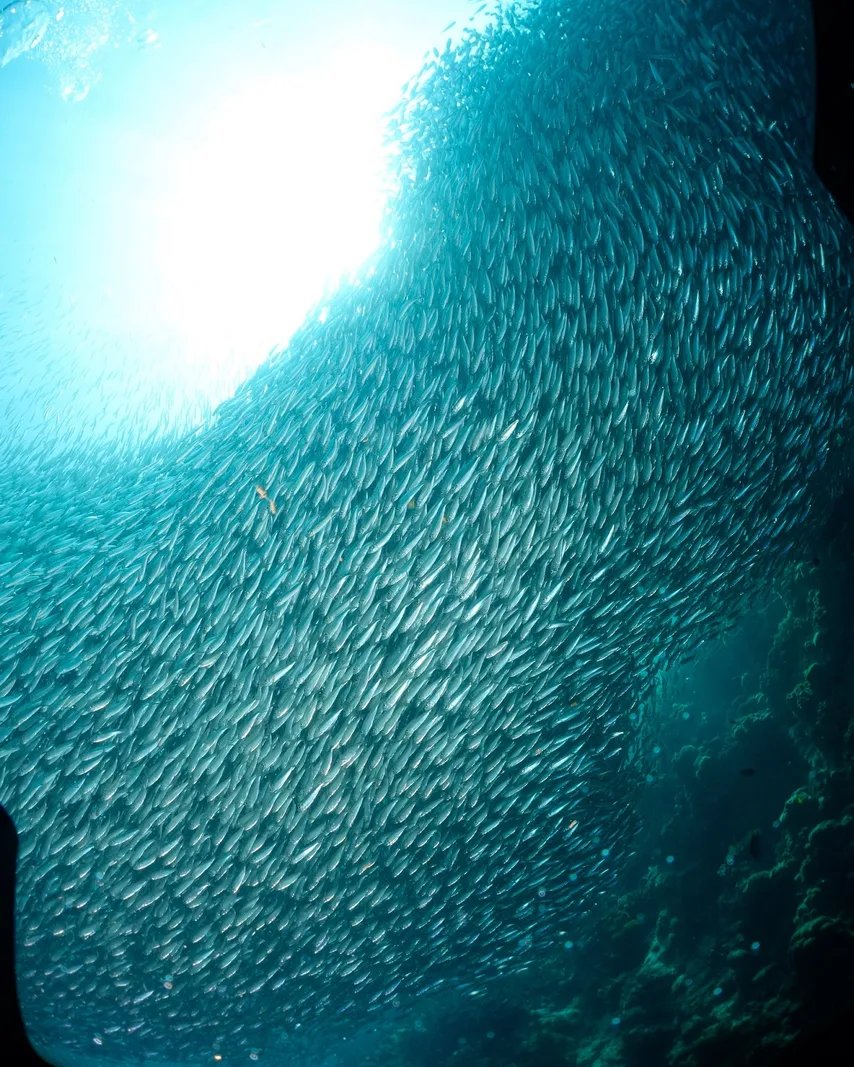
Short answer: Moalboal's sardines are a resident baitball, not a migration, so there is no season to time and no boat required - the school sits within swimming distance of Panagsama Beach in about five to twenty metres of water. You can snorkel it. The name borrowed from South Africa's genuine sardine run is the source of most of the confusion.
Trip.comHotels in Philippines
Compare live prices via Travelpayouts — targeted for this guide.
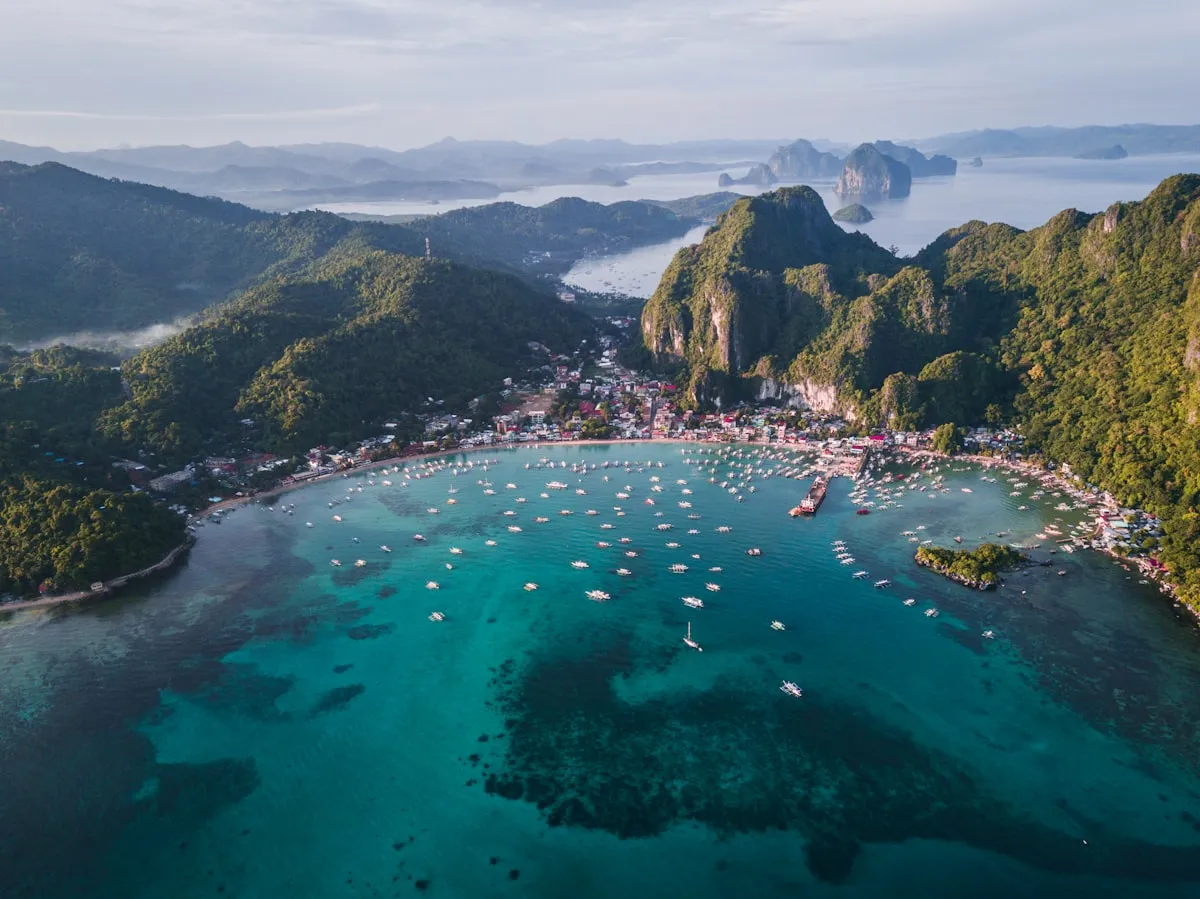
Search on Trip.comFor snorkellers, freedivers and divers planning Moalboal on the west coast of Cebu, about three hours from Cebu City. Conditions and etiquette last checked 30 July 2026. The baitball is a wild aggregation and its exact position along the drop-off shifts week to week.
| Belief | Reality | What it changes |
|---|
| It is a seasonal migration | Resident year-round | No date to plan around |
| You need a boat | Swimmable from Panagsama Beach | No tour required |
| You need scuba | Snorkelling reaches it | Non-divers can see it |
| It is always in one spot | Moves along the drop-off | Ask locally on the day |
Mistake one: assuming there is a season to book around
The phrase sardine run belongs to South Africa, where billions of sardines migrate up the coast in a genuine seasonal event lasting weeks. Travellers apply that model to Moalboal and start looking for the right month.
There is no right month. The Moalboal school is resident and has been for years, holding station along the drop-off off Panagsama. What varies is water clarity and sea state, not whether the fish are there.
The fix: stop optimising the calendar for the sardines and optimise it for conditions instead. Calmer, clearer water generally comes outside the peak typhoon months, and that is the only seasonal input worth weighting.
Mistake two: booking a boat trip to reach it
Operators sell sardine run tours, and they are perfectly good tours. They are also not necessary. The baitball sits close enough to shore that you can walk into the water at Panagsama and swim out to it in a few minutes.
The drop-off begins remarkably close in - the reef shelf ends and the wall falls away within easy swimming distance, and the sardines hold along that edge in shallow water where light still reaches.
The fix: for a first look, rent a mask and fins and swim out. Save the boat for Pescador Island, which genuinely does need one and is the better dive site anyway.
Mistake three: thinking you need to be a diver
The sardines are shallow. A snorkeller floating on the surface sees the school as a moving wall beneath them, and a freediver dropping five metres is inside it. Scuba adds time, not access.
This makes Moalboal one of the few genuinely world-class marine experiences in the Philippines available to someone who has never breathed compressed air. Families and non-divers get the same spectacle.
The fix: if you are not certified, do not let that stop you booking Moalboal. If you are certified, the scuba value here is Pescador Island's walls and the turtles, with the sardines as a bonus rather than the reason.
Mistake four: crowding the turtles
Green sea turtles are common along the same stretch of reef and they are habituated to people, which travellers read as consent. Turtles surface to breathe, and a snorkeller hovering above one blocks the thing it needs to do.
The pattern to avoid is a ring of people around a feeding turtle, each waiting for a photograph, with the animal unable to ascend without swimming through them. It happens daily on this reef.
The fix: stay level with or below a turtle rather than above it, keep a few metres back, and never touch or ride one. Sea turtles are protected under Philippine wildlife law, which the DENR administers, and harassment is an offence rather than bad manners.
Mistake five: ignoring what the reef has already lost
Moalboal's hard coral took heavy damage over past decades from dynamite fishing and from Typhoon Odette, and what visitors see today on the shallow shelf is recovery in progress rather than a pristine reef.
The sardines and the turtles are the draw, and both are resilient. The coral is not, and fin contact from the volume of snorkellers now entering from the shore is a live pressure on a shelf that is trying to regrow.
The fix: enter and exit at the marked access points rather than walking across reef, keep fins up and away from the shelf, and use reef-safe sunscreen or a rash guard. Marine sanctuary fees collected locally fund enforcement and reef protection - pay them rather than looking for the free entry point.
There is a second-order reason this matters. Moalboal's shallow shelf is the reason the sardines are visible at all: the school holds against a drop-off that begins where the reef flat ends, and the flat is the part under fin pressure. Degrade the shelf and the geometry that puts a wall of fish within snorkelling reach of a beach stops being a given. The site's accessibility is not a permanent feature of the coastline - it is a condition that depends on the reef surviving the number of people now coming to see it.
What most guides get wrong about the sardine run
The most consequential error is the name itself, repeated without correction. Calling it a run implies a migration and a season, and it sends travellers hunting for the best months to see something that never leaves. That single misnomer generates more bad Moalboal planning than everything else combined.
The second is selling boat access to a shore-accessible site. Guides describe sardine run tours as the way to reach the baitball when the school is a swim from the beach, which quietly converts a free experience into a paid one.
The third is treating Moalboal as a day trip bolted onto Oslob and Kawasan Falls. That itinerary - whale sharks at dawn, canyoneering at midday, sardines in the afternoon - is sold constantly and gives each site under an hour. The baitball rewards being in the water repeatedly across a couple of days, in different light, which a coach schedule cannot deliver.
Frequently asked questions
When is the best time for the Moalboal sardine run?
There is no season - the school is resident year-round. Optimise for calm, clear water instead, which generally means avoiding the peak typhoon months rather than targeting a particular month.
Can you snorkel the sardine run?
Yes. The baitball holds in shallow water along the drop-off within swimming distance of Panagsama Beach, so a snorkeller sees it from the surface without needing scuba or a boat.
Do I need a boat to see the sardines?
No. Walk in from Panagsama Beach and swim out. Save the boat for Pescador Island, which does require one and is the stronger dive site.
Is it safe to swim with the turtles?
Yes, if you stay level with or below them and a few metres back. Never touch or ride a turtle - they are protected under Philippine wildlife law and they need clear access to the surface to breathe.
How do I get to Moalboal?
About three hours by road from Cebu City to Moalboal town, then a short tricycle ride down to Panagsama Beach where the accommodation and dive shops are.