Short answer: Makati is the closest major district to NAIA - short in distance, unpredictable in time, with the same trip taking twenty minutes or an hour depending on the hour. Ride-hailing from any terminal is the simplest option. The trap is the airport itself: NAIA's four terminals are physically separate buildings with no airside connection, so changing terminal means exiting into city traffic and checking in again from the street.
Trip.comHotels in Manila
Compare live prices via Travelpayouts — targeted for this guide.
Search on Trip.comA getting-there guide for Makati: from the airport, between terminals, and onward. Last checked 9 August 2026.
| Leg | Time | Notes | Checked |
|---|
| NAIA to Makati | 20 min - 1h+ | Highly variable by hour | 2026-08-09 |
| Between NAIA terminals | 15 min - 45 min | By road, outside the airport | 2026-08-09 |
| Makati to Intramuros | ~30 min off-peak | The city's main sight | 2026-08-09 |
| Clark (CRK) to Manila | 2-3 hours | Bus; northern alternative | 2026-08-09 |
How this guide was built
Manila is the busiest hub in our route table: eight of our eleven listed domestic routes start there, which is why almost every Philippine itinerary passes through it. Makati is where most of those travellers sleep.
Its bookable inventory tells you what kind of base it is - 14 trips, all full days, almost entirely food tours, bar crawls and rooftop nights, with a floor of PHP 923. It is somewhere to eat and sleep between flights rather than a sightseeing destination in itself.
Four terminals, no connection between them
NAIA has Terminals 1, 2, 3 and 4 and they are separate buildings. There is no airside walkway. Changing terminal means clearing the airport, taking a road transfer and checking in again.
In Manila traffic that transfer is unpredictable. Airlines are distributed across the terminals rather than grouped conveniently, so a connection between two carriers frequently means a terminal change. For separately booked flights, allow three hours minimum.
A free inter-terminal shuttle has operated at various times, but it runs on the same roads as everything else - it saves money rather than time.
Getting from the airport to Makati
Ride-hailing works from all terminals and is the simplest option for a first arrival. Airport taxis are metered and also fine. The distance is genuinely short; the journey is not reliably so.
Budget generously in either direction during peak hours. This single fact shapes a Manila stay more than any attraction does, and it does not improve seasonally.
Where in Makati to aim for
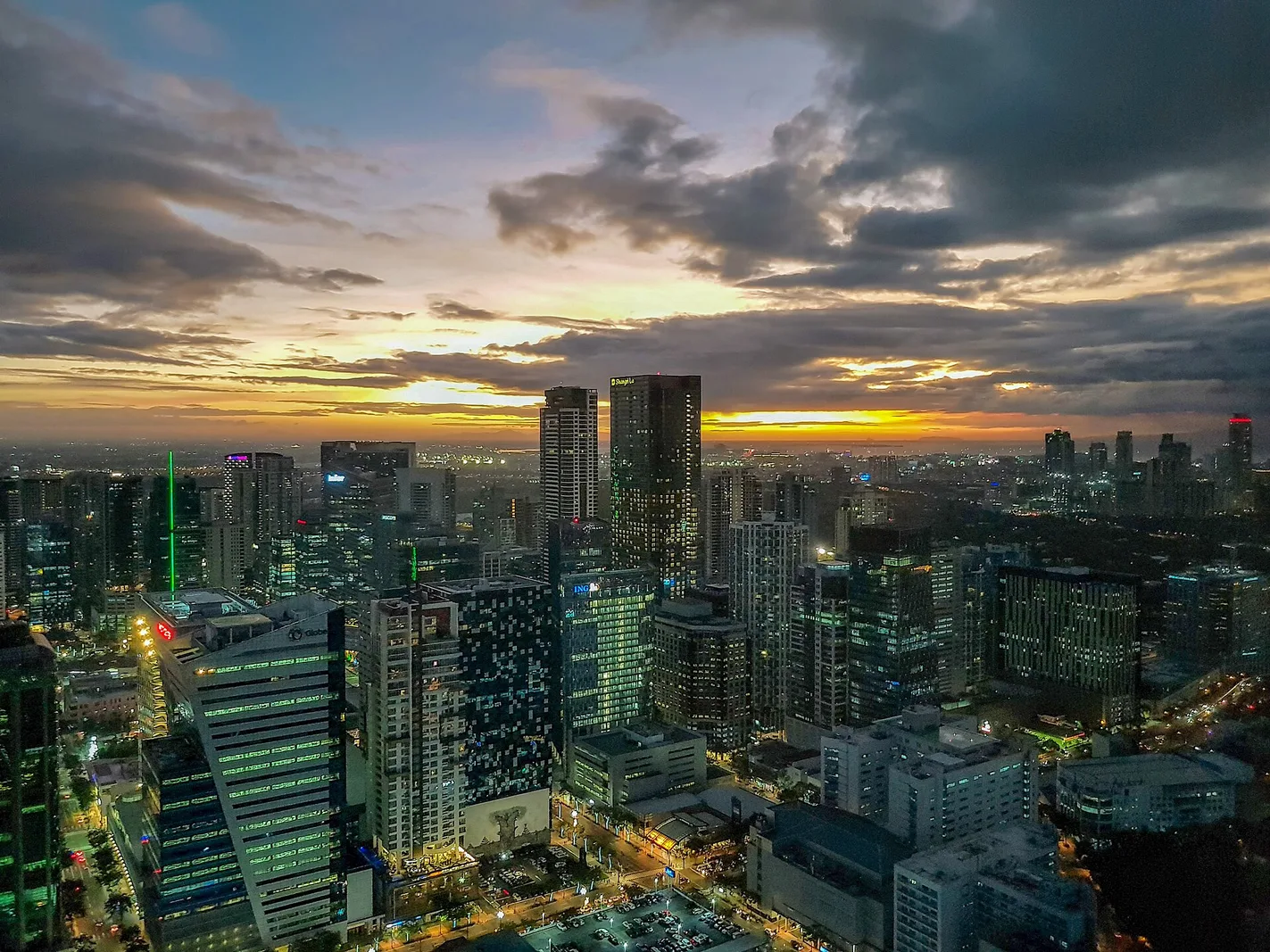
Makati proper around Ayala Avenue is the business district with the malls attached. Poblacion, inside it, is the dense nightlife and eating quarter and is genuinely walkable. BGC in Taguig is a separate newer district - cleaner, quieter, more corporate.
All three work as a stopover base. Choose on whether you want bars downstairs or a quiet street, because the airport transfer is similar from each.
The eTravel registration
The Philippines requires an online arrival registration completed shortly before landing, producing a QR code checked at immigration. It is free, takes a few minutes, and applies regardless of nationality or visa status.
Do it before boarding rather than in the immigration hall on airport wifi. It is the commonest avoidable delay for first-time arrivals.
Onward: domestic flights and the northern alternative
Domestic check-in closes well before departure and counters do not stay open for late arrivals. Two hours before departure is the working minimum, and that is two hours at the correct terminal.
For northern Luzon, Clark (CRK) is the alternative - buses from Metro Manila take two to three hours, and flying out of Clark avoids crossing Manila. It works well when you are already north of the city and poorly when you are in Makati trying to save on the fare.
What most guides get wrong about getting to Makati
The first error is treating NAIA as one airport for connections. The terminals are separate and the transfer is on public roads.
The second is quoting a fixed NAIA-to-Makati time. It varies by hour more than almost any transfer in the country.
The third is recommending Clark for a Makati-based trip. Two to three hours of bus each way undoes the fare saving unless your plans are already northern.
Money on arrival
Airport exchange rates are poor and airport ATMs charge a per-withdrawal fee on top of whatever your own bank takes. Change a small amount for the taxi and the first day, then use a city ATM or a money changer in Makati for the rest.
Carry small notes. Tricycles, jeepneys, terminal fees and port charges across the whole country are cash-only, and breaking a large note at a jetty counter is a slow way to start a transfer.
Moving around the city
Ride-hailing is the practical default and works from everywhere. The MRT and LRT exist and are cheap, but they are crowded and do not serve the routes most visitors want.
Plan two things per day in one district rather than three across the city. That single adjustment makes Manila a far better place to be, and it applies whatever the season.
Which terminal is which at NAIA
Terminal 1 handles most foreign carriers, Terminal 2 was historically the Philippine Airlines terminal, Terminal 3 takes a mix of international and domestic airlines, and Terminal 4 is the small domestic one.
Assignments do change, so the rule that survives is procedural: check the terminal on your booking the week before you fly, and again the day before. Arriving at the wrong NAIA terminal costs an unplanned road transfer in traffic you cannot predict.
Onward to the islands
Eight of the eleven domestic routes in our table start in Manila, which is why most Philippine itineraries include a departure from here the day after a long-haul arrival.
If that is your plan, an airport-area hotel for the first night removes city traffic from the equation entirely. Domestic check-in closes well before departure and counters do not stay open for late arrivals, so two hours before the flight is the working minimum - at the correct terminal.
Getting to Intramuros, the one sight worth the traffic
Intramuros is about half an hour from Makati off-peak and is the actual reason to spend a day in Manila. A walking tour costs PHP 500, or PHP 300 for the budget version - the cheapest guided product in our entire inventory.
Go in the morning before the heat and the traffic build. Fort Santiago and San Agustin fill a morning, and the bay sunset cruise at PHP 400 is a natural way to end the day nearby.
Frequently asked questions
How long from NAIA to Makati?
Twenty minutes to over an hour on the same route, depending entirely on the time of day.
Are the NAIA terminals connected?
No. All four are separate buildings; changing terminal means leaving the airport by road.
How much time do I need between flights?
Three hours minimum for separately booked flights, especially if the terminal changes.
What is eTravel?
A free online arrival registration producing a QR code checked at immigration. Complete it before boarding.
Should I use Clark instead?
Only for northern Luzon. It is two to three hours from Metro Manila by bus.
Makati, Poblacion or BGC?
Makati and Poblacion for food and nightlife, BGC for a quieter and more corporate base. Airport transfer is similar from all three.
Book tours, hotels & stays in Makati
Top tours
Top hotels
Top stays