Cebu City at dusk does not announce its best meals. They simmer in dented woven baskets on roadside carts, sizzle over coconut-husk charcoal, and stack up on bamboo skewers under a single hanging bulb. This is a place where the most memorable food rarely sits behind glass or a printed menu, and where knowing which cart to trust is half the meal. A Cebu street food tour with a local guide is exactly that knowledge, walked and eaten one stop at a time. You are not just sampling dishes; you are reading a 450-year-old port city through its grease, smoke, and vinegar.
Cebu Street Food Tour with Local Guide - Guide
Trip.com
Search on Trip.comHotels in Philippines
Compare live prices via Travelpayouts — targeted for this guide.
Cebu is the oldest city in the Philippines, founded by the Spanish in 1565 around the harbor where Ferdinand Magellan had landed in 1521. That long history as a trading port shaped the plate. Chinese merchants brought noodles and the soy-and-vinegar instinct; Spanish friars and colonizers left empanadas, leche flan, and a love of pork; the surrounding Visayan farms and the Visayan Sea supplied the rest. Your guide threads this together as you eat, so a skewer of grilled pork stops being a snack and becomes a small lesson in who passed through this island.
The Setting: A Port City Built for Eating Outdoors
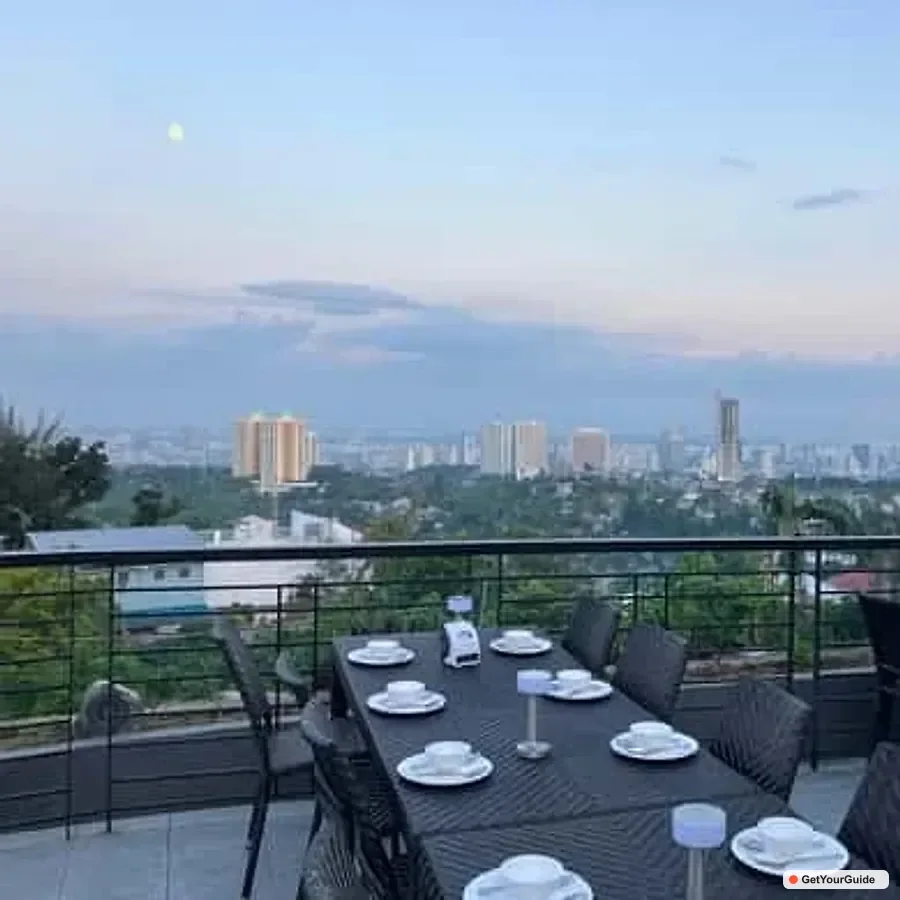
Cebu City sits on a narrow coastal strip on the east side of long, mountainous Cebu Island, hemmed between the sea and a steep limestone spine that rises just behind downtown. That geography matters at the table. The reefs and channels of the Visayan Sea make seafood cheap and central, while the cooler uplands toward Busay and the Transcentral Highway grow the calamansi, chilies, and vegetables that sharpen the food. Because Cebu's climate is hot and humid year-round, life and cooking spill outdoors, and the late afternoon into evening is when the carts and barbecue rows truly switch on.
The classic territory for a street food walk is downtown and the old core: the streets around Colon (often cited as the oldest street in the Philippines), the lanes near Carbon Market, and the legendary barbecue and seafood alleys. Specific stops vary by guide and by what is freshest that night, but the rhythm is consistent: you move on foot through working neighborhoods, eat standing up or on plastic stools, and let the guide order in Cebuano so you taste what locals actually eat rather than the tourist-facing version.
Trip.com
See all tours in Philippines on Trip.comFood tour in Philippines
Hand-picked experiences in Philippines — book on Trip.com with instant confirmation.
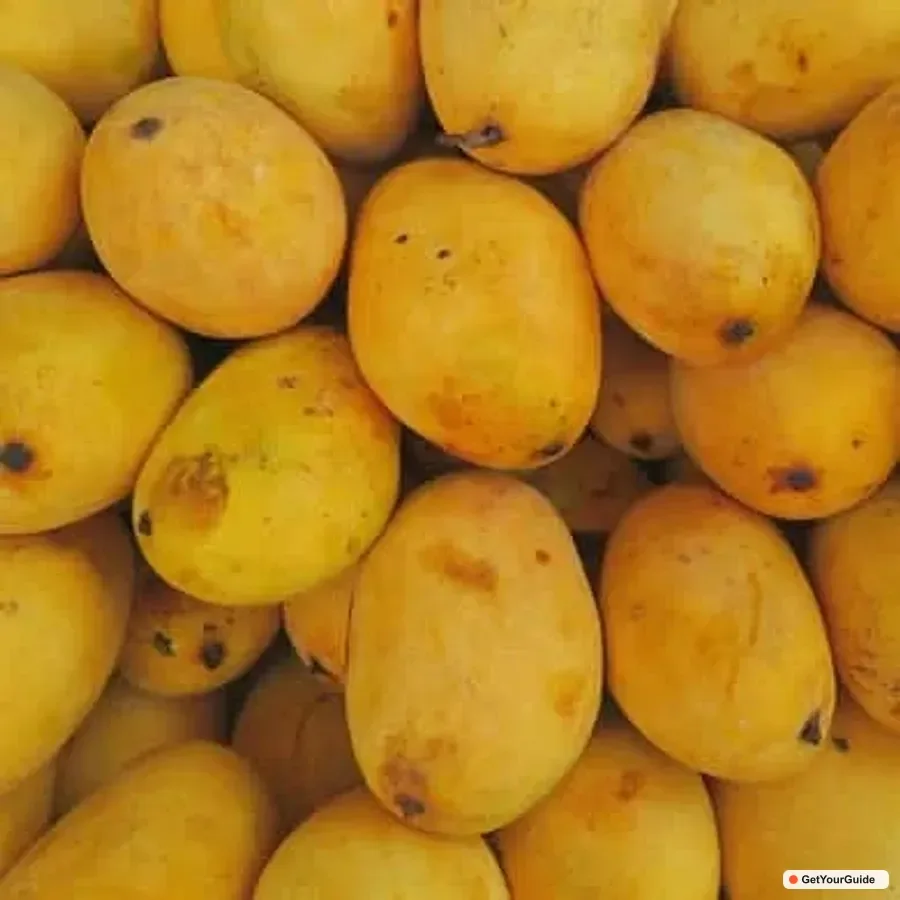

What You Actually Eat, Stop by Stop
No two tours are identical, but a well-run Cebu street food walk almost always covers this canon:
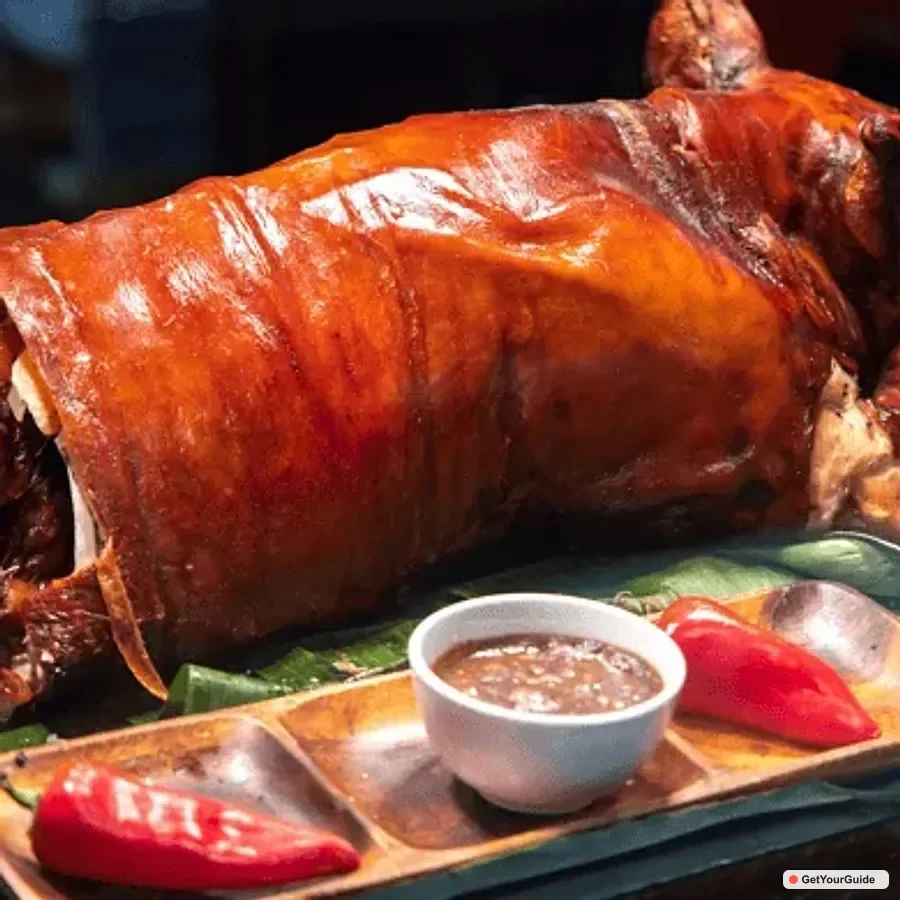
- Cebu lechon - Cebu's signature roast pig is internationally famous for a reason. Unlike many other regional styles, Cebuano lechon is seasoned heavily in the cavity with lemongrass, scallions, garlic, and spices rather than relying on a dipping sauce, so the meat itself is savory and the skin shatters like glass. Tasting good lechon, sliced fresh, is often the centerpiece.
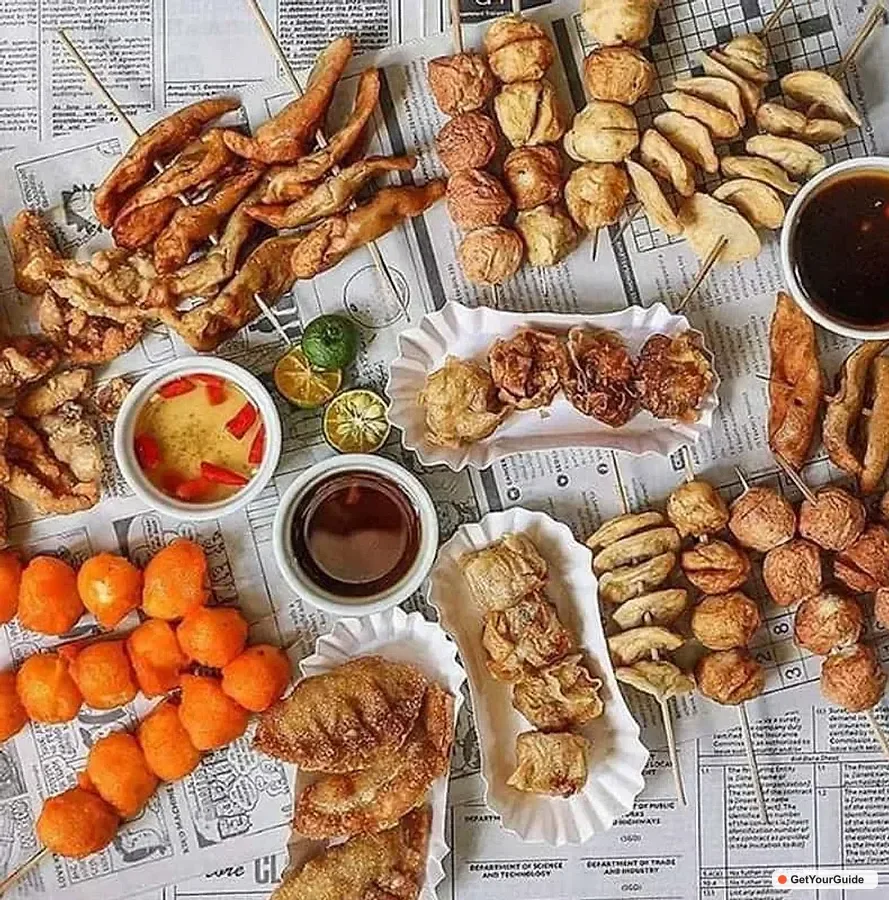
- Pungko-pungko - a quintessentially Cebuano experience where you crouch (the name comes from squatting) at a low table piled with deep-fried snacks: chicharon bulaklak, longganisa, lumpia, and more, eaten by hand with a small bag of spiced vinegar. You grab what you want and pay for what you ate.
- Ngohiong - Cebu's distinctive spring roll, a Chinese-Filipino hybrid of julienned vegetables and ubod (heart of palm) wrapped and fried, dunked in a thick, garlicky sauce. It is a Cebu specialty you will not find done the same way elsewhere.
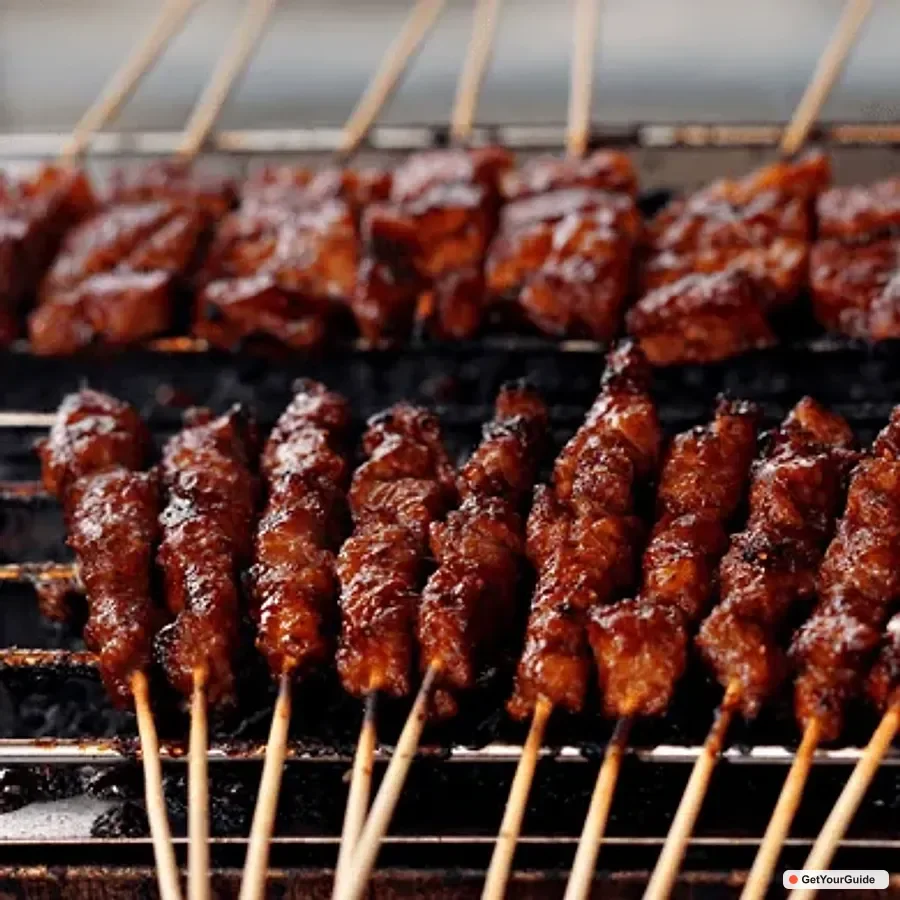
- Grilled street barbecue and "exotic" skewers - pork barbecue, chicken, and the famously named items: isaw (intestines), tinae, chicken ass, and betamax (cubes of congealed pork or chicken blood, named for the old video cassette shape). Your guide will tell you honestly what each is and let you choose your bravery level.
- Seafood, grilled to order - in the seafood paluto rows you point at fresh fish, squid, or shells and have them grilled on the spot, brushed with a soy-calamansi marinade.
- Puso (hanging rice) - rice boiled inside little woven coconut-leaf pouches, the essential carb partner to barbecue. Learning how it is woven and why street vendors use it is a small highlight.
- Sweets and drinks - depending on the route, this can include puto, bibingka, sticky-rice treats, fresh buko (young coconut) juice, or local sweets that close the walk.
Why a Local Guide Changes Everything
Street food anywhere rewards insider knowledge, but in Cebu it is almost essential. The best carts are unsigned, the best lechon stalls are known by reputation rather than branding, and the difference between a great vendor and a forgettable one is invisible to a visitor. A local guide does the ordering, handles the Cebuano, knows which stall fries fresh versus reheats, and steers you through the food-safety questions every traveler quietly worries about - choosing busy, high-turnover vendors where the oil and ingredients move fast.
Just as valuable is the storytelling. A good guide explains why Cebu eats the way it does: the Chinese-Filipino fusion behind ngohiong, the Spanish colonial roots of the sweets, the working-class genius of puso rice that let dockworkers and market sellers eat on the move. You leave understanding the city, not just full.
Practical Tips for the Walk
- Best time: Late afternoon into the evening is prime, when the barbecue and seafood rows light up and the heat of the day eases. Cebu is hot and humid all year; the drier, more comfortable stretch is roughly December through May, while June to November brings more rain and the possibility of typhoons that can disrupt outdoor eating.
- How strenuous: Easy to moderate. It is a walking tour over real city streets and pavement, usually a couple of hours, at a relaxed pace with frequent stops to eat. Comfortable closed shoes beat sandals on uneven, sometimes wet ground.
- What to bring: Cash in small bills (street vendors do not take cards), a refillable water bottle, hand sanitizer or wipes, and a light, breathable outfit. A small appetite-management strategy helps - pace yourself, because there is more food than first-timers expect.
- Typically included: Most tours include the food and drink tastings across the stops and your guide. Confirm in advance whether all tastings are covered or whether you pay for a few extras, and always flag dietary needs (pork-heavy menus, shellfish, spice) when booking so the route can be adjusted.
- Responsible travel: Eating where locals eat directly supports small family vendors and market sellers, which is one of the most direct ways tourism money reaches ordinary Cebuanos. Bring your own bottle and skip single-use plastics where you can, tip fairly, and be respectful with photos - these are people's livelihoods and homes, not a set.
- Comfort honesty: Street food carries some inherent risk anywhere. The mitigation is exactly why you hire a guide: stick to their vendor choices, eat things hot and freshly cooked, and ease into the more adventurous skewers rather than diving in.
A Last Bite
By the end of a Cebu street food tour you will have eaten standing in an alley, squatted at a pungko-pungko table with vinegar on your fingers, watched skin crackle off a fresh lechon, and tasted a spring roll that exists nowhere else quite the same way. More than that, you will have read the city the way Cebuanos do - through its port-town fusions, its working-class ingenuity, and its refusal to put its best food anywhere but the open street. Come hungry, follow your guide, and let the oldest city in the Philippines feed you the way it has fed sailors, traders, and dockworkers for centuries.
Good to know before you book
- Duration: typically a full day (around 8 to 10 hours including transfers), though half-day and multi-day options exist - check the listing.
- Best for: couples, families and first-time visitors.
- What is included: the farm or class, a guide, tastings or a meal and often transfers.
- Pickup: most tours offer hotel or central pickup; confirm your point and time when booking.
- Book through: the GetYourGuide button on this page, which shows live availability and pricing.
Frequently asked questions
How long does the Cebu Street Food Tour with Local Guide take?
Most departures run as a full day - roughly 8 to 10 hours including pickup, travel and the activities themselves - so plan to set aside the whole day. Some operators offer shorter or private versions; the exact timing for your date is shown when you book through the GetYourGuide button on this page.
What is included in the Cebu Street Food Tour with Local Guide?
Typically the price covers the farm or class, a guide, tastings or a meal and often transfers. Inclusions vary by operator, so always read the specific listing - it spells out exactly what is provided and what you pay for separately, such as entrance or environmental fees.
What should I bring?
Pack comfortable closed shoes for farm ground, a hat, sunscreen, water and an appetite for the tastings. It is also worth carrying some cash for local fees, drinks and tips, plus any personal medication, since card facilities can be limited outside the cities.
Is the Cebu Street Food Tour with Local Guide suitable for beginners or families?
It is relaxed and family-friendly, suitable for all ages and fitness levels - a gentle, hands-on experience rather than a strenuous one. If you have specific concerns about age, fitness or swimming ability, message the operator before booking - they can advise on the best option for your group.
When is the best time to do this tour?
The best conditions are usually the dry months of December to May, with calm seas for snorkelling and diving. That said, the Philippines is a year-round destination, and many of these experiences run in any season - just expect the occasional shower and check the forecast for the day.
How do I get to Cebu City?
To reach Cebu City, fly into Mactan-Cebu International Airport, then drive south (about 3 to 4 hours to the southwest coast). Many tours include transfers from nearby towns or hotels, so confirm your pickup arrangement when you book so the day runs smoothly from the start.
Do I need to book the Cebu Street Food Tour with Local Guide in advance?
Yes - booking ahead is strongly recommended, especially in the dry-season peak and on weekends, when popular tours and the best operators sell out. Reserving online also locks in your spot and lets you compare timings and inclusions easily.
How much does the Cebu Street Food Tour with Local Guide cost?
Prices vary with the season, group size and exactly what is included, so we do not list a fixed figure here. Tap the GetYourGuide button on this page to see the current, accurate price and availability for your chosen date.
Can I do the Cebu Street Food Tour with Local Guide as a private or customised tour?
Many operators offer a private version of this experience for couples, families or small groups who want a flexible pace and a guide to themselves, and some can tailor the route or add stops. If a private or custom option matters to you, check the listing or message the operator before booking, as availability and prices differ from the standard shared tour.
Ready to explore Cebu City?
From planning to the moment you arrive, the Cebu Street Food Tour with Local Guide is one of the most rewarding ways to experience this corner of the Philippines - and booking it is simple. Use the GetYourGuide button on this page to check live availability, compare timings and secure your spot, then turn up and let the local guides handle the rest while you focus on the views, the water and the memories.

PANA.PH Editorial Team
Philippines travel desk
The PANA.PH travel desk researches, books and re-checks Philippines travel logistics — fares, ferry schedules, government fees and permit rules — and publishes what it can verify.
🏡 Real local stays (book direct)
Hand-picked homestays and guesthouses — book direct, no markup.
Browse all local stays →


🌊 Popular activities (book instantly)
Island hopping, canyoneering, whale sharks — real Klook/GetYourGuide options.
View all activities →