Picture this: you're standing on a narrow rock ledge, 15 metres above a pool of water so blindingly turquoise it looks fake, your guide giving you an encouraging nod, your knees doing something involuntary. Below you, your friends have already jumped and are shouting up at you from the water. You take a breath, step off — and for a brief, weightless second, the jungle canopy blurs past you before you plunge into the coldest, clearest water you've ever felt in your life.
Kawasan Falls Canyoneering: The Complete Guide (2026 Prices, Tips & What to Expect)
Trip.com
Search on Trip.comHotels in Philippines
Compare live prices via Travelpayouts — targeted for this guide.
That's Kawasan Falls canyoneering. And it is, without question, the best half-day adventure the Philippines has to offer.
The Kawasan Falls system in Badian, southern Cebu, is famous for its multi-tiered turquoise waterfalls — a staple of every Cebu Instagram feed. But most people don't realise that the falls are actually the finish line of a full canyoneering route that takes you upstream through gorges, underground rivers, natural rock slides, and a series of cliff jumps that range from "nervous but manageable" to "genuinely terrifying (optional)." This guide covers everything: prices, logistics, what to expect step by step, who can do it, and how to squeeze a whale shark encounter into the same day.
Two Ways to Experience Kawasan Falls
Before diving into logistics, it's worth knowing you have two very different options here:
Trip.com
See all tours in Philippines on Trip.comCanyoneering in Philippines
Hand-picked experiences in Philippines — book on Trip.com with instant confirmation.
Option 1: Full Canyoneering Tour (4–5 Hours)
This is the one everyone is talking about. You start at Matutinao village, work your way downstream through the canyon system — trekking, swimming, jumping, sliding — and end at the iconic Kawasan Falls main pool. Cost: PHP 1,500–1,800 per person for a local guide (this includes safety equipment). Organised day tours from Cebu City typically bundle this with transport and run PHP 2,500–3,500 all-in. This is the experience worth planning your whole Cebu day around.
Option 2: Waterfall Visit Only (1–2 Hours)
If cliff jumping is a hard no and you just want to see the waterfalls, you can hike in from the Badian end and reach the main pool without doing the canyon route. You'll still need to hire a local guide (mandatory, enforced by the barangay) and pay the environmental fee. Cost for the basic visit is roughly PHP 200–300 per person including the guide fee. You'll also want to splurge on a bamboo raft ride (PHP 150/person) across the main pool — the water is so clear you can see every pebble on the bottom from the raft. It's stunning, but it's a fraction of the full experience.
For the purposes of this guide, we're focusing on the full canyoneering tour, because that's why you're here.
Getting There from Cebu City
Kawasan Falls is about 100 kilometres south of Cebu City — roughly 3–4 hours by road depending on traffic and route. You have two realistic options:
Option A: Organised Day Tour (Easiest, Most Popular)
Book a full-day tour from Cebu City that includes return transport, a licensed canyoneering guide, safety gear, and the environmental fee. Expect to pay PHP 2,500–3,500 per person. Tours typically depart at 5–6am from Cebu City, get you to Badian for a 7:30–8am start, and return to Cebu City by 5–6pm. This is the smart choice if you don't want to deal with multiple jeepney connections and habal-habal negotiations on a tight schedule.
Klook and local Cebu tour operators (check Facebook groups like "Cebu Adventures") both offer this. We compare Klook vs. local guides in detail below.
Option B: DIY (Cheaper, More Flexible)
Take a bus from Cebu South Bus Terminal (Bacalso Avenue, near the South Road Properties) to Bato via Dalaguete. Air-conditioned buses run regularly from 4am. Journey time: about 2.5 hours, cost: around PHP 100. Tell the driver/conductor you're going to Badian or Kawasan Falls — they know the drop-off point. From the highway drop-off in Badian, catch a habal-habal (motorcycle taxi) to Matutinao village, where canyoneering registration starts. Habal-habal cost: PHP 80–120 per person. You'll then hire a guide on-site. Total DIY cost: roughly PHP 600–800 per person round-trip, plus guide fees on the ground. It's more hassle but works perfectly fine if you're a confident independent traveller.
What Canyoneering Actually Involves: Step by Step
Here's exactly what happens on the full canyoneering route, in order:
Registration and Briefing at Badian
Before you start, your guide will register your group at the official barangay registration point. You pay the PHP 350 environmental fee here — this is non-negotiable, goes to the local community, and funds trail maintenance and rescue operations. You'll be fitted with a life jacket (mandatory for everyone, regardless of swimming ability) and a helmet. Your guide will run through the safety rules: jump feet-first, always check the pool is clear before you jump, follow the guide's cues, and never rush. Listen carefully — these aren't just formalities.
The 45-Minute Intro Trek Upstream
The route begins with a hike upstream along the riverbank and through the jungle. The trail is well-worn but can be slippery when wet — this is where proper footwear matters. You'll wade through ankle-to-knee-deep sections of the river, scramble over boulders, and start to get a feel for the canyon environment. The canyon walls close in around you and the air gets noticeably cooler as you descend deeper into the gorge. The water is a stunning blue-green even before the action starts.
First Jump: 5 Metres (Optional)
The route's first jump is the gentlest — a 5-metre ledge into a deep pool. Guides will offer a gentle nudge of encouragement (psychological, not physical — jumping is always your choice), but nobody is ever forced. If you want to skip any jump on the entire route, you can bypass it via a scrambling path around the pool. That said, the 5-metre jump is the one most people surprise themselves by doing. The water entry is clean and the pool is deep. Most first-timers come up from the water laughing.
The 10-Metre Cliff Jump at Cambubulgan
The route's mid-point jump steps things up to 10 metres. This is where the genuine nervous energy kicks in. The ledge is wide enough to stand comfortably but 10 metres looks very different when you're on top of it vs. looking up from below. Feet together, arms crossed over your chest, step out — don't jump forward, just step off the edge. You'll plunge deep, the life jacket pops you back up fast. Exhilarating doesn't begin to cover it. Again, there's a bypass route if you want to walk around.
The Underground River Section
One of the most unexpected highlights of the route: a section where the canyon narrows into a low cave and you swim through an underground passage in near-total darkness. Guides carry headlamps (or share them with groups), and you'll swim single-file through cool, still water with rock walls inches from your shoulders. It lasts about 5–10 minutes and is genuinely atmospheric — the sound of rushing water echoes off the cave walls, your headlamp cuts a narrow beam through the dark, and you emerge blinking into a sunlit gorge pool on the other side. Brilliant.
The Slide Sections
Scattered through the route are several natural and semi-improved rock slides — smooth rock chutes worn by centuries of water flow that send you whooshing into pools at the bottom. Some are natural, some have been lightly improved by adding concrete edges for safety. All are enormous fun. Guides usually go first to demonstrate the correct body position (lean back, arms up, feet first) and spot you at the bottom.
The 15-Metre Cliff Jump (Optional)
The big one. The signature jump. Fifteen metres is a serious height — roughly equivalent to a 5-story building — and the approach is a narrow ledge that requires the guide's help to reach. From the top, the pool below looks impossibly far away. This jump is genuinely optional with no peer pressure (at least from your guide) and the bypass is easy. But if you've made it this far and jumped the 10-metre, your body is already in the zone. People who skip the 10m but do the 15m are rare. People who do the 10m and skip the 15m are common. People who do both are very, very happy with themselves. Entry: feet together, chin up, arms out. The impact is hard but the life jacket buoys you fast.
Arrival at Kawasan Falls Main Pool
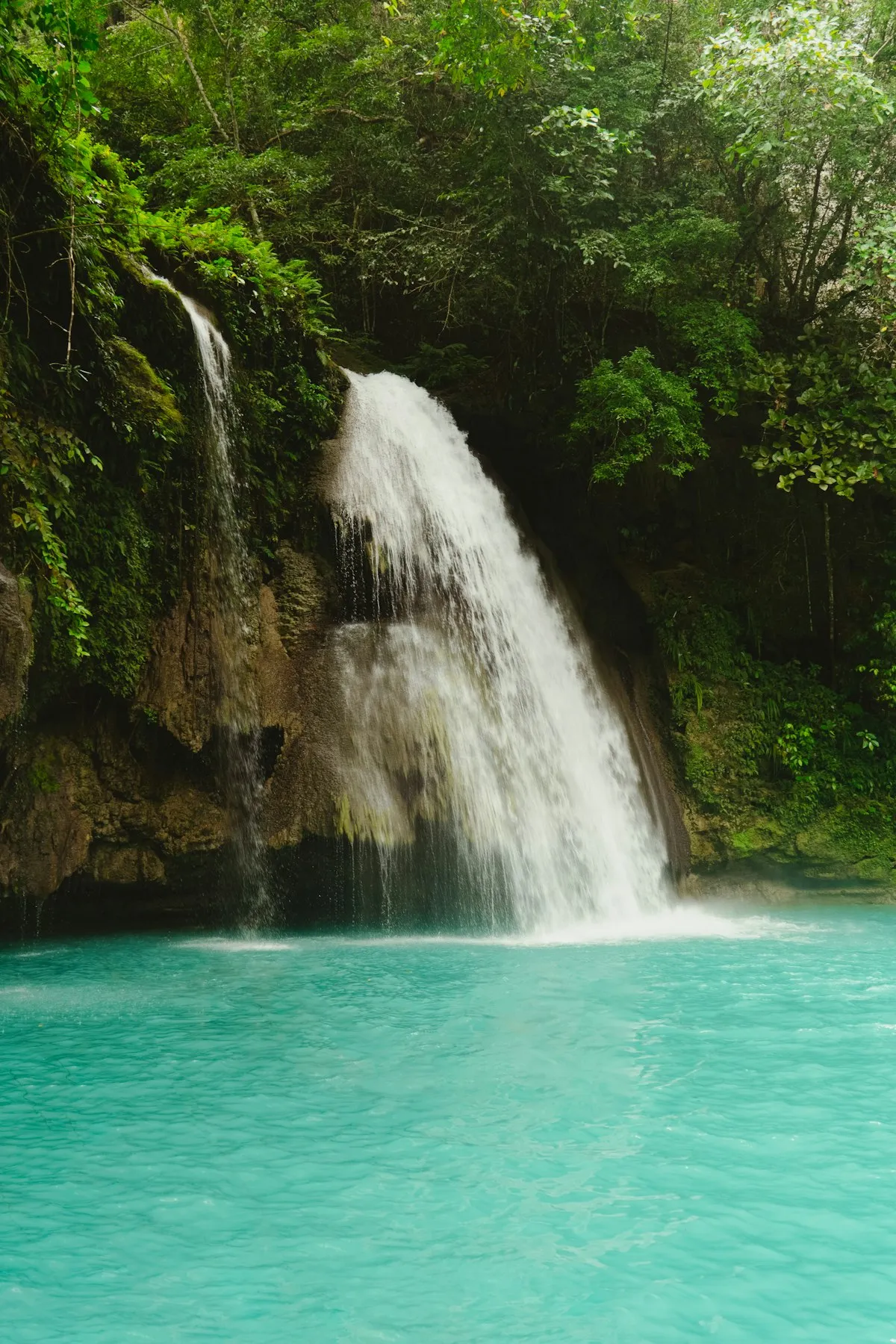
And then — after 4 to 5 hours of trekking, swimming, jumping, and sliding — you turn a final corner in the canyon and the main Kawasan Falls comes into view. It's absurdly beautiful. Three tiers of white water cascade into a pool of blue-green that looks genuinely tropical-paradise unreal. The mist from the falls keeps the air around the pool cool and fresh. Bamboo nipa-style restaurants line the shore serving cold San Miguel and grilled fish. You've earned this.
Take the bamboo raft ride (PHP 150/person) to get up close to the falls — the raftsmen pole you through the shallow pool as the falls mist down on you. It's the perfect punctuation mark on a perfect half-day.
Physical Requirements: Who Can Do This?
Can a non-swimmer do canyoneering? Yes — everyone wears a mandatory life jacket for the entire route, and the swimming sections are shallow enough that a non-swimmer floating in a life jacket is perfectly safe. Guides stay close. The underground river section requires you to be comfortable with your face near water but doesn't require actual swimming technique. That said, if you're deeply hydrophobic (not just non-swimmer, but actively panicky around water), the underground section in particular might be overwhelming.
How fit do you need to be? Moderate fitness is enough. The 45-minute trek is not technical — it's hiking over rocks and wading through shallow water. If you can walk uphill for 30 minutes without stopping, you can do this. The jumps are momentary events, not sustained physical exertion. Children as young as 10–12 regularly complete the route with family groups. Elderly guests in their 60s do it too. What matters more than fitness is a reasonable comfort with heights and cold water.
What if I panic at a jump? You bypass it and nobody says a word. Guides are used to this and the bypass routes are built into the experience for exactly this reason.
What to Bring
- Footwear: Water shoes or sandals with straps (Teva-style) are ideal. Flip-flops will be lost in the first river crossing. Bare feet on the rock slides are not fun.
- Waterproof bag or dry bag: For your phone, cash, and anything else that can't get wet. A basic drybag costs PHP 200–400 at any Cebu sports shop.
- Change of dry clothes: You will be soaked at the end. Pack a full change in a plastic bag in your bag.
- Sunscreen: Apply before you start — once you're in the canyon, reapplication is tricky and the midday Cebu sun is intense.
- Cash: PHP 1,000–2,000 in cash for fees (environmental fee, guide tip, bamboo raft, food). There are no ATMs near the start point.
- Light snack or energy bar: The route burns energy. Guides often carry basic snacks but don't count on it.
Leave valuables and non-waterproof electronics at your hotel. You won't need them and you will lose them.
Safety: The Honest Picture
Kawasan Falls canyoneering has had accidents — a small number of fatalities over the years, usually involving people attempting the route without licensed guides, or who ignored guide instructions at the jump points. The formal tour structure (registered guides, mandatory life jackets, helmet, environmental fee) was partly established in response to early safety concerns and has significantly improved the track record.
Follow the guide's instructions at every jump — specifically, always check the pool below is clear before you go (the guide does this, but look yourself too). Never jump feet-first into shallow water. Don't rush, especially near the end when you're tired and confidence has (perhaps overconfidently) built up. The 15-metre jump is a serious jump — not a novelty for showing off. The guides know what they're doing. Trust them.
The route is well-regulated compared to many adventure activities in the Philippines. If you book through a legitimate operator, comply with all safety briefing instructions, and don't attempt to freelance on any jump, the risk profile is comparable to zip-lining or whitewater rafting.
Best Time of Day to Start
Start as early as possible — 7:00–8:00am is ideal. Two reasons: first, the canyon route takes 4–5 hours and you want to finish before the midday heat makes the post-canyon trek back uncomfortable (though the canyon itself stays cool). Second, and more importantly, Kawasan Falls is one of the most popular activities in Cebu. By 9:30–10am, groups are queuing at the jump points, the underground section gets crowded, and the main falls pool fills up with day-trippers. An early start means you'll have most of the canyon to yourself.
Tour operators who claim you can start at 10am and it'll be fine are, technically, correct — but the experience is noticeably better at 7am.
Best Season to Visit
November through May is optimal. This is the dry season for Cebu (Amihan — northeast monsoon), which means clear water, minimal rainfall, and stable canyon conditions. The falls are still powerful but not dangerously swollen.
The canyon can close temporarily after heavy rain when water levels rise. During June–October (the southwest monsoon season), rain is more frequent and the canyon occasionally shuts for safety. It doesn't mean you can't visit — Cebu's west coast (where Badian sits) is actually relatively sheltered during habagat — but closures are more likely. Always check with your operator the day before if you're visiting in the wet season.
Water clarity is also best during dry season — that famous turquoise is at its most vivid from December through April.
Where to Eat Afterward
The restaurants at the Kawasan Falls main pool serve solid Filipino food — grilled fish (inihaw na isda), rice, cold drinks, and fresh coconut. Prices are tourist-level but not outrageous (expect PHP 200–400 per person for a meal). These are the most atmospheric post-adventure dining spots imaginable, with the falls misting the air around you.
If you want more options, Badian town proper (10 minutes by habal-habal from the falls) has several small restaurants with more variety. The seafood along the Badian coast is excellent — the area is known for its fishing and the catch is genuinely fresh.
Combine With Oslob Whale Sharks
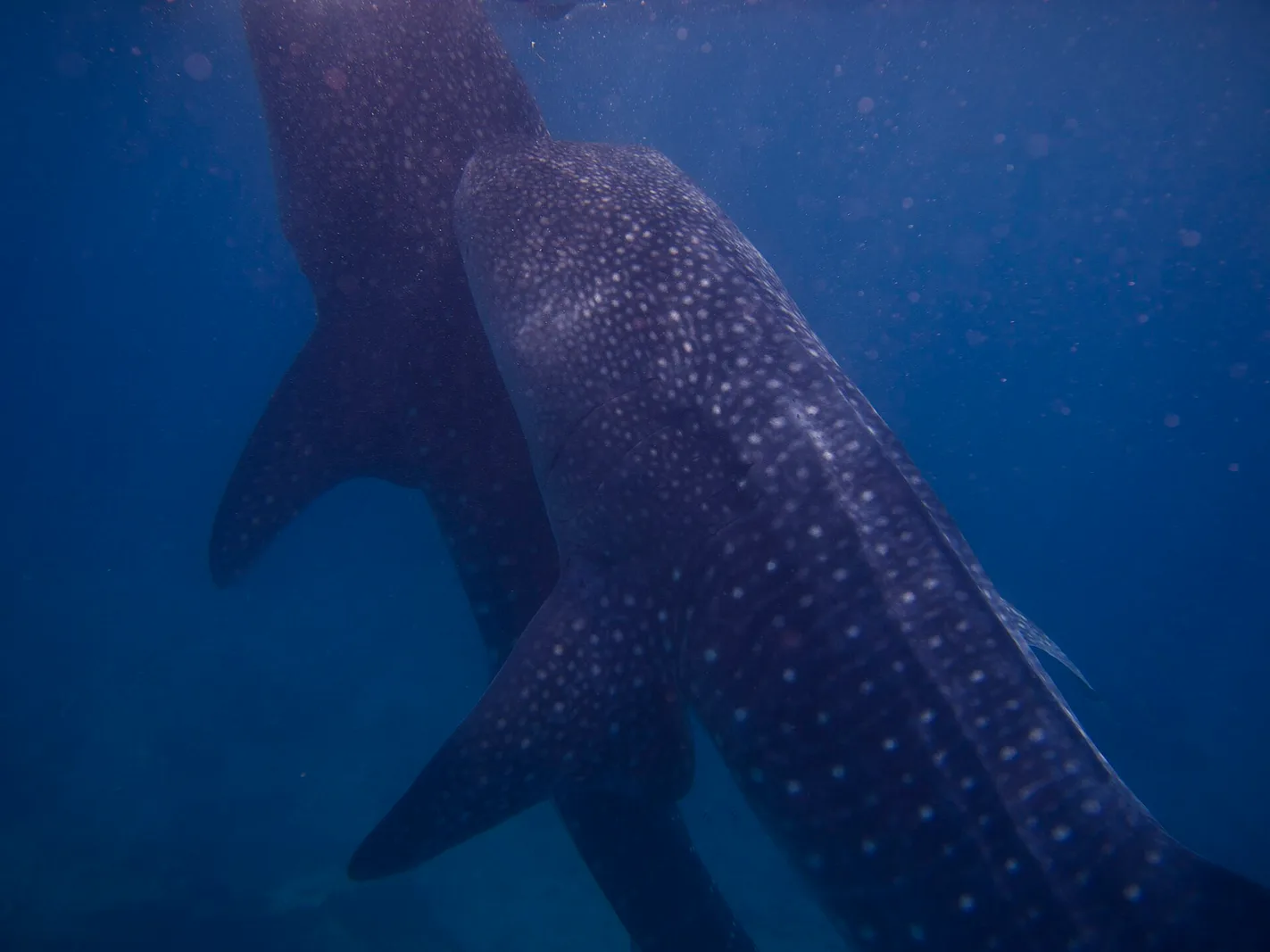
Here's the smartest possible Cebu day trip itinerary: Oslob whale sharks in the morning, Kawasan canyoneering in the afternoon (or reverse, though the morning Oslob timing is more fixed).
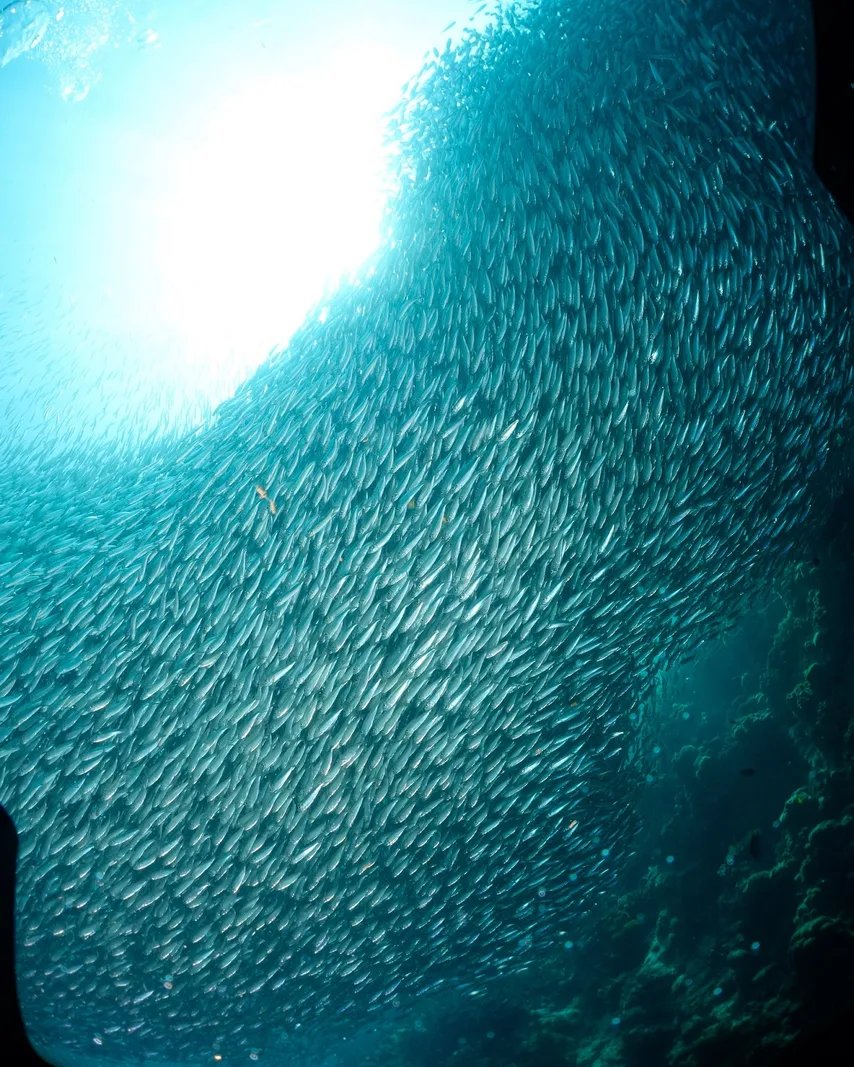
Both Oslob (famous for its resident whale sharks that you can snorkel alongside) and Badian are on the same south Cebu coastal road, about 30 kilometres apart. Every organised Cebu day tour operator runs this exact combination — it's the most popular day trip format in Cebu. You leave Cebu City at 4–5am, hit Oslob for the 6–8am whale shark session when encounters are best, drive 45 minutes south to Badian for a 9–10am canyoneering start, and return to Cebu City by 5–6pm.
It is a long day. It is worth it.
Klook vs. Local Guide: Which Should You Book?
Klook pros: Easier booking (app-based, pay online), traveller reviews, standardised safety gear, English-speaking guides, clear cancellation policy, customer service if something goes wrong. Klook canyoneering packages typically run PHP 2,800–3,500 including transport from Cebu City.
Local guide pros: Cheaper (PHP 1,500–1,800 for canyoneering only if you handle your own transport, or PHP 2,200–2,800 for a local operator's day package), more flexible on timing, supports local Badian-based guide families directly. Quality varies more — ask for licensed BTC (Badian Tourist Council) registered guides specifically.
Our take: First-time visitors or solo travellers will have a smoother experience with Klook or a reputable Cebu tour operator — the transport logistics are handled and the operators have consistent safety standards. If you've done independent travel in the Philippines before and are comfortable with DIY arrangements, going direct to local Badian guides saves money and keeps more of it in the community. Either way, only use registered guides — there are still unlicensed operators around Badian who cut corners on safety equipment.
Frequently Asked Questions
Is canyoneering at Kawasan Falls safe?
Yes, when done with a licensed registered guide, mandatory life jacket, and helmet, and when you follow guide instructions at each jump. The route has a formalised safety framework. Accidents that do occur almost always involve unlicensed operators, people skipping life jackets, or individuals who rush jumps without checking the pool below. Book through a legitimate operator, listen to your guide, and respect the bypass options at each jump point.
How long does the full canyoneering tour take?
The canyon route itself takes 4–5 hours from registration point to the main falls pool. Budget a full half-day: arrive by 7:30am and you'll be relaxing at the falls with a cold drink by 12:30–1pm. If you're combining with Oslob whale sharks, plan for a full 12-hour day leaving Cebu City by 4:30–5am.
What is the age limit for canyoneering?
Most operators require participants to be at least 7–8 years old, though some set the limit at 10–12 for the full jump route. There's no official upper age limit, but guides use common sense with older guests — if someone has mobility issues that would make the boulder scrambling dangerous, guides will advise accordingly. Children under 12 typically skip the larger jumps (10m and 15m) and still have an excellent time on the slides and swim sections.
Can I do just the waterfall visit without canyoneering?
Absolutely. You can hike in from the Badian end, pay the environmental fee (PHP 100–150), hire a short-visit guide (PHP 100–200), and reach the main falls pool in 20–30 minutes. You'll see the famous multi-tiered falls, take the bamboo raft ride, and have a completely beautiful experience — just without the canyon adventure. It's also a great option for groups where some people want to canyor and others prefer the waterfall visit: split up, do your respective activities, and meet at the main pool.
Do I need to be able to swim to do canyoneering?
No. Life jackets are mandatory for the entire route and the swimming sections are designed to be manageable even for non-swimmers with the jacket on. The underground river section involves floating/paddling and does not require swimming technique. Guides stay close to non-swimmers throughout. That said, if you have a genuine phobia of water or closed spaces, the underground cave section may be distressing — it's dark, narrow, and you cannot exit midway. Be honest with your guide about any concerns before you start so they can manage your pace appropriately.
The Bottom Line
Kawasan Falls canyoneering is one of those activities that sounds like a tourist cliche until you actually do it — and then you immediately start planning how to bring every person you know back to do it too. The combination of a jungle canyon route, cliff jumps at escalating heights, an underground river, and a grand finale at one of the most photogenic waterfalls in Southeast Asia is genuinely hard to beat.
Start early, book a registered guide, bring proper footwear, and keep PHP 500 in your dry bag for tips and bamboo raft rides. The Philippines does not have a monopoly on adventure — but Kawasan Falls comes very close to a perfect morning.
See you at the bottom of the 15-metre.

PANA.PH Editorial Team
Philippines travel desk
The PANA.PH travel desk researches, books and re-checks Philippines travel logistics — fares, ferry schedules, government fees and permit rules — and publishes what it can verify.
🏡 Real local stays (book direct)
Hand-picked homestays and guesthouses — book direct, no markup.
Browse all local stays →
🌊 Popular activities (book instantly)
Island hopping, canyoneering, whale sharks — real Klook/GetYourGuide options.
View all activities →