Picture this: you are standing on a mossy boulder deep in a Cebu jungle, the air thick and warm, when someone counts you down and you leap into a pool of water so absurdly turquoise it looks edited. You go under, come up gasping and laughing, and the cliff walls echo it back. This is Kawasan canyoneering in Badian, and for a lot of people it lands somewhere between the most exhilarating and the most beautiful thing they do in the Philippines. Pairing the canyon descent with a jungle zipline turns a great half-day into a full adventure: the slow, surreal river journey downstream, then the rush of soaring above the canopy. It is wet, a little wild, and genuinely unforgettable.
Kawasan Canyoneering with Ziplining Adventure - Guide
Trip.com
Search on Trip.comHotels in Philippines
Compare live prices via Travelpayouts — targeted for this guide.
This guide walks you through what the day actually feels like, why the water is that color, what to bring, and how to do it safely and responsibly.
Where you are: Badian, Kawasan, and that impossible blue
Kawasan Falls sits in the municipality of Badian, on the southwestern coast of Cebu island, roughly a three-hour drive from Cebu City. The falls themselves spill out of the forested interior of the Matutinao River system, and the canyoneering route follows that river upstream of the famous lower falls, through a steep limestone gorge before delivering you to the waterfall everyone recognizes from photos.
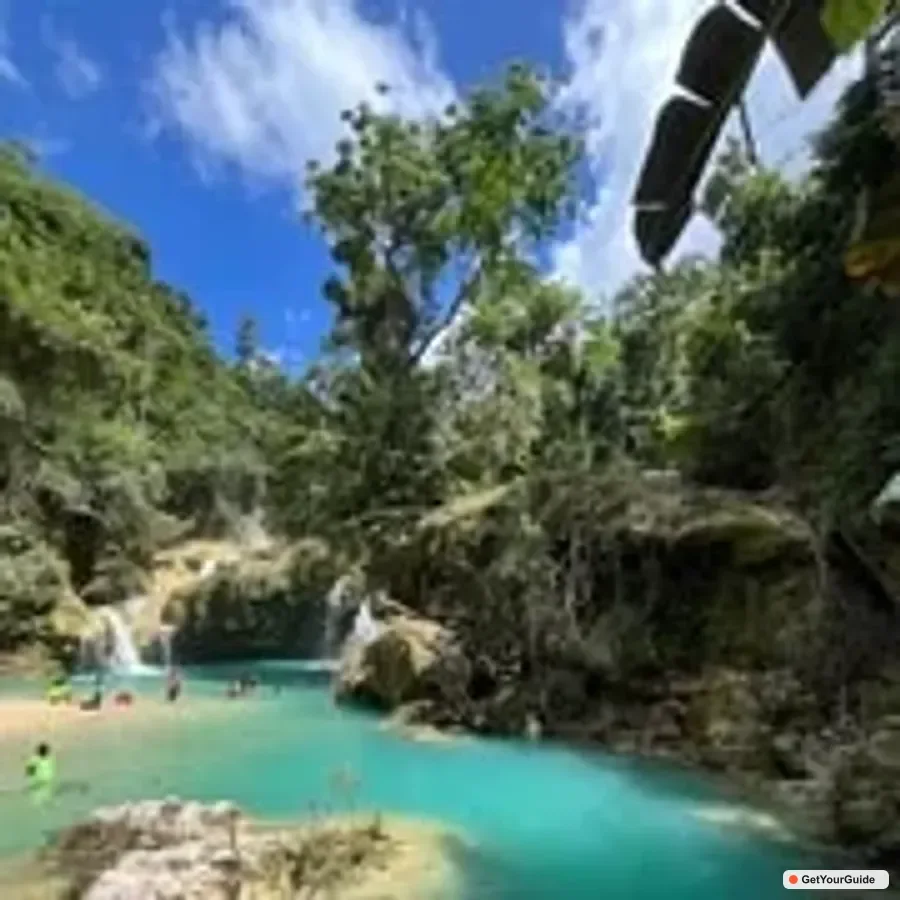
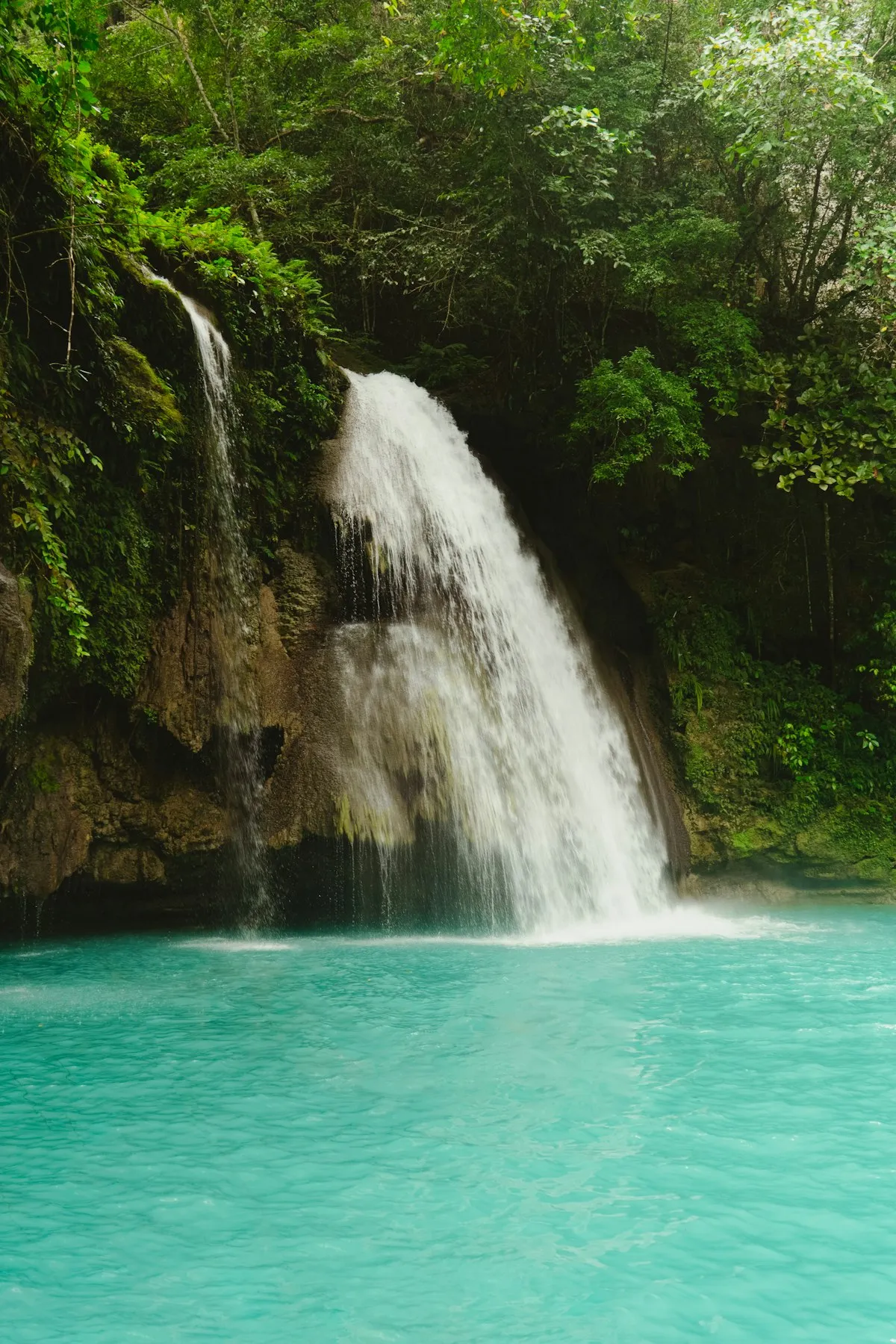
The star of the show is the water. That milky, almost glowing turquoise is not a filter and not pollution. Cebu is built largely of limestone and other carbonate rock, and as rain and groundwater move through it, they dissolve tiny amounts of calcium carbonate. When that mineral-rich water emerges and tumbles down the river, the fine suspended particles scatter sunlight, throwing back the short blue-green wavelengths. The same chemistry is why so many rivers in karst country, from Cebu to Croatia, share that signature opal color. The limestone gorge around you was carved over a very long time by exactly this water, patiently cutting down through soft rock to leave the sheer, sculpted walls you scramble between.
Trip.com
See all tours in Philippines on Trip.comCanyoneering in Philippines
Hand-picked experiences in Philippines — book on Trip.com with instant confirmation.
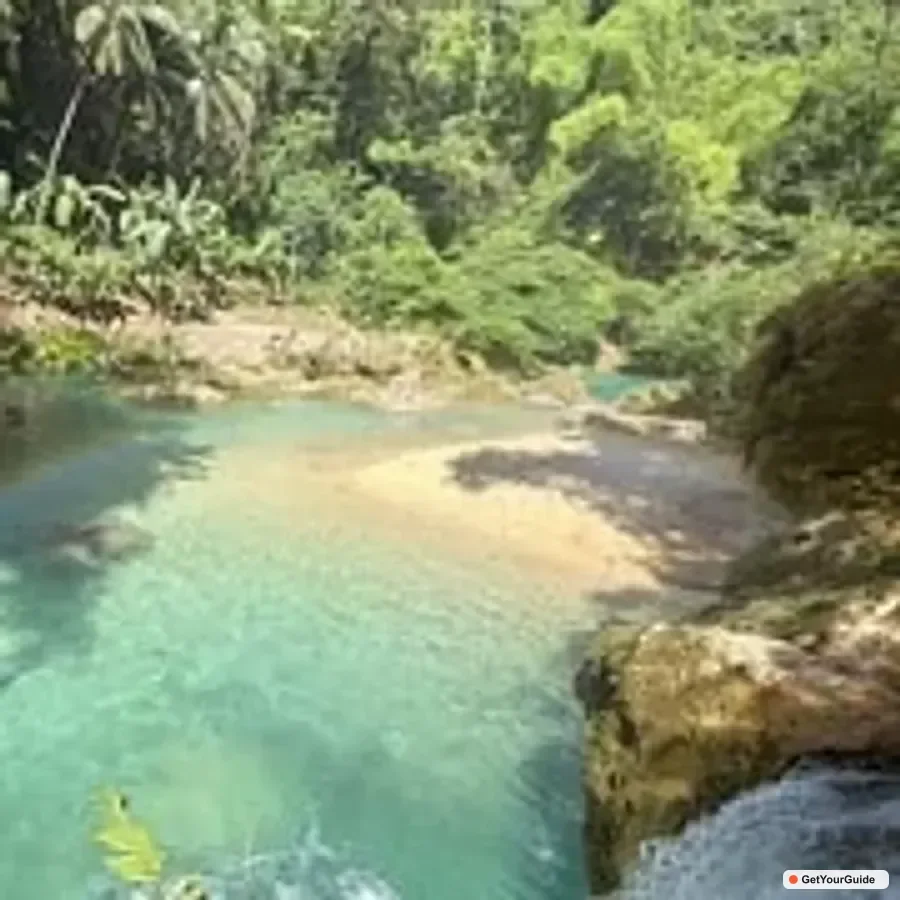
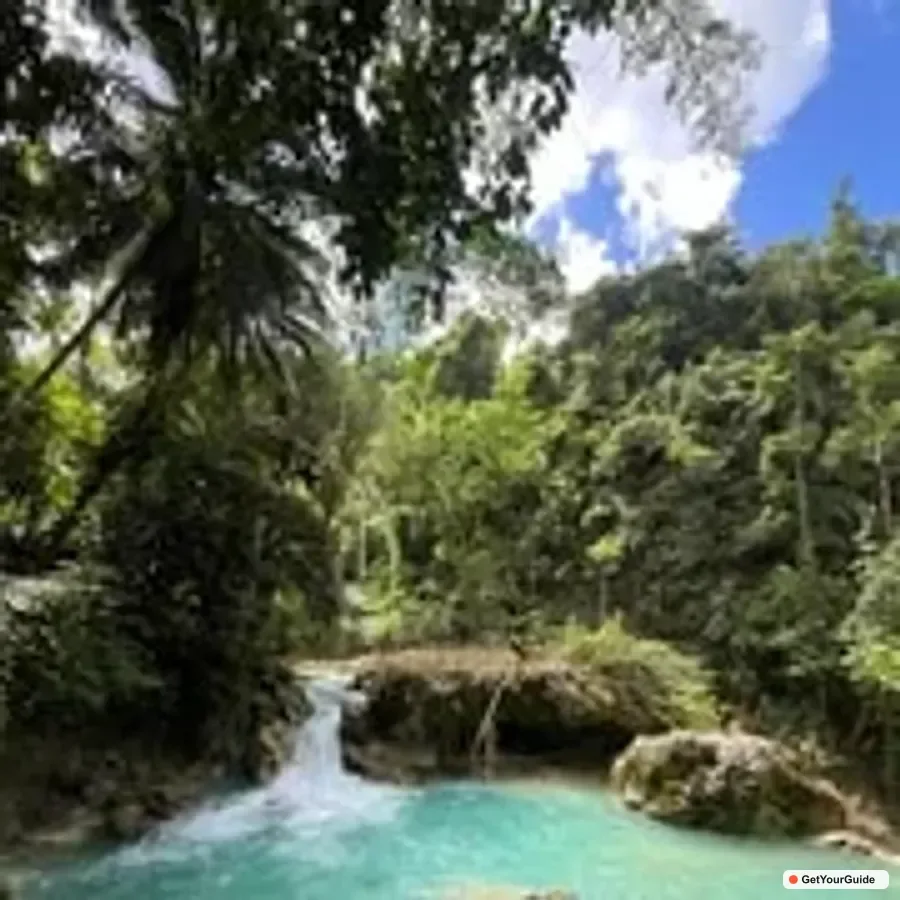
The surrounding forest is part of why the air feels so alive: ferns and vines crowd the banks, kingfishers flash past, and the canyon stays cool and shaded even when the lowlands are baking. It is a genuinely wild stretch of Cebu, which is part of the appeal.
The day, stop by stop
Most trips begin with an early pickup, because the canyon is best done before the midday crowds and afternoon rain. After the drive to Badian, you gear up at a staging area: helmet and a life vest, both non-negotiable, and usually a quick safety briefing from your guide.
Into the canyon
You start upstream and work your way down toward Kawasan. The route is a mix of three things, repeated in different combinations:
- Jumping off ledges into deep pools, ranging from gentle knee-knockers to genuinely tall leaps. Almost every big jump has a lower bypass route, so you are never forced off a cliff you are not comfortable with.
- Swimming and floating through the calm turquoise pools between drops, often the most magical part, drifting along with canyon walls towering on both sides.
- Scrambling, sliding, and short climbs over boulders and natural rock chutes, with the occasional small abseil or guided down-climb.
Guides go ahead to read the water and call out where to land, which matters enormously: jump only where and how they tell you, because depth changes with the season and with rainfall. The whole canyon section typically runs a few hours, and it flows naturally because the river itself is carrying you toward the finish.
Arriving at Kawasan Falls
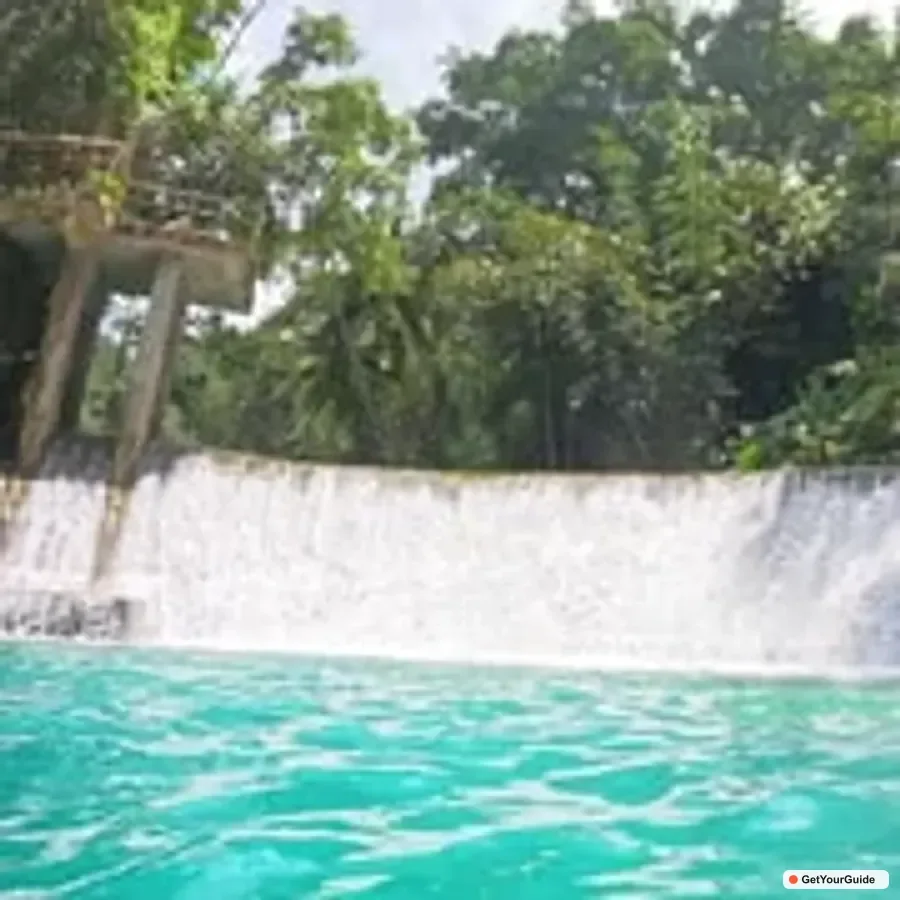
The payoff is sweeping around a bend to the multi-tiered Kawasan Falls, a curtain of that same blue water dropping into a wide basin. After hours in the narrow gorge, the open falls feel like a grand finale. There is usually time to swim, catch your breath, and take photos before the walk out.
The jungle zipline
On the ziplining version of the tour, you trade the river for the treetops. The zipline sends you gliding across a forested valley on a steel cable, harnessed in and clipped to the line, with the canopy and often a river view below. It is a completely different sensation from the canyon: where canyoneering is tactile and immersive, the zipline is pure airy speed and big open scenery. Depending on the operator you may ride seated or in a superman-style horizontal position. It is short but a real thrill, and a great contrast to bookend the wet adventure.
Why it matters, and doing it right
Kawasan canyoneering grew from a small local secret into one of Cebu's signature adventures, and that popularity cuts both ways. On the good side, it has become a real livelihood for Badian: local guides, drivers, gear teams, and small eateries all depend on it. Choosing a licensed, properly equipped operator is the single most responsible thing you can do, because it keeps standards high and money in the community.
A few honest notes. This is a natural river canyon, not a theme-park ride, and it deserves respect. After heavy rain the river can rise fast and turn dangerous; reputable operators will cancel or reroute when conditions are unsafe, and you should treat that as a feature, not a disappointment. Never freelance the jumps, never push past your comfort level because others are going, and listen to your guide without exception. On the environmental side, the canyon stays beautiful only if visitors keep it clean, so carry nothing in that you will not carry out, and skip single-use plastics where you can. Reef-safe, biodegradable sunscreen is the kinder choice for a living river system.
Practical tips before you go
- Fitness and difficulty: Moderately strenuous. You should be comfortable in water and able to swim, since you spend long stretches floating and a life vest does not remove the need to be at ease in deep pools. There is plenty of clambering over slippery rock.
- When to go: The drier months, roughly December through May, tend to give clearer water and more reliable conditions. The wetter season can mean stronger flow and a higher chance of cancellations. Whatever the month, go early in the day to beat both the crowds and afternoon downpours.
- What to wear: Quick-dry clothes or swimwear you do not mind soaking, plus secure footwear with grip, sturdy strapped sandals or old trainers that can get wet. Avoid loose flip-flops; the rocks are slick.
- What to bring: A change of dry clothes for after, a towel, water and a snack, and cash for tips, fees, and food. Leave valuables behind. Phones and cameras should be in a proper waterproof case or, better, left in the van; you will be fully submerged repeatedly.
- What is typically included: Helmet, life vest, and guides are standard. Many packages bundle round-trip transport from Cebu City or Moalboal, entrance and environmental fees, and sometimes a local lunch. Always confirm exactly what your package covers and whether a waterproof bag or GoPro service is offered.
- Duration: From Cebu City, expect a long day once you factor in the drive each way; the in-canyon and zipline activity itself is a matter of a few hours.
The takeaway
Kawasan canyoneering with a jungle zipline is the rare adventure that delivers on both the postcard and the adrenaline. You get the slow wonder of drifting through a glowing limestone gorge, the heart-in-throat moment of a leap into deep blue water, and then the wide-open soar of a zipline over the trees. Go with a good operator, respect the river, listen to your guides, and you will come back tired, soaked, grinning, and already plotting how to describe that color to everyone back home.
Good to know before you book
- Duration: typically a full day (around 8 to 10 hours including transfers), though half-day and multi-day options exist - check the listing.
- Best for: active travellers, couples and friends.
- What is included: a local guide, safety gear (helmet and life vest), entrance fees and usually transfers; lunch is often included or available nearby.
- Pickup: most tours offer hotel or central pickup; confirm your point and time when booking.
- Book through: the GetYourGuide button on this page, which shows live availability and pricing.
Frequently asked questions
How long does the Kawasan Canyoneering with Ziplining Adventure take?
Most departures run as a full day - roughly 8 to 10 hours including pickup, travel and the activities themselves - so plan to set aside the whole day. Some operators offer shorter or private versions; the exact timing for your date is shown when you book through the GetYourGuide button on this page.
What is included in the Kawasan Canyoneering with Ziplining Adventure?
Typically the price covers a local guide, safety gear (helmet and life vest), entrance fees and usually transfers; lunch is often included or available nearby. Inclusions vary by operator, so always read the specific listing - it spells out exactly what is provided and what you pay for separately, such as entrance or environmental fees.
What should I bring?
Pack quick-dry clothes, secure water shoes or sandals with grip, reef-safe sunscreen and a floating or waterproof camera. Helmets and life vests are provided and must be worn. It is also worth carrying some cash for local fees, drinks and tips, plus any personal medication, since card facilities can be limited outside the cities.
Is the Kawasan Canyoneering with Ziplining Adventure suitable for beginners or families?
It suits reasonably fit travellers who can swim and are comfortable in moving water; every cliff jump has a lower, optional alternative, so you set your own intensity. It is not designed for non-swimmers or very young children. If you have specific concerns about age, fitness or swimming ability, message the operator before booking - they can advise on the best option for your group.
When is the best time to do this tour?
The best conditions are usually the dry months of December to May, with calm seas for snorkelling and diving. That said, the Philippines is a year-round destination, and many of these experiences run in any season - just expect the occasional shower and check the forecast for the day.
How do I get to Badian?
To reach Badian, fly into Mactan-Cebu International Airport, then drive south (about 3 to 4 hours to the southwest coast). Many tours include transfers from nearby towns or hotels, so confirm your pickup arrangement when you book so the day runs smoothly from the start.
Do I need to book the Kawasan Canyoneering with Ziplining Adventure in advance?
Yes - booking ahead is strongly recommended, especially in the dry-season peak and on weekends, when popular tours and the best operators sell out. Reserving online also locks in your spot and lets you compare timings and inclusions easily.
How much does the Kawasan Canyoneering with Ziplining Adventure cost?
Prices vary with the season, group size and exactly what is included, so we do not list a fixed figure here. Tap the GetYourGuide button on this page to see the current, accurate price and availability for your chosen date.
Can I do the Kawasan Canyoneering with Ziplining Adventure as a private or customised tour?
Many operators offer a private version of this experience for couples, families or small groups who want a flexible pace and a guide to themselves, and some can tailor the route or add stops. If a private or custom option matters to you, check the listing or message the operator before booking, as availability and prices differ from the standard shared tour.
Ready to explore Badian?
From planning to the moment you arrive, the Kawasan Canyoneering with Ziplining Adventure is one of the most rewarding ways to experience this corner of the Philippines - and booking it is simple. Use the GetYourGuide button on this page to check live availability, compare timings and secure your spot, then turn up and let the local guides handle the rest while you focus on the views, the water and the memories.

PANA.PH Editorial Team
Philippines travel desk
The PANA.PH travel desk researches, books and re-checks Philippines travel logistics — fares, ferry schedules, government fees and permit rules — and publishes what it can verify.
🏡 Real local stays (book direct)
Hand-picked homestays and guesthouses — book direct, no markup.
Browse all local stays →

🌊 Popular activities (book instantly)
Island hopping, canyoneering, whale sharks — real Klook/GetYourGuide options.
View all activities →