Some mornings in southern Cebu start with the smell of wet limestone and the sound of water that has been falling for longer than anyone can remember. You stand at the lip of a turquoise pool, heart thumping, while a guide grins and says the words every Kawasan first-timer half-dreads and half-loves: "Okay, jump." Below you the Matutinao River runs an electric shade of blue-green, the colour of melted glacier in a tropical body. This tour stitches together three of the best things the Moalboal area does: the adrenaline of canyoneering down to Kawasan Falls, the surreal underwater tornado of the Moalboal sardine run, and a gentle drift above sea turtles grazing in the shallows. It is a full, gloriously wet day, and one of the most complete adventure experiences in the Philippines.
Kawasan Canyoneering, Sardine Run & Turtle Chase - Guide
Hotels in Philippines
Compare live prices via Travelpayouts — targeted for this guide.
Where you are: the karst country of southern Cebu
Moalboal sits on the southwest coast of Cebu island, roughly three hours by road from Cebu City. The whole region is built on uplifted coral limestone, a soft, water-soluble rock that rain and rivers carve into caves, sinkholes, and steep-walled canyons. That geology is the whole reason this trip exists. The Matutinao River, which feeds Kawasan Falls in the town of Badian, has spent millennia dissolving and sculpting its way down through that limestone, leaving a slot canyon of smooth grey walls, plunge pools, and a series of waterfalls.
The water's astonishing colour is not dye or trick of light. It comes from dissolved calcium carbonate (limestone) suspended in the cold spring water; fine particles scatter sunlight toward the blue-green end of the spectrum, the same chemistry that turns mountain rivers milky-turquoise around the world. Kawasan itself is a multi-tiered falls, and the canyoneering route brings you down through the upper sections to the famous first tier where day-trippers gather.
The canyoneering: jumping, swimming, and sliding to Kawasan
Canyoneering means descending a canyon by whatever means the terrain demands: walking, scrambling, swimming, sliding down natural rock chutes, and leaping into deep pools. You start upstream near Kanlaob, get fitted with a helmet and a life vest, and then spend a couple of hours working your way downriver toward Kawasan Falls.
Canyoneering in Philippines
Hand-picked experiences in Philippines — book on Trip.com with instant confirmation.
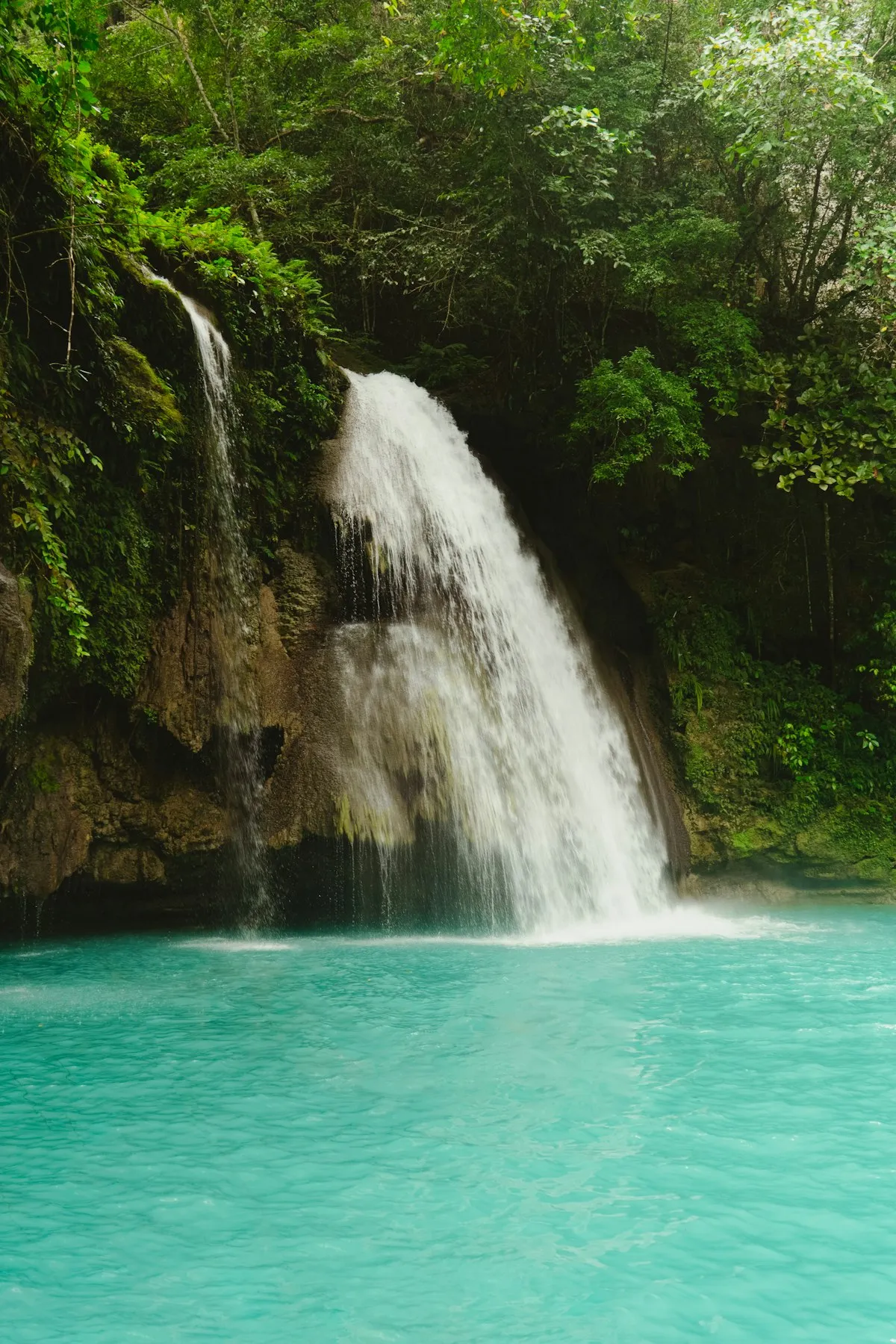
What you actually do, stop by stop:
- Cliff jumps of varying heights, from gentle splashes of a metre or two up to bigger leaps. The very tall jumps (the ones people talk about) are always optional; there is a walk-around path for every one, and no good guide will push you off a ledge you are not ready for.
- Natural water slides where the river has polished the rock smooth, so you sit, let go, and the current does the rest.
- Swims through narrow gorges, floating between walls so close and high they turn the sky into a ribbon overhead.
- Short scrambles and wades over boulders between the deep sections.
- The grand finish at Kawasan Falls, where the canyon opens into that postcard turquoise basin under the falling water.
It is genuinely strenuous in spurts. You need to be a confident swimmer, comfortable in deep water, and reasonably mobile over slick rock. It is not technical climbing, and most people of average fitness manage it well, but it is not a poolside float either. The river water is refreshingly cool, the canyon is shaded, and the whole descent typically takes a couple of hours before you reach the falls.
The sardine run: a living underwater tornado
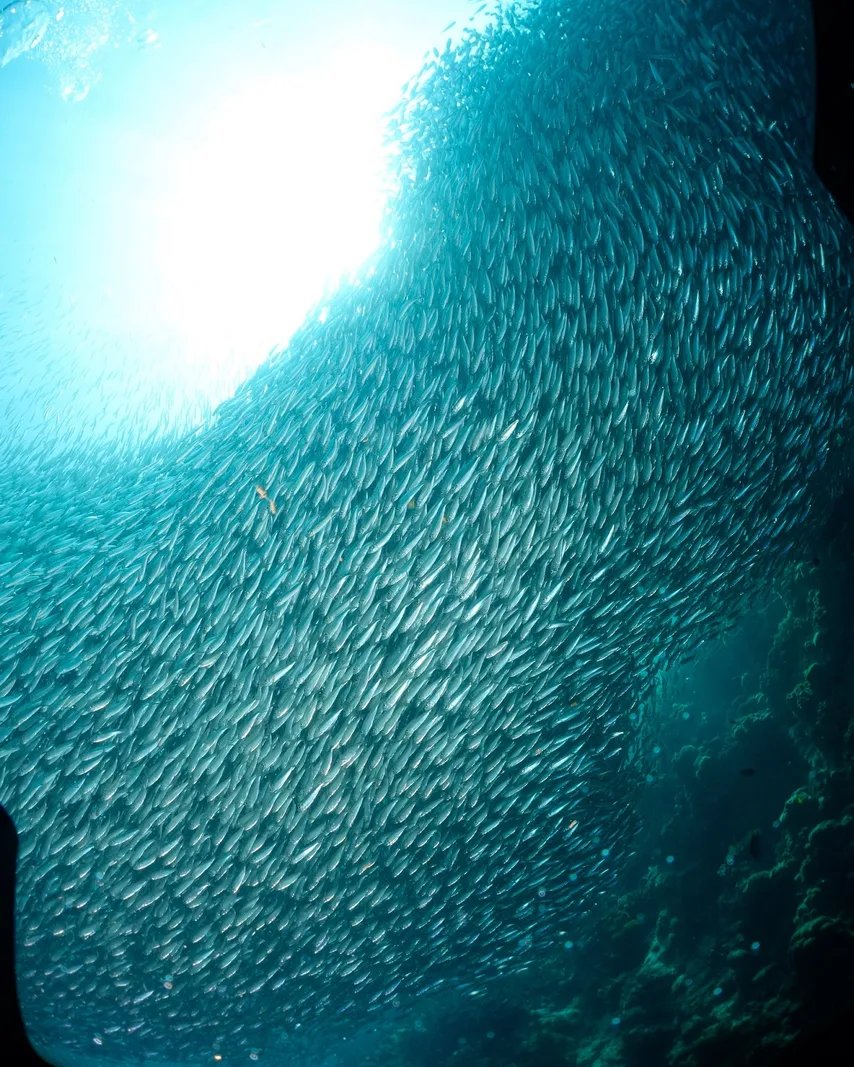
Back on the coast at Panagsama Beach, the second act needs no boat ride and no scuba certification. Just metres off the shoreline, the seabed drops away into a wall, and hovering over it is one of Moalboal's signature wonders: a permanent, resident school of millions of sardines.
What makes Moalboal special is that the sardines are here essentially year-round, not seasonally, so on most days you can snorkel straight off the beach and swim into the bait ball. The fish move as a single organism, a shimmering, shape-shifting mass that parts around you and re-forms in shifting silver curtains. This swirling behaviour is a defence: by packing tight and moving as one, the school confuses predators like jacks, tuna, and the area's sea turtles, making it hard to single out one fish. Diving down even a few metres on a held breath puts you inside the silver, with sunlight cutting through in shafts. It is one of the most accessible "big nature" spectacles in Philippine waters; you do not need to be a diver to see it.
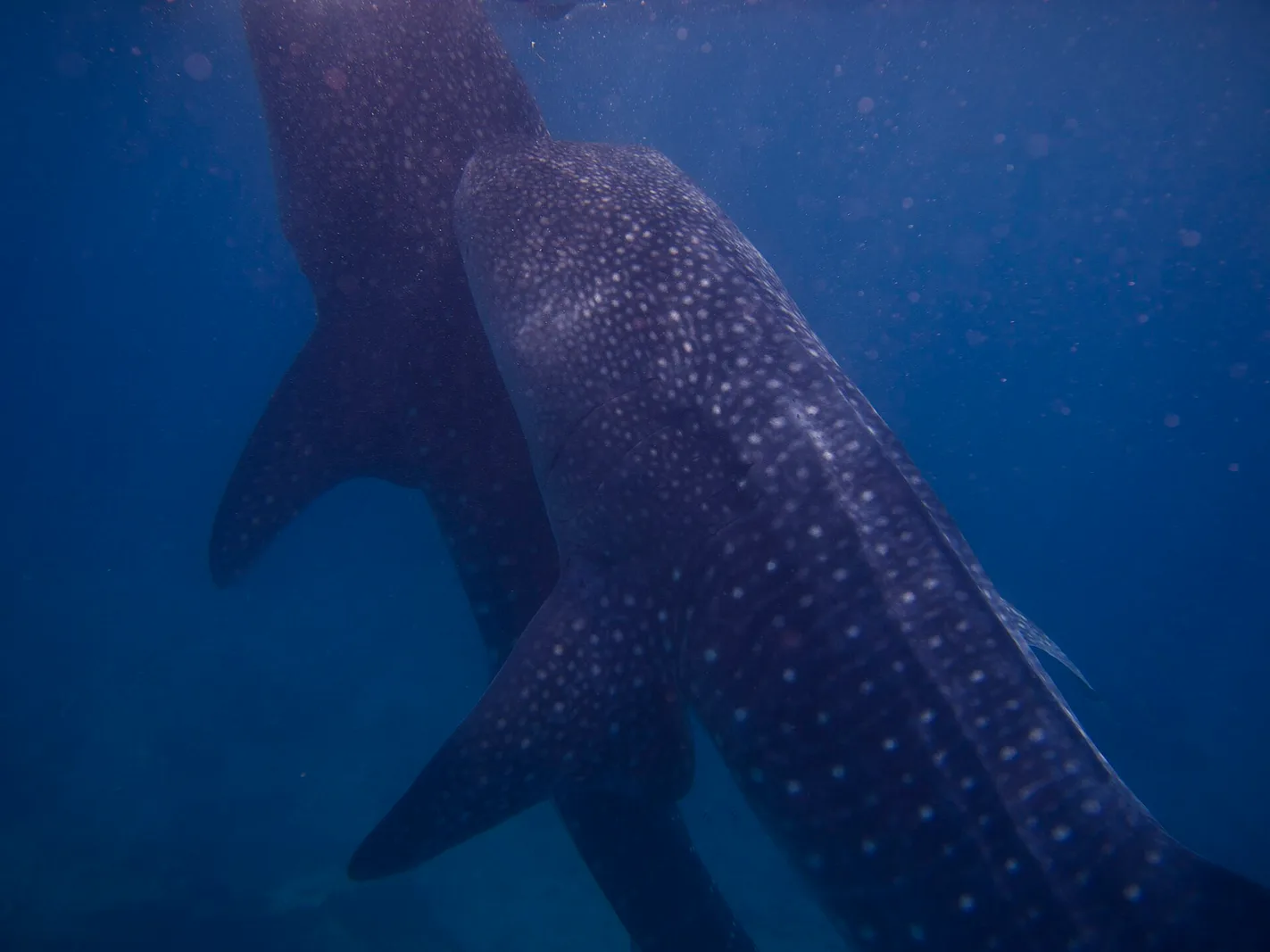
The turtle chase: snorkelling with green sea turtles
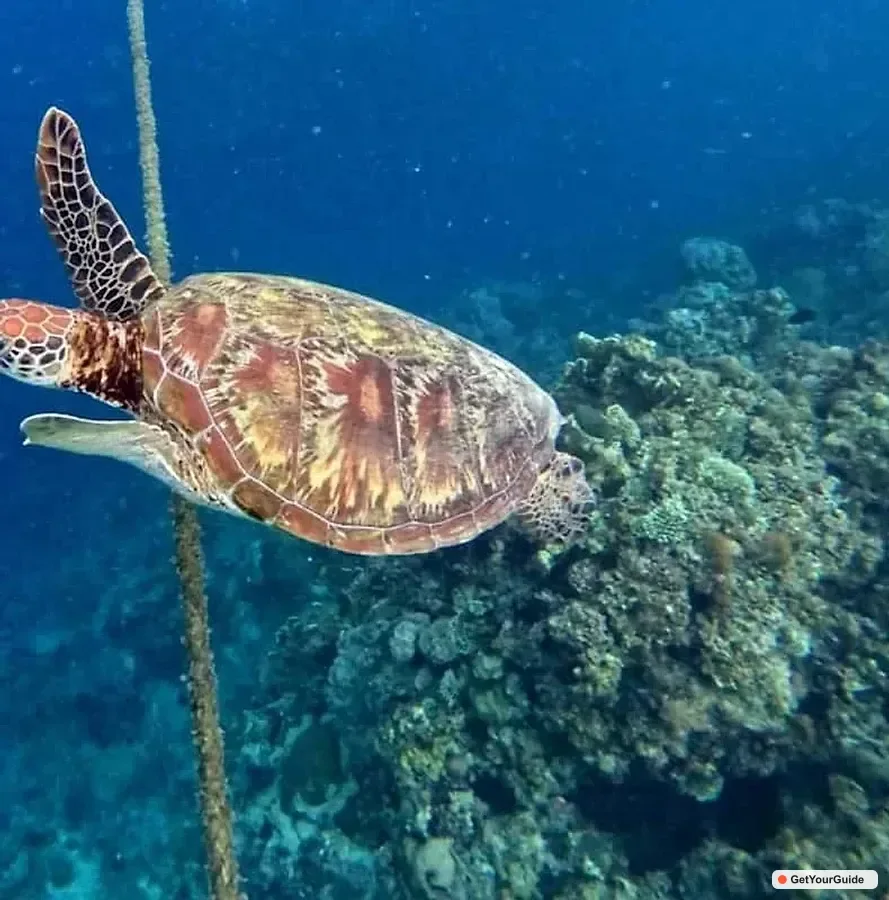
The same shallow reef and seagrass beds that nourish the sardines are also feeding grounds for sea turtles, mostly green turtles, which graze unhurried on the seagrass and algae. "Chase" is a friendly figure of speech; the right way to do this is the opposite of chasing. You float quietly, keep your distance, and let the turtle carry on its slow, ancient business of cropping grass and rising for a breath.
Green turtles are an endangered species, and they are air-breathing reptiles that can hold their breath for long stretches while feeding. A few responsible-travel rules matter here:
- Never touch, ride, or block a turtle, or get between it and the surface; it needs to come up to breathe.
- Keep a respectful gap and let it set the pace.
- Use reef-safe sunscreen, or better, a rash guard, since common sunscreens damage coral and marine life.
- Do not stand on or kick the coral; it is a living, slow-growing animal colony.
Why it matters: conservation and local stewardship
Moalboal's underwater riches are not an accident; they are protected. The area's reefs and the famous nearby Pescador Island fall within marine protected zones, and the recovery of fish life here is a quiet success story for community-managed conservation in the Philippines. The sardines and turtles thrive precisely because fishing pressure has been managed and the reef given room to heal. Choosing licensed operators, paying the local environmental and barangay fees, and following the guides' rules all feed back into keeping this ecosystem alive. On the Kawasan side, canyoneering income has become a major livelihood for Badian families, which gives the community a direct stake in keeping the river clean and the canyon intact.
Practical tips for the day
- Fitness and difficulty: Moderate to challenging on the canyon, easy and gentle in the sea. You must be able to swim. Pregnant travellers and those with heart, back, or knee issues should skip the canyoneering or take the walk-arounds.
- What to wear and bring: quick-dry clothes or a rash guard and board shorts over swimwear, plus sturdy sandals or water shoes with a real grip (not flip-flops). The rock is slippery. Bring a small dry bag, reef-safe sunscreen, and a strapped/floating action camera if you want footage.
- What's typically included: helmet and life vest for the canyon, a local guide, and usually transfers and the various entrance and environmental fees. Snorkel gear for the sea portion is generally available. Confirm inclusions when you book.
- Timing: an early start beats both the midday crowds at Kawasan and the heat. The whole package is a long, full day. The sardines and turtles are reliable year-round; the canyon is at its most thrilling in or just after the wetter months when flow is strong, though heavy rain can occasionally close the canyon for safety.
- Safety: only book operators who provide helmets and vests and who scale jumps to your comfort. Never canyoneer independently in flood conditions.
The takeaway
Few day trips in the Philippines pack this much range: the cold-water rush of leaping into a limestone canyon, the dreamlike hush of floating inside a million sardines, and the quiet privilege of sharing the water with a wild sea turtle. Do it with respect, follow the guides, keep your hands to yourself underwater, and Moalboal will hand you a day you will be describing to people for years. Bring your nerve, your sense of wonder, and a waterproof grin.
Good to know before you book
- Duration: typically a full day (around 8 to 10 hours including transfers), though half-day and multi-day options exist - check the listing.
- Best for: active travellers, couples and friends.
- What is included: a local guide, safety gear (helmet and life vest), entrance fees and usually transfers; lunch is often included or available nearby.
- Pickup: most tours offer hotel or central pickup; confirm your point and time when booking.
- Book through: the GetYourGuide button on this page, which shows live availability and pricing.
Frequently asked questions
How long does the Kawasan Canyoneering, Sardine Run & Turtle Chase take?
Most departures run as a full day - roughly 8 to 10 hours including pickup, travel and the activities themselves - so plan to set aside the whole day. Some operators offer shorter or private versions; the exact timing for your date is shown when you book through the GetYourGuide button on this page.
What is included in the Kawasan Canyoneering, Sardine Run & Turtle Chase?
Typically the price covers a local guide, safety gear (helmet and life vest), entrance fees and usually transfers; lunch is often included or available nearby. Inclusions vary by operator, so always read the specific listing - it spells out exactly what is provided and what you pay for separately, such as entrance or environmental fees.
What should I bring?
Pack quick-dry clothes, secure water shoes or sandals with grip, reef-safe sunscreen and a floating or waterproof camera. Helmets and life vests are provided and must be worn. It is also worth carrying some cash for local fees, drinks and tips, plus any personal medication, since card facilities can be limited outside the cities.
Is the Kawasan Canyoneering, Sardine Run & Turtle Chase suitable for beginners or families?
It suits reasonably fit travellers who can swim and are comfortable in moving water; every cliff jump has a lower, optional alternative, so you set your own intensity. It is not designed for non-swimmers or very young children. If you have specific concerns about age, fitness or swimming ability, message the operator before booking - they can advise on the best option for your group.
When is the best time to do this tour?
The best conditions are usually the dry months of December to May, with calm seas for snorkelling and diving. That said, the Philippines is a year-round destination, and many of these experiences run in any season - just expect the occasional shower and check the forecast for the day.
How do I get to Cebu?
To reach Cebu, fly into Mactan-Cebu International Airport, then drive south (about 3 to 4 hours to the southwest coast). Many tours include transfers from nearby towns or hotels, so confirm your pickup arrangement when you book so the day runs smoothly from the start.
Do I need to book the Kawasan Canyoneering, Sardine Run & Turtle Chase in advance?
Yes - booking ahead is strongly recommended, especially in the dry-season peak and on weekends, when popular tours and the best operators sell out. Reserving online also locks in your spot and lets you compare timings and inclusions easily.
How much does the Kawasan Canyoneering, Sardine Run & Turtle Chase cost?
Prices vary with the season, group size and exactly what is included, so we do not list a fixed figure here. Tap the GetYourGuide button on this page to see the current, accurate price and availability for your chosen date.
Can I do the Kawasan Canyoneering, Sardine Run & Turtle Chase as a private or customised tour?
Many operators offer a private version of this experience for couples, families or small groups who want a flexible pace and a guide to themselves, and some can tailor the route or add stops. If a private or custom option matters to you, check the listing or message the operator before booking, as availability and prices differ from the standard shared tour.
Ready to explore Cebu?
From planning to the moment you arrive, the Kawasan Canyoneering, Sardine Run & Turtle Chase is one of the most rewarding ways to experience this corner of the Philippines - and booking it is simple. Use the GetYourGuide button on this page to check live availability, compare timings and secure your spot, then turn up and let the local guides handle the rest while you focus on the views, the water and the memories.

PANA.PH Editorial Team
Philippines travel desk
The PANA.PH travel desk researches, books and re-checks Philippines travel logistics — fares, ferry schedules, government fees and permit rules — and publishes what it can verify.
🏡 Real local stays (book direct)
Hand-picked homestays and guesthouses — book direct, no markup.
Browse all local stays →

🌊 Popular activities (book instantly)
Island hopping, canyoneering, whale sharks — real Klook/GetYourGuide options.
View all activities →