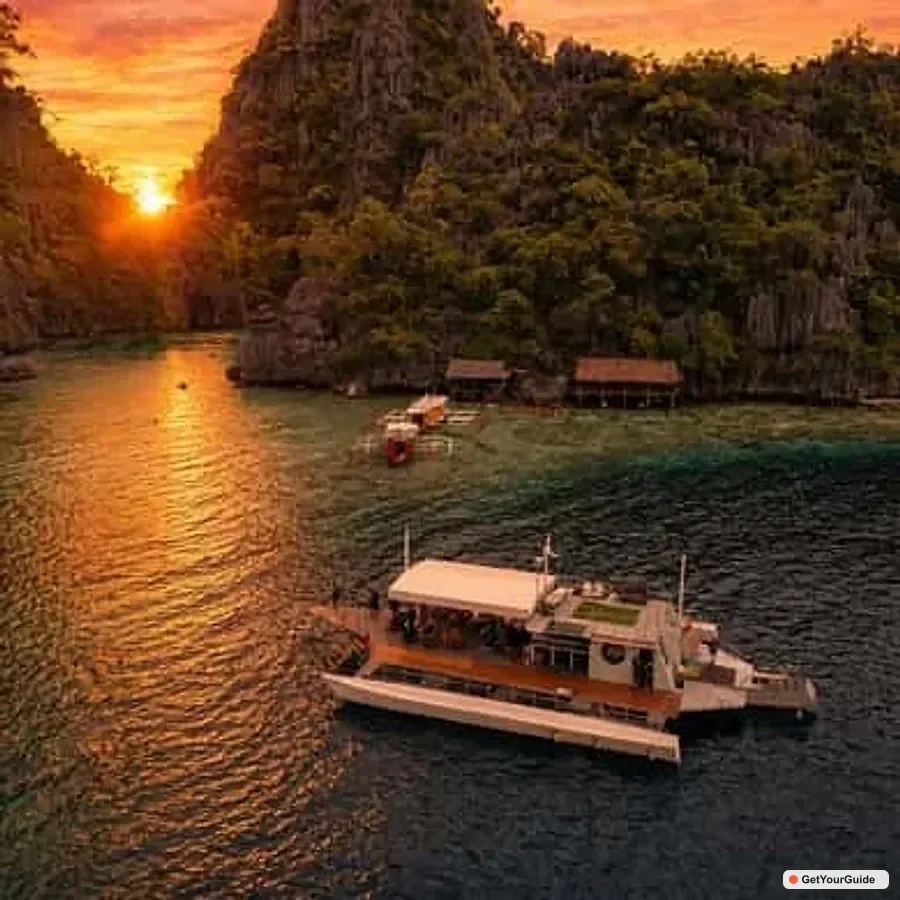
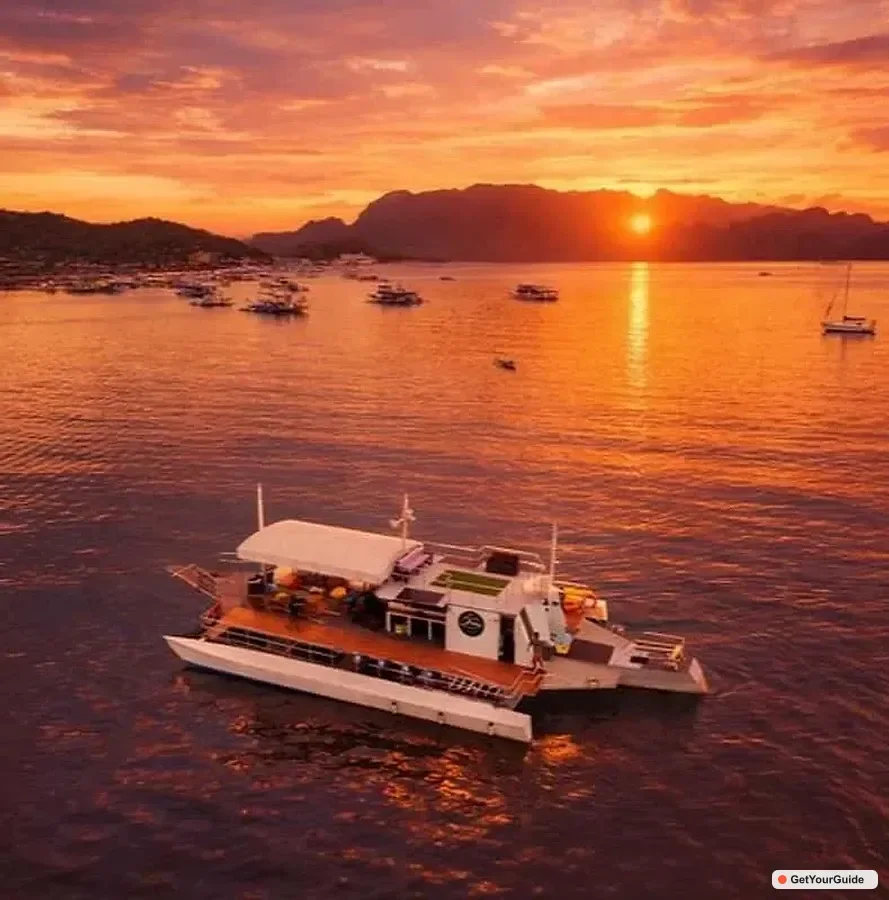
There is a particular hour in Coron when the whole bay seems to exhale. The fierce tropical sun loses its glare, the limestone cliffs of Coron Island turn from grey to amber, and the water goes glassy and pink. This is the hour a luxury trimaran sunset cruise is built for: you step off the busy Coron Town waterfront, the engine hums, and within minutes the noise of the public market and the tricycle horns fades behind you. Ahead is one of the most dramatic seascapes in the Philippines, lit by a sky that is starting to catch fire. After a day of island-hopping, snorkeling, and clambering up the famous Mount Tapyas stairs, this is the part of Coron where you finally just sit back and let it all wash over you.
Coron Island Sunset Cruise on a Luxury Trimaran - Guide
Trip.com
Search on Trip.comHotels in Philippines
Compare live prices via Travelpayouts — targeted for this guide.
Where you actually are: the geology of Coron Bay
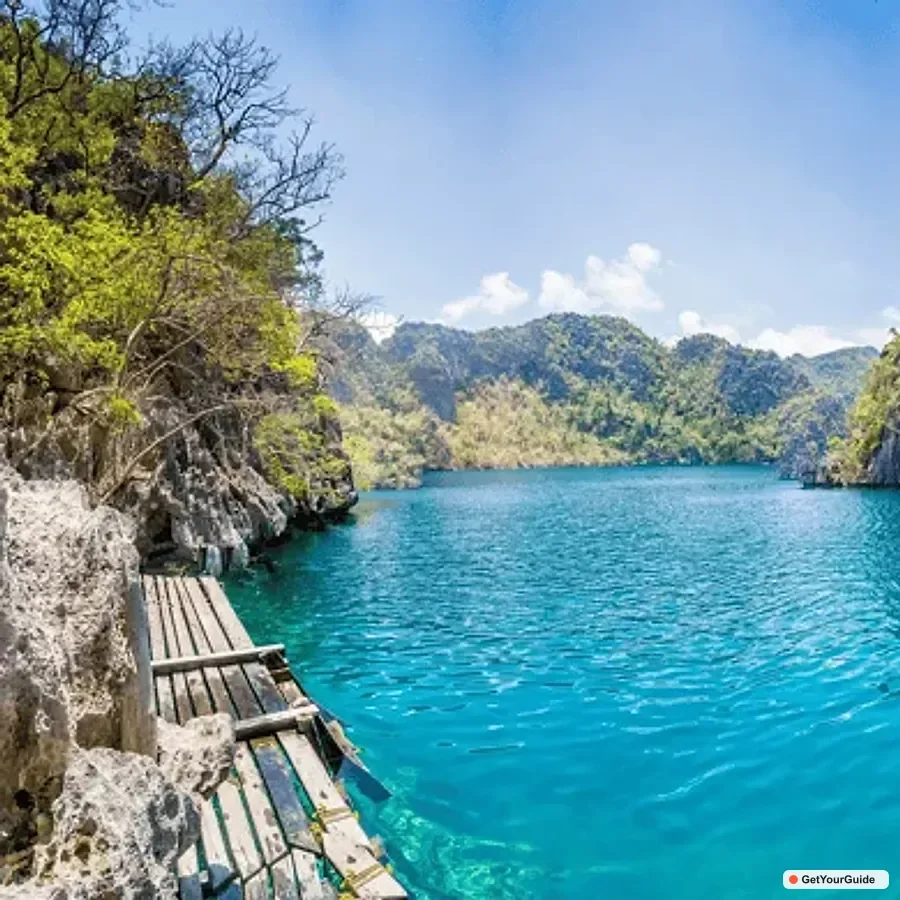
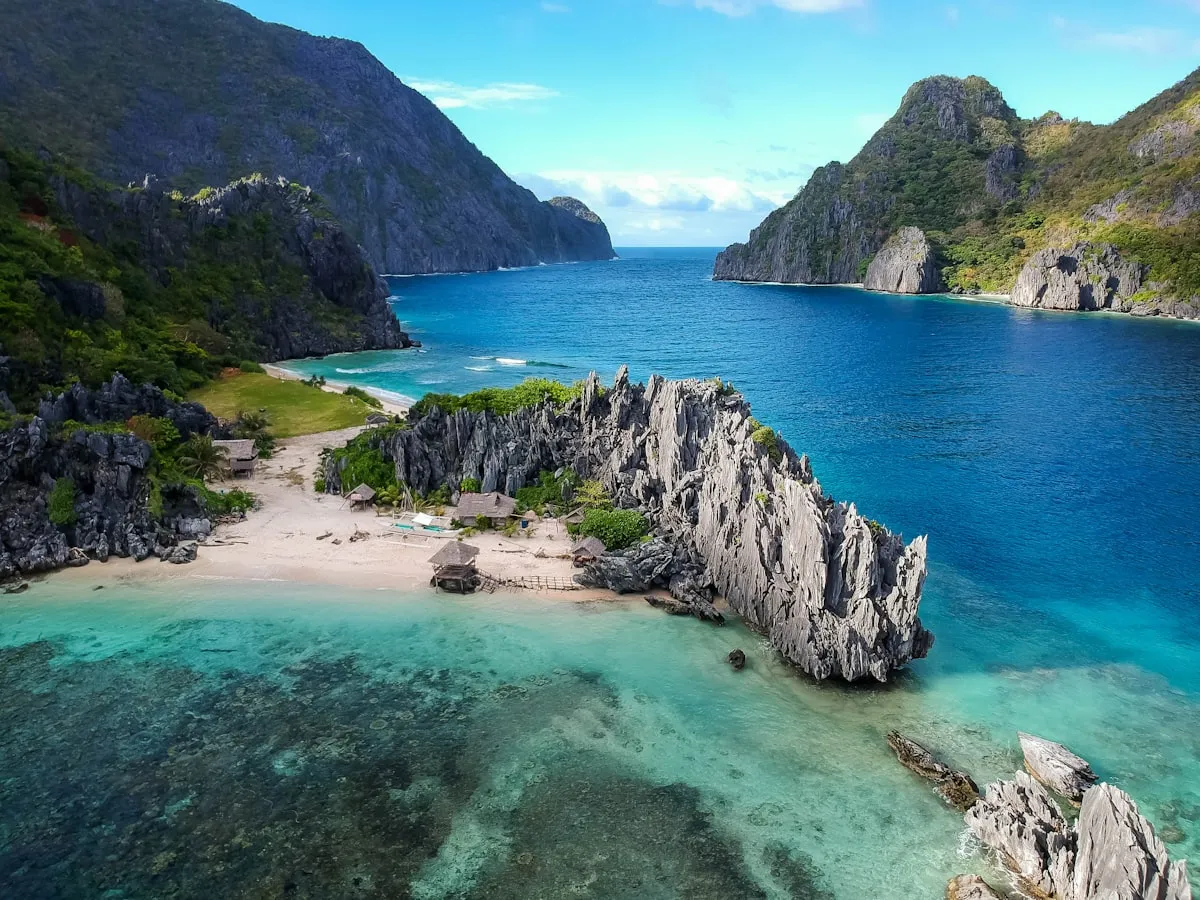
It helps to understand what you are looking at, because Coron's scenery is genuinely unusual. The town of Coron sits on Busuanga Island, the largest of the Calamian Islands, a cluster scattered in the strait between mainland Palawan and Mindoro. But the showstopper is Coron Island itself, the jagged, fortress-like landmass just across the water from town. Those near-vertical black-and-grey cliffs are ancient karst limestone, formed from coral reefs and marine sediments laid down over millions of years, then uplifted and weathered into the sheer, sharp ridges you see today. Rainwater, being mildly acidic, slowly dissolved the soft limestone over geological time, carving the pinnacles, hidden lagoons, and the brackish lakes (like the well-known Kayangan and Barracuda lakes) that sit cradled inside the island's rock walls.
Crucially, Coron Island and its surrounding waters are the ancestral domain of the Tagbanua people, one of the oldest Indigenous groups in the Philippines. The Tagbanua hold a Certificate of Ancestral Domain Title over Coron Island and its lakes, and they actively manage access to protect sacred sites and fragile ecosystems. This is why some areas are off-limits and why visitor fees support the community. A good sunset cruise respects those boundaries, cruising the open bay and the approaches rather than trespassing into closed sacred zones.
Why a trimaran, and what the boat is like
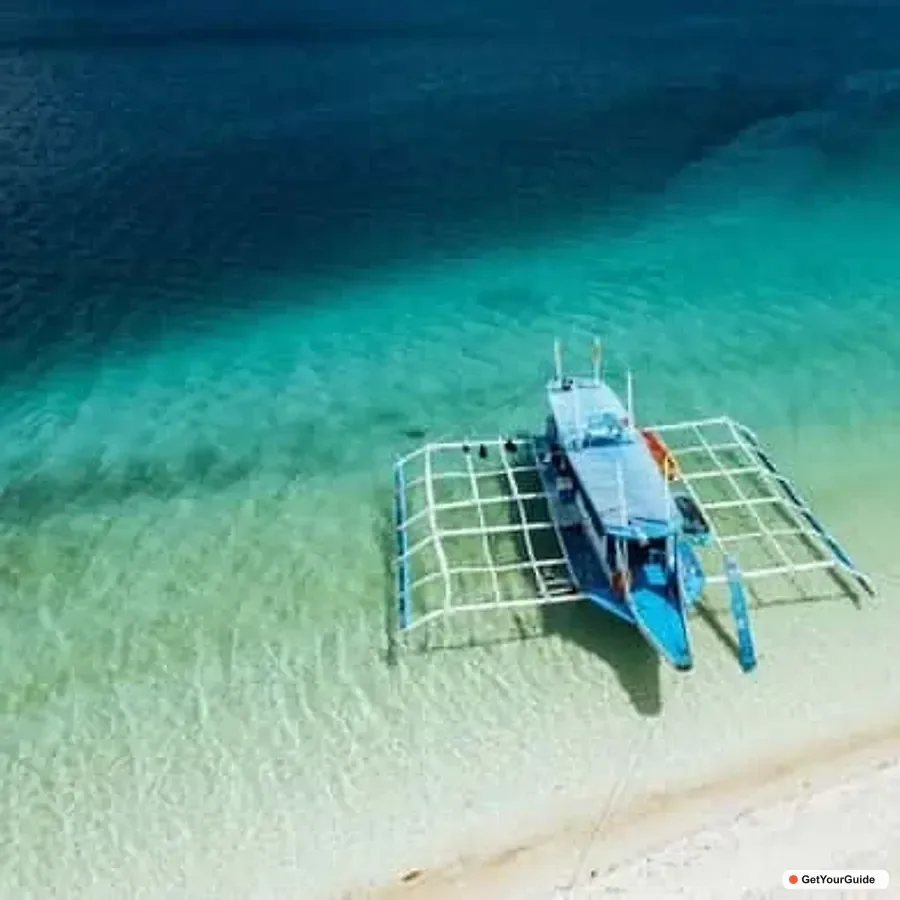
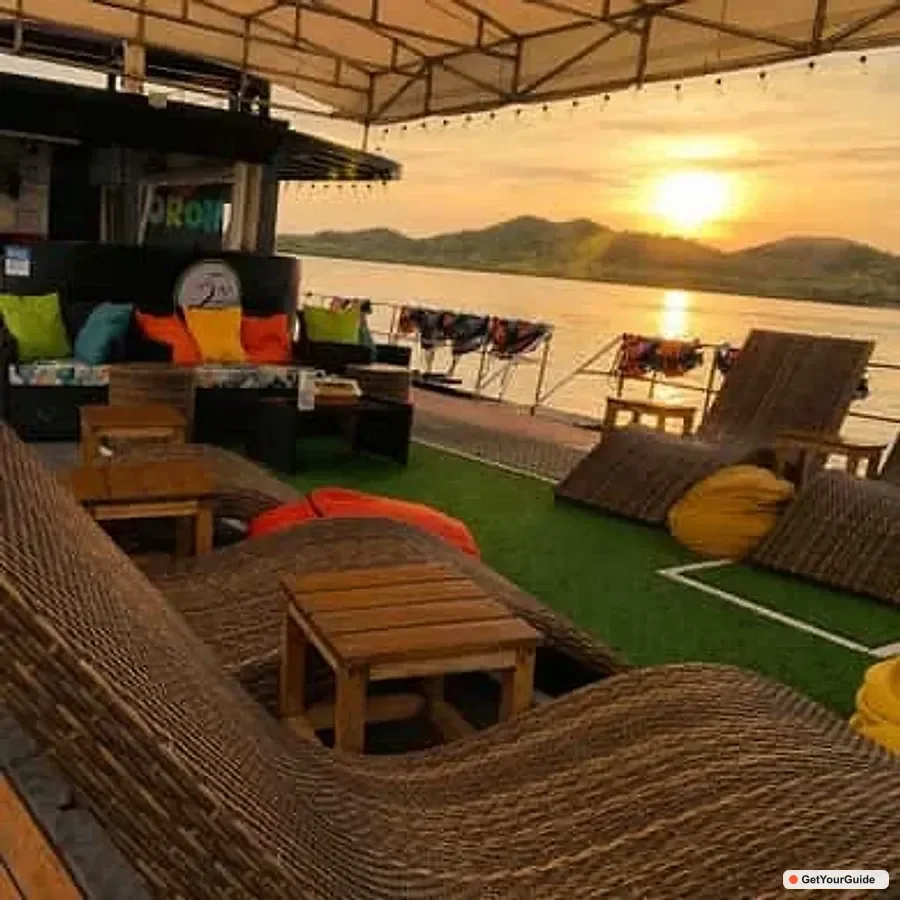
Most Coron boat trips use the classic Filipino bangka, a single-hull outrigger with bamboo arms. A trimaran is a different animal: a central hull flanked by two smaller outer hulls. That three-hull design gives you a wide, stable deck that barely rocks, even when the bay picks up a little chop in the late afternoon. The practical upshot is comfort. Instead of perching on a narrow bench, you get generous lounging space, usually shaded seating, cushioned sun-deck areas, and room to move around with a drink in hand without doing the bangka shuffle.
Trip.com
Boat tour in Philippines
Hand-picked experiences in Philippines — book on Trip.com with instant confirmation.
Coron Private Speedboat Tour with Lagoon LunchCoron, Philippines · Full dayFrom ₱68,822Book on Trip.com →
El Nido Landscape PhotographyEl Nido, Palawan · 3 daysFrom ₱2,500Book on Trip.com →
Coron Barracuda Lake, Skeleton Wreck & Twin Lagoon Boat TourCoron, Philippines · Full dayFrom ₱1,850Book on Trip.com →
On a typical luxury sunset cruise you can expect:
- A relaxed, social pace rather than a packed snorkel-stop itinerary, with the boat positioned for the best light.
- Welcome drinks and often light snacks, canapes, or local refreshments served on board; many operators include beer, soft drinks, or simple cocktails.
- Plenty of open deck for photos as the boat repositions to keep the sun in frame.
- Music kept low enough that the scenery, not the speakers, is the main event.
Because offerings vary by operator, confirm exactly what is included when you book, whether food is a full spread or just nibbles, whether drinks are unlimited or a set number, and how long the cruise runs.
What the cruise actually feels like, moment by moment
You usually board in the late afternoon, often somewhere between roughly 3:30 and 5:00 pm depending on the season and the sunset time. The boat eases out of the harbor and the first thing you notice is the change in temperature: out on the water there is a steady breeze, and the heat of the day lifts off your shoulders.
As the trimaran tracks across the bay, the limestone cliffs of Coron Island rise up on one side, their crags catching the lowering light. The captain typically angles the boat so the sun sits over the open water and the islands silhouette against it. This is the stretch where people drift quiet, phones come out, and the deck fills with that easy holiday hush. If conditions are calm, some cruises pause so you can swim or simply float beside the boat in the warm, clear water while the sky changes color overhead.
Then comes the main act. Coron sunsets are famous for a reason: the combination of scattered limestone islets, open horizon to the west, and tropical haze produces deep oranges, reds, and purples that smear across the whole sky. As the sun drops, the silhouettes of distant bangkas heading home and the dark wall of the island make for some of the best photographs you will take in Palawan. After the sun is gone, the afterglow lingers, and that is often when the drinks and snacks come into their own, you sit in the soft blue dusk with the lights of Coron Town beginning to twinkle on the far shore.
The wider Coron story, and why it matters
Coron's fame rests on two pillars. The first is that limestone-and-lagoon scenery, which has made the Calamianes one of the most photographed corners of the Philippines. The second is its extraordinary underwater history: the waters around Coron hold one of the world's best concentrations of World War II shipwrecks. In September 1944, U.S. carrier aircraft attacked a Japanese fleet sheltering here, sending around a dozen vessels to the seabed. Today those wrecks, encrusted in coral and patrolled by fish, are a world-class scuba diving destination. You will not dive them on a sunset cruise, but knowing they lie beneath you as you sail across the bay adds a quiet weight to the experience.
Coron also sits at the heart of a fragile marine environment. The reefs, seagrass beds, and the Tagbanua-managed lakes are under real pressure from rising tourism. Conservation here is not abstract, it is the reason access fees exist and why responsible operators matter.
Practical tips for the cruise
- When to go: The dry season, roughly late November through May, brings the most reliable clear skies and calm seas, with the cooler, drier months early in that window often the most comfortable. The wet season can still deliver dramatic skies, but cruises may be cancelled or rescheduled if the weather turns; build in a flexible day.
- Timing in the day: Aim to be on the water at least an hour before sunset so you catch the full color build-up, not just the final minutes. Check the local sunset time and confirm the boarding time.
- What to wear and bring: Light clothing plus a thin layer for the breeze after dark, which can feel cool once you are wet or windblown. Bring reef-safe sunscreen, a hat and sunglasses for the earlier glare, a dry bag for electronics, and swimwear and a towel if a swim stop is offered. A power bank is wise, you will use your camera relentlessly.
- How strenuous: Not at all. This is the gentlest experience in Coron, no hiking, no demanding snorkeling. The wide trimaran deck makes boarding and moving around easy, which makes it a strong choice for families, older travelers, or anyone wanting to relax after active days.
- Responsible travel: Respect the Tagbanua ancestral domain, do not touch or stand on coral if you swim, take all rubbish back with you, and choose operators who keep groups manageable and avoid intruding on closed sacred areas. Reef-safe sunscreen genuinely helps protect the corals you came to admire.
- Duration: Most sunset cruises run in the region of two to three hours, though this varies by operator, so confirm when booking.
A quiet, golden close to your Coron days
Coron throws a lot at you, the steep climb up Mount Tapyas, the cold shock of Kayangan Lake, the long island-hopping days under a hard sun. A luxury trimaran sunset cruise is the counterweight to all of it: the moment you stop chasing the next stop and simply let Palawan put on its show. With a stable deck under your feet, a drink in your hand, and those famous limestone cliffs glowing against a burning sky, this is the kind of slow, soft evening you will be describing to people long after the tan has faded. Of all the things to do in Coron, it might be the one you remember most clearly, precisely because, for once, you did nothing at all but watch.
Good to know before you book
- Duration: typically a full day (around 8 to 10 hours including transfers), though half-day and multi-day options exist - check the listing.
- Best for: couples, families and first-time visitors.
- What is included: transport and a guide; check the listing for meals, gear and fees.
- Pickup: most tours offer hotel or central pickup; confirm your point and time when booking.
- Book through: the GetYourGuide button on this page, which shows live availability and pricing.
Frequently asked questions
How long does the Coron Island Sunset Cruise on a Luxury Trimaran take?
Most departures run as a full day - roughly 8 to 10 hours including pickup, travel and the activities themselves - so plan to set aside the whole day. Some operators offer shorter or private versions; the exact timing for your date is shown when you book through the GetYourGuide button on this page.
What is included in the Coron Island Sunset Cruise on a Luxury Trimaran?
Typically the price covers transport and a guide; check the listing for meals, gear and fees. Inclusions vary by operator, so always read the specific listing - it spells out exactly what is provided and what you pay for separately, such as entrance or environmental fees.
What should I bring?
Pack comfortable clothing, sunscreen, a hat, water and a little cash for fees and extras. It is also worth carrying some cash for local fees, drinks and tips, plus any personal medication, since card facilities can be limited outside the cities.
Is the Coron Island Sunset Cruise on a Luxury Trimaran suitable for beginners or families?
It suits a wide range of travellers; ask the operator about fitness or swimming requirements if you are unsure. If you have specific concerns about age, fitness or swimming ability, message the operator before booking - they can advise on the best option for your group.
When is the best time to do this tour?
The best conditions are usually the dry season from late November to May, when seas are calmest and skies clearest. That said, the Philippines is a year-round destination, and many of these experiences run in any season - just expect the occasional shower and check the forecast for the day.
How do I get to Coron?
To reach Coron, fly into Puerto Princesa, El Nido or Coron (Busuanga) airport, then transfer by road or boat. Many tours include transfers from nearby towns or hotels, so confirm your pickup arrangement when you book so the day runs smoothly from the start.
Do I need to book the Coron Island Sunset Cruise on a Luxury Trimaran in advance?
Yes - booking ahead is strongly recommended, especially in the dry-season peak and on weekends, when popular tours and the best operators sell out. Reserving online also locks in your spot and lets you compare timings and inclusions easily.
How much does the Coron Island Sunset Cruise on a Luxury Trimaran cost?
Prices vary with the season, group size and exactly what is included, so we do not list a fixed figure here. Tap the GetYourGuide button on this page to see the current, accurate price and availability for your chosen date.
Can I do the Coron Island Sunset Cruise on a Luxury Trimaran as a private or customised tour?
Many operators offer a private version of this experience for couples, families or small groups who want a flexible pace and a guide to themselves, and some can tailor the route or add stops. If a private or custom option matters to you, check the listing or message the operator before booking, as availability and prices differ from the standard shared tour.
Ready to explore Coron?
From planning to the moment you arrive, the Coron Island Sunset Cruise on a Luxury Trimaran is one of the most rewarding ways to experience this corner of the Philippines - and booking it is simple. Use the GetYourGuide button on this page to check live availability, compare timings and secure your spot, then turn up and let the local guides handle the rest while you focus on the views, the water and the memories.

PANA.PH Editorial Team
Philippines travel desk
The PANA.PH travel desk researches, books and re-checks Philippines travel logistics — fares, ferry schedules, government fees and permit rules — and publishes what it can verify.
🏡 Real local stays (book direct)
Hand-picked homestays and guesthouses — book direct, no markup.
Browse all local stays →

🌊 Popular activities (book instantly)
Island hopping, canyoneering, whale sharks — real Klook/GetYourGuide options.
View all activities →