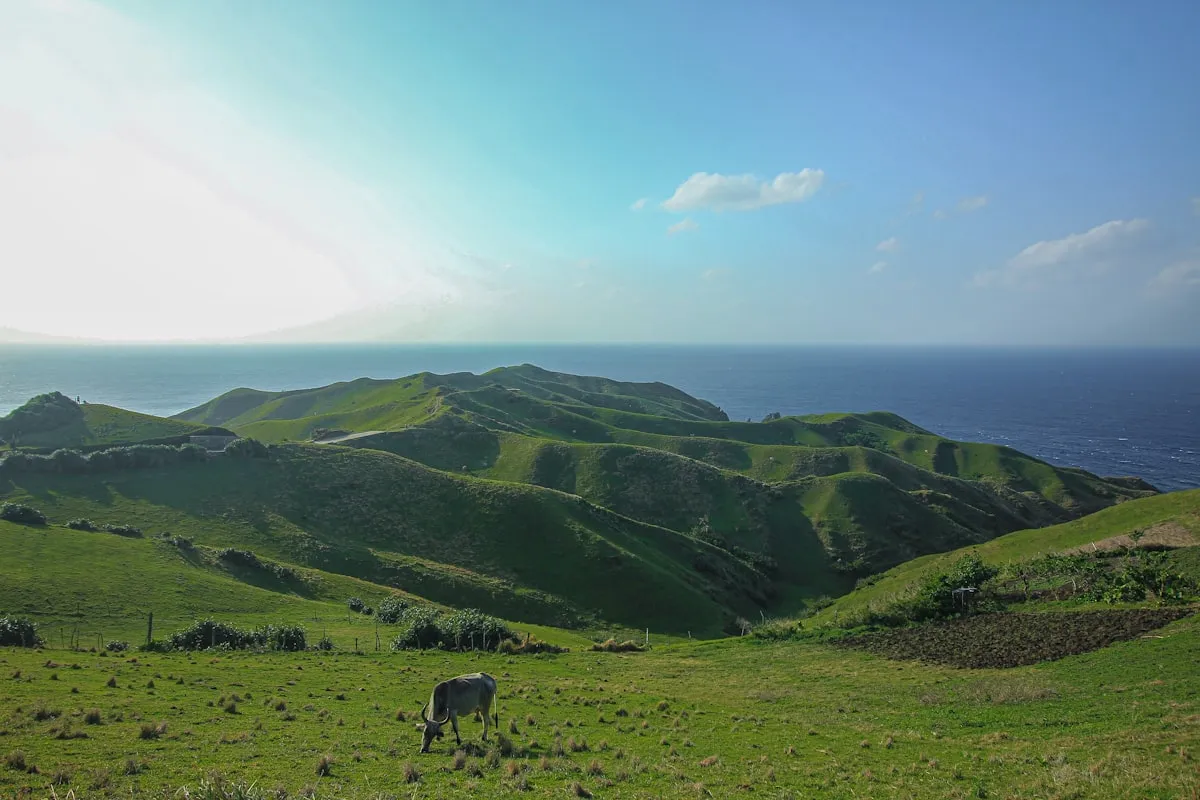
Cebu City has a way of fooling first-time visitors. Down at sea level it is all heat, traffic, and the steady hum of the Philippines' second-biggest metro. But point a vehicle uphill toward the mountain barangays of Busay, Cantipla, and the high villages above, and within forty-five minutes the air turns cool and resin-scented, the jeepneys thin out, and the city dissolves into a green wall of ridgelines. This is the Cebu Highlands Escape with Coffee Farm Experience: a day spent trading the lowland swelter for pine-cool viewpoints, small mountain farms, and a steaming cup of locally grown coffee with a view of the whole island spread out below. It is one of the most underrated ways to understand Cebu, because the highlands are where the island actually breathes.
Cebu Highlands Escape with Coffee Farm Experience - Guide
Hotels in Philippines
Compare live prices via Travelpayouts — targeted for this guide.
Why the Cebu highlands are cool (literally)
Cebu is a long, narrow island built largely from uplifted limestone and a spine of mountains running north to south. The central cordillera behind Cebu City climbs steeply from the coast, with peaks and ridges that rise well over 800 meters, topping out around Mount Manunggal and the high ground near the Babag and Busay ranges. That elevation is the whole secret of the trip: for every few hundred meters you climb, the temperature drops noticeably, so a highland barangay can sit several degrees cooler than the sweltering port below. Morning mist pooling in the valleys, dew on the grass, and a genuine need for a light jacket at a viewpoint are all things that surprise lowlanders the first time.
The terrain itself is karst country: limestone laid down as ancient reef, then thrust upward and weathered into the steep, folded hills you see today. Thin mountain soils, cool nights, and good drainage on these slopes happen to be excellent for growing vegetables and, crucially, coffee. The same geology that makes the ridges dramatic to look at makes them productive to farm.
What you actually see and do, stop by stop
The route winds up the Transcentral Highway, the serpentine road that climbs out of Cebu City and stitches together the mountain barangays. The exact stops vary by operator and traffic, but a classic highland escape strings together a handful of these:
Tours & activities in Philippines
Hand-picked experiences in Philippines — book on Trip.com with instant confirmation.
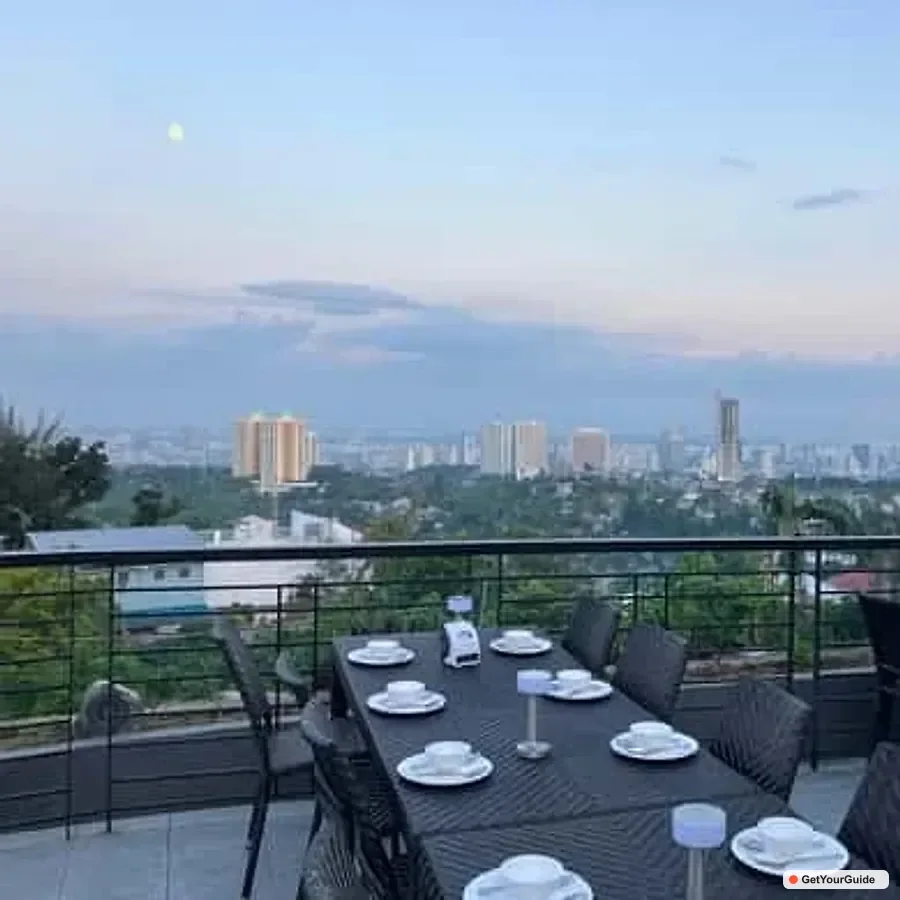

- A ridgeline viewpoint above the city. The first big payoff is usually a lookout where the metro, the port, and the Mactan channel lie far below, with neighboring islands floating on the horizon. On clear mornings you can trace the coastline for miles; by late afternoon the city lights begin to glitter as the sun drops.
- The Temple of Leah and Sirao area. Many highland tours pass the grand, colonnaded Temple of Leah, a Roman-inspired memorial structure that has become an Instagram landmark, and the flower gardens of Sirao (often called Cebu's "Little Amsterdam") where rows of celosia bloom in bright reds and yellows against the green hills.
- Mountain markets and roadside farms. The high barangays are Cebu City's vegetable basket. You will pass small plots of lettuce, cabbage, herbs, and flowers clinging to the slopes, often tended by families who have farmed these ridges for generations.
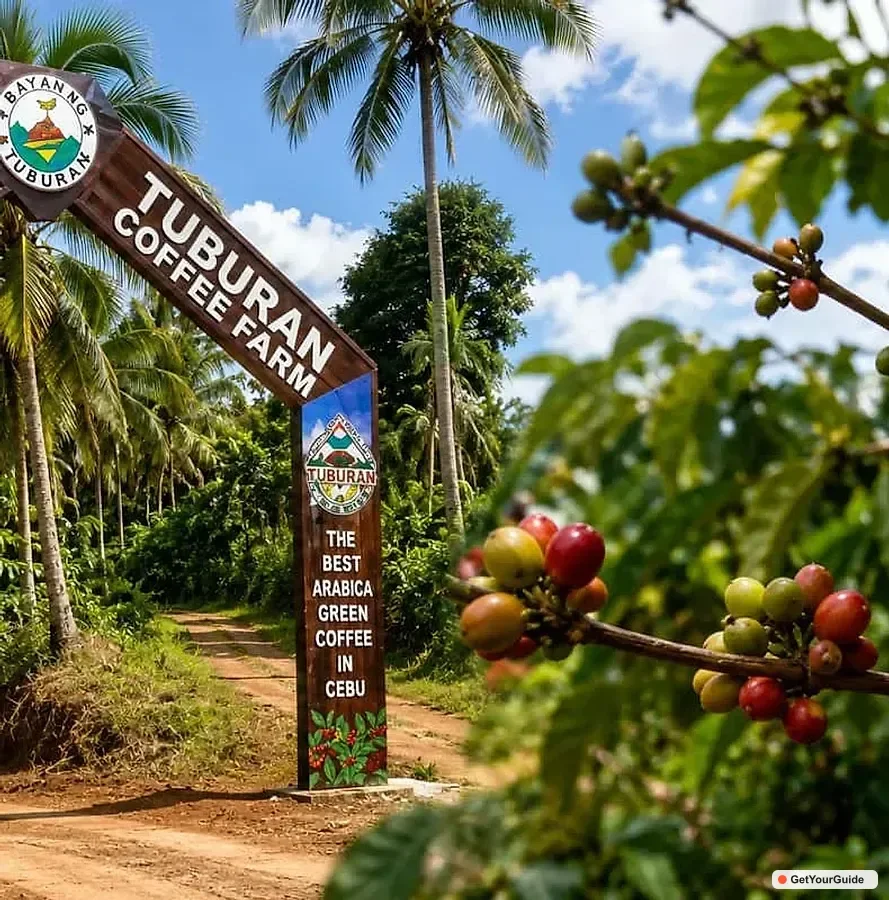
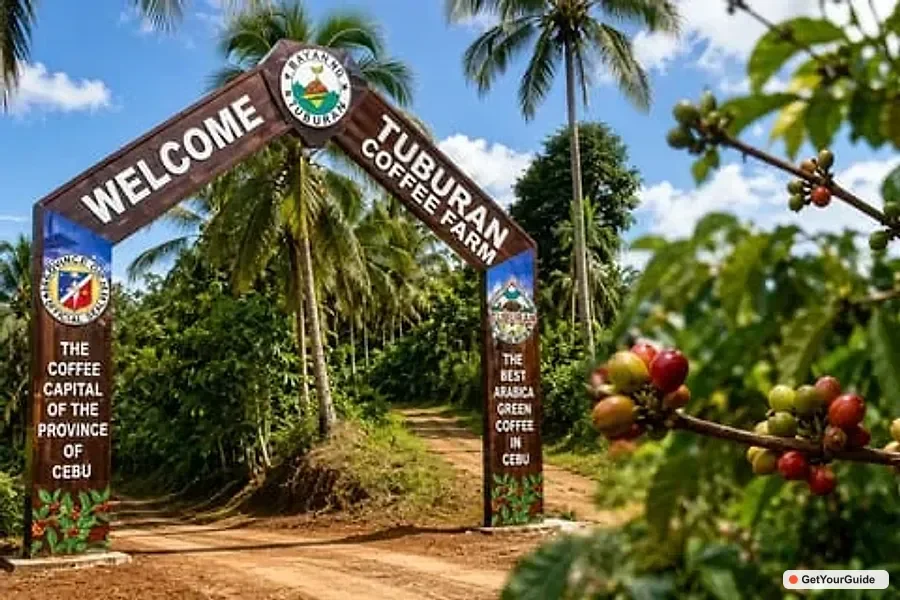
- The coffee farm experience. The heart of the trip. At a working highland farm you walk among the coffee shrubs, learn how the cherries are picked and processed, and see the journey from tree to cup up close.
Inside the coffee farm
The coffee story is the part most travelers do not expect. The Philippines has a long, real coffee history: in the 1800s it was one of the world's notable producers before a devastating outbreak of coffee leaf rust late in that century gutted the crop. The country grows several species, with robusta dominating commercially and prized arabica and the famously full-bodied liberica (known locally as "barako") grown in pockets of cooler upland terrain. Cebu's highlands, with their elevation and cool nights, are exactly the kind of place where small-scale specialty coffee is being revived.
A good farm visit walks you through the whole chain. You see the glossy-leaved coffee shrubs and the cherries ripening from green to deep red. You learn the basics of processing, how the fruit is pulped, the beans fermented or dried, then hulled and roasted, and how each step shapes the flavor in your cup. The reward at the end is a fresh brew, often poured at a viewpoint, made from beans grown on the very slope in front of you. Tasting coffee where it was grown, in the cool air that helped it ripen slowly, is a completely different experience from buying it in a city cafe, and it reframes how you think about that ubiquitous morning cup.
Culture, history, and why it matters
The highlands are not just a scenic backdrop; they are where a quieter, older Cebu persists. While the lowlands carry the weight of history as the site of the first Spanish settlement in the Philippines and the cradle of Christianity in the archipelago, the mountain barangays preserve a rural rhythm of farming, family land, and tight-knit communities. Visiting a working coffee farm puts your money directly into that local economy and supports smallholders trying to keep upland farming viable against the pull of city jobs.
There is a genuine conservation dimension too. The mountains behind Cebu City are a critical watershed, feeding the springs and reservoirs the lowland metro depends on. Decades of clearing and quarrying have put pressure on these forests, which makes the patches of remaining woodland, the reforestation efforts, and sustainable shade-grown coffee plots more than just pretty scenery. When you choose a farm visit over a quarry-side selfie, you are quietly voting for the version of the highlands that keeps the city's taps running.
Practical tips for the day
- Best time to go: The dry months (roughly December to May) give the clearest views and the lowest chance of an afternoon downpour washing out the ridgelines. Early morning offers cool air and mist in the valleys; late afternoon rewards you with a sunset and, on the way down, the city lighting up.
- What to wear and bring: Comfortable closed shoes for walking on farm tracks that can be muddy after rain. Bring a light jacket or long sleeves, the highlands really are cooler, especially in the wind at a viewpoint. Add sunscreen, a hat, water, and a power bank for all the photos you will inevitably take.
- How strenuous it is: Gentle. Most of the day is by vehicle with short walks at each stop. The coffee-farm walk involves easy strolling on sloped ground rather than a hike, making this a great option for families, older travelers, and anyone wanting nature without a hard trek.
- What is typically included: Round-trip transport from the city, a guide, stops at the major highland viewpoints and attractions, and the guided coffee-farm visit with a tasting. Some attractions along the route, the Temple of Leah and flower gardens, for example, charge small individual entrance fees, so carry a little cash in pesos.
- Duration: Plan on roughly half a day, often around five to six hours door to door, depending on how many stops and how long you linger over the views and the coffee.
- Responsible travel: Buy a bag of beans straight from the farm to support the growers, take your trash back down with you, and stick to marked paths around the crops. The barangays are real communities, not theme parks, so a little courtesy goes a long way.

The takeaway
Most visitors come to Cebu for the sea, the whale sharks of Oslob, the canyoneering at Kawasan, the diving off Moalboal. Few realize that the best antidote to the island's heat and crowds is to simply look up. The highlands escape is a slow, sensory day: cool wind on a ridge, the smell of damp earth and roasting beans, a whole city laid out beneath your feet, and a cup of coffee that tastes of the very slope you are standing on. It is the kind of half-day that quietly becomes the part of the trip you talk about most, the morning you discovered that Cebu, for all its coastline, has a green and breezy heart waiting at the top of the road.
Good to know before you book
- Duration: typically a full day (around 8 to 10 hours including transfers), though half-day and multi-day options exist - check the listing.
- Best for: couples, families and first-time visitors.
- What is included: the farm or class, a guide, tastings or a meal and often transfers.
- Pickup: most tours offer hotel or central pickup; confirm your point and time when booking.
- Book through: the GetYourGuide button on this page, which shows live availability and pricing.
Frequently asked questions
How long does the Cebu Highlands Escape with Coffee Farm Experience take?
Most departures run as a full day - roughly 8 to 10 hours including pickup, travel and the activities themselves - so plan to set aside the whole day. Some operators offer shorter or private versions; the exact timing for your date is shown when you book through the GetYourGuide button on this page.
What is included in the Cebu Highlands Escape with Coffee Farm Experience?
Typically the price covers the farm or class, a guide, tastings or a meal and often transfers. Inclusions vary by operator, so always read the specific listing - it spells out exactly what is provided and what you pay for separately, such as entrance or environmental fees.
What should I bring?
Pack comfortable closed shoes for farm ground, a hat, sunscreen, water and an appetite for the tastings. It is also worth carrying some cash for local fees, drinks and tips, plus any personal medication, since card facilities can be limited outside the cities.
Is the Cebu Highlands Escape with Coffee Farm Experience suitable for beginners or families?
It is relaxed and family-friendly, suitable for all ages and fitness levels - a gentle, hands-on experience rather than a strenuous one. If you have specific concerns about age, fitness or swimming ability, message the operator before booking - they can advise on the best option for your group.
When is the best time to do this tour?
The best conditions are usually the dry months of December to May, with calm seas for snorkelling and diving. That said, the Philippines is a year-round destination, and many of these experiences run in any season - just expect the occasional shower and check the forecast for the day.
How do I get to Cebu City?
To reach Cebu City, fly into Mactan-Cebu International Airport, then drive south (about 3 to 4 hours to the southwest coast). Many tours include transfers from nearby towns or hotels, so confirm your pickup arrangement when you book so the day runs smoothly from the start.
Do I need to book the Cebu Highlands Escape with Coffee Farm Experience in advance?
Yes - booking ahead is strongly recommended, especially in the dry-season peak and on weekends, when popular tours and the best operators sell out. Reserving online also locks in your spot and lets you compare timings and inclusions easily.
How much does the Cebu Highlands Escape with Coffee Farm Experience cost?
Prices vary with the season, group size and exactly what is included, so we do not list a fixed figure here. Tap the GetYourGuide button on this page to see the current, accurate price and availability for your chosen date.
Can I do the Cebu Highlands Escape with Coffee Farm Experience as a private or customised tour?
Many operators offer a private version of this experience for couples, families or small groups who want a flexible pace and a guide to themselves, and some can tailor the route or add stops. If a private or custom option matters to you, check the listing or message the operator before booking, as availability and prices differ from the standard shared tour.
Ready to explore Cebu City?
From planning to the moment you arrive, the Cebu Highlands Escape with Coffee Farm Experience is one of the most rewarding ways to experience this corner of the Philippines - and booking it is simple. Use the GetYourGuide button on this page to check live availability, compare timings and secure your spot, then turn up and let the local guides handle the rest while you focus on the views, the water and the memories.

PANA.PH Editorial Team
Philippines travel desk
The PANA.PH travel desk researches, books and re-checks Philippines travel logistics — fares, ferry schedules, government fees and permit rules — and publishes what it can verify.
🏡 Real local stays (book direct)
Hand-picked homestays and guesthouses — book direct, no markup.
Browse all local stays →

🌊 Popular activities (book instantly)
Island hopping, canyoneering, whale sharks — real Klook/GetYourGuide options.
View all activities →