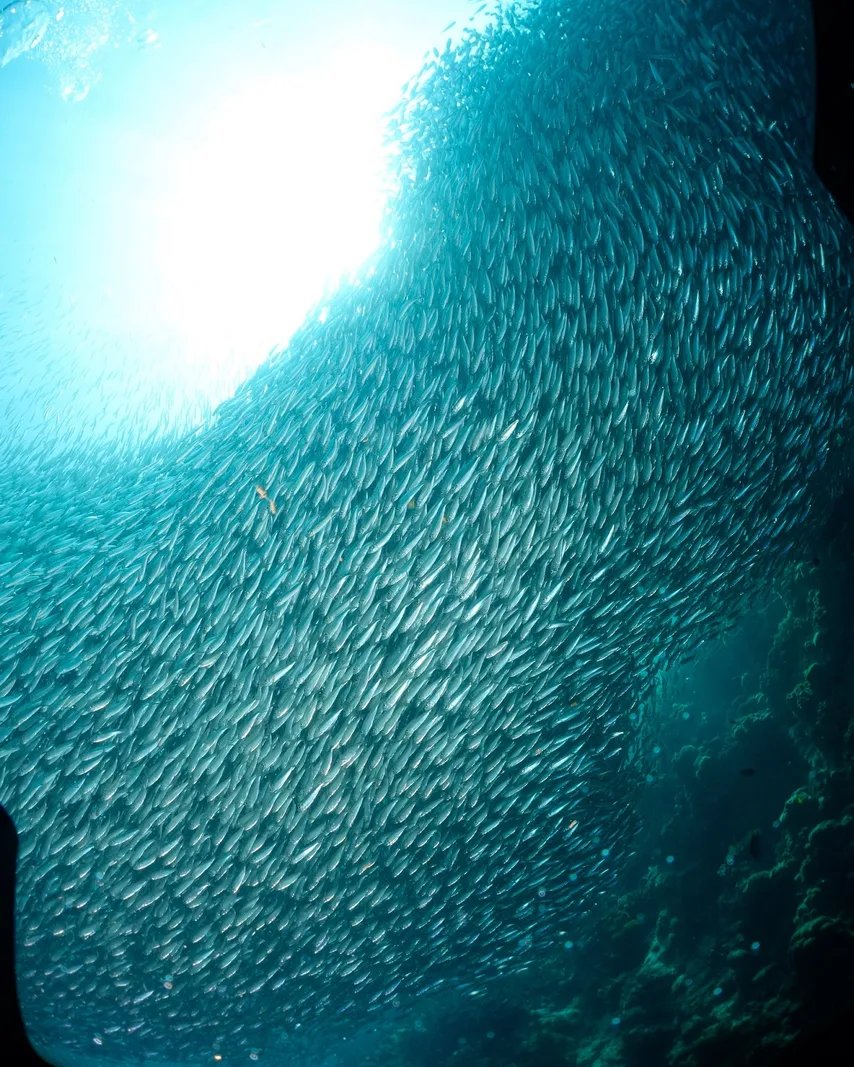
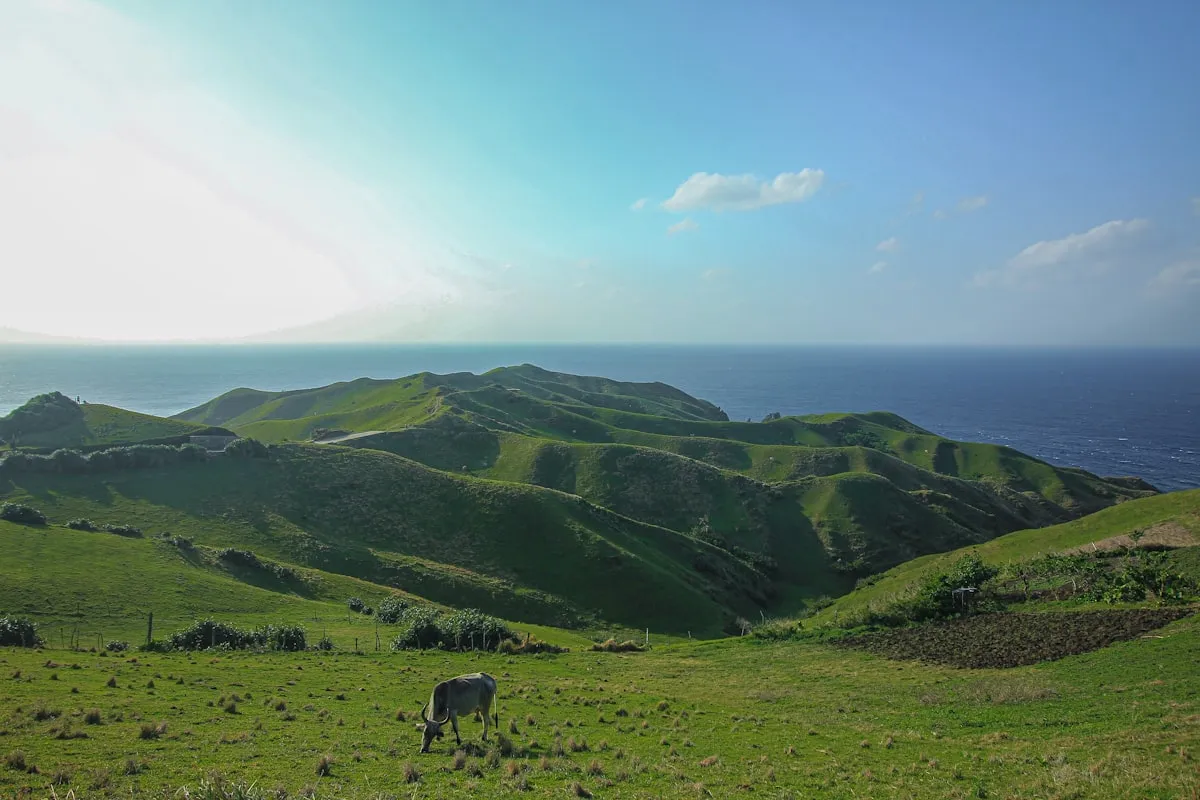
There is a moment, somewhere on the ferry crossing from Cebu to the Camotes, when the noise of the city finally falls away. The sea here glows a particular shade of turquoise, the kind that looks edited but isn't, and the low green silhouette of the islands rises ahead like a secret the rest of the Philippines hasn't quite caught onto yet. Camoteños call their home the "Lost Horizon of the South," a phrase that sounds like marketing until you spend a day here and realize it is simply true. This full-day tour stitches together the three things the islands do best: cool freshwater caves you can swim in, a lake that shifts character with the tides, and beaches of soft white sand where the afternoon seems to stretch twice as long as it should.
Full-Day Camotes Islands Tour: Caves, Lake & Beach - Guide
Trip.com
Search on Trip.comHotels in Philippines
Compare live prices via Travelpayouts — targeted for this guide.
The Camotes are a small cluster east of Cebu and west of Leyte, sitting in the Camotes Sea. The two main islands you explore on a tour like this are Pacijan and Poro, joined by a causeway so seamless that most visitors never notice they have crossed from one to the other. A third island, Ponson, lies further out. Together they make up a quiet limestone world that rewards travelers who slow down.
The geology: why caves, why a lake, why this water is so clear
Almost everything you see on this tour traces back to one material: limestone. The Camotes are built largely of uplifted coral and marine limestone, rock that began life as ancient reefs and seabed and was later pushed above the waves by tectonic movement. Limestone is soft, soluble, and easily sculpted by water, and that single fact explains the whole day.
When rainwater, slightly acidic from absorbing carbon dioxide, soaks into this porous rock, it slowly dissolves channels, chambers, and sinkholes. Over many thousands of years that process carves out caves and underground pools. This is classic karst landscape, the same family of geology that produces the famous limestone scenery elsewhere in the country. The caves you swim in are not man-made tunnels; they are the hollowed insides of the island, filled with groundwater so clean and cool it can take your breath away on a hot day.
Trip.com
See all tours in Philippines on Trip.comTours & activities in Philippines
Hand-picked experiences in Philippines — book on Trip.com with instant confirmation.
The caves and freshwater pools
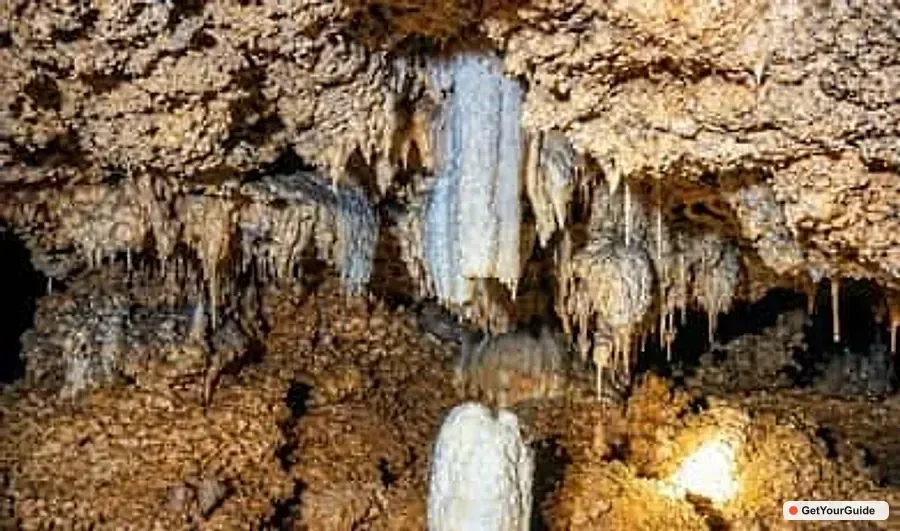
The signature stop for many visitors is a cave pool fed by fresh, slightly brackish groundwater filtered through all that limestone. Timubo Cave on Pacijan is the most popular: a descent on steps into a narrow chamber that opens onto a clear, cool swimming pool inside the rock, with stalactites overhead and the strange, lovely acoustics of an enclosed cave. Bukilat Cave on Poro is the other classic, an open-roofed cave on the eastern coast where shafts of daylight fall onto the water. Because Bukilat sits near the sea, its water level rises and falls subtly with the tide, a quiet reminder of how connected these freshwater pools are to the ocean around them. Swimming inside one of these caves, in water that feels almost impossibly clear, is the moment most people remember longest.
Lake Danao
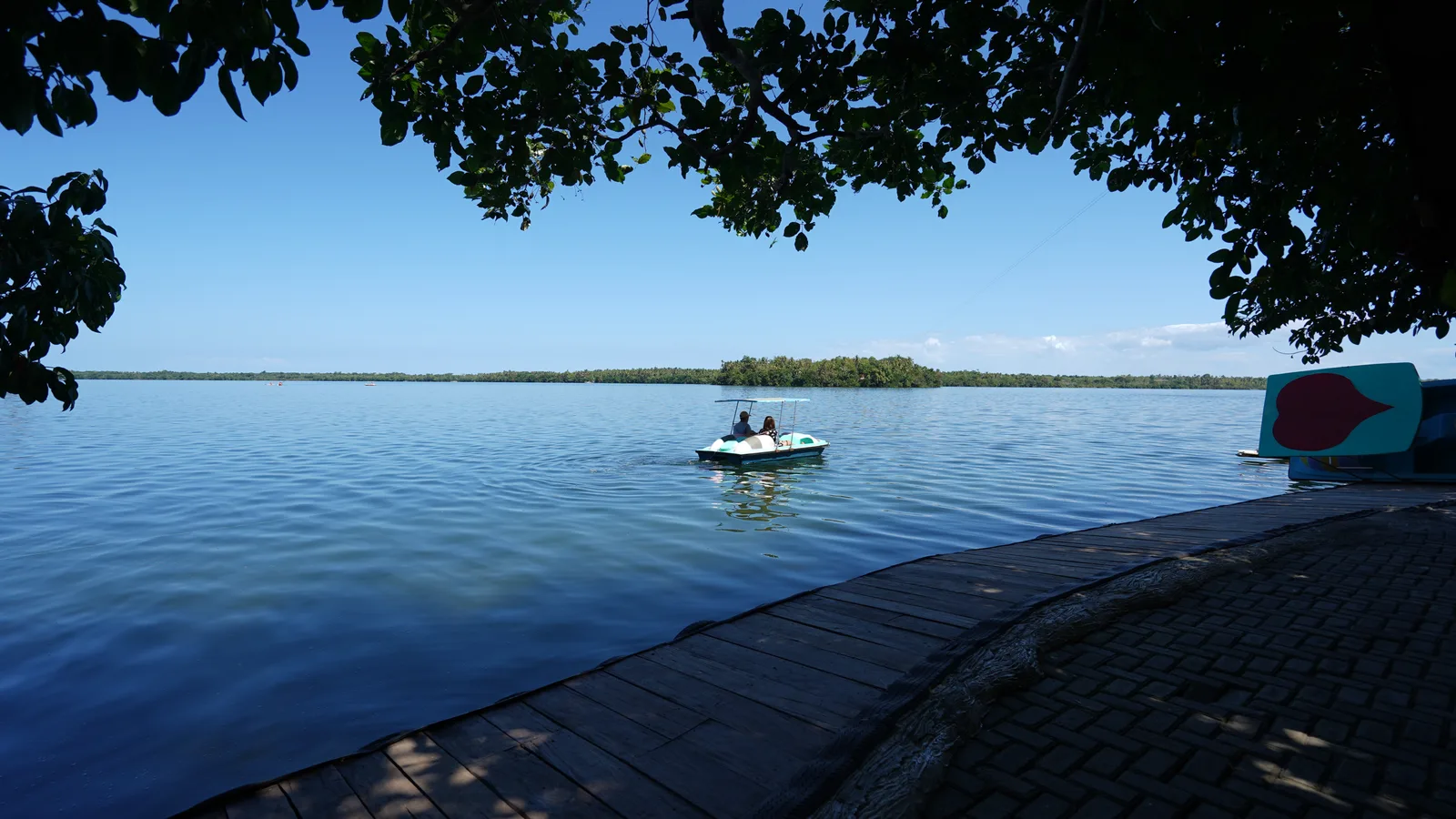
The lake stop is Lake Danao, a large, irregularly shaped freshwater lake that locals say resembles a figure-eight or a guitar from above. Sitting between Pacijan and Poro, it is the biggest lake in the islands and one of the largest in the Central Visayas region. Fringed by mangroves and trees, it is a peaceful place ringed by a park where you can kayak, paddle a boat, or simply walk the shoreline. The water is calm and the setting is unhurried; this is the part of the day designed for catching your breath rather than chasing adrenaline. Early morning and late afternoon, when the light goes soft and gold, are the loveliest times here.
The white-sand beaches
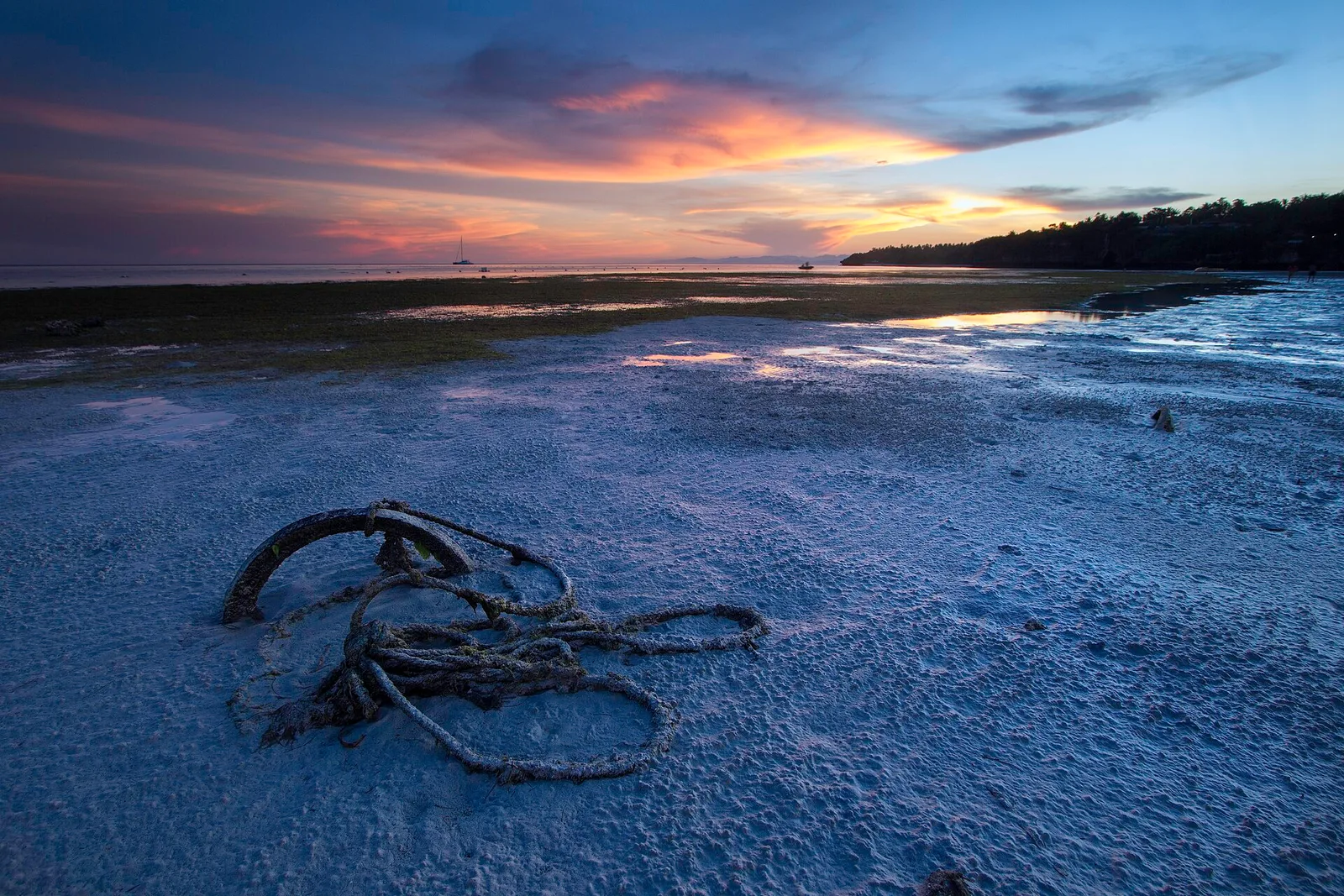
The beach finale usually lands at Santiago Bay on Pacijan, a long, gentle crescent of white sand and shallow, warm water. The white sand here is itself a product of the same limestone story, the ground-down remains of coral and shell. At low tide the sea pulls far back to reveal wide flats and sandbars you can walk across; at high tide the bay fills in and becomes ideal for an easy swim. Some itineraries also take in viewpoints like Buho Rock, a small cliff platform with diving boards and a sweeping look out over the Camotes Sea. Wherever the tour ends up, the rhythm is the same: warm shallow water, swaying coconut palms, and the kind of horizon that gives the islands their nickname.
Culture and why these islands matter
The Camotes are quiet, deeply rural, and proudly Camoteño. Fishing and farming shape daily life, and the pace is famously gentle. The islands have a long Catholic heritage visible in old stone churches and town fiestas, and a folk tradition rich with stories about caves, spirits, and the sea. What makes them matter for a traveler is precisely what they lack: there are no high-rise resorts, no crowds pressing onto the sand, no sense of a place performing for tourists. You are visiting a working island community whose natural treasures, the caves and lake especially, double as cherished local swimming spots.
That intimacy comes with responsibility. The freshwater caves are fragile ecosystems; the limestone formations grow back at a glacial pace and the water quality depends on what we put into it. Skip sunscreen and lotions before entering cave pools, take every scrap of trash back out with you, and never break off stalactites as souvenirs. Treat the lake and beaches the same way, and support local boatmen, guides, and small eateries so the tourism money stays in the community that protects these places.
Practical tips for the day
- Getting there: Most tours connect with a ferry from the Cebu side (commonly from Danao City to Consuelo on Poro, or from the Cebu City area to Pacijan). The crossing is part of the experience; do the math on ferry schedules, as boats are far less frequent than city buses.
- How strenuous: Moderate and family-friendly overall. The main effort is the stairs down into and back out of the caves, which can be steep and slippery. Anyone reasonably mobile can manage it, but watch your footing.
- What to wear and bring: Swimwear under your clothes, a quick-dry towel, water shoes or sandals with grip for slick cave steps, plenty of drinking water, and reef-safe or no sunscreen for cave swims. Bring small cash; card payment is unreliable on the islands and you will want it for entrance fees, snacks, and tips.
- Best time: The dry season, roughly from around December through May, gives the calmest seas and the most reliable ferry crossings. Start early to fit caves, lake, and beach into one day and to enjoy the cave pools before midday crowds.
- What's typically included: Tours generally cover island transport between stops and a guide; site entrance fees, food, and ferry tickets may or may not be bundled, so confirm before booking. Duration is a full day, often eight to ten hours once travel between Pacijan and Poro is factored in.
Before you go
The Camotes do not overwhelm you. They do something rarer: they let a day breathe. You float in a cave carved by ten thousand years of patient rain, you drift across a quiet lake, and you finish with your toes in white sand watching the sun slide toward Cebu. The islands earned their nickname honestly, and the best souvenir you can take home is the memory of how unhurried it all felt. Go gently, leave it cleaner than you found it, and the Lost Horizon will be waiting, just as lovely, for whoever comes next.
Good to know before you book
- Duration: typically a full day (around 8 to 10 hours including transfers), though half-day and multi-day options exist - check the listing.
- Best for: couples, families and first-time visitors.
- What is included: the boat, life vests, snorkelling gear, a guide and usually lunch; island entrance and environmental fees may be paid locally.
- Pickup: most tours offer hotel or central pickup; confirm your point and time when booking.
- Book through: the GetYourGuide button on this page, which shows live availability and pricing.
Frequently asked questions
How long does the Full-Day Camotes Islands Tour: Caves, Lake & Beach take?
Most departures run as a full day - roughly 8 to 10 hours including pickup, travel and the activities themselves - so plan to set aside the whole day. Some operators offer shorter or private versions; the exact timing for your date is shown when you book through the GetYourGuide button on this page.
What is included in the Full-Day Camotes Islands Tour: Caves, Lake & Beach?
Typically the price covers the boat, life vests, snorkelling gear, a guide and usually lunch; island entrance and environmental fees may be paid locally. Inclusions vary by operator, so always read the specific listing - it spells out exactly what is provided and what you pay for separately, such as entrance or environmental fees.
What should I bring?
Pack swimwear, reef-safe sunscreen, a hat, a towel, water shoes for rocky landings and a waterproof pouch for your phone. It is also worth carrying some cash for local fees, drinks and tips, plus any personal medication, since card facilities can be limited outside the cities.
Is the Full-Day Camotes Islands Tour: Caves, Lake & Beach suitable for beginners or families?
It is suitable for almost everyone, including families and non-swimmers, thanks to life vests and calm, sheltered water at most stops. There is plenty of time to simply relax on the sand. If you have specific concerns about age, fitness or swimming ability, message the operator before booking - they can advise on the best option for your group.
When is the best time to do this tour?
The best conditions are usually the dry months of December to May, with calm seas for snorkelling and diving. That said, the Philippines is a year-round destination, and many of these experiences run in any season - just expect the occasional shower and check the forecast for the day.
How do I get to Cebu?
To reach Cebu, fly into Mactan-Cebu International Airport, then drive south (about 3 to 4 hours to the southwest coast). Many tours include transfers from nearby towns or hotels, so confirm your pickup arrangement when you book so the day runs smoothly from the start.
Do I need to book the Full-Day Camotes Islands Tour: Caves, Lake & Beach in advance?
Yes - booking ahead is strongly recommended, especially in the dry-season peak and on weekends, when popular tours and the best operators sell out. Reserving online also locks in your spot and lets you compare timings and inclusions easily.
How much does the Full-Day Camotes Islands Tour: Caves, Lake & Beach cost?
Prices vary with the season, group size and exactly what is included, so we do not list a fixed figure here. Tap the GetYourGuide button on this page to see the current, accurate price and availability for your chosen date.
Can I do the Full-Day Camotes Islands Tour: Caves, Lake & Beach as a private or customised tour?
Many operators offer a private version of this experience for couples, families or small groups who want a flexible pace and a guide to themselves, and some can tailor the route or add stops. If a private or custom option matters to you, check the listing or message the operator before booking, as availability and prices differ from the standard shared tour.
Ready to explore Cebu?
From planning to the moment you arrive, the Full-Day Camotes Islands Tour: Caves, Lake & Beach is one of the most rewarding ways to experience this corner of the Philippines - and booking it is simple. Use the GetYourGuide button on this page to check live availability, compare timings and secure your spot, then turn up and let the local guides handle the rest while you focus on the views, the water and the memories.

PANA.PH Editorial Team
Philippines travel desk
The PANA.PH travel desk researches, books and re-checks Philippines travel logistics — fares, ferry schedules, government fees and permit rules — and publishes what it can verify.
🏡 Real local stays (book direct)
Hand-picked homestays and guesthouses — book direct, no markup.
Browse all local stays →

🌊 Popular activities (book instantly)
Island hopping, canyoneering, whale sharks — real Klook/GetYourGuide options.
View all activities →