Cebu City wears its history out in the open. Walk a single downtown block and you brush past a 16th-century cross sheltered under a tiled kiosk, a Spanish stone fort guarding the harbor, and a church whose centerpiece is the oldest religious relic in the Philippines. Then, almost without warning, the tour pivots upward. The van climbs out of the heat and traffic into the cool green ridge above the city, and within half an hour you are standing at Tops, watching the whole metropolis, its airport island, and the Mactan Channel spread out below like a map. This combination, deep history at sea level and big sky at altitude, is what makes the Cebu City History and Uphill Tour such a satisfying way to read the city in a single day.
Cebu City History and Uphill Tour - Guide
Trip.com
Search on Trip.comHotels in Philippines
Compare live prices via Travelpayouts — targeted for this guide.
The lay of the land: harbor city meets mountain spine
Cebu is a long, narrow island, and Cebu City sits on its eastern coast facing the sheltered Mactan Channel. That geography is the whole story. The calm, deep harbor is exactly why Ferdinand Magellan's expedition anchored here in 1521 and why the Spanish later chose Cebu as their first permanent settlement and the original capital of the Philippines, founded by Miguel Lopez de Legazpi in 1565. The flat coastal strip filled up with churches, plazas, and trading houses, and the city simply grew until it ran into the hills.
Those hills are the spine of Cebu Island, a ridge of uplifted limestone and older rock running roughly north to south. As the city sprawled, it climbed the lower slopes of barangays like Busay, where the air is noticeably cooler and the views open up. The uphill leg of this tour follows that climb, trading the dense, humid grid of downtown for switchback roads, roadside flower stalls, and the green folds of the mountains. It is a short distance but a complete change of world.
The heritage core, stop by stop
The historical half of the day clusters around the old Spanish core, where most sites are within walking distance of each other.
Trip.com
See all tours in Philippines on Trip.comSpa experience in Philippines
Hand-picked experiences in Philippines — book on Trip.com with instant confirmation.
Magellan's Cross
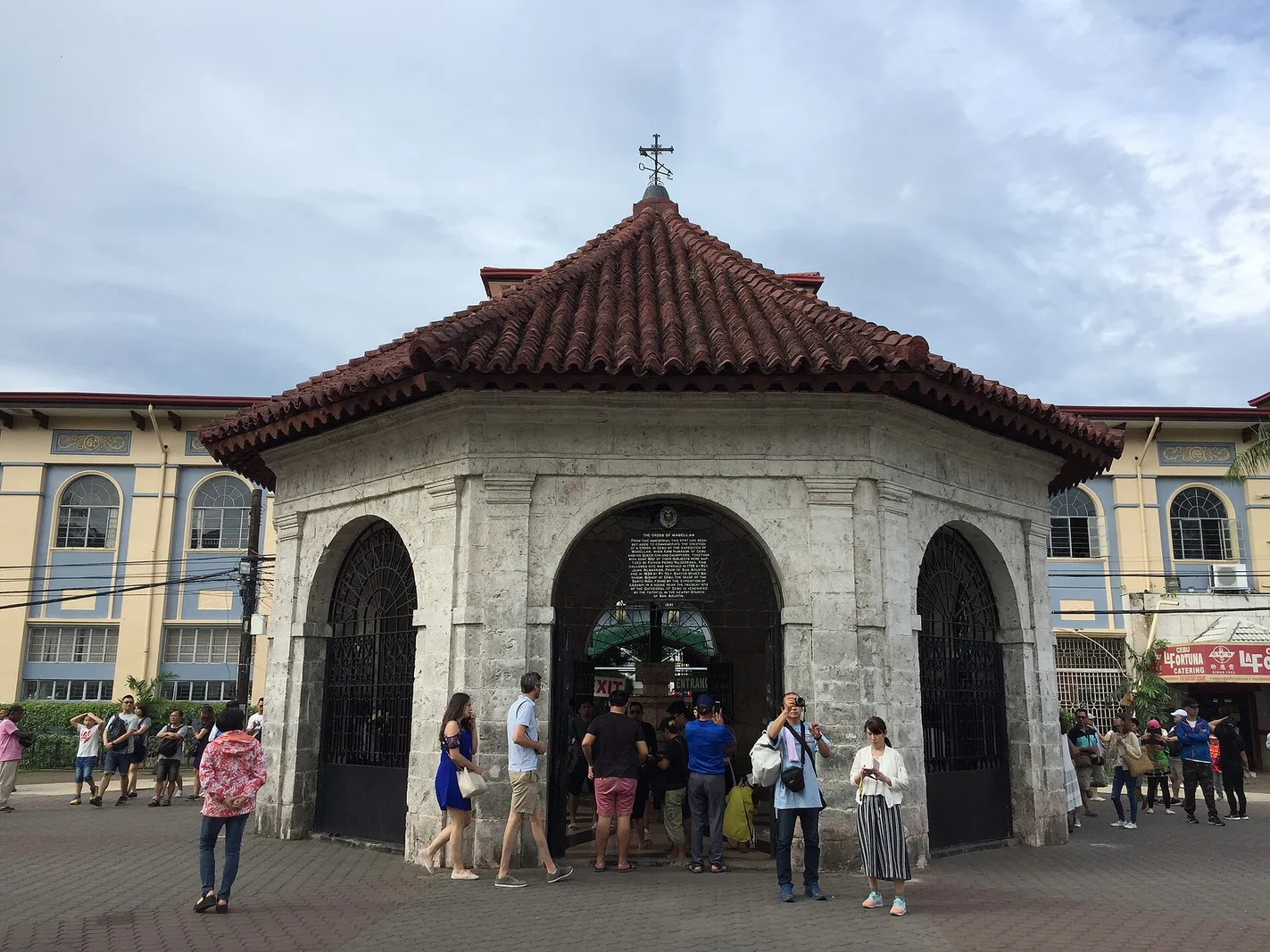
This is usually the first stop and the symbolic heart of it all. According to tradition, the cross was planted by Magellan's men in 1521 to mark the baptism of Rajah Humabon, his queen, and hundreds of their followers, the first Christian converts in the islands. The original is said to be encased inside the hollow wooden cross you see today, housed in a small open chapel whose ceiling is painted with the scene of that first mass. It takes only a few minutes to visit, but it carries enormous weight as the founding moment of Christianity in the Philippines.
Basilica Minore del Santo Nino
Steps away stands the Basilica del Santo Nino, the oldest Roman Catholic church in the country, founded in 1565 on the spot where the image of the Santo Nino, the Holy Child Jesus, was rediscovered after Legazpi's arrival. That little statue, a gift from Magellan to Queen Juana at her baptism, is the most venerated religious icon in the Philippines and the focus of the massive Sinulog festival each January. The current stone church, rebuilt over the centuries, is a working basilica, so expect prayer, candles, and crowds of devotees alongside visitors.
Fort San Pedro
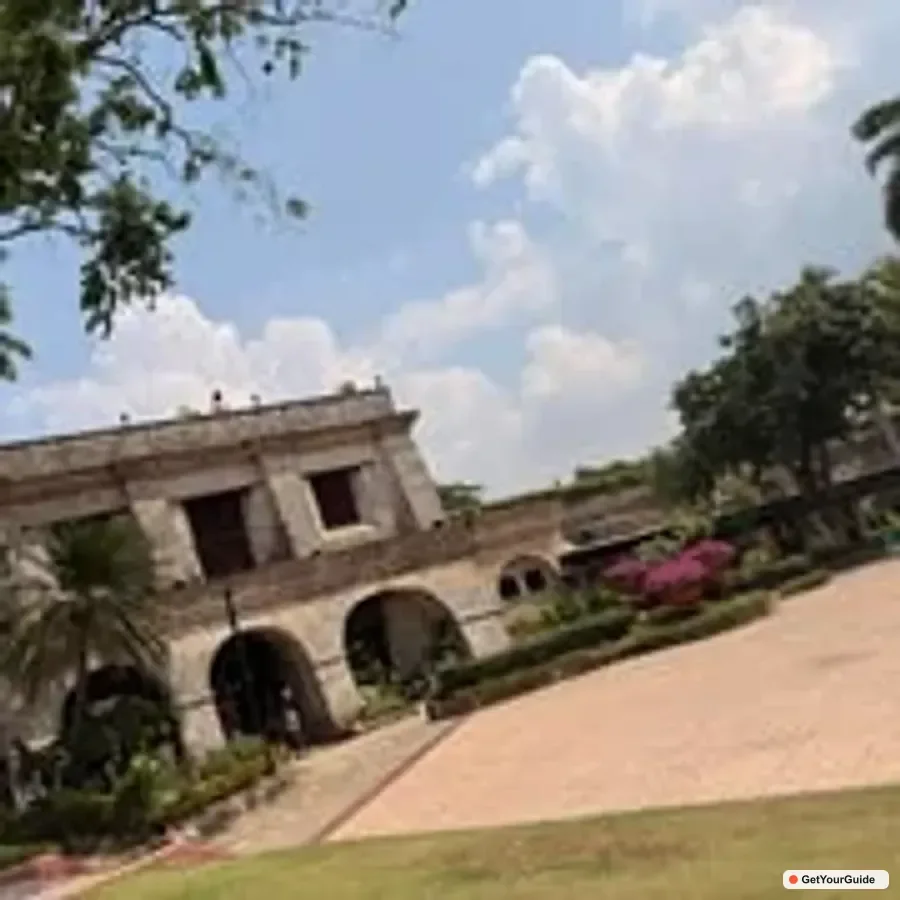
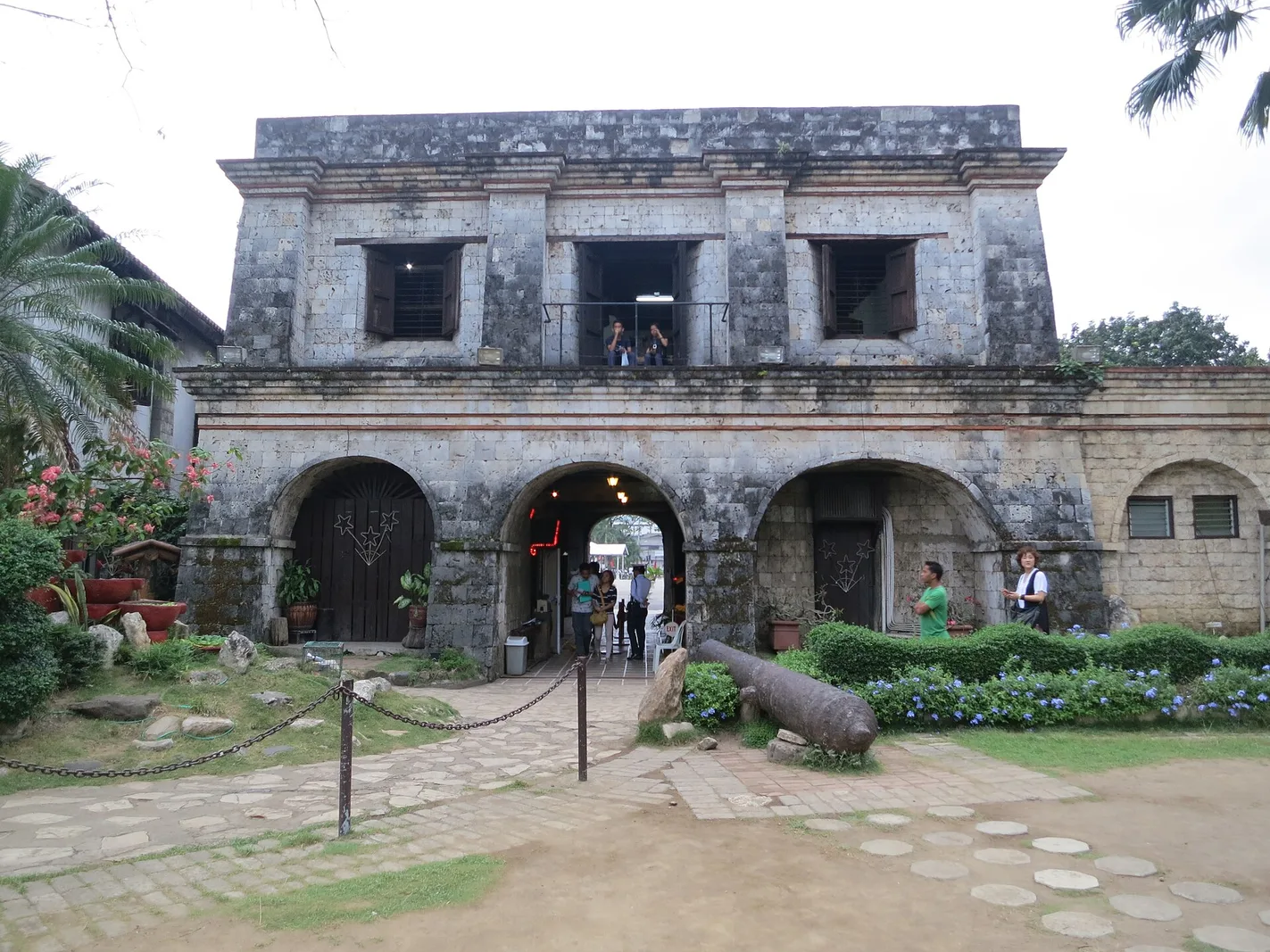
A short walk toward the waterfront brings you to Fort San Pedro, the oldest and smallest triangular bastion fort in the country, begun under Legazpi in 1565. Its coral-stone walls have served as a Spanish garrison, an American barracks, and even a zoo and city offices over the years. Today it is a quiet walled garden where you can climb the ramparts, look out toward the port, and feel how the city defended its precious harbor.
Heritage of Cebu Monument and Colon Street
Many versions of the tour also pause at the Heritage of Cebu Monument in the old Parian district, a dramatic tableau of bronze and concrete sculptures depicting key moments in Cebu's past, and roll past Colon Street, recognized as the oldest street in the Philippines. The nearby Yap-Sandiego Ancestral House, one of the oldest Chinese-Filipino homes still standing, sometimes features as well, a window into the merchant families who shaped the city.
The climb to Tops
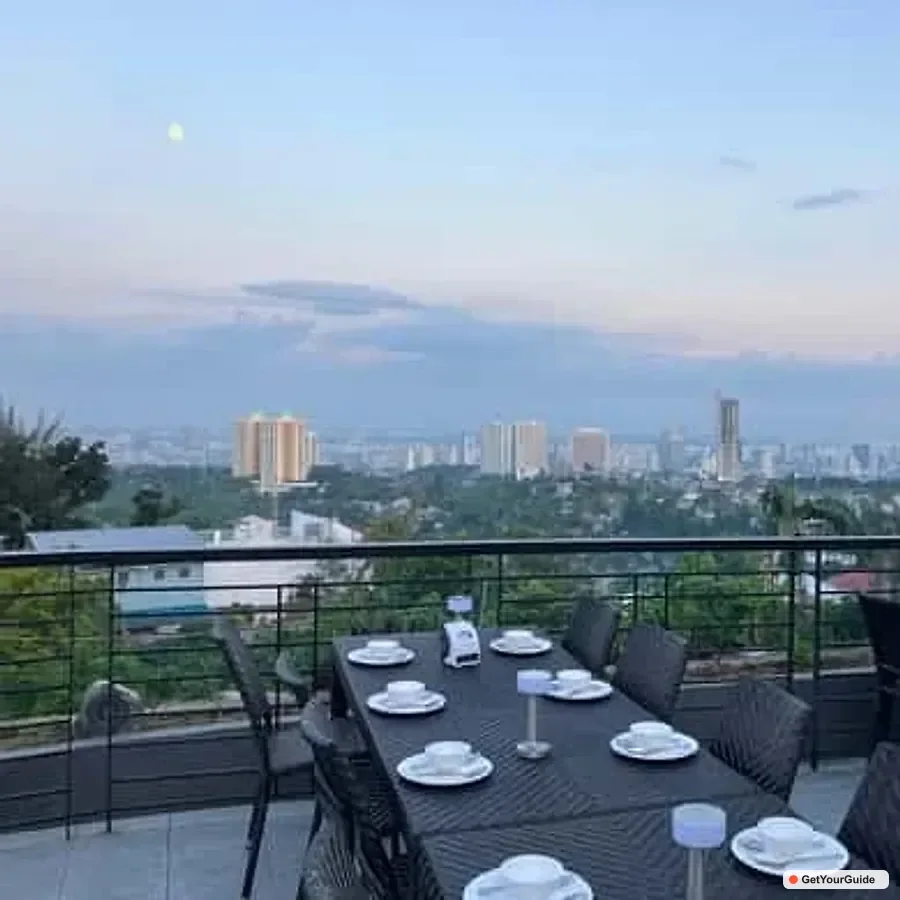
With the lowland history behind you, the tour turns uphill into Busay. The road narrows and steepens, and the temperature drops a few degrees as you gain elevation on the mountain ridge. Tops, sometimes called Tops Lookout, is a circular observation deck built from the natural rock of the hillside, ringed by low stone walls and open to the sky.
From here the payoff is the panorama. On a clear day you can trace the entire layout of Cebu City below, follow the Mactan Channel as it separates the main island from Mactan, pick out the airport, and watch ships move through the harbor that started this whole story centuries ago. It is the single best vantage point for understanding the geography you spent the morning walking through, the harbor, the coastal city, and the mountains pressing in behind it. Late afternoon is the classic time to arrive, when the heat softens, the light turns golden, and the city lights begin to flicker on at dusk.
Why it matters
This route is essentially the founding story of the modern Philippines compressed into a few square kilometers. Cebu is where European contact, Christianity, and Spanish colonial rule all began in the islands, and where the country's first capital took root before Manila ever rose to prominence. Visiting the cross, the basilica, and the fort in sequence is like reading the opening chapters of the national story in order. The uphill finale then lets you step back and see the living result: a busy, sprawling Visayan metropolis that grew out of that single harbor.
Practical tips
- Best time of day: Mornings are best for the downtown heritage sites to beat the heat and crowds; aim to reach Tops in the late afternoon for cooler air, sunset, and city lights.
- Best season: The drier months, roughly December through May, give the clearest mountain views. January is special for Sinulog energy at the basilica but extremely busy.
- What to wear: Light, breathable clothing for the lowland heat, but bring a light layer for Tops, where it can feel surprisingly cool and breezy. Modest dress (covered shoulders and knees) is appropriate for the basilica, which is an active place of worship.
- Footwear: Comfortable walking shoes; the heritage core involves walking between sites on city streets.
- How strenuous: Light. The walking is mostly flat and short, and the uphill section is done by vehicle, not on foot, so this suits most fitness levels and families.
- Bring: Water, sun protection, a hat, and small cash for candles, entrance fees, or snacks and drinks at Tops.
- Duration: Plan on roughly half a day, often around four to six hours depending on traffic and how long you linger at the viewpoint.
- Responsible travel: Remember the basilica is a sacred site for millions of Filipinos, not just a photo stop, so keep quiet during services and ask before photographing worshippers. Carry out your trash at Tops to help keep the ridge clean.
The closing view
What makes this tour stick with people is the arc of it. You begin at a wooden cross planted half a millennium ago, trace the city's birth through stone churches and coral forts, then ride up into the hills until the whole story lies beneath you at once. Standing at Tops as the sun drops behind the ridge and the lights of Cebu come alive, you understand the city not as a list of monuments but as a living place, one that started at a quiet harbor and never stopped growing. It is the perfect first day in Cebu, and the perfect way to fall for it.
Good to know before you book
- Duration: typically a full day (around 8 to 10 hours including transfers), though half-day and multi-day options exist - check the listing.
- Best for: couples, families and first-time visitors.
- What is included: transport and a guide; check the listing for meals, gear and fees.
- Pickup: most tours offer hotel or central pickup; confirm your point and time when booking.
- Book through: the GetYourGuide button on this page, which shows live availability and pricing.
Frequently asked questions
How long does the Cebu City History and Uphill Tour take?
Most departures run as a full day - roughly 8 to 10 hours including pickup, travel and the activities themselves - so plan to set aside the whole day. Some operators offer shorter or private versions; the exact timing for your date is shown when you book through the GetYourGuide button on this page.
What is included in the Cebu City History and Uphill Tour?
Typically the price covers transport and a guide; check the listing for meals, gear and fees. Inclusions vary by operator, so always read the specific listing - it spells out exactly what is provided and what you pay for separately, such as entrance or environmental fees.
What should I bring?
Pack comfortable clothing, sunscreen, a hat, water and a little cash for fees and extras. It is also worth carrying some cash for local fees, drinks and tips, plus any personal medication, since card facilities can be limited outside the cities.
Is the Cebu City History and Uphill Tour suitable for beginners or families?
It suits a wide range of travellers; ask the operator about fitness or swimming requirements if you are unsure. If you have specific concerns about age, fitness or swimming ability, message the operator before booking - they can advise on the best option for your group.
When is the best time to do this tour?
The best conditions are usually the dry months of December to May, with calm seas for snorkelling and diving. That said, the Philippines is a year-round destination, and many of these experiences run in any season - just expect the occasional shower and check the forecast for the day.
How do I get to Cebu City?
To reach Cebu City, fly into Mactan-Cebu International Airport, then drive south (about 3 to 4 hours to the southwest coast). Many tours include transfers from nearby towns or hotels, so confirm your pickup arrangement when you book so the day runs smoothly from the start.
Do I need to book the Cebu City History and Uphill Tour in advance?
Yes - booking ahead is strongly recommended, especially in the dry-season peak and on weekends, when popular tours and the best operators sell out. Reserving online also locks in your spot and lets you compare timings and inclusions easily.
How much does the Cebu City History and Uphill Tour cost?
Prices vary with the season, group size and exactly what is included, so we do not list a fixed figure here. Tap the GetYourGuide button on this page to see the current, accurate price and availability for your chosen date.
Can I do the Cebu City History and Uphill Tour as a private or customised tour?
Many operators offer a private version of this experience for couples, families or small groups who want a flexible pace and a guide to themselves, and some can tailor the route or add stops. If a private or custom option matters to you, check the listing or message the operator before booking, as availability and prices differ from the standard shared tour.
Ready to explore Cebu City?
From planning to the moment you arrive, the Cebu City History and Uphill Tour is one of the most rewarding ways to experience this corner of the Philippines - and booking it is simple. Use the GetYourGuide button on this page to check live availability, compare timings and secure your spot, then turn up and let the local guides handle the rest while you focus on the views, the water and the memories.

PANA.PH Editorial Team
Philippines travel desk
The PANA.PH travel desk researches, books and re-checks Philippines travel logistics — fares, ferry schedules, government fees and permit rules — and publishes what it can verify.
🏡 Real local stays (book direct)
Hand-picked homestays and guesthouses — book direct, no markup.
Browse all local stays →

🌊 Popular activities (book instantly)
Island hopping, canyoneering, whale sharks — real Klook/GetYourGuide options.
View all activities →