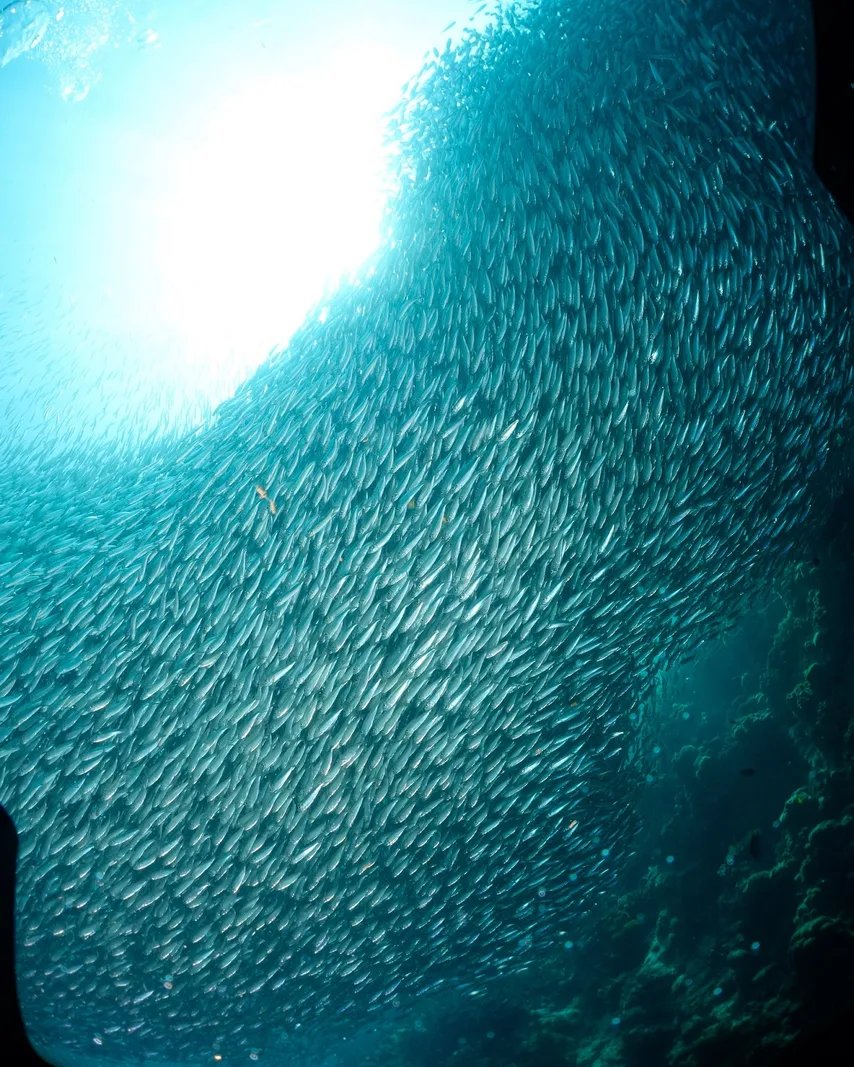
The boat has been running for forty minutes and nobody has spoken above a whisper. Six snorkelers sit on the gunwales, masks on foreheads, fins ready. The Butanding Interaction Officer stands at the bow, scanning the surface. Then she raises her hand — slow, deliberate — and points. In the dark water below, something enormous is moving. Not a shadow. An actual animal, its spotted flanks barely visible in the blue-green depth, its caudal fin sweeping in slow arcs the size of a front door.
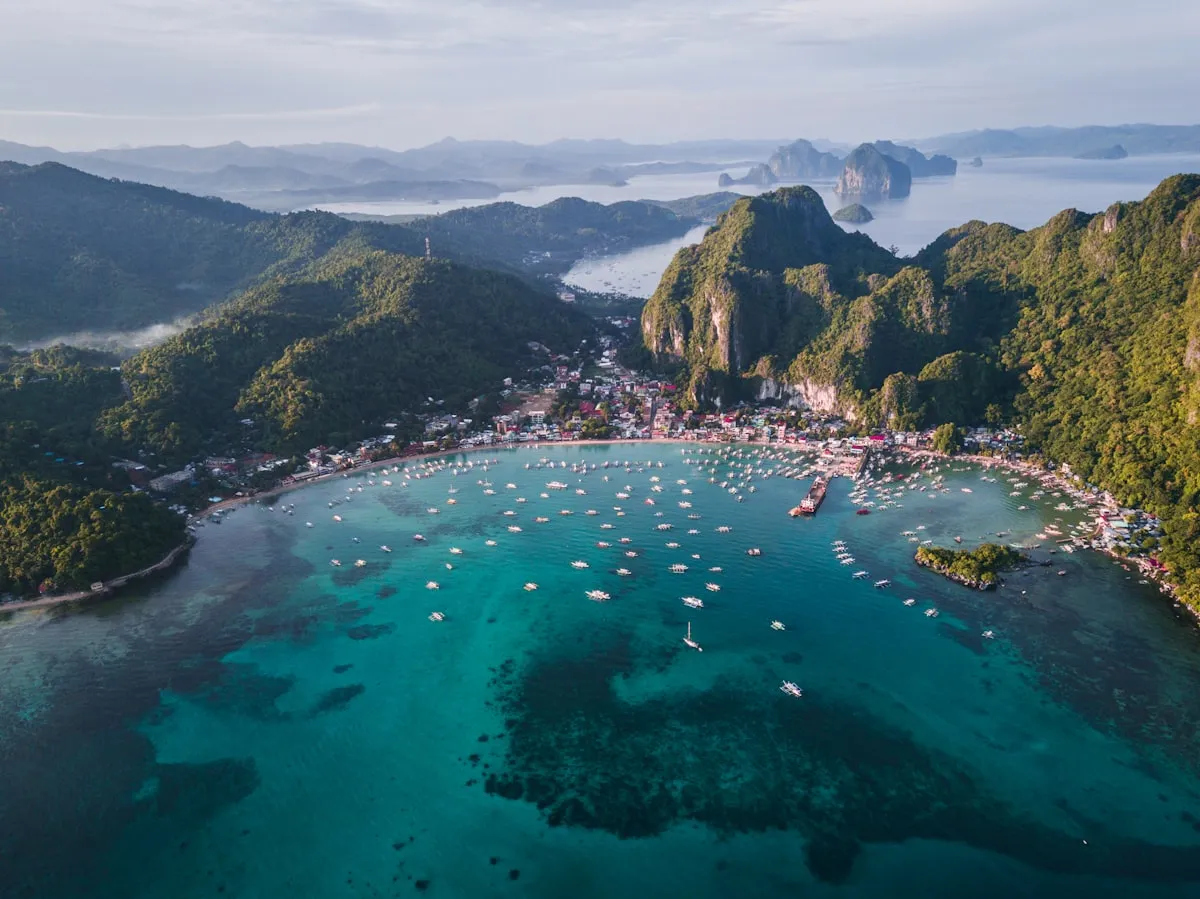
Donsol, Sorsogon: Ethical Whale Shark Watching in the Philippines (The Better Alternative)
Trip.com
Search on Trip.comHotels in Philippines
Compare live prices via Travelpayouts — targeted for this guide.
"Go," she says, and everyone slides silently into the water.
This is Donsol. No feeding trough. No conditioned response. Just wild whale sharks doing what whale sharks have done in these waters for millions of years, and six humans briefly sharing their ocean.
Why Donsol Is Different From Oslob
The difference between Donsol and Oslob's whale shark experience is not just philosophical — it is experiential. At Oslob, whale sharks surface because fishermen throw shrimp in the water. The behavior is reliable, predictable, and artificial. The animals are present because of a learned feeding association, and their movements in the interaction zone are dominated by the food source, not natural behavior.
Trip.com
See all tours in Philippines on Trip.comWhale shark watching in Philippines
Hand-picked experiences in Philippines — book on Trip.com with instant confirmation.
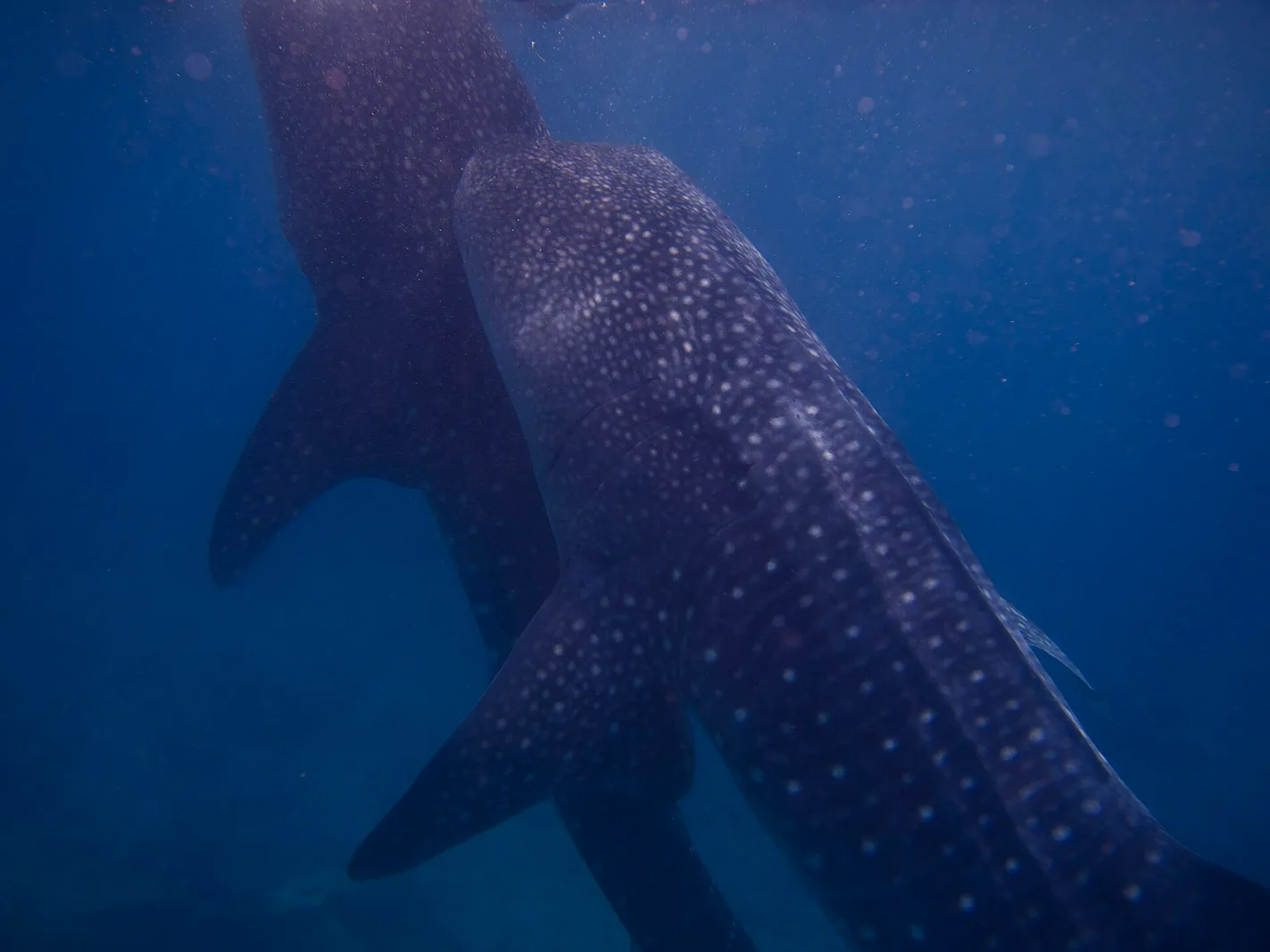
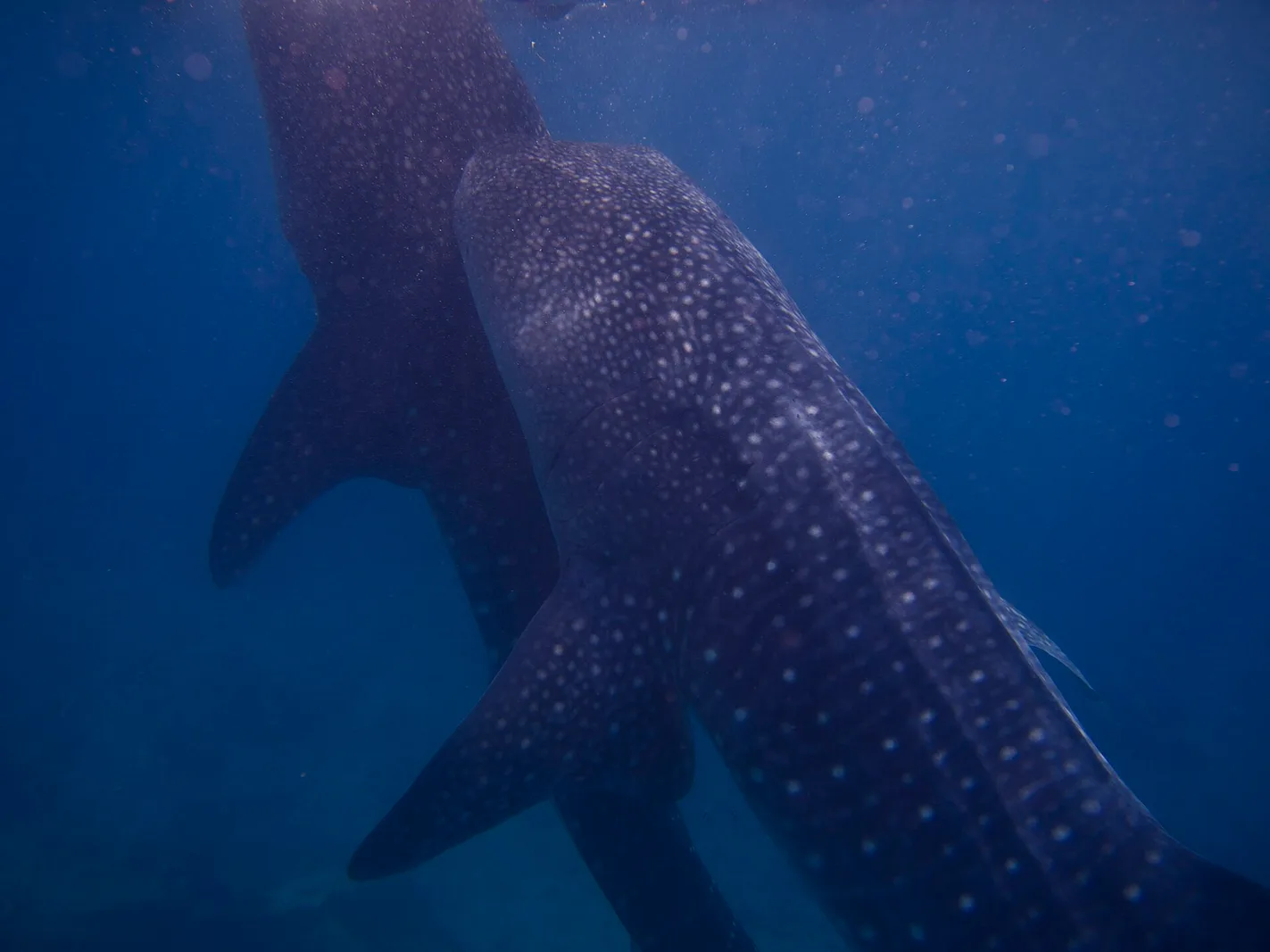
At Donsol, nothing is fed to anything. The whale sharks that aggregate in Donsol Bay from November through June are here because the bay's plankton-rich waters offer natural foraging. They are engaged in real filter-feeding — cruising the upper water column with their mouths open, straining tonnes of microscopic organisms from the sea. When you swim beside a whale shark at Donsol, you are witnessing an actual behavior in an actual ecosystem. The animal's trajectory, speed, and direction are entirely its own.
WWF (World Wildlife Fund) Philippines helped establish Donsol's responsible whale shark tourism program in 1998 — making it one of the world's first formally structured, conservation-oriented whale shark tourism programs. It is a genuine pioneer in ecotourism design.
Getting to Donsol
Donsol is in Sorsogon province, at the southern tip of the Luzon mainland. Getting there requires a little more effort than a day trip to Oslob, but it is very manageable:
By Air and Land
- Fly to Legazpi City: Cebu Pacific and Philippine Airlines operate daily flights from Manila to Legazpi Airport in Albay. Flight time is approximately 1 hour 20 minutes. Fares: PHP 2,000–4,500 depending on timing and advance booking.
- Van from Legazpi to Donsol: From the Legazpi airport area, vans (shared or chartered) run to Donsol, approximately 1 to 1.5 hours via the Sorsogon highway. Shared van fare is PHP 100–150 per person; chartered van PHP 700–1,000 for the whole vehicle.
By Bus
From Manila's PITX or Cubao terminals, DLTB Co. and other lines operate overnight buses to Sorsogon City (approximately 10–12 hours). From Sorsogon City, jeepneys and vans run to Donsol (30–45 minutes, PHP 30–50). The bus option is significantly cheaper (PHP 600–900 Manila-Sorsogon) but consumes a full night of travel.
Most visitors fly to Legazpi and use the whale shark trip as a one or two-night detour before continuing to explore Bicol or flying back from Legazpi.
The Season
Whale sharks visit Donsol Bay from November through June, with peak concentration from February through May. During peak season (March and April especially), the encounter rate during morning trips exceeds 95% — you will almost certainly see whale sharks. In the shoulder months of November-December and June, sighting rates are lower but the experience is quieter and the town is even more relaxed.
The WWF Visitor Center and the Donsol LGU formally close the whale shark season on June 15 each year, after which boat trips are suspended. The sharks gradually disperse to follow the plankton blooms elsewhere in the Philippine Sea.
How the Donsol Experience Works
Step 1: Registration at the Visitor Center
All visitors must register at the Donsol Butanding Interaction Visitor Center before going out. Registration includes an orientation briefing — approximately 30 minutes — covering the rules of interaction, the biology of whale sharks, and the history of the program. The briefing is mandatory and genuinely informative. Entrance fee: PHP 300 per person (includes registration and use of facilities).
Step 2: The Boat
Groups of maximum 6 visitors are assigned to each boat. This is a strict limit, not a guideline — the cap prevents the overcrowding that plagues Oslob's water zone. Each boat carries one licensed Butanding Interaction Officer (BIO), trained in whale shark behavior and responsible interaction protocol. Boat hire: PHP 1,000–1,500 per boat per session, split among the group (so roughly PHP 170–250 per person for a full boat, often PHP 400–600 for smaller groups).
Boats go out in the morning from approximately 7am. A session lasts around 3 hours. Afternoon trips are not operated — whale sharks are harder to spot in afternoon light and sea conditions are often less favorable.
Step 3: In the Water
When the BIO spots a whale shark, she positions the boat ahead of the animal's path and signals the group to enter the water. Snorkeling only — scuba diving is not permitted, as bubbles stress the animals. The rules are strict and the BIO enforces them: maintain at least 3 metres from the body, 4 metres from the tail (the tail can injure a swimmer), no touching, no flash photography, stay at the surface and never dive down toward a descending shark.
The whale sharks here are genuinely massive — 6 to 10 metres on average, occasionally larger. They move with deceptive speed; what looks like a leisurely glide propels a 10-tonne animal at 4–5 km/h. Keep up is harder than it looks, especially in choppy water. Focus on the first 30 seconds of the encounter — get your bearings, find the right position relative to the shark's head, and just be present in the moment.
Firefly Watching: Donsol's Other Magic
Separate from the whale shark activity, Donsol offers one of the Philippines' best firefly watching experiences on the Donsol River. At dusk, small outrigger boats carry passengers up the river, and as dark falls, the mangrove trees on the riverbanks begin to light up with synchronised firefly displays — thousands of small lights blinking in rhythm, covering entire trees in a living light show.
The experience is genuinely magical. Unlike the commercial firefly tours in Bangkok or Kuala Lumpur (which often use light pollution to simulate the effect), Donsol's firefly population is entirely natural and the river is dark enough to make the display fully visible. Cost: PHP 400–600 per person for a 45-minute to 1-hour river trip at dusk. Trips depart from the main municipal pier at around 5:30–6:00pm.
The combination of morning whale shark snorkeling and evening firefly watching makes Donsol one of the most rewarding two-day nature itineraries in the Philippines.
Accommodation in Donsol
Donsol is a small municipal town with basic but clean accommodation options:
- Vitton Beach Resort: The longest-established resort in Donsol, directly on the water. PHP 1,500–2,500/night for fan rooms, PHP 2,500–3,500 for air-conditioned rooms with sea views.
- Woodland Resort: Quiet, well-maintained rooms in a garden setting a short walk from the pier. PHP 800–1,500/night.
- Homestays: Several families near the Visitor Center offer clean rooms at PHP 500–800/night — the most budget-friendly option and a more direct way to support the local community.
Book accommodation in advance for March and April — the peak period fills up quickly and Donsol has limited room inventory compared to Oslob's proximity to Cebu City's hotel stock.
Combining Donsol with Mayon Volcano
Donsol sits 30 minutes from Sorsogon City and 1.5 hours from Legazpi City, where Mayon Volcano — one of the Philippines' most iconic natural landmarks — dominates the skyline. A 2-to-3-night Bicol itinerary combining Donsol whale sharks with a visit to Mayon's Cagsawa Ruins and Sumlang Lake (for the perfect Mayon reflection photo) is one of the best value itineraries in the Philippines. Legazpi City makes an excellent base for both.
Frequently Asked Questions
Are whale shark sightings guaranteed at Donsol?
Not guaranteed — they are wild animals in open water — but the odds are very high during peak season (February–May). During March and April, virtually every morning trip encounters at least one whale shark; multiple encounters (3–6 animals on a single trip) are common. In November and December, encounter rates drop to roughly 60–70%. If you don't see a shark on your first trip, you can book again — groups who go twice almost always succeed.
Is Donsol better than Oslob for whale shark watching?
For the quality and authenticity of the wildlife experience: yes, Donsol is better. Wild animals in natural behavior are genuinely more remarkable than conditioned, fed animals. For ease of access and certainty of sighting: Oslob has the logistical advantage (3 hours from Cebu City, near-certain sightings, no season). Your choice depends on your priorities. If ethical wildlife tourism matters to you, or if you want the most authentic experience possible, Donsol is clearly the right choice.
How much does the full Donsol experience cost?
Budget approximately PHP 1,500–2,000 per person for the whale shark trip (including PHP 300 registration, PHP 400–600 boat share for a full group, PHP 200–300 for snorkel gear rental). Add PHP 500–600 for the evening firefly tour, PHP 800–2,500 for a night's accommodation, and PHP 300–600 for meals in Donsol town. A complete overnight experience runs PHP 3,500–6,000 per person all-in, excluding transport from Manila or Legazpi.
What should I bring to Donsol for whale shark snorkeling?
Reef-safe mineral sunscreen (chemical sunscreens are banned to protect the marine environment), a rash guard or thin wetsuit for sun protection and minor warmth (morning water is slightly cooler), your own mask and snorkel if you are particular about fit (rentals available), an underwater camera or GoPro (no flash permitted), and cash for fees and accommodation (ATMs in Donsol are limited — bring sufficient cash from Legazpi or Sorsogon City).
What else is there to do in Donsol and Sorsogon?
Beyond whale sharks and fireflies: Sorsogon City itself has the Subic-Subic white sand beach and the Juag Lagoon Marine Sanctuary (mangrove kayaking, bird watching). Bulusan Volcano Natural Park in eastern Sorsogon offers easy hiking around a crater lake in a cool, misty forest setting. Bulan town in southern Sorsogon has an excellent local seafood market. The whole Bicol region — from Donsol to Mayon to Caramoan's dramatic limestone islands — is one of the Philippines' most underrated travel corridors.

PANA.PH Editorial Team
Philippines travel desk
The PANA.PH travel desk researches, books and re-checks Philippines travel logistics — fares, ferry schedules, government fees and permit rules — and publishes what it can verify.
🏡 Real local stays (book direct)
Hand-picked homestays and guesthouses — book direct, no markup.
Browse all local stays →
🌊 Popular activities (book instantly)
Island hopping, canyoneering, whale sharks — real Klook/GetYourGuide options.
View all activities →