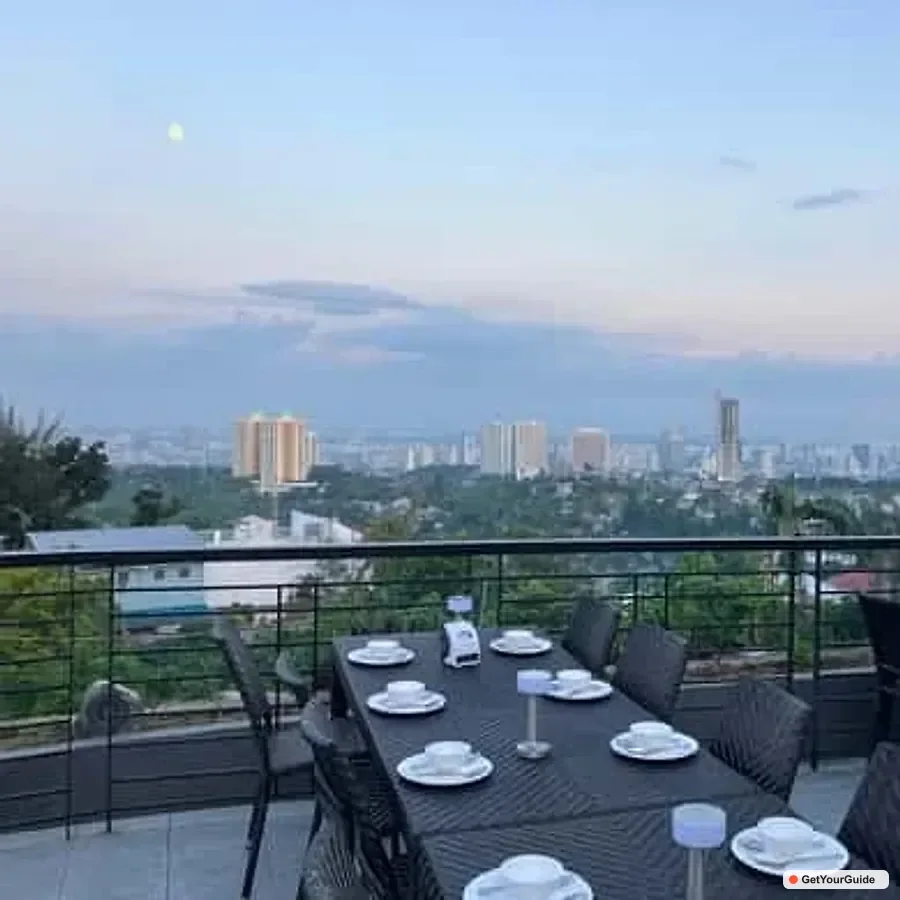
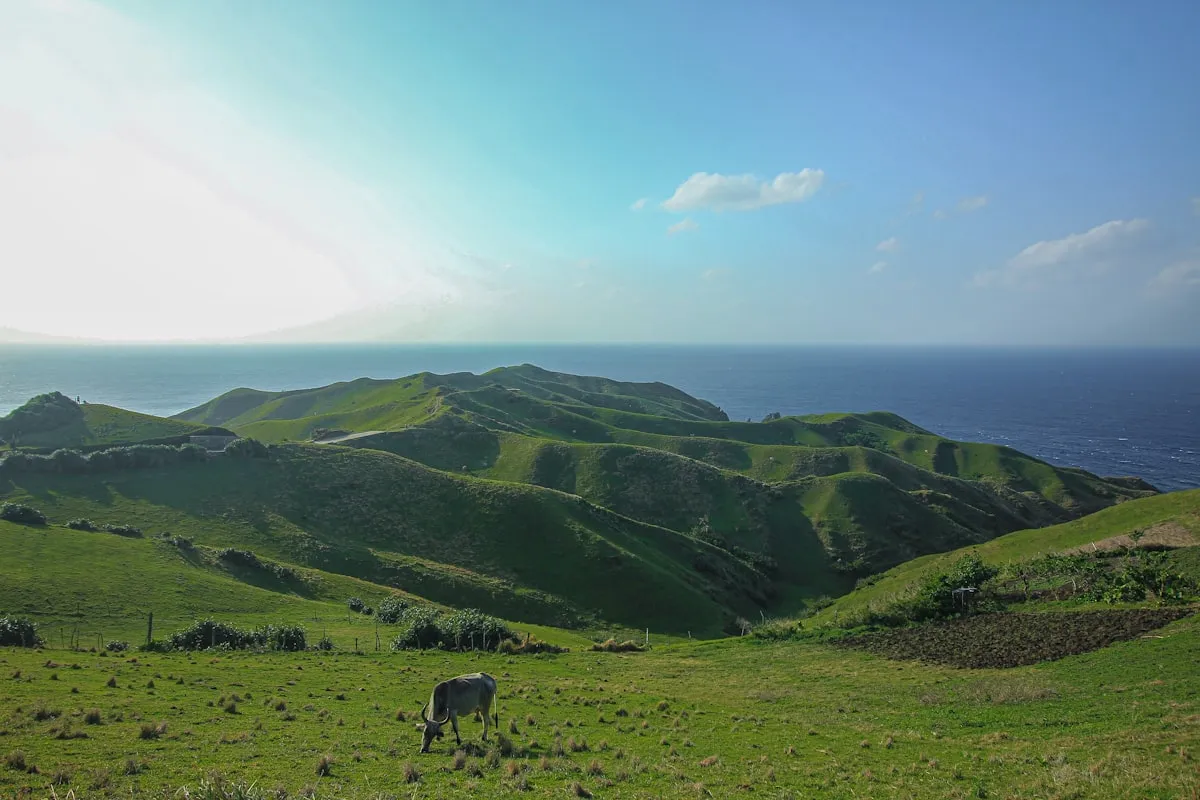
Most people who fly into El Nido never see this side of it. They arrive, hop on a bangka, and spend their days threading through the limestone towers of Bacuit Bay on the west coast, chasing the island-hopping circuit that put this corner of Palawan on every travel wishlist. But drive across the municipality to the quiet eastern shore, and you reach Sibaltan, a fishing barangay where the rhythm slows right down, the karst gives way to mangrove and reef, and the sea opens onto the Sulu Sea instead of the South China Sea. This is where you do your first-ever breaths underwater, and if the season is kind, where a manta ray the size of a dinner table glides past while you are still learning to clear your mask.
El Nido Discover Scuba Diving with Manta Rays - Guide
Trip.com
Search on Trip.comHotels in Philippines
Compare live prices via Travelpayouts — targeted for this guide.
This Discover Scuba Diving experience is built for people who have never dived before. There is no certification at the end and no prior experience required. You spend a morning learning the basics, then descend with an instructor at your side the entire time. It is one of the gentlest, most personal introductions to the underwater world you will find in the Philippines, and the setting could hardly be better.
Why Sibaltan, and not the postcard side of El Nido
El Nido sits at the northern tip of Palawan, the long sword-shaped island that forms the western edge of the Philippine archipelago. The famous towers of Bacuit Bay are Permian-age limestone, ancient coral reefs compressed into rock over roughly 250 million years and then sculpted by rain and sea into the jagged karst cliffs you see today. Sibaltan sits on the opposite, eastern coast, facing the Sulu Sea. The geology is different here: gentler shoreline, seagrass beds, mangroves, and fringing reefs rather than sheer cliffs plunging into deep water.
That difference matters underwater. The eastern reefs around Sibaltan and the nearby waters off northeastern Palawan are part of a marine zone known for healthy seagrass and reef habitat, the kind of productive, plankton-rich water that larger animals come to feed in. Sibaltan also has real cultural weight: it is one of the oldest continuously settled areas in El Nido, with archaeological finds pointing to early trade contact, and the community runs a small heritage museum (Balay Cuyonon) celebrating Cuyonon culture and traditional Palawan boat-building. You feel that lived-in, local quality the moment you arrive. This is a working village, not a resort strip.
Trip.com
See all tours in Philippines on Trip.comDiving in Philippines
Hand-picked experiences in Philippines — book on Trip.com with instant confirmation.

About the manta rays
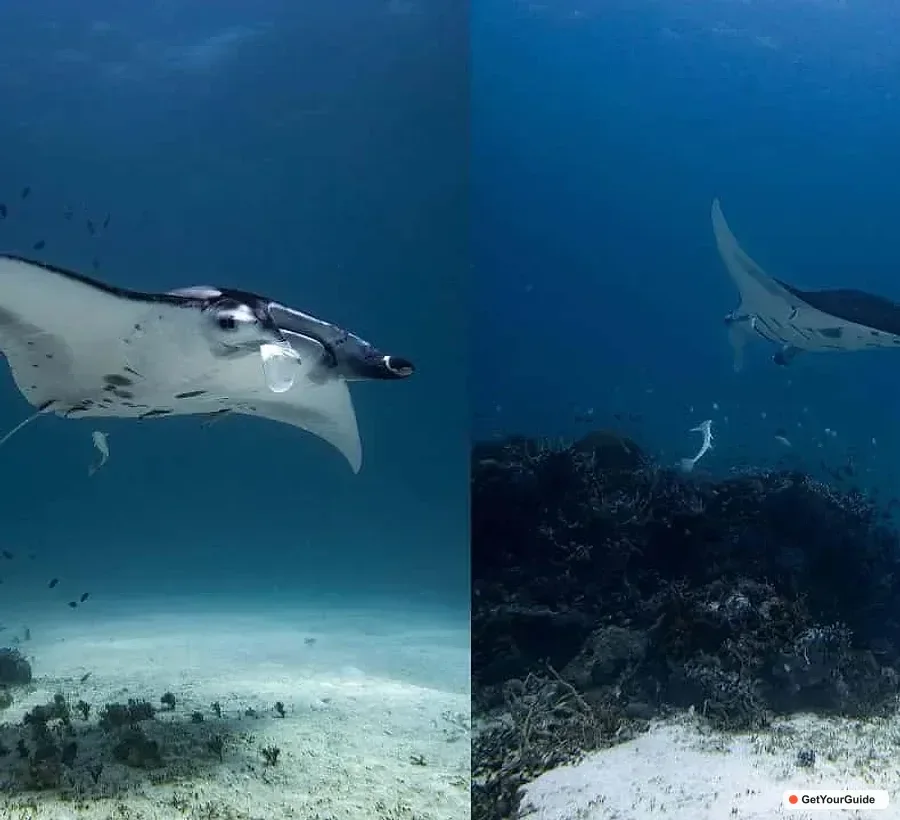
Let me be honest and specific here, because this is the part people fix on. Manta rays are not guaranteed. No reputable dive operation will promise you one, and you should be wary of anyone who does. Mantas are wild, migratory plankton-feeders that follow food, currents, and season. When conditions line up, the waters off northeastern Palawan do attract them, and seeing one on a discover dive is a genuine possibility rather than a marketing fantasy, but treat it as a wonderful bonus, not a certainty.
What you are likely hoping to meet is the reef manta (Manta alfredi), the smaller of the two manta species but still enormous by any human measure, with a wingspan that commonly reaches three to four metres. They have no sting and no teeth that threaten you; they feed by filtering plankton through their gills, mouths held open as they bank and barrel-roll through clouds of tiny organisms. They are intelligent, curious, and famously calm around respectful divers. Globally, reef mantas are listed as Vulnerable, which is exactly why the etiquette around them is non-negotiable: no touching, no chasing, no blocking their path, and let them come to you. A manta encounter is something you earn by being still.
What the day actually looks like, step by step
The briefing and the basics
Your morning begins on land or in shallow, calm water with a thorough briefing. Your instructor walks you through the gear: the mask, fins, buoyancy control device (the inflatable jacket that holds your tank), the regulator you breathe from, and the simple hand signals divers use because you cannot talk underwater. You will learn three or four core skills before you go anywhere interesting: how to breathe slowly and continuously, how to clear water from your mask, how to recover your regulator if it slips from your mouth, and how to equalise the pressure in your ears as you descend. None of it is hard. It just takes a few calm repetitions.
The descent
Once you are comfortable, you descend gradually with the instructor holding or staying right beside you. Discover dives are kept shallow and gentle, typically in the range of around 6 to 12 metres, where the light is bright, the colours are vivid, and there is plenty to see without venturing deep. You move slowly. The whole point is to hover, breathe, and look.
What you see down there
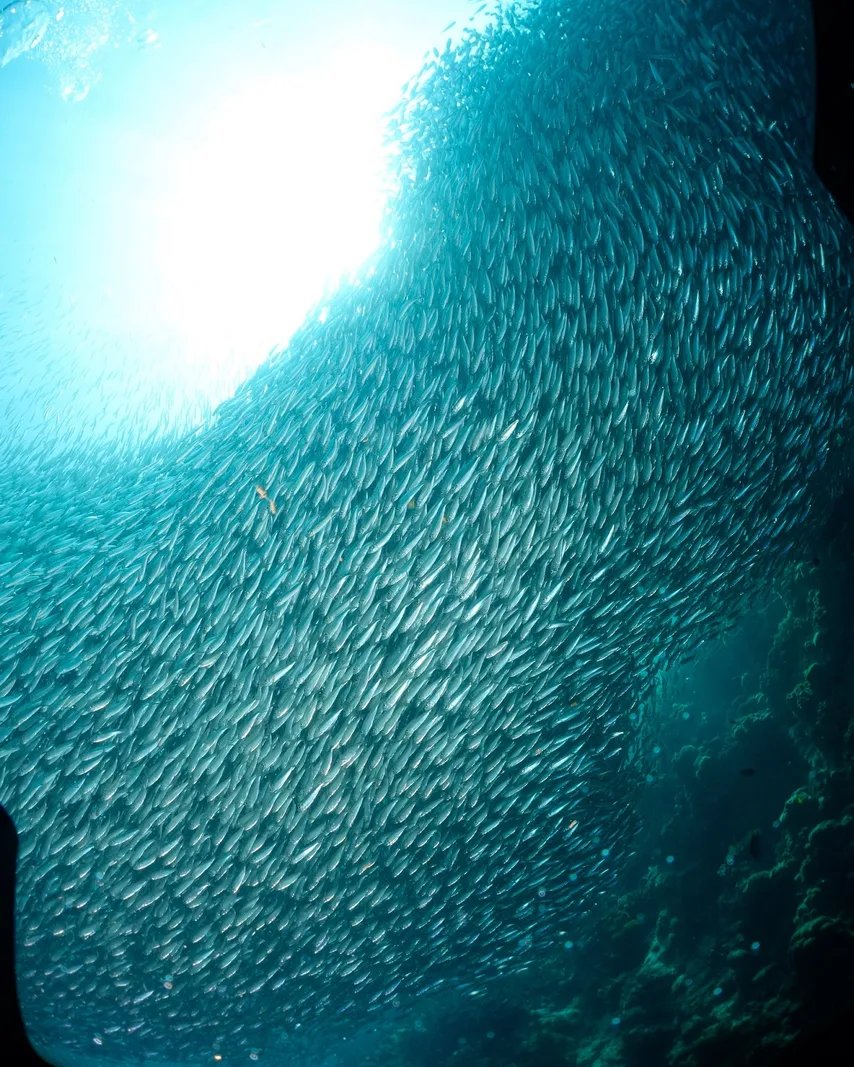
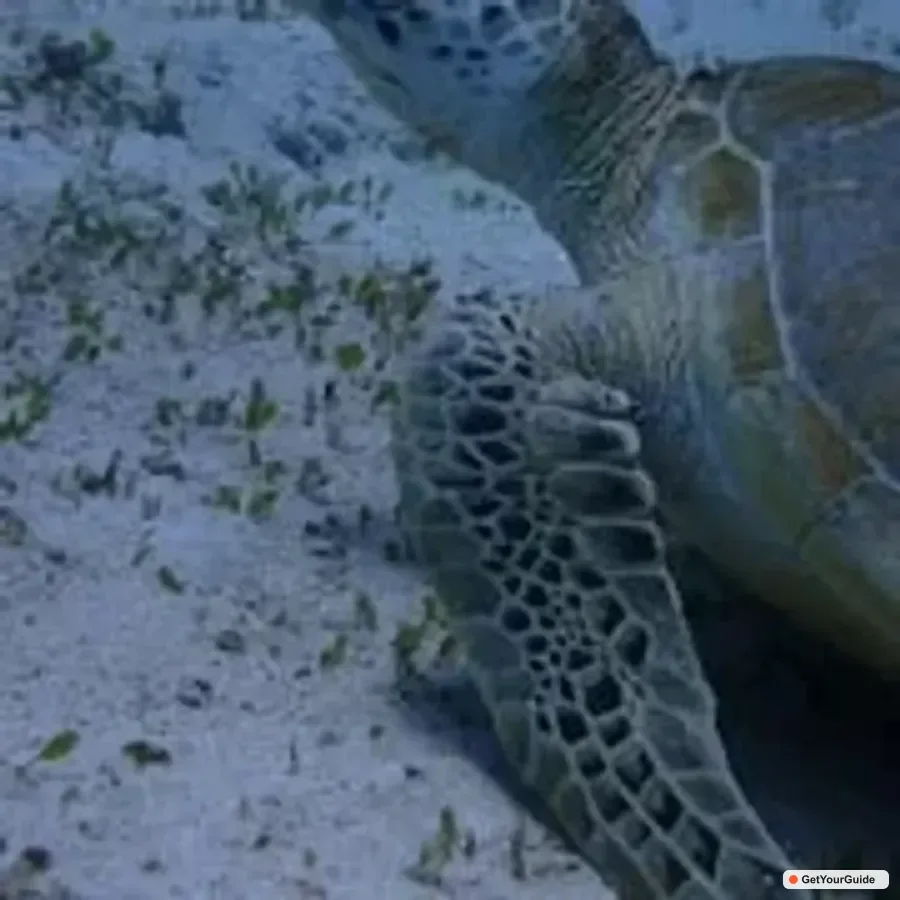
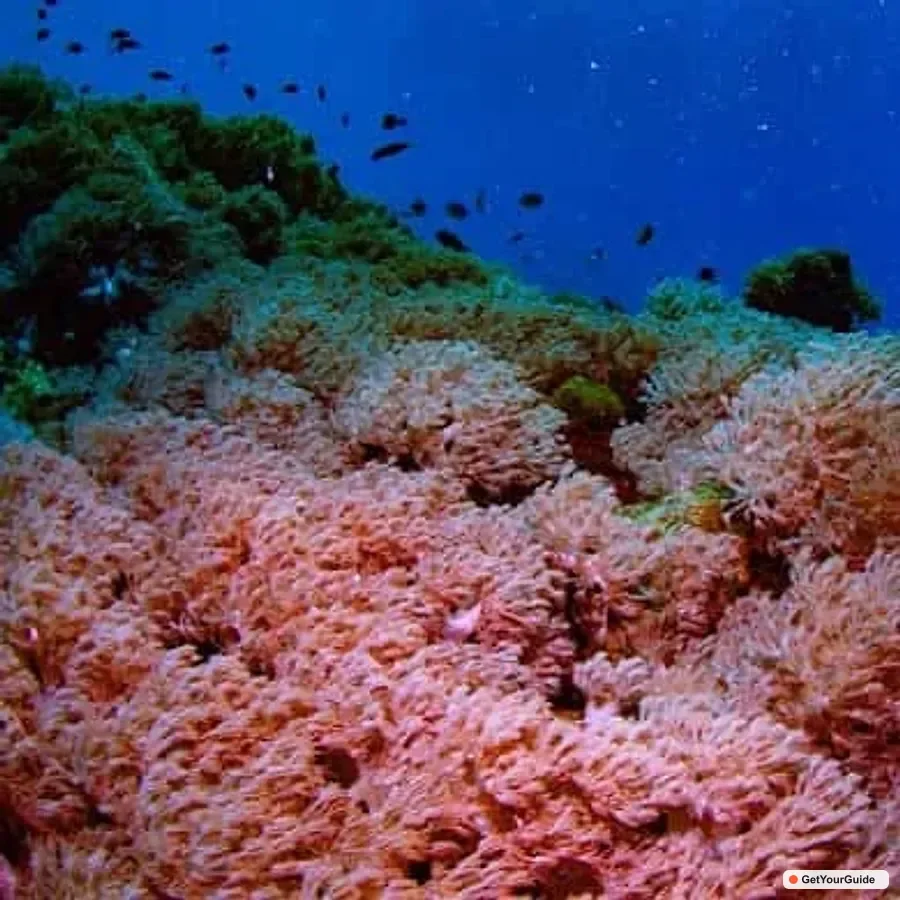
Even without a manta, the reef delivers. Expect hard and soft corals, clouds of anthias and damselfish, clownfish guarding their anemones, parrotfish crunching at the reef, perhaps a sea turtle cruising past, moray eels tucked in crevices, and the small theatre of nudibranchs and shrimp if your guide has a good eye. The water here is warm and generally clear, and the sensation of weightlessness, of breathing calmly while suspended over a living reef, is the thing that hooks most first-timers far more than any single creature.
Practical tips from people who have done it
- Best season: The eastern coast around Sibaltan is most diveable during the dry, calmer months, roughly late November through May, with the clearest, flattest conditions often falling between December and April. The southwest monsoon (habagat) brings rougher seas in the wetter middle of the year. Manta sightings are seasonal and weather-dependent, so ask your operator directly about recent activity.
- How strenuous: Low. You do not need to be a strong swimmer, but basic comfort in water helps enormously. The gear does the floating; your job is to stay calm and breathe.
- Health note: Diving has real medical screening for a reason. If you have heart, lung, ear, or sinus conditions, asthma, or are pregnant, disclose it. You will fill out a medical questionnaire. Never dive with a cold or congestion, because you will not be able to equalise.
- The flying rule: Do not dive and then fly the same day. The standard guidance is to wait at least 18 to 24 hours after diving before boarding a flight, so plan this for early in your trip, not the morning you leave.
- What to bring: Swimwear, a towel, reef-safe sunscreen (apply well before you gear up, or wear a rash guard instead to protect both your skin and the reef), water, and motion-sickness tablets if you are prone to seasickness on the boat ride out.
- Typically included: All scuba equipment, the instructor, and the briefing. Most operators include an underwater photo or two from the instructor. Confirm whether transfers from El Nido town, lunch, and the marine fee are bundled or extra.
- Duration: Budget a half to full day once you factor in the briefing, the travel to and from the dive area, the dive itself, and surface time.
Diving responsibly here
Sibaltan's appeal is precisely that it is not overrun, and the way you behave underwater keeps it that way. Practise good buoyancy so you never kick or touch the coral, which is a living animal that takes decades to grow and seconds to break. Keep a respectful distance from every creature, mantas above all, and let wildlife dictate the encounter rather than pursuing it. Choosing an operator that briefs you properly on this, that keeps groups small, and that supports the local community is part of why the eastern coast remains worth the trip. The community here has invested in heritage and conservation, and your money and your manners both vote for that future.
A quiet kind of first time
There is a particular silence in your first dive, just the slow rasp of your own breathing and the soft creak of the reef. In Sibaltan that silence comes without crowds, against a backdrop most visitors to El Nido never even glimpse. Whether or not a manta sweeps out of the blue that day, you surface changed, a little more at home in the sea than you were that morning. And if one does come, vast and unhurried, you will understand instantly why people spend their lives chasing that feeling.
Good to know before you book
- Duration: typically a full day (around 8 to 10 hours including transfers), though half-day and multi-day options exist - check the listing.
- Best for: active travellers, couples and friends.
- What is included: the boat, snorkelling gear, a guide and often lunch; marine-park or environmental fees may be extra.
- Pickup: most tours offer hotel or central pickup; confirm your point and time when booking.
- Book through: the GetYourGuide button on this page, which shows live availability and pricing.
Frequently asked questions
How long does the El Nido Discover Scuba Diving with Manta Rays take?
Most departures run as a full day - roughly 8 to 10 hours including pickup, travel and the activities themselves - so plan to set aside the whole day. Some operators offer shorter or private versions; the exact timing for your date is shown when you book through the GetYourGuide button on this page.
What is included in the El Nido Discover Scuba Diving with Manta Rays?
Typically the price covers the boat, snorkelling gear, a guide and often lunch; marine-park or environmental fees may be extra. Inclusions vary by operator, so always read the specific listing - it spells out exactly what is provided and what you pay for separately, such as entrance or environmental fees.
What should I bring?
Pack swimwear, reef-safe sunscreen applied early and sparingly, a towel and an underwater camera. Snorkelling gear is normally provided. It is also worth carrying some cash for local fees, drinks and tips, plus any personal medication, since card facilities can be limited outside the cities.
Is the El Nido Discover Scuba Diving with Manta Rays suitable for beginners or families?
It is suitable for swimmers and snorkellers of most levels, with life vests available for the less confident. For scuba elements you will need the appropriate certification. Children can usually join with a vest and supervision. If you have specific concerns about age, fitness or swimming ability, message the operator before booking - they can advise on the best option for your group.
When is the best time to do this tour?
The best conditions are usually the dry season from late November to May, when seas are calmest and skies clearest. That said, the Philippines is a year-round destination, and many of these experiences run in any season - just expect the occasional shower and check the forecast for the day.
How do I get to El Nido?
To reach El Nido, fly into Puerto Princesa, El Nido or Coron (Busuanga) airport, then transfer by road or boat. Many tours include transfers from nearby towns or hotels, so confirm your pickup arrangement when you book so the day runs smoothly from the start.
Do I need to book the El Nido Discover Scuba Diving with Manta Rays in advance?
Yes - booking ahead is strongly recommended, especially in the dry-season peak and on weekends, when popular tours and the best operators sell out. Reserving online also locks in your spot and lets you compare timings and inclusions easily.
How much does the El Nido Discover Scuba Diving with Manta Rays cost?
Prices vary with the season, group size and exactly what is included, so we do not list a fixed figure here. Tap the GetYourGuide button on this page to see the current, accurate price and availability for your chosen date.
Can I do the El Nido Discover Scuba Diving with Manta Rays as a private or customised tour?
Many operators offer a private version of this experience for couples, families or small groups who want a flexible pace and a guide to themselves, and some can tailor the route or add stops. If a private or custom option matters to you, check the listing or message the operator before booking, as availability and prices differ from the standard shared tour.
Ready to explore El Nido?
From planning to the moment you arrive, the El Nido Discover Scuba Diving with Manta Rays is one of the most rewarding ways to experience this corner of the Philippines - and booking it is simple. Use the GetYourGuide button on this page to check live availability, compare timings and secure your spot, then turn up and let the local guides handle the rest while you focus on the views, the water and the memories.

PANA.PH Editorial Team
Philippines travel desk
The PANA.PH travel desk researches, books and re-checks Philippines travel logistics — fares, ferry schedules, government fees and permit rules — and publishes what it can verify.
🏡 Real local stays (book direct)
Hand-picked homestays and guesthouses — book direct, no markup.
Browse all local stays →


🌊 Popular activities (book instantly)
Island hopping, canyoneering, whale sharks — real Klook/GetYourGuide options.
View all activities →